
Tanker Attacks and Stalled Iran Talks Push Oil Higher Into the Weekend
Crude oil rallied Friday. Two ADNOC vessels were attacked in the Strait of Hormuz. Traffic fell below the monthly average. The United States said the blockade could continue indefinitely.
Russia’s Sheskharis terminal suspended exports after a drone attack. The rise was not a reaction to stronger demand or a bullish inventory report. It was the supply premium coming back after traders spent last week stripping it out on deal hopes that never materialized.
WTI and Brent both closed on the strong side of key support with the 50-day moving averages holding underneath.
Brent crude settled at $88.52, up $1.45 or 1.67%. U.S. West Texas Intermediate crude settled at $82.40, up $1.15 or 1.42%.
The market heads into next week with a premium tied to a shipping system that remains restricted. Friday made clear there is no deal, no timetable for one and no evidence that normal tanker traffic is returning.

Daily September WTI Crude Oil Futures Technical Analysis
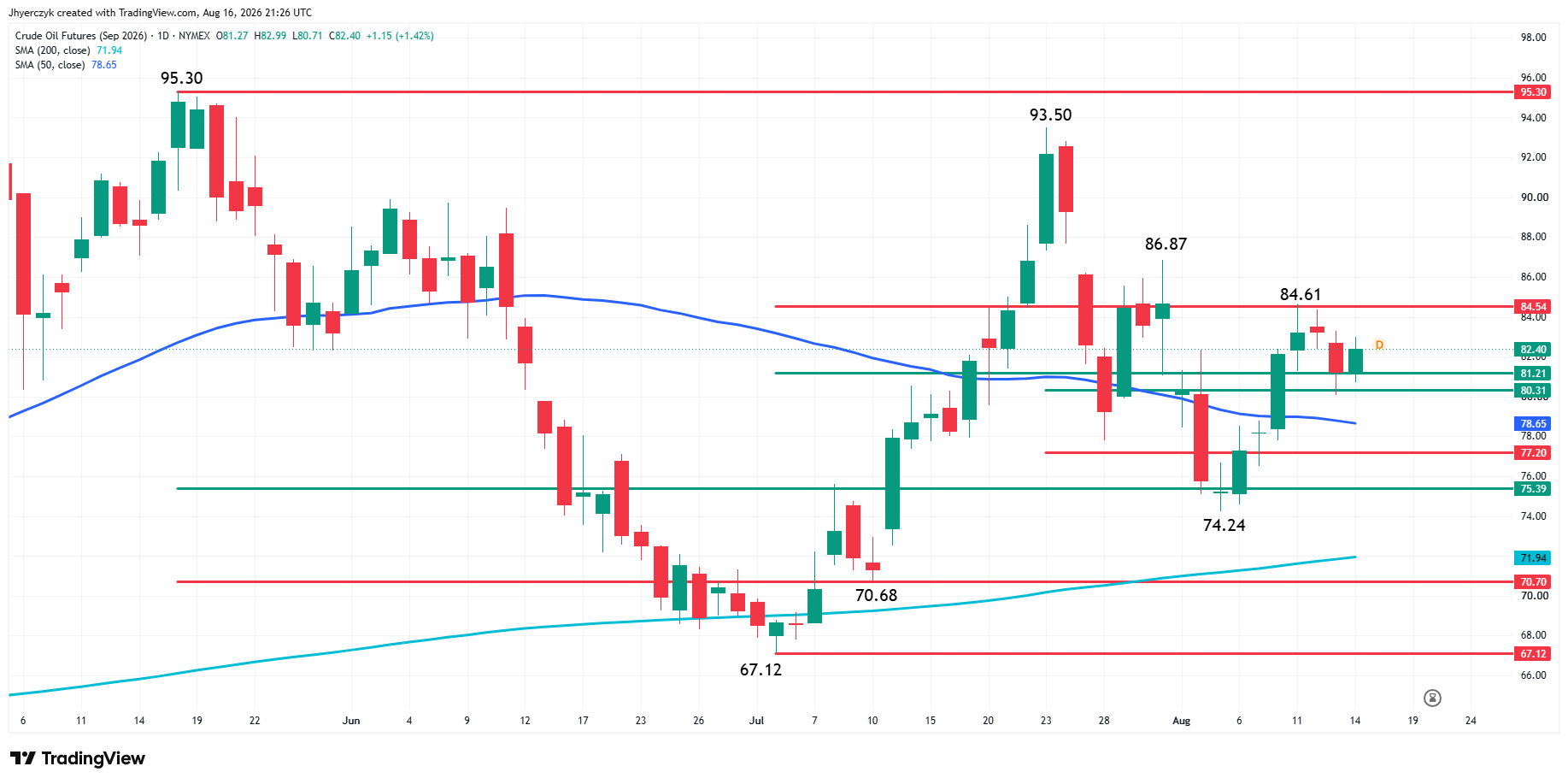
September WTI crude oil futures finished higher on Friday and on the strong side of a pair of 50% levels at $81.21 and $80.31. Additionally, the market closed on the strong side of the 50-day moving average at $78.56. All three levels are expected to be important support this week.
The key upside target is a resistance cluster at $84.54 and $84.61. Overtaking the latter could trigger a surge into the swing top at $86.87. This is a potential trigger point for an acceleration to the upside with $93.50 and $95.30 the two major targets.
Brent Oil Price Forecast
Every new Brent Oil analysis as it publishes, today's technical signal and key levels, live price — on one page.
See all Brent Oil forecastsDaily October Brent Crude Oil Futures Technical Analysis
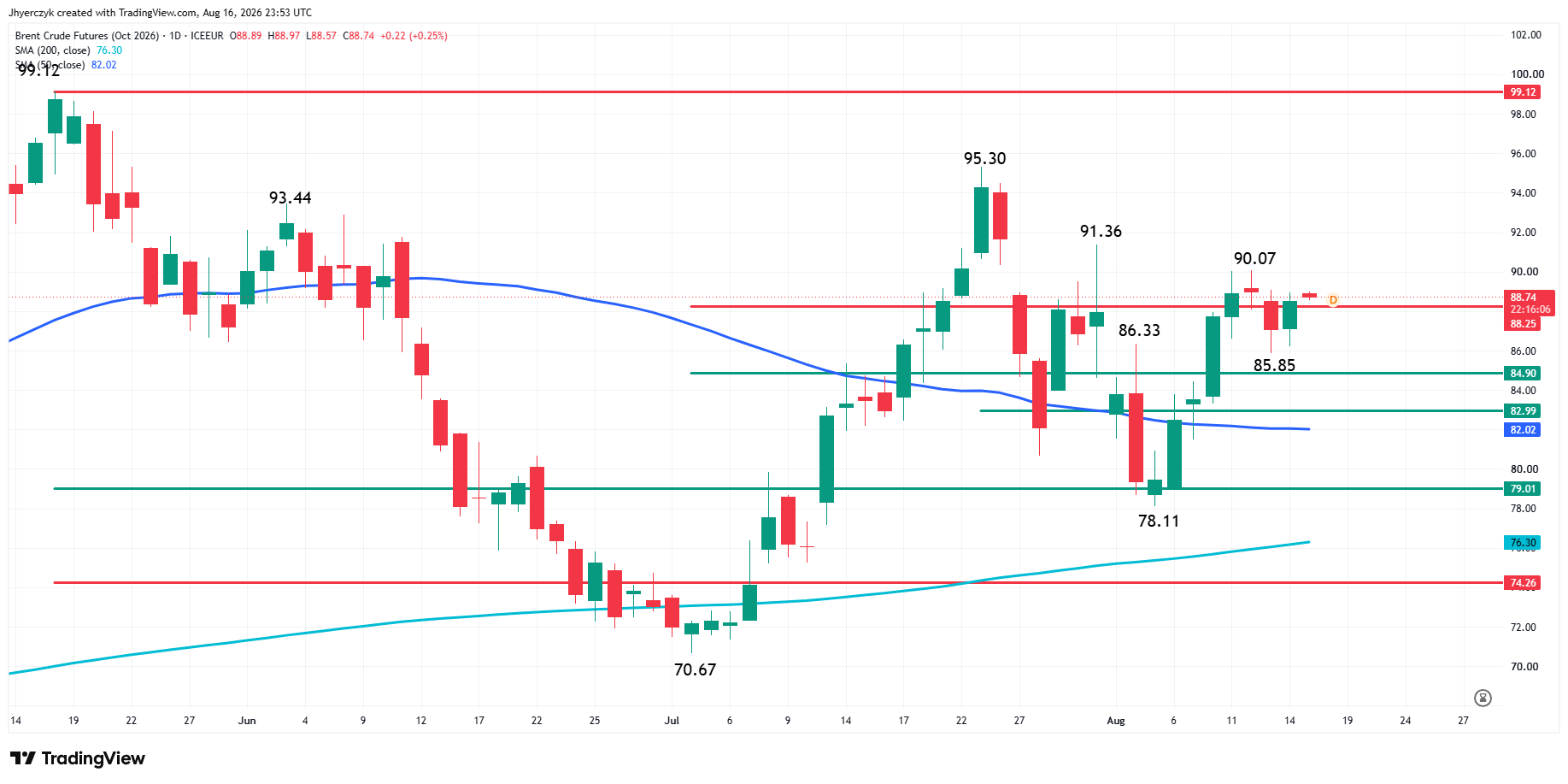
October Brent crude oil futures settled higher on Friday, confirming the new minor bottom at $85.85. The new bottom was formed inside the intermediate retracement zone at $88.25 to $84.90. The first upside target is the swing top at $90.07. Overtaking this level could lead to a quick test of the swing top at $91.36. This is a potential trigger point for an acceleration to the upside with the main targets $95.30 and $99.12.
On the downside, support is a pair of 50% levels at $84.90 and $82.99 as well as the 50-day moving average at $82.02.
Hormuz Got Worse and Russia Made It a Two-Front Problem
The Strait of Hormuz handled about one-fifth of global oil and liquefied natural gas supplies before the conflict began in late February. The UAE condemned Friday’s tanker attacks as Iranian. No injuries were reported. The ships were ADNOC vessels transiting the strait. Traffic was already below the monthly average before the attacks happened.
The United States said Thursday the blockade could run indefinitely. Treasury Secretary Scott Bessent said more measures are coming next week. Crude sold off last week on hopes of a framework. Friday killed whatever was left of that trade. The crude market is not pricing a resolution. It is pricing the cost of waiting for one.
Russia’s Sheskharis terminal at Novorossiysk went offline after a drone strike. The terminal is one of Russia’s key export outlets. The outage may not last. It did not need to. Middle East flows are already constrained and a Russian disruption on the same Friday as Hormuz attacks gave buyers one more reason to hold crude through the weekend.
Demand Cuts and the Inventory Build Are Still in the Room
OPEC cut its 2026 demand-growth forecast again this week. The IEA sees demand declining next year. Both agencies are revising in the same direction. U.S. commercial crude stocks posted their largest weekly increase in more than three and a half years. Higher diesel and gasoline costs are hitting trucking companies, airlines and manufacturers. Those numbers did not stop Friday’s rally. They are the reason WTI closed near $82 instead of running back toward the highs from earlier in the conflict.
What to Watch
Tanker attacks, slower Hormuz traffic, an indefinite blockade threat and a Russian terminal going offline all landed on the same Friday. Supply risk heads into next week stronger than it was Thursday morning. Washington’s next measure and the next vessel count set the near-term tone. Another attack or further drop in tanker traffic keeps the premium in both benchmarks.
WTI closed on the strong side of its 50% levels and the 50-day moving average with the resistance cluster at $84.54 to $84.61 as the next target. Brent confirmed a new minor bottom inside its retracement zone and is pointed at the swing tops above. The demand downgrades and the inventory build are not going away. They are the ceiling. The supply risk is the floor. Friday widened the distance between the two.
If you’d like to know more about how to trade crude oil, please visit our educational area.