


Oil prices remain strong as tensions in the Middle East increase the risk of supply disruptions. Iran has threatened to hit back at renewed U.S. strikes. Iran has also said that energy assets throughout the Gulf are vulnerable. In the meantime, U.S. attacks on Iranian tankers near Kharg Island have raised concerns about Iran’s exports. These developments increase the risk of more disruption in the Strait of Hormuz. Any slowdown in tanker traffic could delay the deliveries of crude and tighten global supply. The higher shipping and insurance costs may put additional strain. These concerns pushed WTI oil to $93 and Brent oil to $99.
As long as the conflict is ongoing, the oil market could remain strong. Goldman Sachs also revised its forecasts for the price of Brent and WTI by $5 as it believes shipping disruptions will continue into 2027. Crude oil prices may remain higher until the end of 2026 if this is extended into a supply cut from the Persian Gulf. Further attacks on tankers, export terminals or energy facilities could push Brent above $100. But if a ceasefire is reached or normal shipping resumes, prices may plummet. In my view, the supply risks will continue to drive oil prices and political developments will keep the market volatile.
WTI Crude Oil Price Forecast: Breakout Targets $97
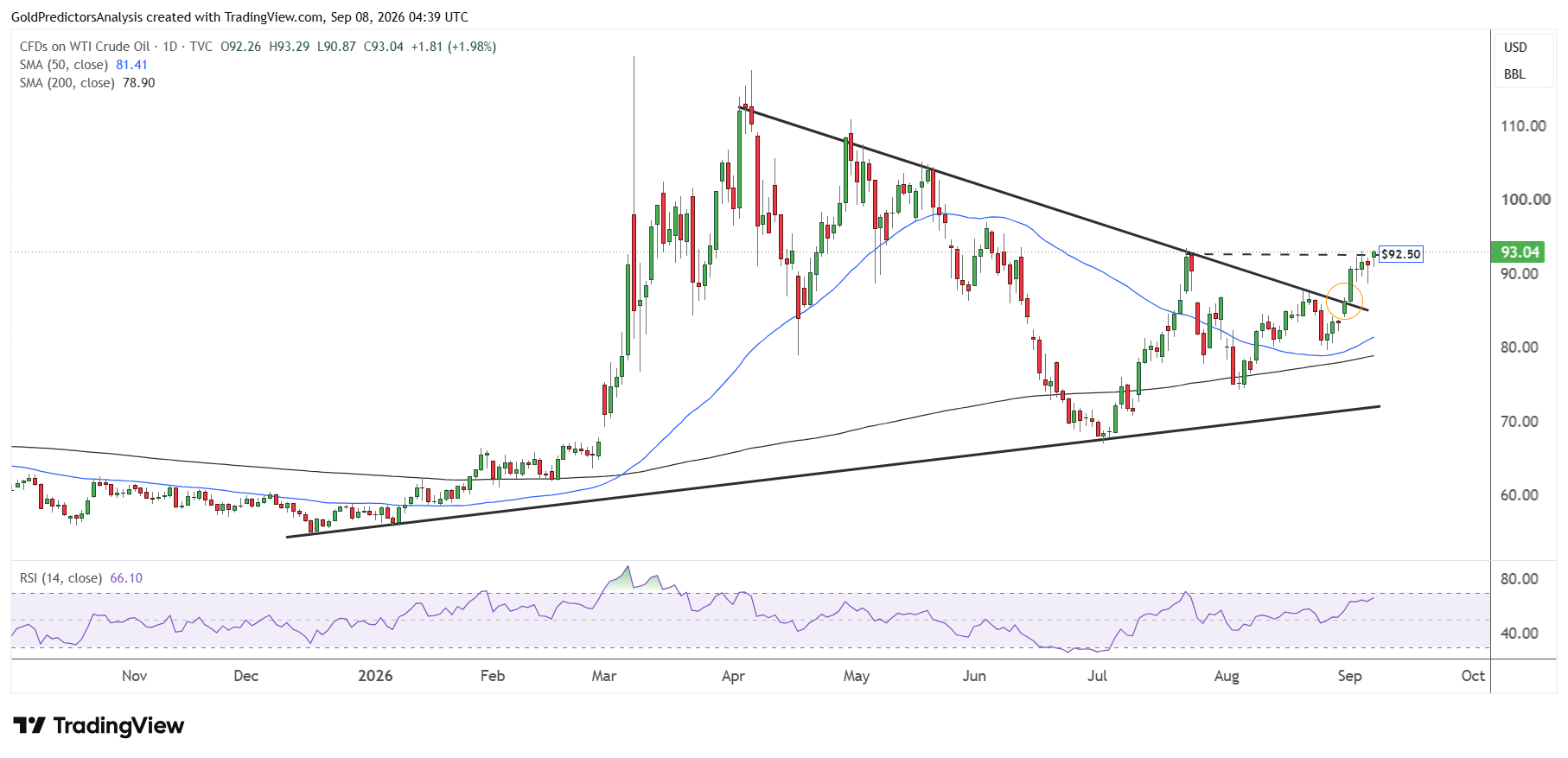
The daily chart for WTI crude oil shows that the price has broken out of the triangle at the $87 area and pushed toward the initial resistance level of $92.50. The price shows positive consolidation around this resistance and increases the odds of an upside breakout.
A break above $92.50 will open the way towards an immediate target of the $97 area. The price remains above the 50 and 200 SMAs. The RSI is also around 65.90, which indicates that further upside is possible.
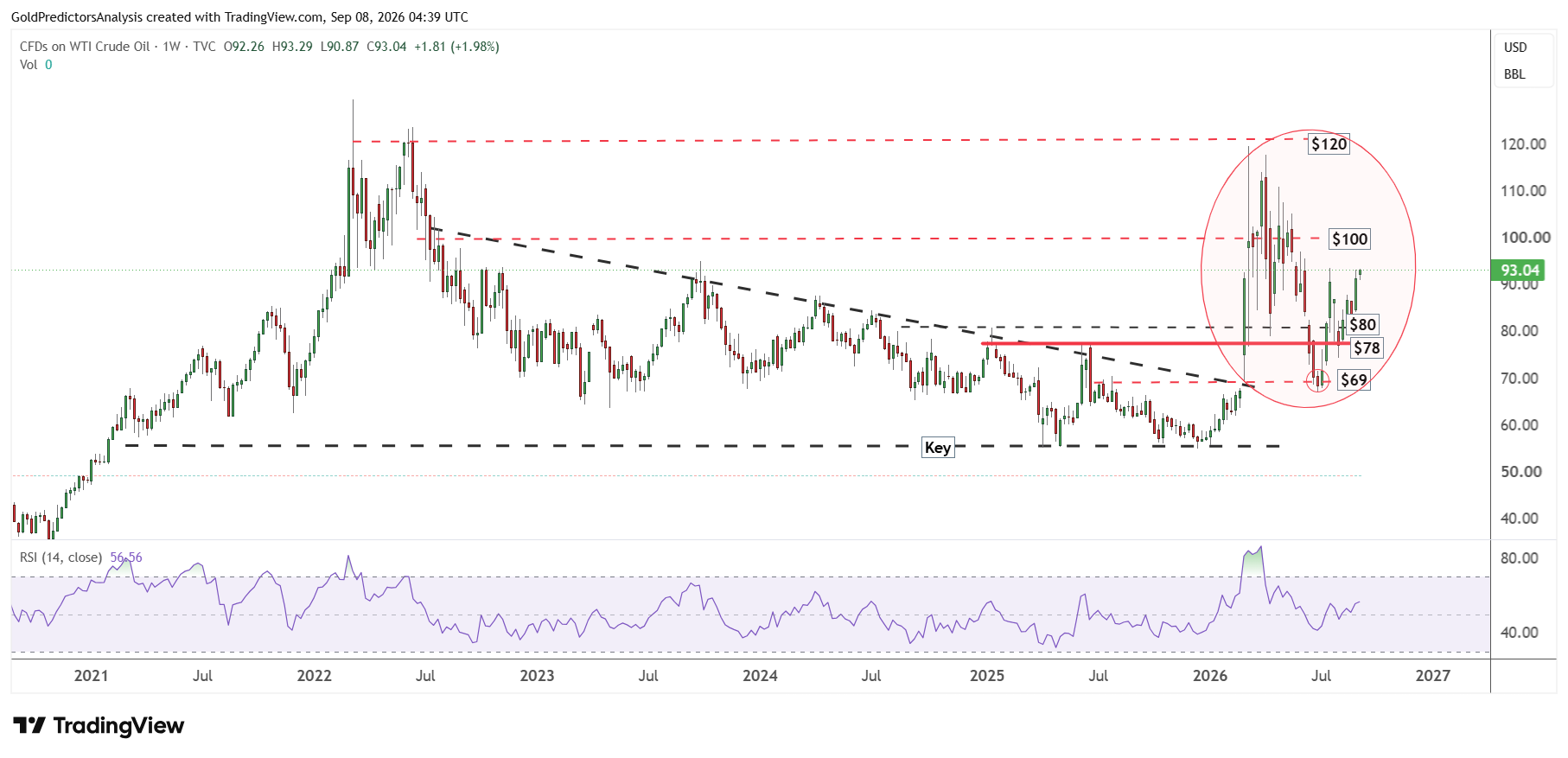
The bullish price action in WTI crude oil is also evident in the weekly chart, which shows a strong 9.32% gain last week. This increases the possibility of further gains towards $97 this week as tensions between the U.S. and Iran escalate. Moreover, the RSI remains above the midline on the weekly chart, which indicates positive price action.
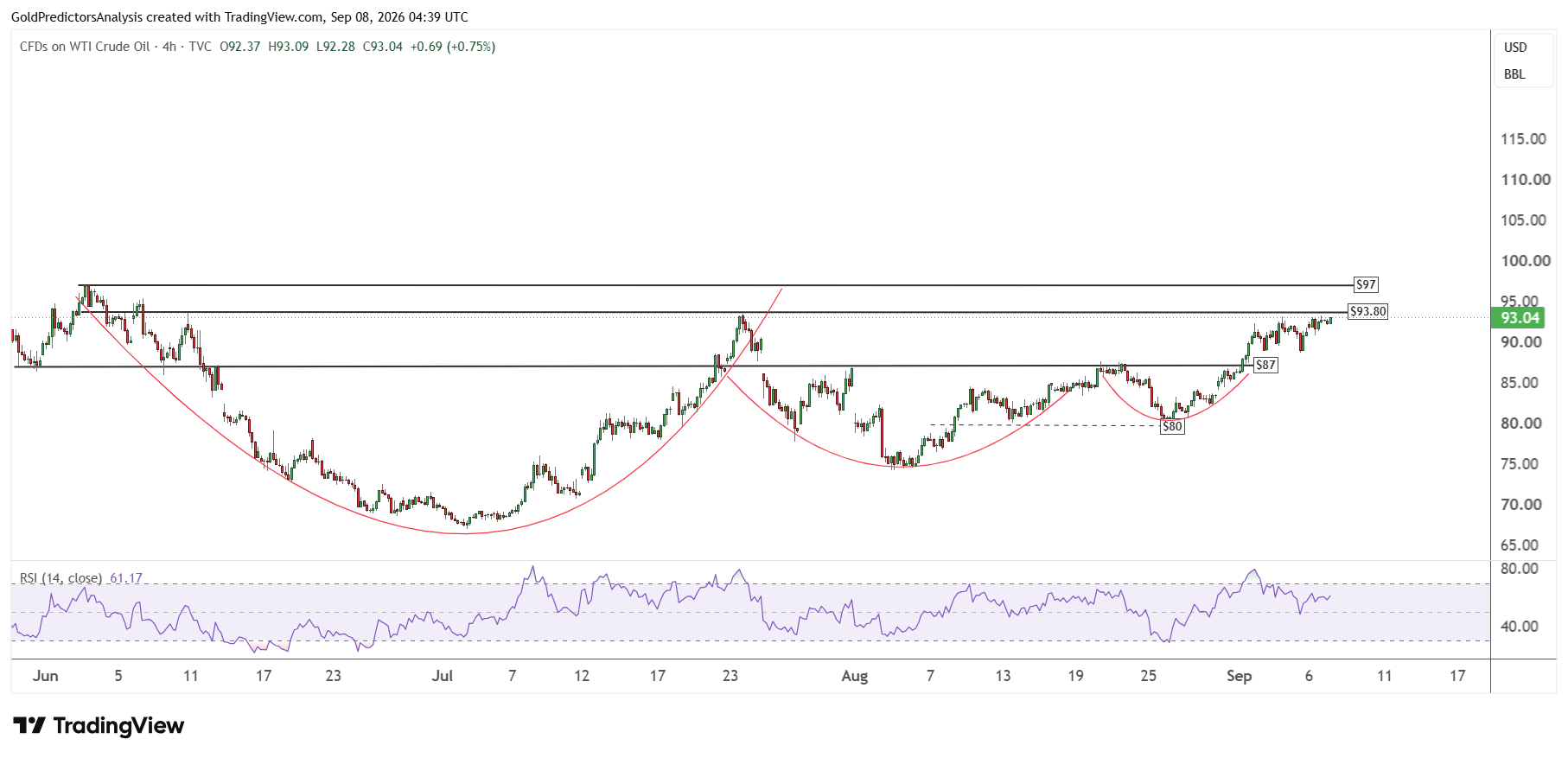
The 4-hour chart also shows the formation of rounding bottoms above the $80 region, which increases the possibility of an upside breakout above $93.80. A break above $93.80 will indicate an immediate target of $97. However, a break above $97 will indicate an increase in bullish momentum in the short term.
Brent Oil Price Forecast
Every new Brent Oil analysis as it publishes, today's technical signal and key levels, live price — on one page.
See all Brent Oil forecastsBrent Crude Oil Price Forecast: $100 Breakout Could Target $112
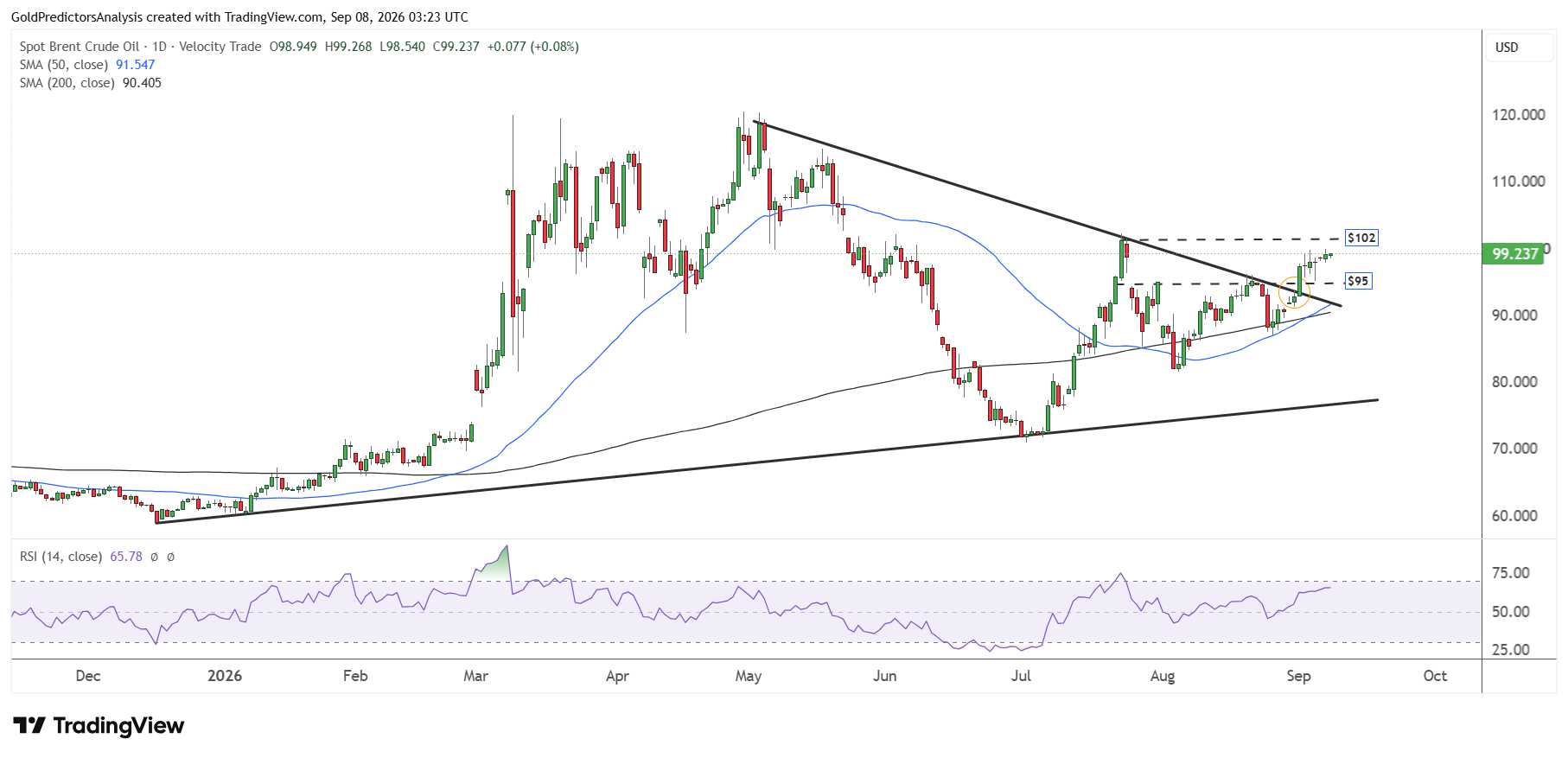
The daily chart for Brent crude oil also shows similar price action and shows that prices have broken out of the triangle pattern at the $93.50 level. After the breakout, the price is approaching the initial resistance of $102 in the short term.
A break above $102 will indicate further upside towards the $112 area in the short term. The price remains above the 50 and 200 SMAs, and the 50 SMA has crossed above the 200 SMA. This crossover further increases the positive momentum in the short term. As long as the price of Brent crude oil remains above $88, higher prices are possible in the next few days.
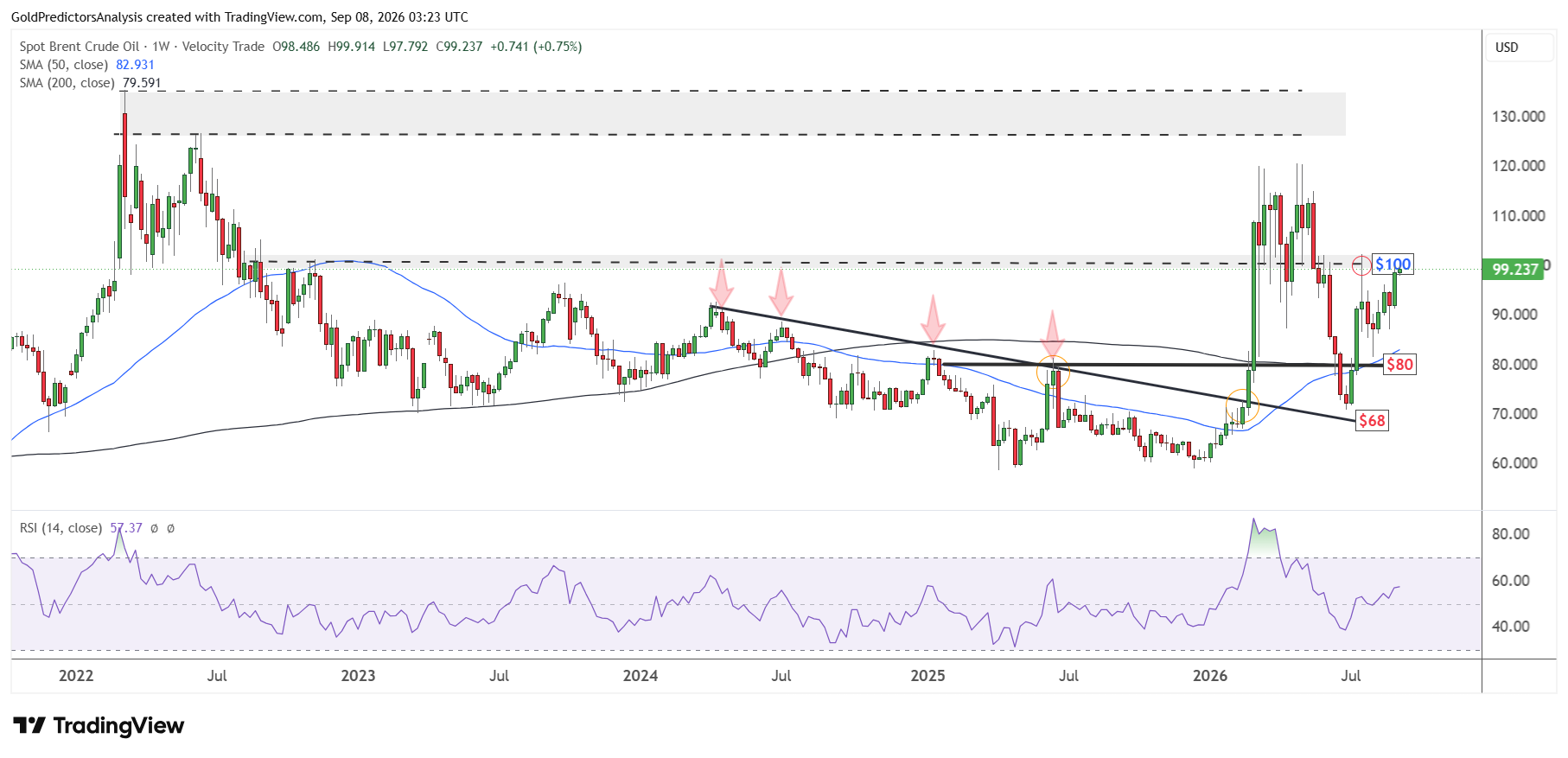
The weekly chart for Brent crude oil shows that the expected target of $100 has been reached. The price is now attempting to break above this area to open the way for $110 in the short term. But the price may consolidate in the $98-$102 area before breaking higher. The RSI remains above the midline, which increases the odds of an upside breakout in the Brent crude oil market.
Key WTI and Brent Levels to Watch
Oil prices maintain a bullish outlook as tensions in Middle East threaten supply and shipping through the Strait of Hormuz. WTI has broken out of the triangle and could target $97 if it clears $93.80. Brent is testing the $100-$102 area and a break above this zone could open the way to $110-$112.
The crude prices also remain above key moving averages and the RSI readings support the positive momentum. But the market may remain highly volatile as the rally depends heavily on geopolitical tensions. I remain bullish in the short term as long as WTI holds above $87 and Brent remains above $88.