WTI Crude Oil
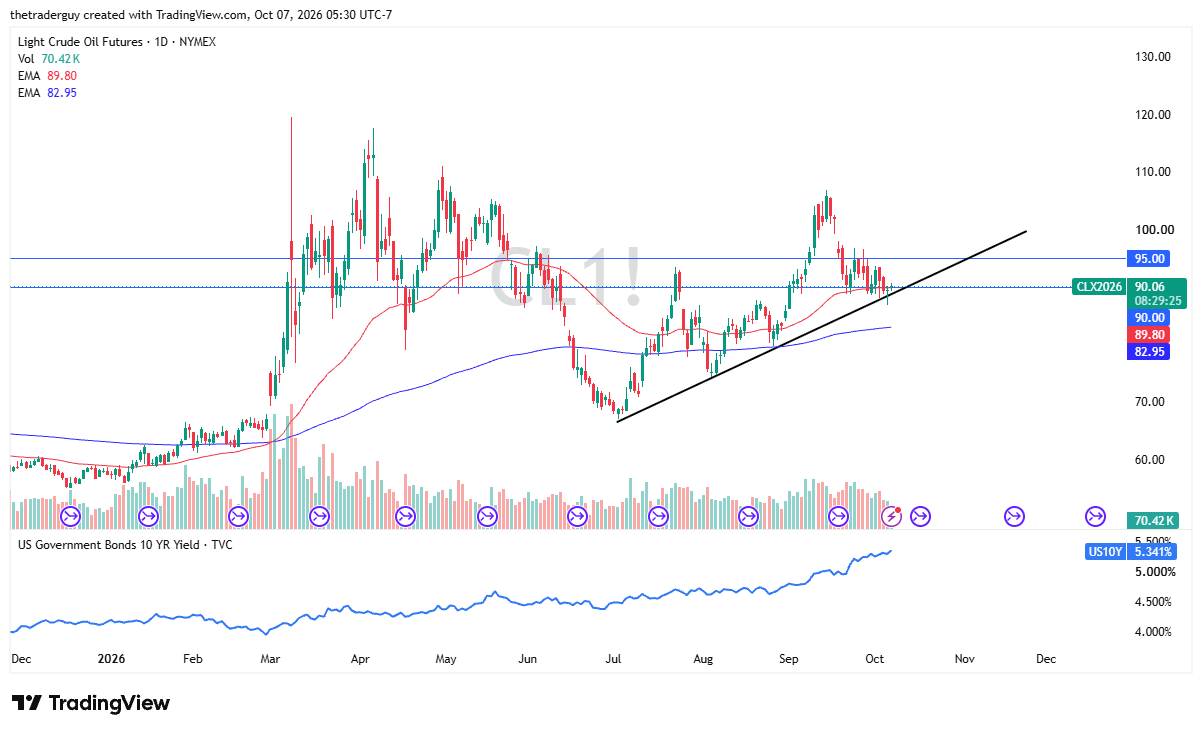
Crude oil was testing support during the early part of the Wednesday session. The light sweet crude oil market faces a couple of competing fundamental forces at the moment. Tight refined-product supplies support demand for crude, while rising American production provides a little bit of a counterweight.
The latest official assessment comes from the Energy Information Administration’s October outlook, released Tuesday. Its forecasts describe the underlying balance rather than today’s live futures price.
The domestic catalyst is Wednesday’s weekly petroleum status report, scheduled for 10:30 a.m. Before that release, the latest weekly figures showed commercial crude inventories at 427.32 million barrels for September 25, up 922,000 barrels from the previous week. That increase suggests that available crude supplies have expanded, although inventories alone cannot establish whether or not we are actually seeing weakening consumption.
Refinery activity continues to be a major issue here, along with imports and exports alongside headline stock-change numbers. A build caused by reduced refinery processing has different implications than one driven by stronger production. So, we need to see a trend here to start to get an idea if this is just a backlog in the supply chain.
East Coast distillate inventories were 32% below their 5-year seasonal average in September, and that’s where the concern is. The EIA expects regional stocks to remain 20% to 30% below average through the coming winter. Limited refining capacity and dependence on incoming shipments leave the region exposed to disruptions in international fuel availability.
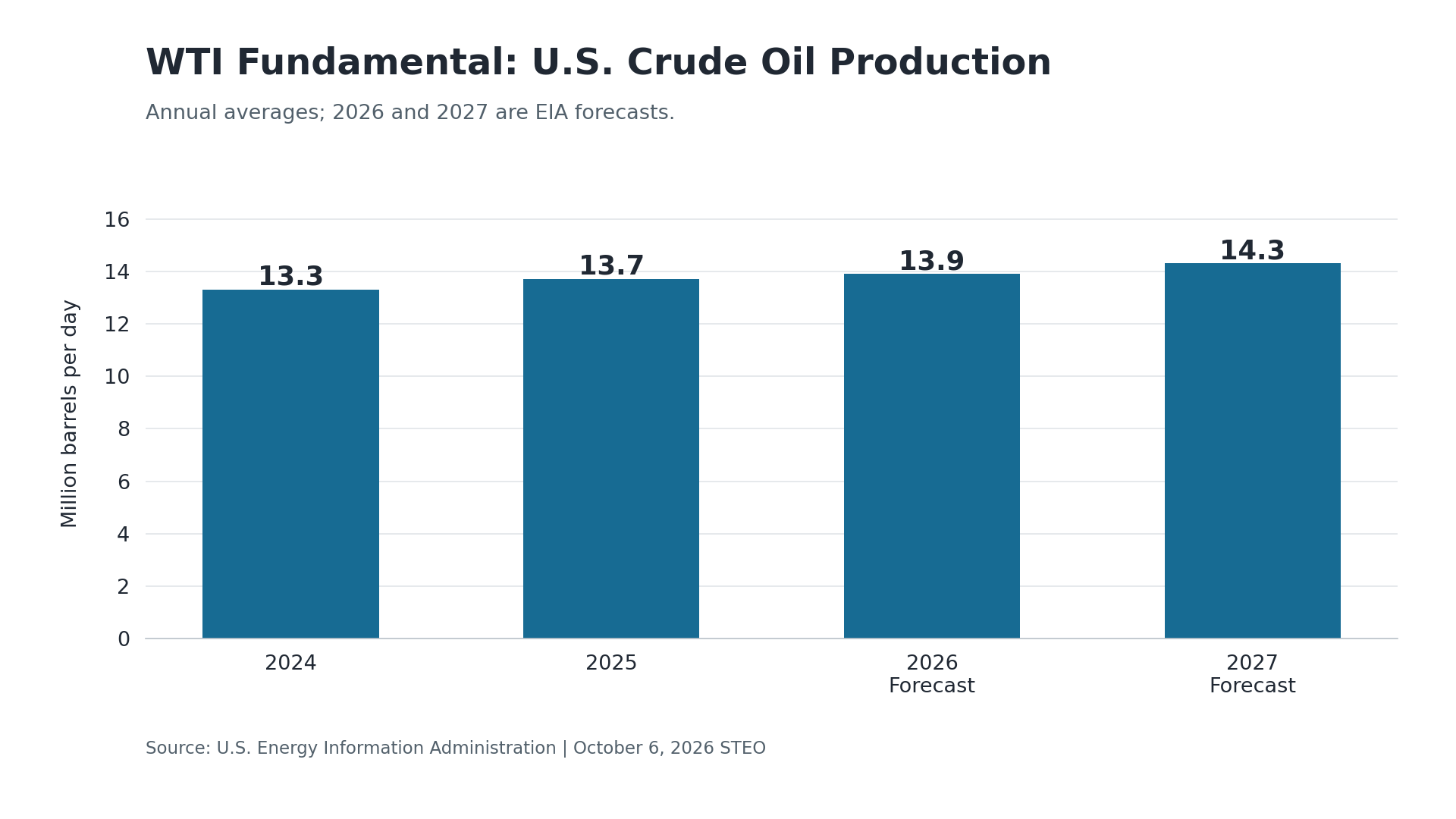
The market currently sees American production screaming to the upside, though, as we are now looking at 14 million barrels per day and 14.3 million barrels expected next year. The net change is almost 1 million barrels from 2025. Fuel consumption in the United States is expected to slip from 20.7 million barrels daily to 20.6 million this year.
Fuel shortages offer support, but additional crude supply limits the argument for uninterrupted gains here. The market currently finds itself testing the $90 level, with the $95 level above being a potential target. But this trend line has come into the chart to offer support.

Brent
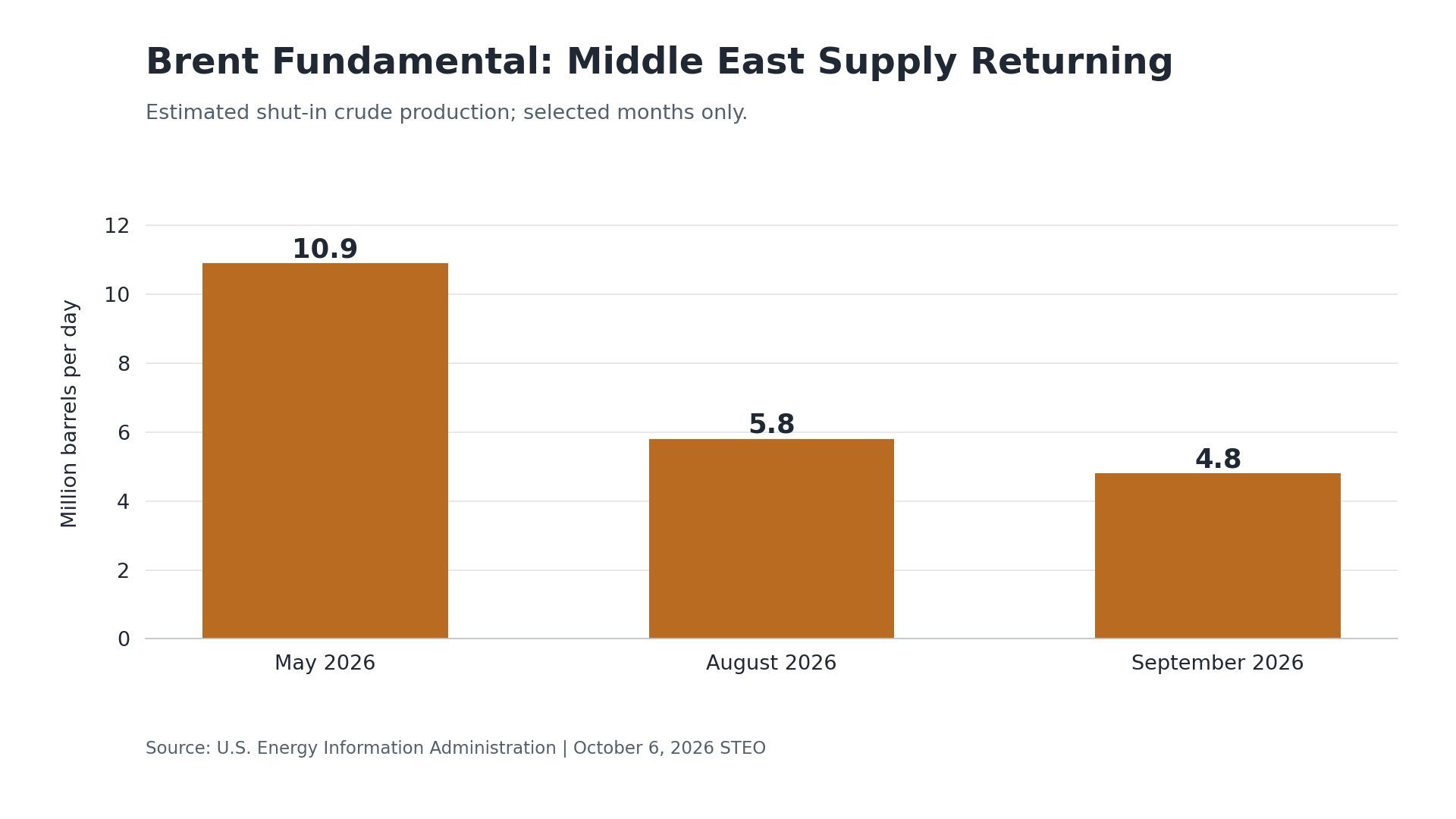
The Brent market finds itself in a little bit of a different situation, as the October assessment by the EIA suggests that regional production in the Middle East declined to 4.8 million barrels daily in September from 5.8 million during May’s peak.
That being said, the Brent market’s fundamental backdrop is somewhat similar, although it is dominated by the reliability of Middle Eastern exports. The October EIA assessment reports that regional production shut-ins declined to 4.8 million barrels daily from 5.8 million in August and 10.9 million at May’s peak. Supply is recovering, but volumes remain unavailable. The central issue is whether or not improving export arrangements can survive renewed infrastructure disruption.
The attacks on Saudi Arabia’s East-West Pipeline as a source of volatility in September are not doing anybody any favors. Before those attacks, there had been more than 5 million barrels daily exported through Yanbu, Saudi Arabia, bypassing the Strait of Hormuz.
For Brent, the implication is pretty straightforward. Alternative transport capacity matters almost as much as production. Oil cannot reach buyers, and therefore it does very little to relieve immediate scarcity. However, the other thing to think about here is that higher shipping costs and insurance expenses can also raise delivered costs.
EIA estimates show that global inventories declined by 1.9 million barrels daily during the third quarter and forecast another 0.7 million-barrel daily decline in the fourth quarter. Continued withdrawals leave less protection against unexpected interruptions via military conflict.
The policy of OPEC also adds another wrinkle to consider, with participants agreeing to maintain September’s required production levels for November. The announcement establishes their formal policy stance, but it doesn’t guarantee that actual production will hit those numbers. The next meeting for OPEC is November 1.
Emergency supplies could moderate pressure, as the G7 has, just in the last week, stayed committed to a coordinated 100 million-barrel release over 4 months, including substantial diesel releases within the first 20 days.
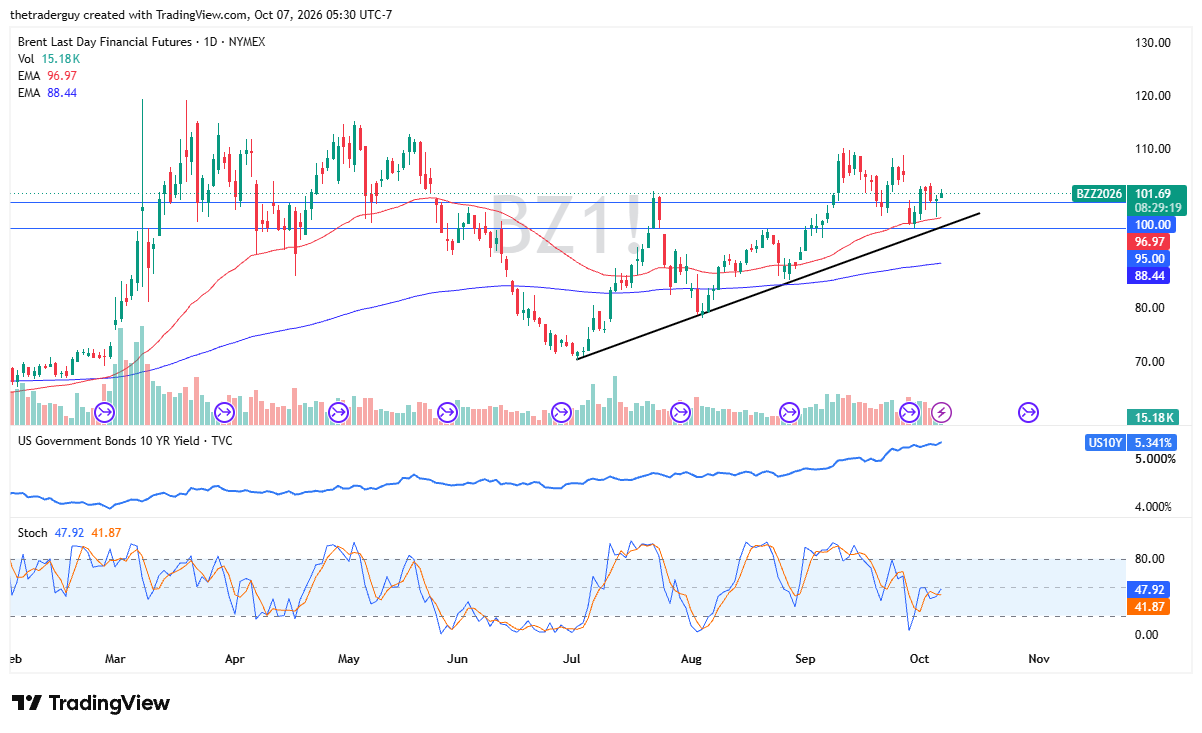
That being said, this is a market that is in a bit of a trending channel. That trending channel is something that I think holds, and therefore does look bullish from a technical analysis standpoint.
Let’s be honest here: it’s more likely to get bad news than good when it comes to headlines out of the Middle East. So, one would assume sooner or later there would be something to cause prices to jump. How far is the question now that we’re seeing more supply?
Brent Oil Price Forecast
Every new Brent Oil analysis as it publishes, today's technical signal and key levels, live price — on one page.
See all Brent Oil forecastsAll of this essentially keeps me somewhat bullish, but not as bullish as I may have been, say, 3 months ago. I think it’s a slow grind higher that would make the most sense. It’s not a massive change in attitude; it’s not a massive change in anything else, but keep in mind that even with plentiful crude, there are other alternate places to play energy, such as gasoline futures, which might be a little livelier anyway.