Financial markets faced renewed pressure on Thursday as higher energy costs complicated the outlook for inflation, interest rates, and, of course, growth. European sovereign debt remained a particular concern, with the central question turning into a combination of expensive energy and tightening financial conditions, and what that can produce in terms of an outlook for either economic growth or a slowdown.

Not All Yields Mean the Same Thing
For currency markets, this has created competing forces: higher yields that can attract capital, while deteriorating confidence in the bloc can push it away. Brent crude has been very positive in the early part of the session, gaining 4% at one point. The same can be said for WTI, and at this point in time, the advance seems to be linked to uncertainty over Middle Eastern supply. Both figures are rapidly advancing early during the session. Considering that this is early in the day, the question will be what is going to happen before settlement.
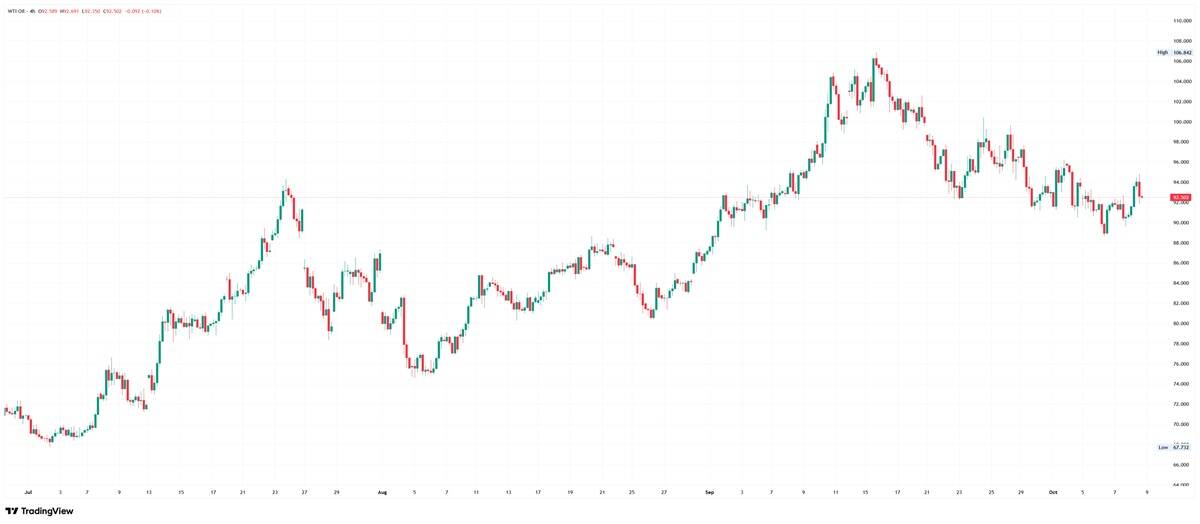
The Economic Implications Extend Beyond the Price Paid at the Pump
In analytical terms, sustained energy inflation can possibly squeeze household spending and corporate margins while complicating the job of central banks to contain inflation while trying to maintain economic growth. Import-dependent economies face an additional challenge at times when their currencies weaken, increasing domestic costs of dollar-priced commodities. The duration of the shock will be the most important factor here, as well as hedging arrangements.
European Debt Issues Remain a Concern, and It’s Spreading
Europe’s debt markets add another layer of uncertainty, with renewed selling in French, Italian, and Greek government bonds being seen. The STOXX 600 is down around 1%, and European banks are almost 2% lower on average during the morning. The euro has traded near 1.1180 again, and the U.S. 10-year Treasury yield is around 5.33%.
For the euro, the quality of the yield increase matters as much as its size. Higher borrowing costs associated with stronger growth would be a good sign and could lift the euro, but higher yields associated with doubts about fiscal sustainability and possibly energy shocks can instead discourage investment in the continent. For international investors, it makes relative interest rates an incomplete guide.
Brent Oil Price Forecast
Every new Brent Oil analysis as it publishes, today's technical signal and key levels, live price — on one page.
See all Brent Oil forecastsFiscal credibility, liquidity, and the resilience of domestic banks can change how attractive a higher yield actually appears to traders. Pressure spreading across several countries in the European Union right now raises questions about whether financing conditions will remain sufficiently consistent across the Union.
FOMC Meeting Minutes
The FOMC meeting minutes for September provide a bit of U.S. policy backdrop. All participants supported a quarter-percentage-point increase at the last meeting. Most assessed that another increase would probably be appropriate by year-end, but future decisions would depend on incoming information. This, of course, was the statement before the latest weak economic numbers came out of the United States.
The minutes also went on to describe how energy price increases could spread to broader inflation. Officials did link artificial intelligence investment to strong business spending and potential demand pressures. This limits the comfort investors can take away from weaker pricing, as the market by itself does not establish that inflation pressures have subsided.
The inflation picture in Europe requires similar care. September headline inflation is at 3.8%, but energy inflation at 18.8% and core inflation at 2.5% show just how concentrated some of the problems are. The Wall Street Journal had recently reported that Europe’s chief economist, Philip Lane, had not detected a noticeable pickup in wages. This does work against inflation concerns; however, it also weakens the possibility of household spending. Europe remains a very chaotic picture.