Silver Pulls Back After Two-Day Surge Runs Out of Fuel
Silver is giving back a piece of its two-session rally Thursday because the three things that powered it have all stalled at the same time. The dollar is no longer falling. Treasury yields are flat. Crude oil has stopped dropping. Wednesday’s 4.4% run to the highest level since early July was aggressive short-covering and fresh buying hitting the market together, and now the easy part of that trade is over.
The overnight session pushed silver to $62.91 before sellers stepped in. Kashkari, Cook and Daly all spoke this week and the committee is publicly split on September. Friday’s payrolls report is what decides whether this pullback is a pause or the start of a reversal.
At 11:58 GMT, Spot Silver (XAGUSD) is trading $61.74, down 0.49%.
Hormuz Deal Talk Started It, but Oil Has Stopped Falling
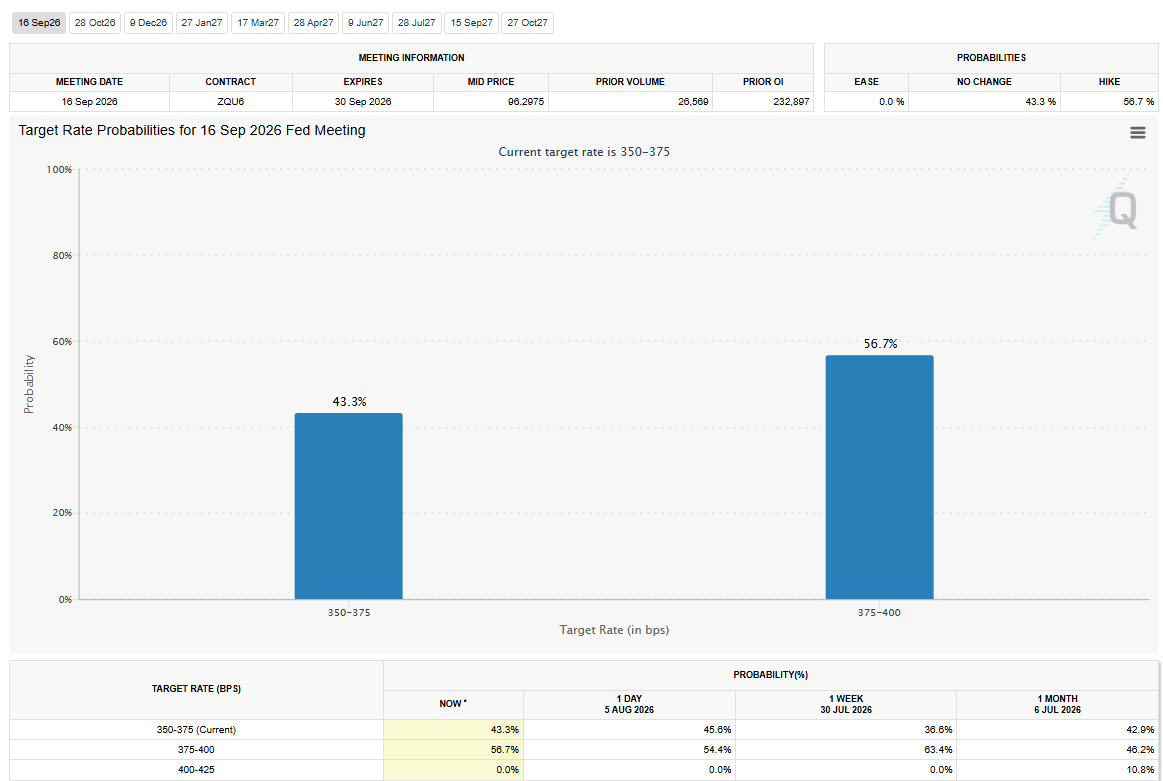
The Iran-Oman discussions cracked the inflation trade this week. A possible Hormuz route pulled crude lower and September hike odds dropped to 55% from 67% two days ago. Silver moved because the rate-hike positioning broke apart, not because anybody found new industrial demand.
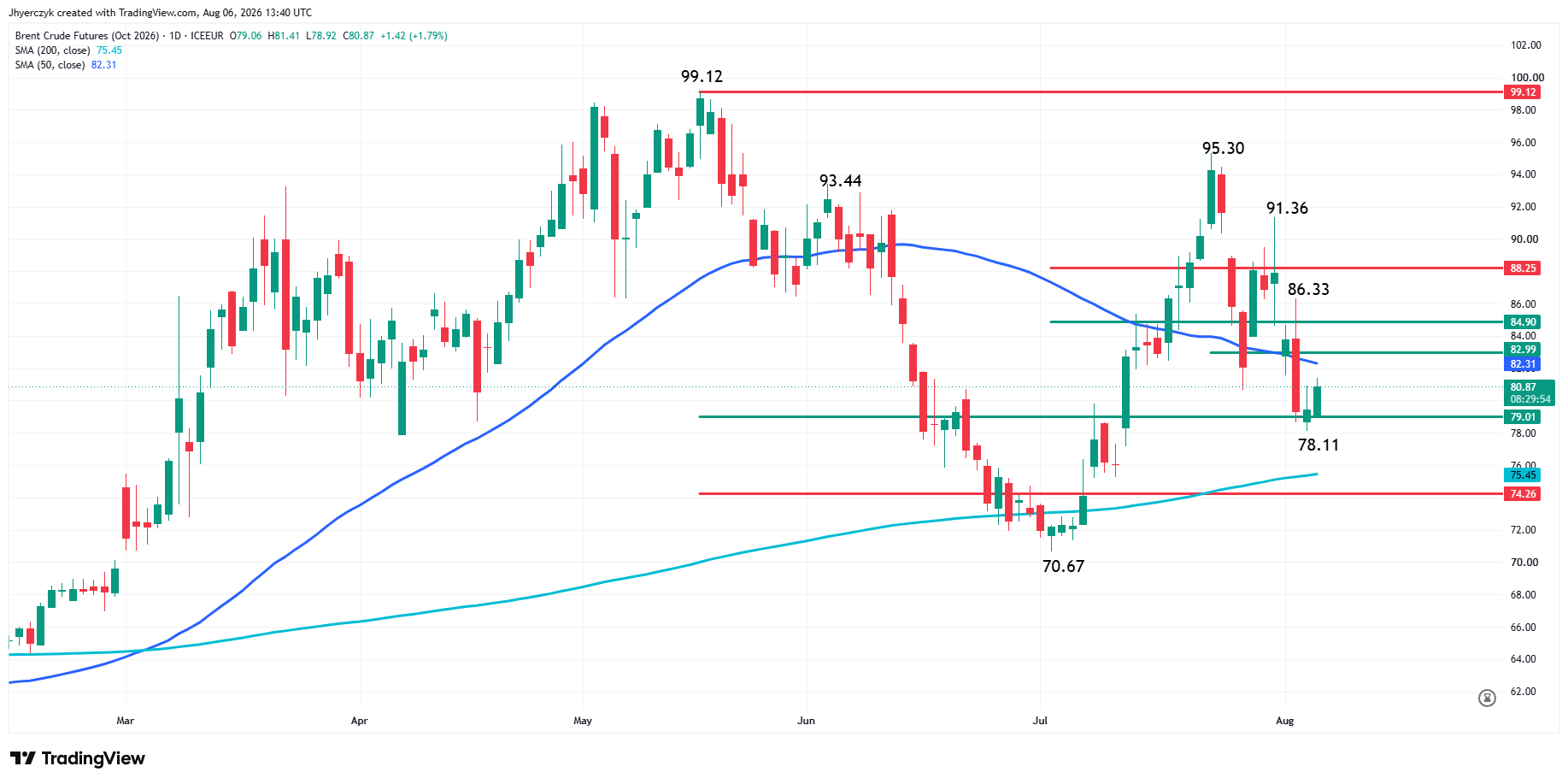
WTI is near $75 and Brent is around $80, both well below last week. But neither one fell further Thursday. Iran still wants control over ships entering the Gulf and visibility over traffic leaving. Washington has rejected that arrangement repeatedly. If talks hold, crude stays contained and the inflation premium keeps leaking out. If they collapse, oil snaps back and the rate trade reassembles. Silver is trading a prospect, not a result.
Dollar Steadied and That Changes the Trade
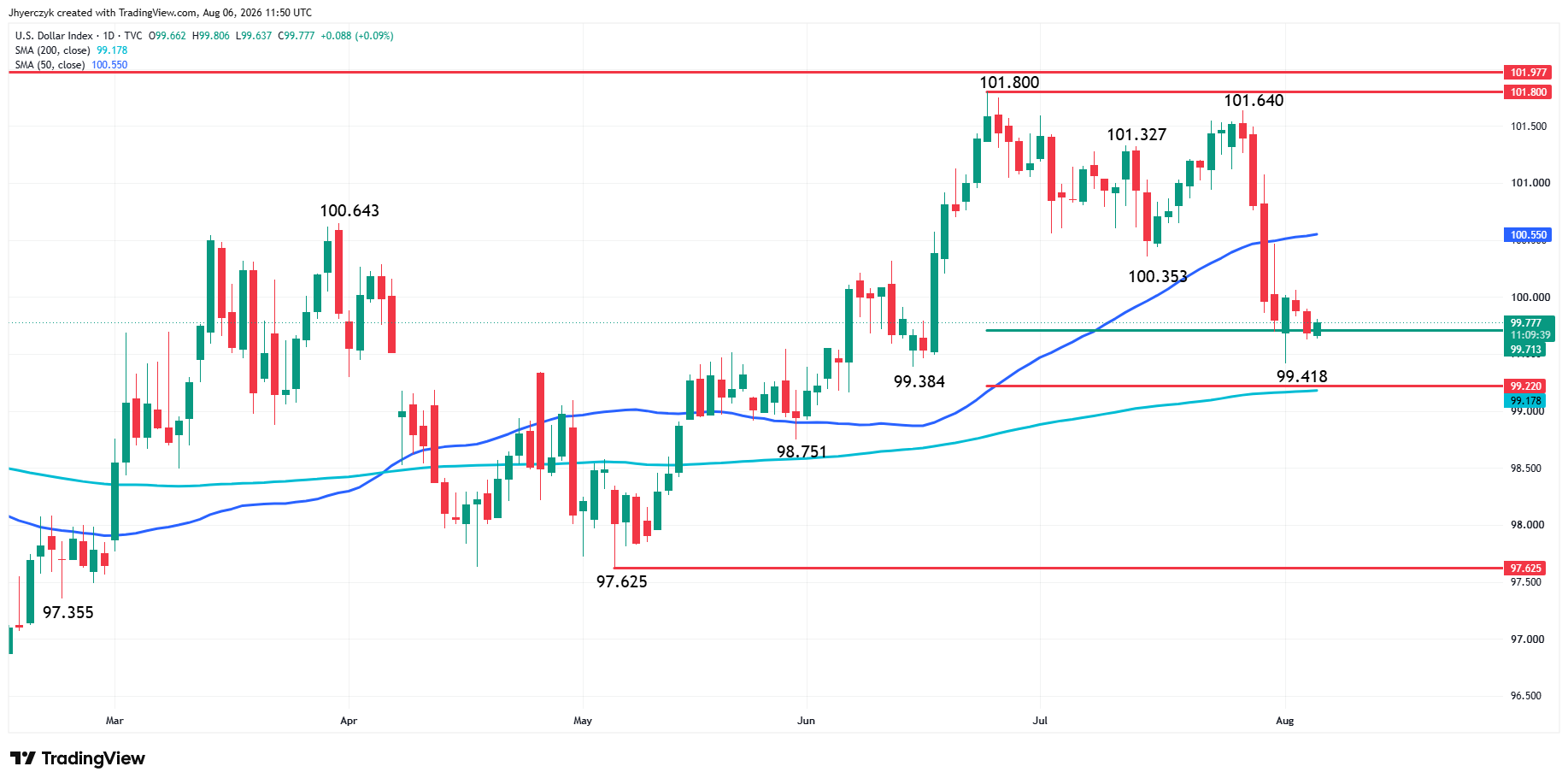
The dollar index has edged back toward 99.77 as the yen gives up part of its intervention-led gain. Wednesday’s silver rally needed the currency falling hard to force short covering and pull fresh buying into the metal. Thursday’s dollar is not falling. It is sitting.
Silver Price Forecast
Every new Silver analysis as it publishes, today's technical signal and key levels, live price — on one page.
See all Silver forecastsThat is enough to explain the pullback without looking for an industrial demand story. Silver ran on a macro combination that required all three pieces moving at once. One of them stopped. The other two are flat. Buyers do not have the same urgency they had 24 hours ago.
Silver can hold its gains if the dollar stays below last week’s levels. It becomes harder to hold if the currency starts rebuilding ahead of Friday’s jobs number.
Yields Are Flat, Not Falling
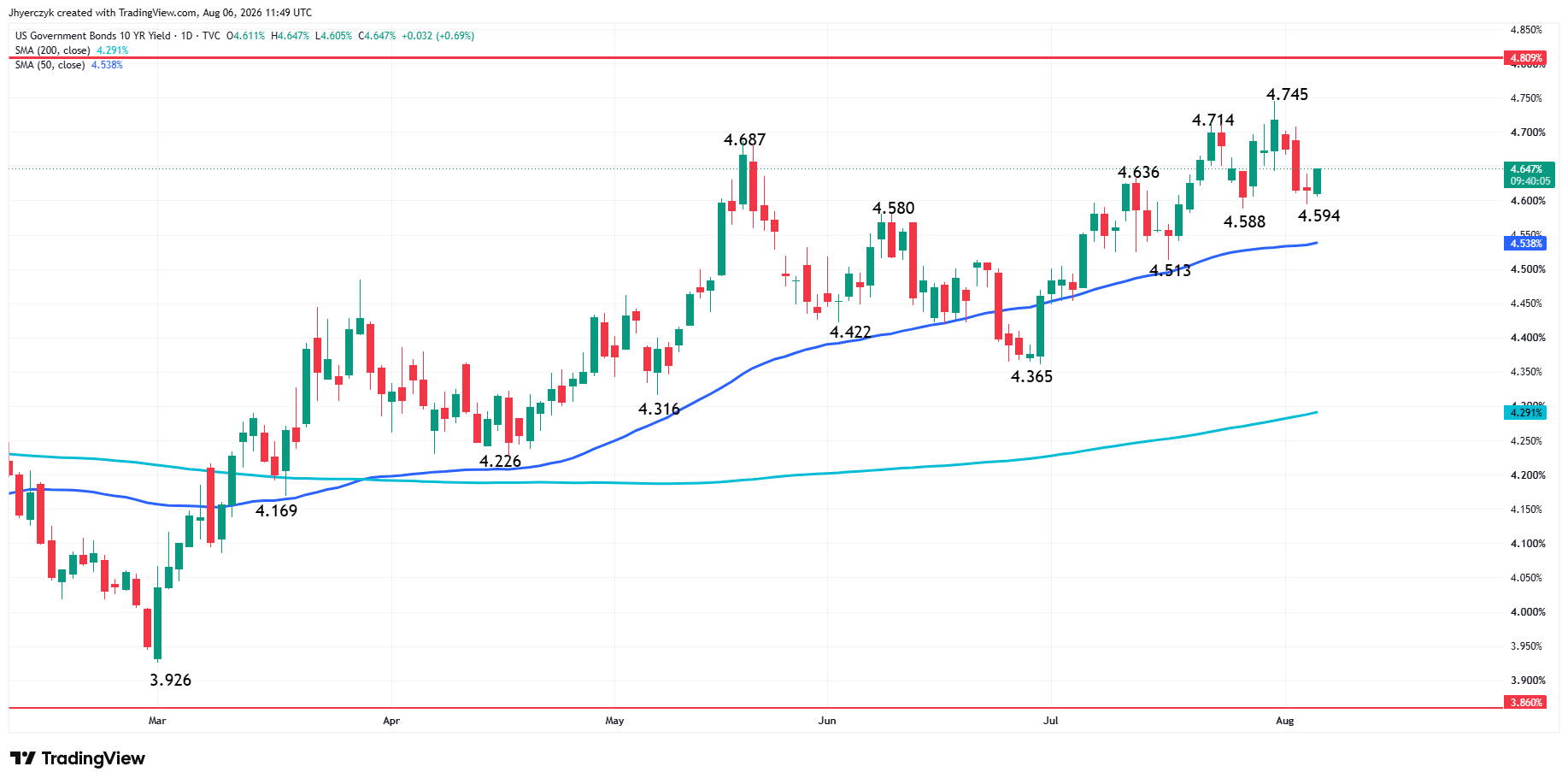
The 10-year is near 4.65%. The 30-year is holding around 5.19%. Both are little changed after Wednesday’s decline. The two-year ticked higher to 4.20%, which tells you traders are not ready to price out September entirely.
Kashkari said rates should start moving higher. Cook said she is open to a hike if inflation does not keep easing. Daly supported the hold and wants more evidence before September. Three Fed officials, three different positions. The committee is split in public and the market has to wait for the data to pick a side.
Wednesday showed how fast silver moves when yields and the dollar cooperate. Thursday is showing what happens when they stop.
Daily Spot Silver (XAGUSD) Technical Analysis
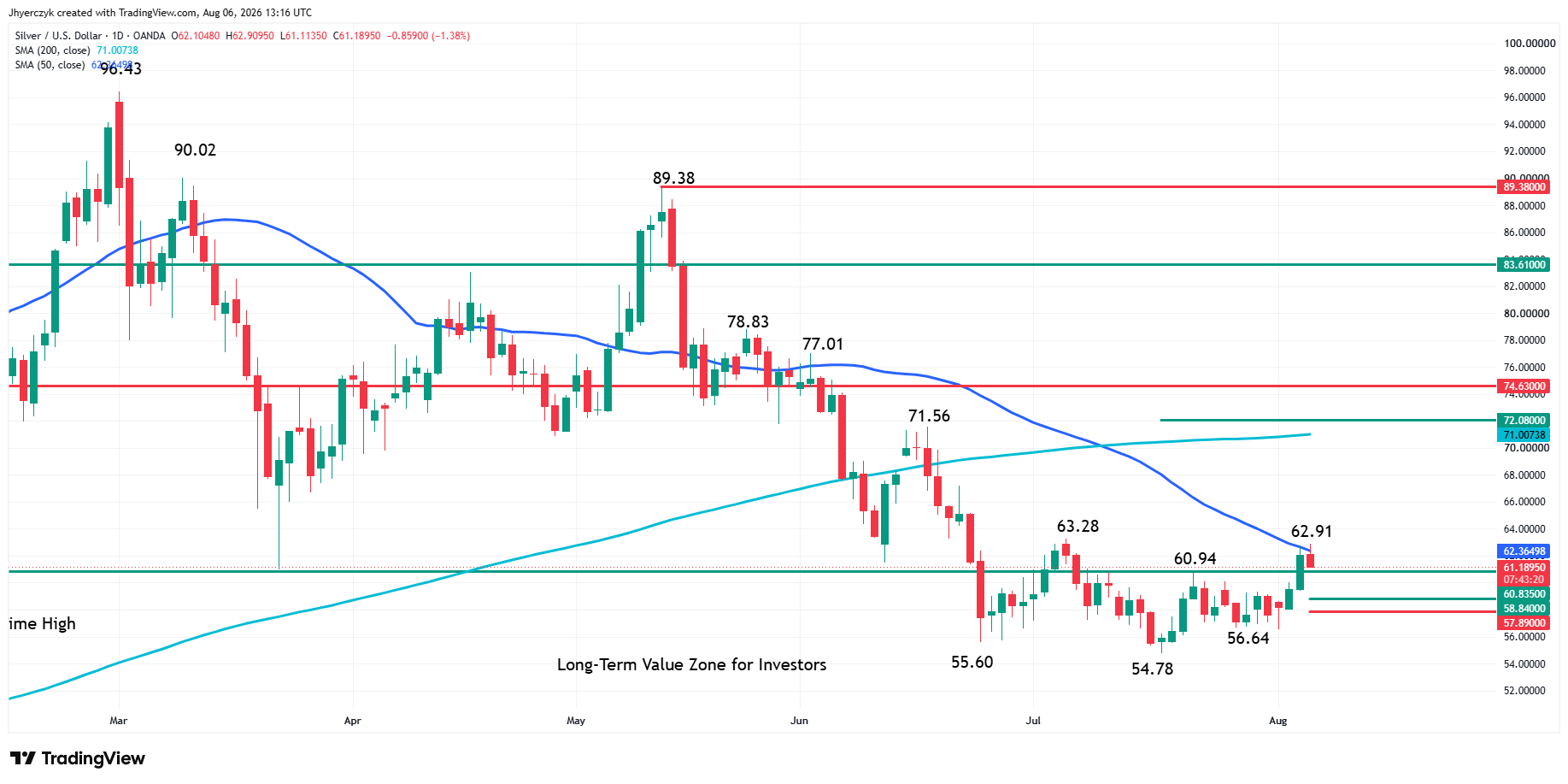
Spot silver is edging lower Thursday after hitting its highest level since July 6 at $62.91. At first, the breakout over the 50-day moving average at $62.36 suggested the buying was getting stronger. However, the sudden reversal and break back under the 50-day moving average suggest the move may have been a bull trap.
The 50-day moving average, today’s intraday high at $62.91 and the July 6 swing top at $63.28 are now resistance levels.
The first downside target is the long-term 50% level at $60.835. If a test of this level fails to bring in buyers, look for a potential break into the retracement zone at $58.84 to $57.89.
Since the swing chart trend indicator turned up Wednesday, traders may have shifted into buy-the-dip mode. The first area they are likely to defend is $60.835, followed by $58.84 to $57.89. They are likely to remain in this mode until the swing bottom at $56.64 is violated.
A sustained move over the intraday high at $62.91 could trigger a test of $63.28. Taking out this swing top would reaffirm the uptrend and put the 200-day moving average at $71.01 on the radar.
What to Watch
Silver ran hard for two sessions on lower oil, a falling dollar and shrinking rate-hike odds. All three stalled Thursday and the metal is pulling back from the overnight high. The rally was a macro relief trade and macro relief trades need the relief to continue. Friday’s payrolls is the catalyst. Soft hiring and weaker wages keep the dollar under pressure and give silver room to hold above the breakout. Firm wages and solid hiring put the September trade back together and the pullback from $62.91 has further to go.
The breakout above the 50-day moving average failed to hold and that is a concern. Buyers who shifted into buy-the-dip mode after Wednesday’s trend change have to defend the first support area or the rally loses credibility fast. A strong jobs number on top of a failed breakout gives sellers everything they need.
More Information in our Economic Calendar.