


This was the weekend the war was supposed to matter. Three American service members were killed. The United States ran its ninth night of strikes on Iran and began reaching beyond military targets. Iran launched a fresh wave of missiles, hit a major oil facility in Kuwait, and declared the ceasefire had formally collapsed. Oil gapped up almost 4% on Sunday, with Brent pushing above $91, its highest since June. Bonds fell. Every ingredient of the classic flight to safety was on the table at once.
Gold Defies War Headlines
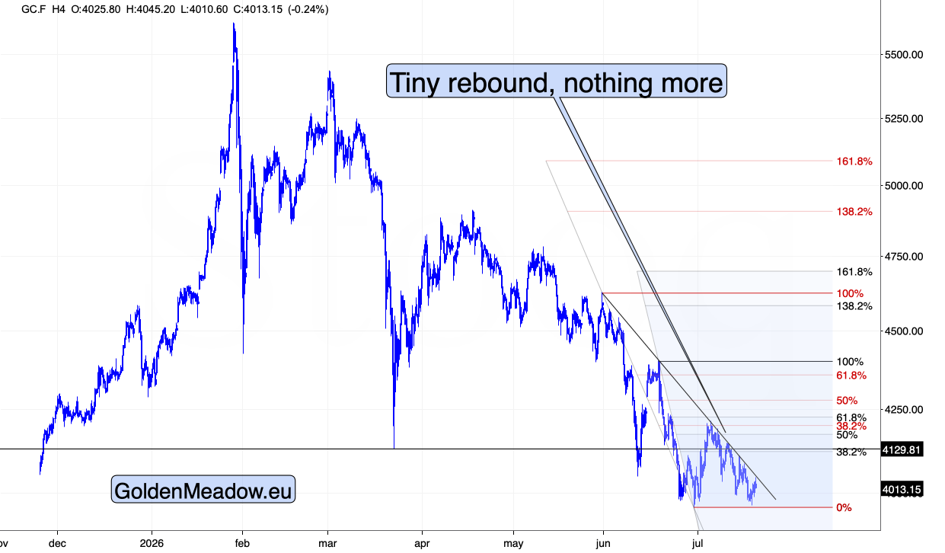
Gold went from about $3,986 on Friday to roughly $4,020 in early trade today, then gave most of it back toward $4,000 as I write. Thirty-odd dollars, then handed back, on a widening war and a one-month high in oil. Bloomberg said it as plainly as I could: gold fell after the escalation because it stoked bets the Federal Reserve may need to raise rates, not because anyone reached for it as a haven.
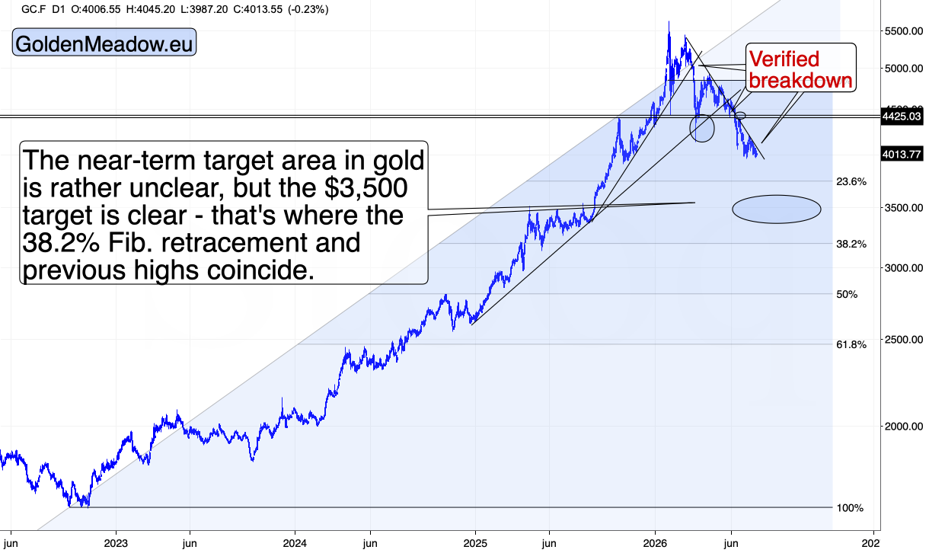
I have lost count of how many times I have written this exact paragraph now. The war started, and gold gave its spike back in a day. A peace deal was signed, and gold did the same. The war came back, escalated, widened, and now killed American troops, and gold has treated each headline like it was not there.
A market does not ignore its single best reason to rally by accident. It ignores it because that reason was never what moved it. What moves gold is the dollar and the rate behind it, and a wider war on the world’s most important oil route does not soften the Federal Reserve. It hardens it.
That is the whole mechanism, and this weekend ran it in front of you. More conflict means more oil. More oil means more inflation. More inflation means a Fed that leans toward hiking, which lifts real yields and the dollar and presses gold down. Two soft inflation prints last week had knocked the odds of a July hike to about 10%, yet the odds of a hike by December sat near 73% even then, and this weekend’s oil spike is pushing the whole path back up. The escalation is not a bid for gold. It is fuel for the thing that has been sinking gold all year.
Technically, gold’s medium- and short-term downtrends remain intact – in perfect tune with what I’ve been writing about for weeks. Even today’s tiny upswing managed to take gold only to the declining resistance line – not above it.
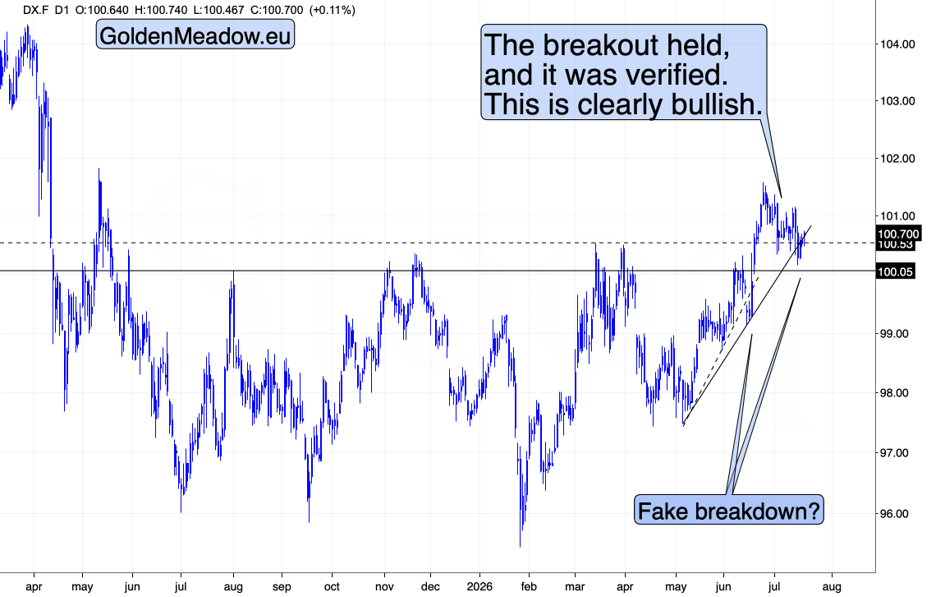
The dollar tells the calmer version of the same story. Through a killed-ceasefire weekend and a spike in oil, the Dollar Index sat firm near 101, holding above the 100 breakout that has anchored this entire decline. It did not need to do anything dramatic. It simply refused to give ground while the metals failed to rally, and every failed rally in gold is one more vote for the breakout that keeps pressing the sector lower.
Technically, the situation is bullish as the USDX is above its previous highs, and the small breakdown below the rising support line was already invalidated. This is a buy signal.
One thing I am watching honestly, because it is the real risk to all of this. Transit through the Strait has all but stopped. One tracking firm reported no tankers passing since the fifteenth. As long as the market treats this as a disruption and oil pares its spikes the way it did this morning, the chain runs my way, from oil to inflation to a firmer dollar to weaker metal.
If those transits stay near zero and oil breaks higher instead of fading, the shock stops being merely inflationary and turns into something harsher, and that is the one path that could change how gold behaves. It has not yet (and it might not happen at all), and today’s oil giving back gains says the market still sees this as contained. But that transit number is the thing to watch this week above any headline.
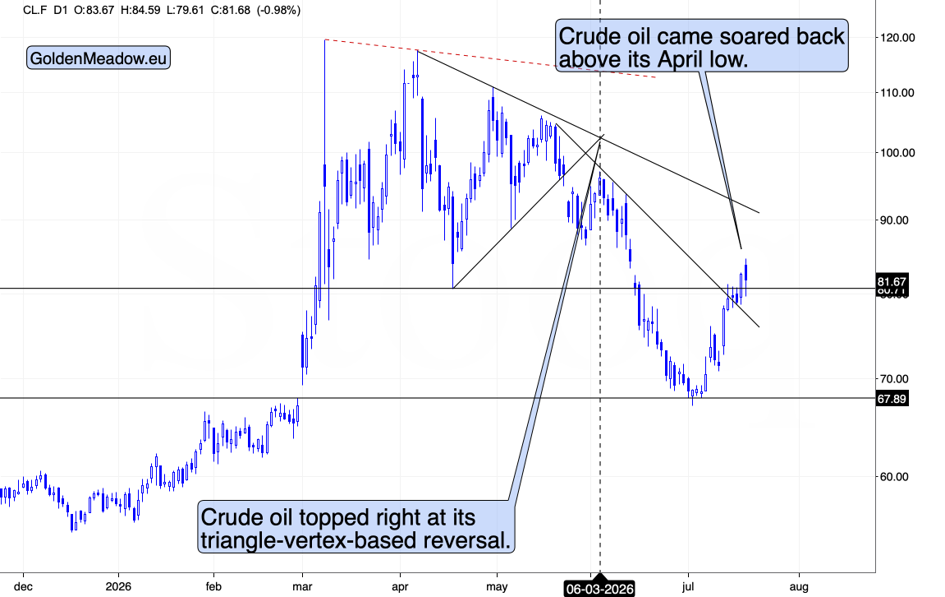
Technically, oil came back above its mid-April low, and it looks ready to soar.
Gold Price Forecast
Every new Gold analysis as it publishes, today's technical signal and key levels, live price — on one page.
See all Gold forecasts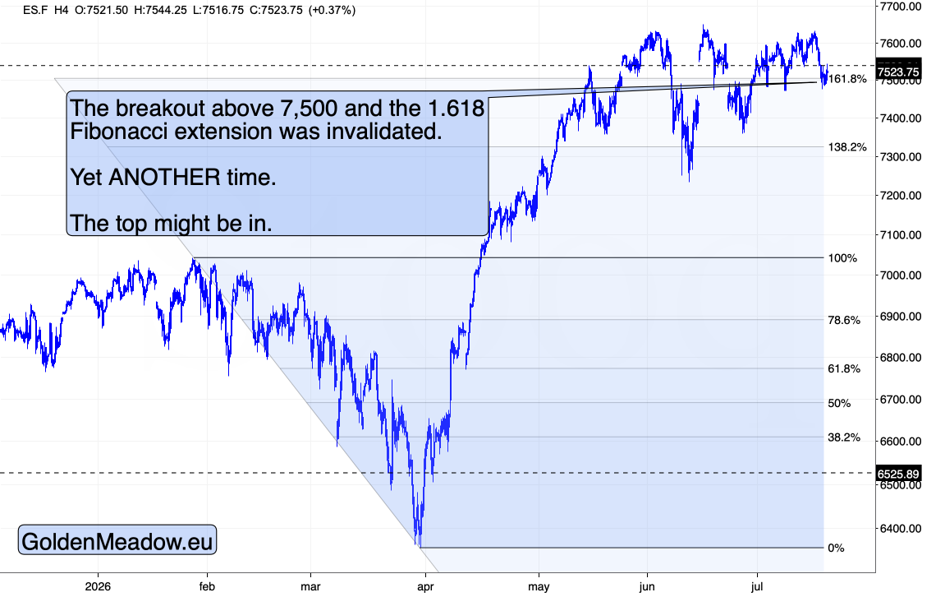
The SpaceX IPO Signaling a 2026 Top
The S&P 500 Index closed last week slightly below 7,500. It’s now trying to move above this level one more time, but it might have a really hard time doing so with rising oil prices and the fundamental situation in the Middle East looking terrible.
Also, do you remember how hyped investors were about the SpaceX IPO?
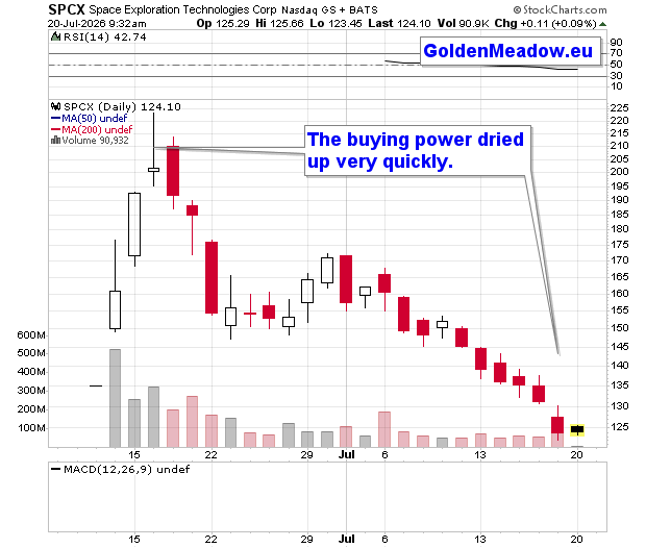
Three days.
That’s how long it took for the buying power to dry out.
This is very disappointing, and I’m viewing this as a topping sign for the whole market. That mid-June top in SpaceX corresponded to the top in the S&P 500 – it seems to me that both might have formed their own 2026 tops then – in tune with my expectations.
So, all in all, the loudest weekend of the war produced American deaths, a collapsed ceasefire, and oil at a one-month high, and gold could not hold thirty dollars of a bounce. A wider war does not make gold a safer haven. It makes the Federal Reserve a harder one. That is the whole story, and it has not changed once. The outlook for the precious metals market (as well as for non-energy commodities) remains bearish.
Thank you for reading today’s analysis – I appreciate that you took the time to dig deeper and that you read the entire piece. If you’d like to get more (and extra details not available to 99% investors), I invite you to stay updated with our free analyses – sign up for our free gold newsletter now.
Sincerely,
Przemyslaw K. Radomski, CFA


