


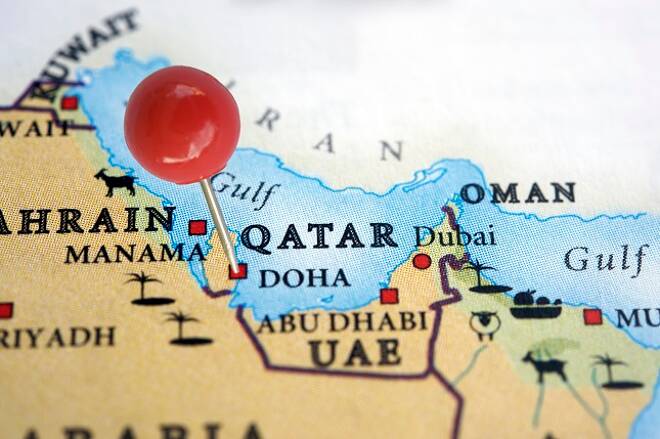
The world took a moment’s pause on Monday 5, June after the news that Saudi Arabia, the UAE, Egypt, Bahrain and Yemen officially cut off all ties with Qatar. Conflict in the area has been brewing for a while, mainly due to the unpopularity of the Emir of Qatar, amongst his neighbours, particularly Saudi Arabia. The Emir has been raising eyebrows for some time, due to his foreign policy; which aligned him to Saudi’s Shia rival, Iran. There was also the matter of Qatar’s alleged support of terrorism and supposed attempts to actively destabilise the region.
Mauritius, Mauritania, the Maldives and Libya have since followed the example set by Qatar’s gulf neighbours, cutting off all connections with the troubled country and giving Qatari citizens only two weeks to leave the GCC member states.
The result of Qatar being ostracised by its neighbours has been widely felt across the currency markets. On June 9 the Qatari Riyal traded at twelve-month lows on the futures market, after Moody’s announcement that they were downgrading their rating from AA3 to AA2. Moody’s move underscores the belief that Qatar’s economic position and its future growth prospects are now on shaky ground.
The S&P has mirrored the sentiment of its peers and rerated Qatar from AA to AA- and Fitch has put the troubled Gulf State on Ratings Watch Negative. In addition, buys on the Riyals came to a halt from Pakistani traders and numerous Sri Lankan banks, following the advice of their partners in Singapore.
Forex traders keeping an eye on the reports will have noticed that the USD spiked to a twelve-year high against the Riyal last week, oil prices are steadily on the decline and lingering anticipation over long-term sustainability of revenues in the region have resurfaced. This explains the lack of confidence from the investors, and several portfolio investment funds have left the country.
There are desperate times ahead for Qatar as the country grows very little of its own produce and depends largely on its Saudi alliance; Iran has already had to fly in food reserves. If the situation is to continue and a long-term solution is not found then Qatar could be in for a major crisis and the government will have to secure new trade deals quickly.
The outcast however, definitely has some aces up its sleeve, one being the gas and oil fields in Qatar; it is the world’s largest LNG exporter. In the worst case scenario, Qatar could (theoretically) hold the world to ransom by turning off the taps and wait to see if it reverses the noose around their necks in terms of embargos. It will take a while before they feel the heat, their government has an estimated $335 billion in its Sovereign Wealth Fund and this could mitigate some of the short- term economic repercussions.
The future looks bleak for the Arab state, how they deal with the underlying issues will determine the severity of the outcomes. What unfolds in the coming months is going to be of great interest not only to the forex trading industry, but to the world at large.

For up-to-the-minute market commentary from leading analysts, visit FXTM’s market analysis page.


