Stock Index Futures Edge Lower as Tech Sell-Off Continues
The major U.S. stock index futures are edging lower overnight on Friday. Some of the weakness is being fueled by follow-through selling after yesterday’s weak session. Some investors are also reacting to a drop in shares of Amazon, which fell following earnings. Investors are also taking early protection against a broader market sell-off, which has been the theme this week.
At 08:58 GMT, E-mini Dow Futures are trading 48957.00, down 41.00 or -0.08%. The E-mini S&P 500 Index is at 6808.50, down 12.25 or -0.18% and the E-mini Nasdaq-100 Index is trading 24549.25, down 101.75 or -0.41%.

Tech Giants Stumble Despite Strong Earnings
Thursday’s decline was linked to another steep drop in technology stocks. This was led by weakness in Alphabet after its better-than-expected earnings report, released Wednesday after the close, failed to stabilize the market. An 8.5% post-earnings drop in Qualcomm also contributed to the weakness.
Software Sector Faces Worst Week Since 2008
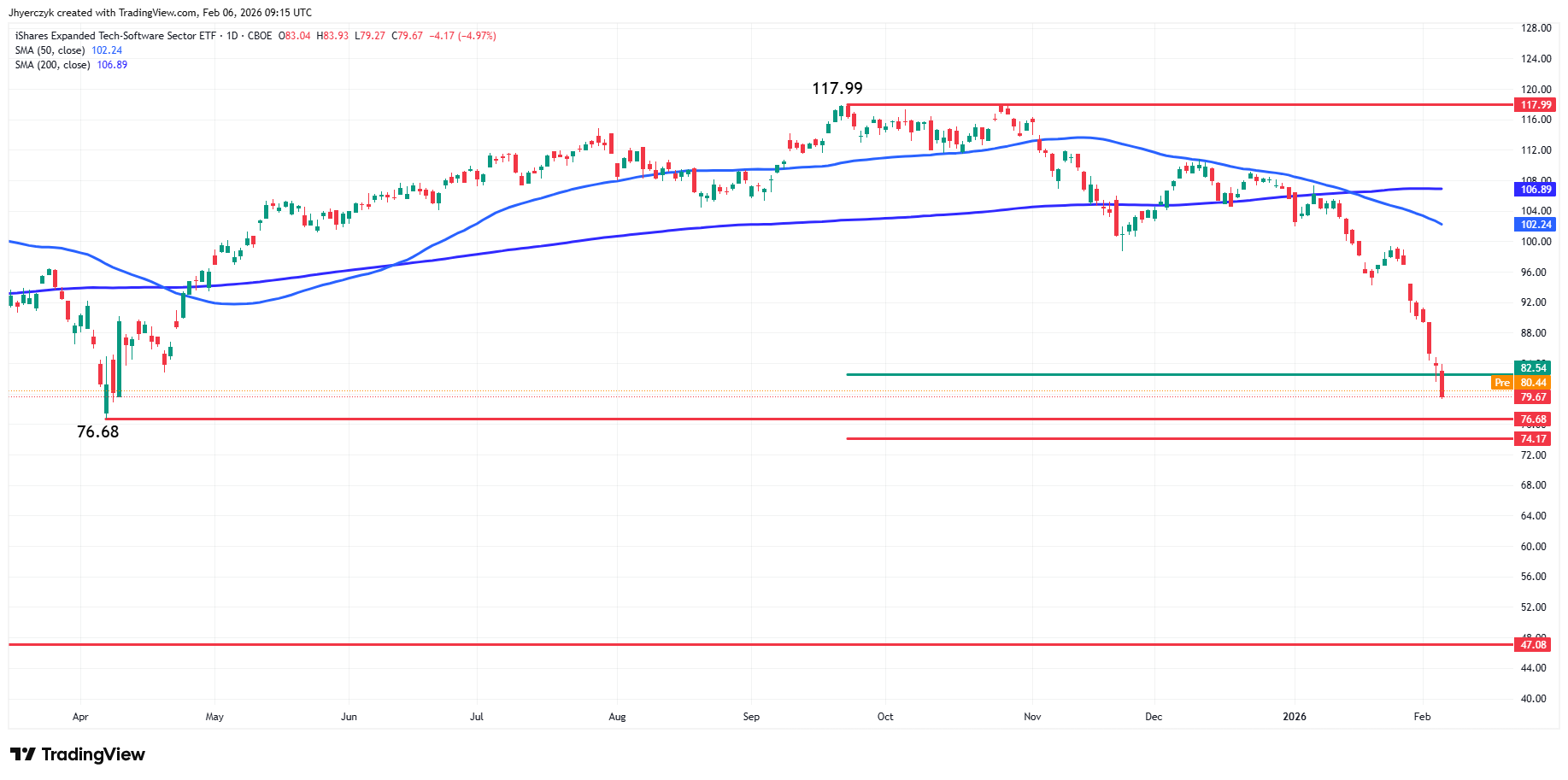
On Friday, traders will also be eyeing the iShares Expanded Tech-Software Sector ETF (IGV), which is down more than 11% this week. With its biggest weekly decline since 2008, many investors feel this ETF was the flashpoint that encouraged investors to dump shares in the other major technology sub-sectors. It wasn’t just profit-taking or a speculative bubble that started the sell-off—it’s based on real fear that AI will eventually replace software.
Amazon’s Spending Plans Rattle Investors
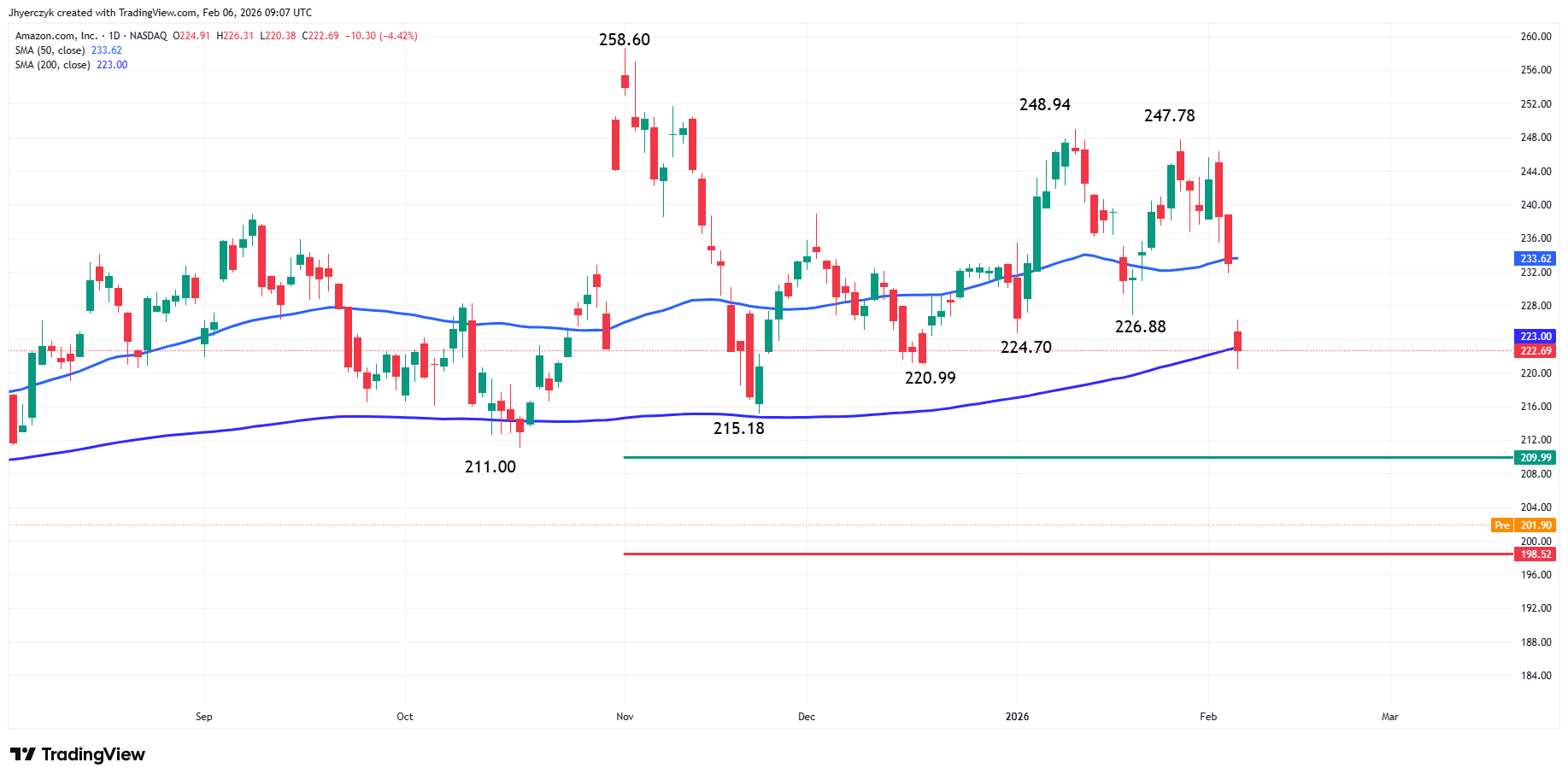
One stock that will be watched closely on Friday is Amazon. The size of the stock’s market influence and its distribution among investors is enough to turn the market around. Overnight, this hasn’t been the case, with shares dropping 11.5% in after-hours trading. Earnings were good, but the forecast to raise its capital expenditures by more than 50% this year to about $200 billion rattled investors enough to encourage them to sell.
The message Wall Street is delivering after this week’s sell-off is that throwing money at AI is not going to cut it like last year, and companies are going to have to start showing some financial returns.
E-mini Dow Straddles Key Support Level
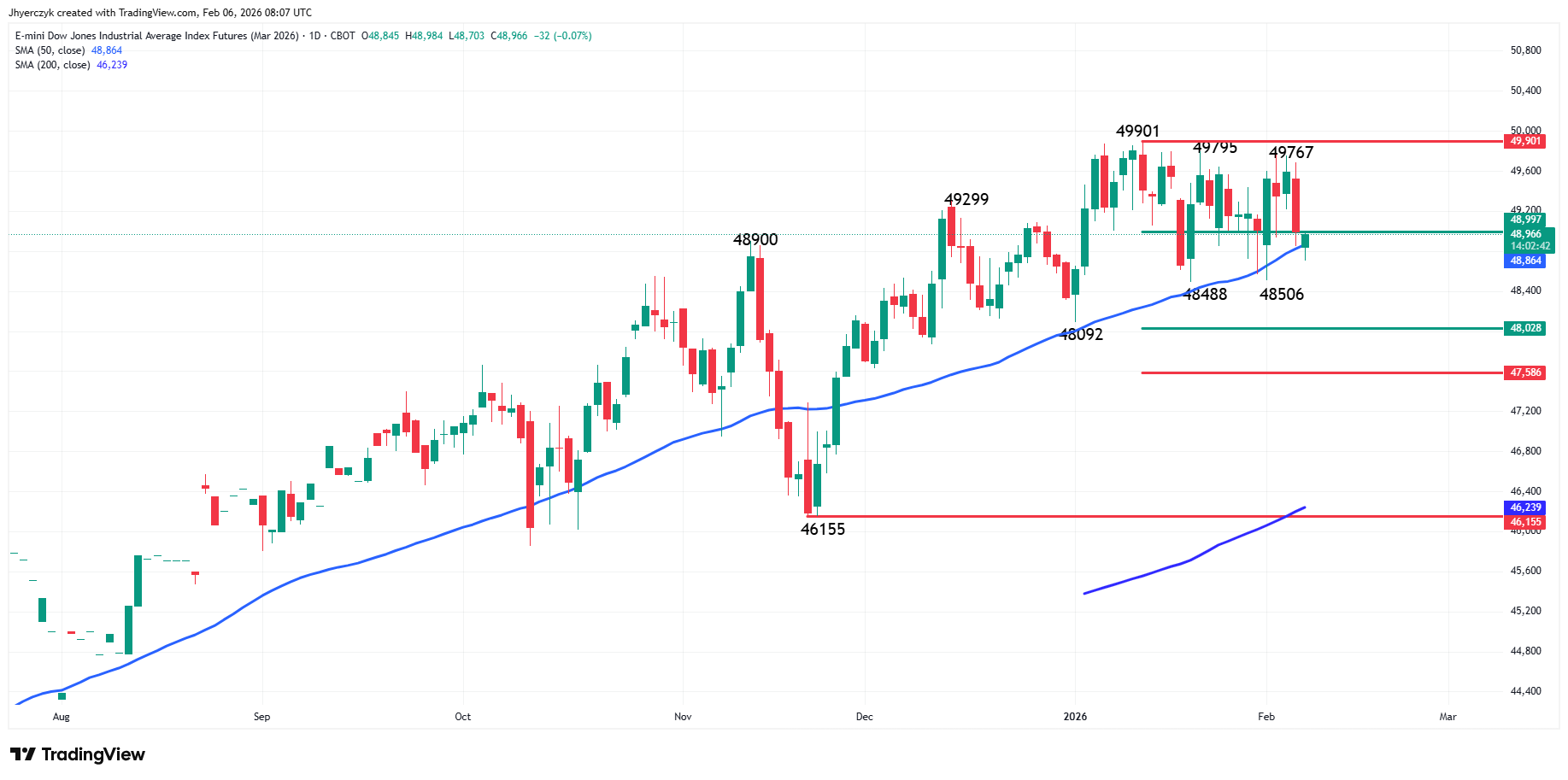
Ahead of the cash market opening, E-mini Dow futures are lower while straddling the 50-day moving average at 48864. This trend indicator has provided support three times in the past month at 48506, 48488, and 48092. In mid-November, a breakdown under this trend indicator led to a 4-day, 1000-point decline.
The E-mini Dow has been the stable index in 2026 as investors have been rotating from tech into industrial and material stocks. Holding above the 50-day moving average will signal the presence of buyers and keep the blue-chip index within striking distance of its record high at 49901. If 48864 fails as support, then prices could plunge into 48028 to 47586 support.
S&P 500 Trades Below Key Moving Average
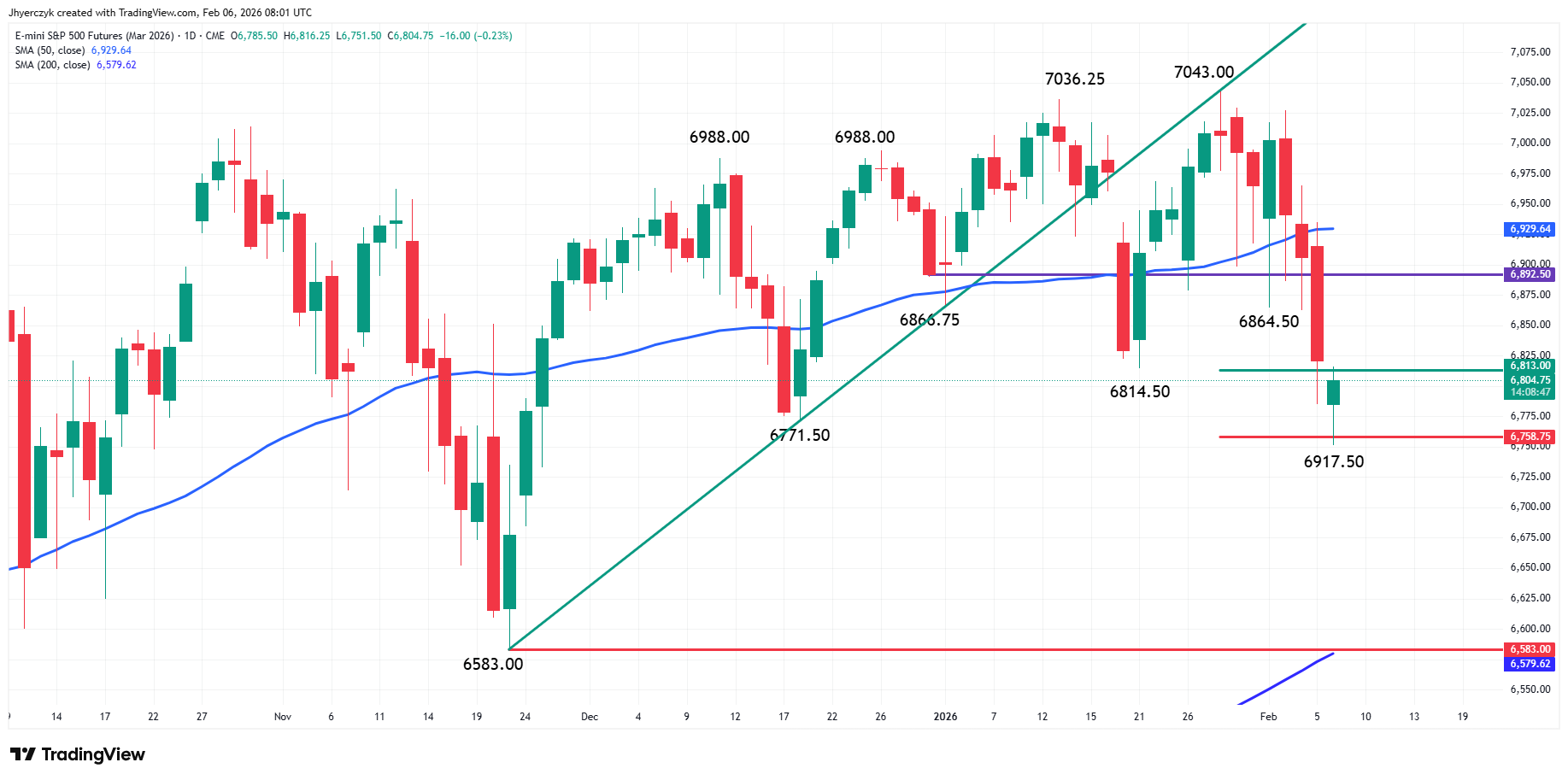
E-mini S&P 500 Index futures are lower overnight but off their low at 6917.50. With the benchmark index trading on the bearish side of the 50-day moving average at 6929.75 and lower for the year, we could see renewed selling pressure on rallies on Friday. A clean trade through the intraday low could trigger an acceleration into the support cluster formed by a bottom at 6583.00 and the all-important 200-day moving average at 6579.75.
Nasdaq-100 Tests Critical 200-Day Moving Average
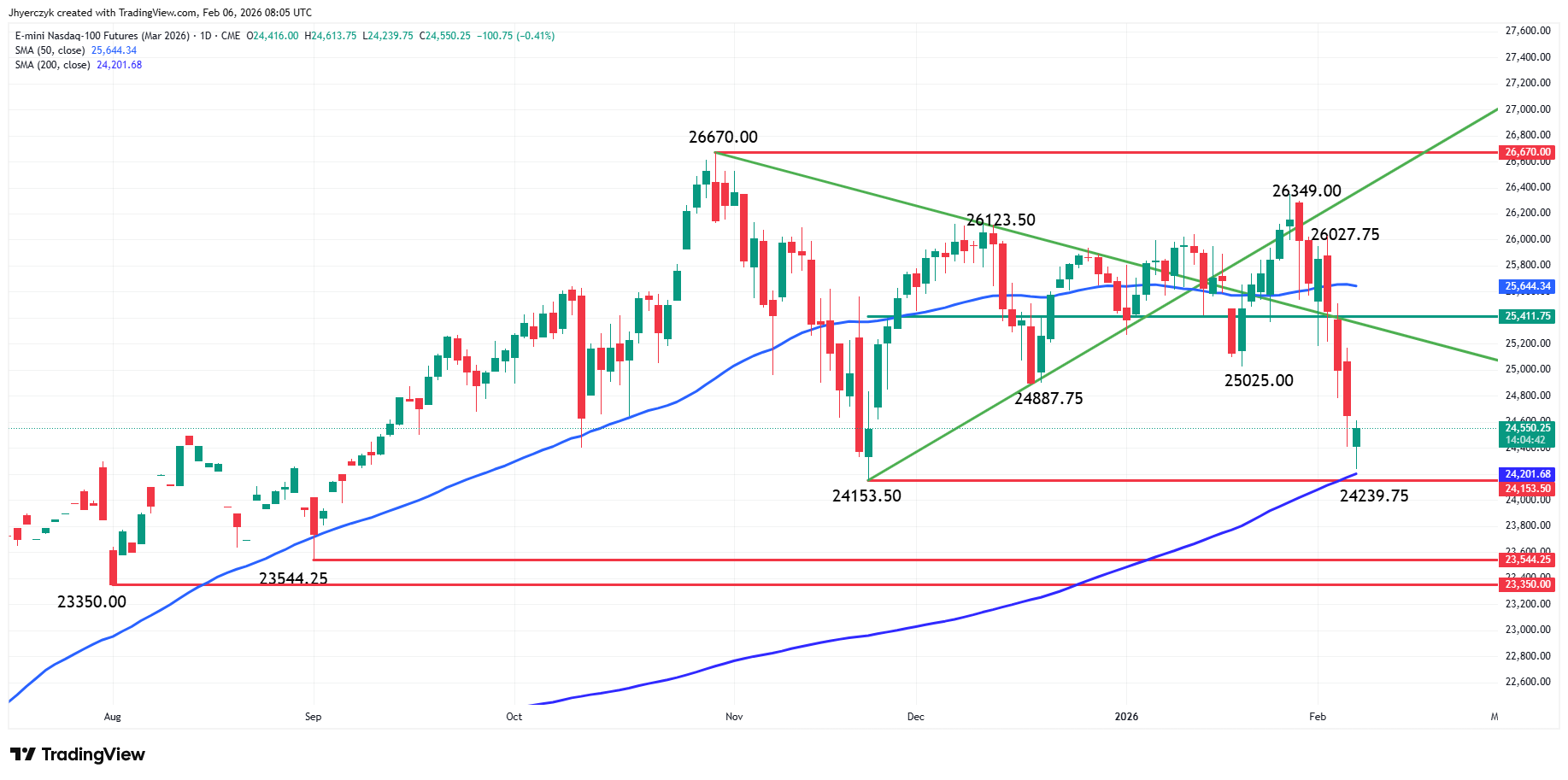
Conditions are worse in the E-mini Nasdaq-100 futures market. Today’s intraday low at 24239.75 comes in just above the 200-day moving average at 24201.75 and the November 21 main bottom at 24153.50. The daily chart shows that if support fails, the selling could accelerate into a pair of main bottoms at 23544.25 and 23350.00.
There’s really no clear upside target nearby, but with the trend down, traders are likely to be in “sell the rally” mode unless a successful test of the 200-day moving average produces a massive intraday reversal bottom.
More Information in our Economic Calendar.