US stock futures declined during the Asian market session on Friday, February 6, extending their losses from the previous day’s sell-off.
Concerns about returns on investment continued to weigh on sentiment after Alphabet (GOOGL) and Amazon.com (AMZN) announced sizable AI-related spending plans.
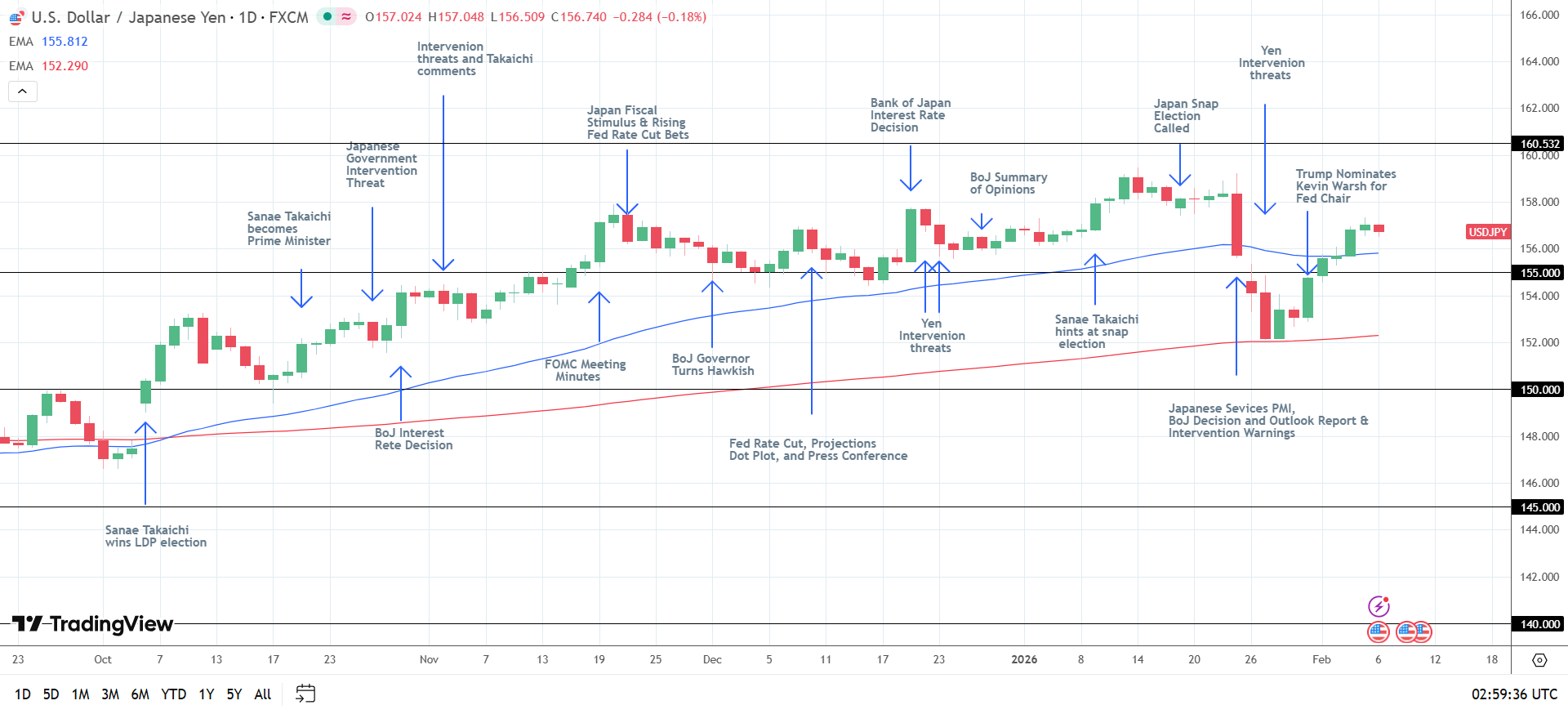
Meanwhile, hawkish Bank of Japan rhetoric strengthened the yen, adding to the negative sentiment. USD/JPY fell 0.18% to 156.740, leaving the Nikkei 225 in the red alongside the US equity futures.
While concerns about AI-related spending and returns on investment weighed on sentiment, rising bets on multiple 2026 Fed rate cuts support a medium-term outlook for US stock futures.
Below, I’ll outline the key market drivers, the medium-term outlook, and the technical levels traders should watch.

Bank of Japan Policymaker Calls for Rate Hikes
On February 6, Bank of Japan board member Kazuyuki Masu boosted bets on an H1 2026 rate hike, overshadowing weak Japanese economic data.
Masu stated:
“I am convinced that continuing with further policy interest rate hikes will be needed to complete the normalization of monetary policy in Japan.”
While concerned about inflation, he warned against raising rates too quickly, limiting the yen’s gains and impact on risk assets.
Earlier in the day, Japanese household spending fell sharply in December, reflecting the effects of higher import prices on households’ purchasing power. The BoJ has hinted at rate hikes to combat the effect of yen weakness on import prices, which is also a concern among lawmakers.
Commenting on yen weakness, Masu stated:
“Due attention should be paid to whether inflation triggered by the yen’s depreciation may raise people’s inflation expectations and, in turn, affect underlying inflation, which I will touch on later. The Bank, therefore, carefully monitors developments in the foreign exchange market and their effects on economic activity and prices in Japan.”
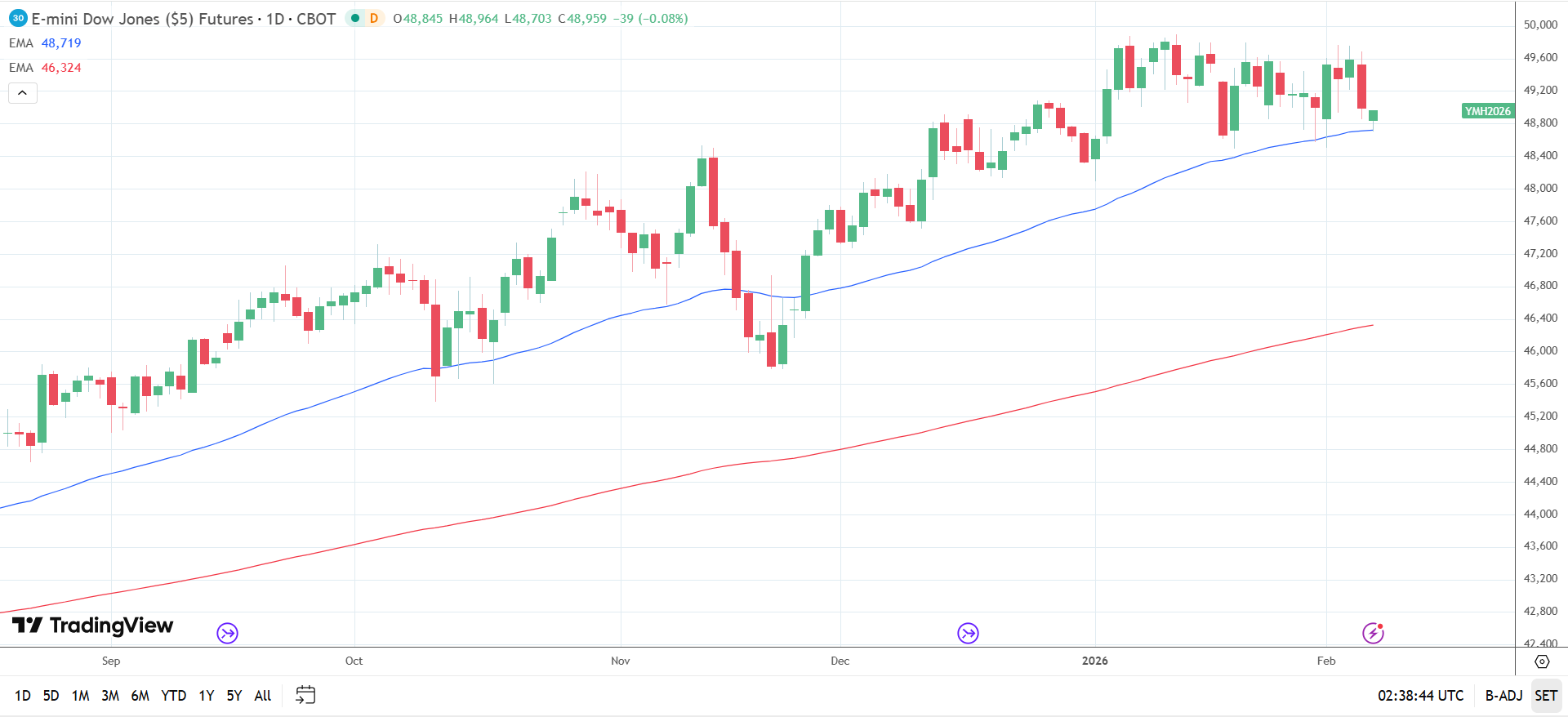
A hawkish BoJ and a dovish Fed signals narrowing US-Japan rate differentials in favor of the yen. Narrower rate differentials may make yen carry trades into US assets less profitable. This scenario may trigger yen carry trade unwinds as seen in mid-2024.
Dow Jones Price Forecast
Every new Dow Jones analysis as it publishes, today's technical signal and key levels, live price — on one page.
See all Dow Jones forecasts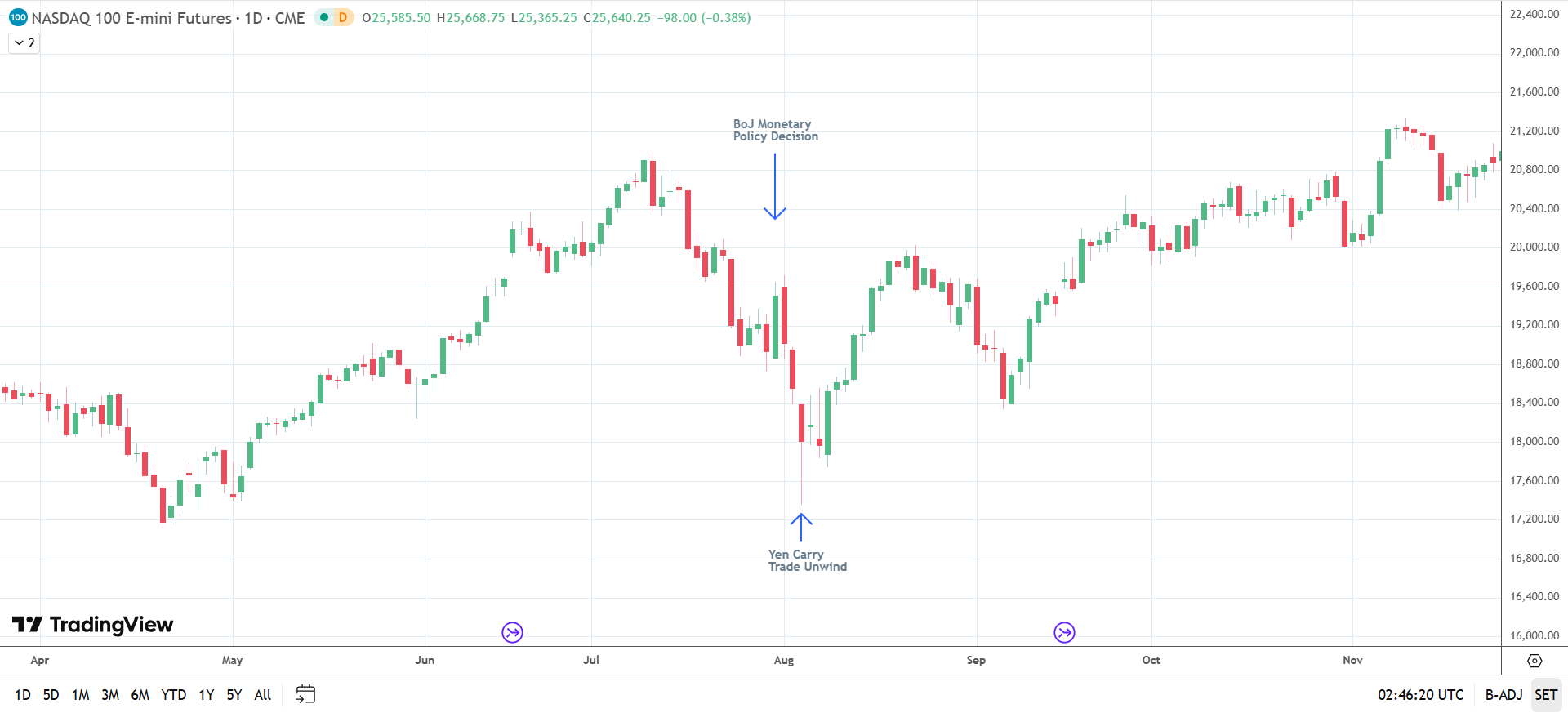
US Consumer Sentiment in Focus
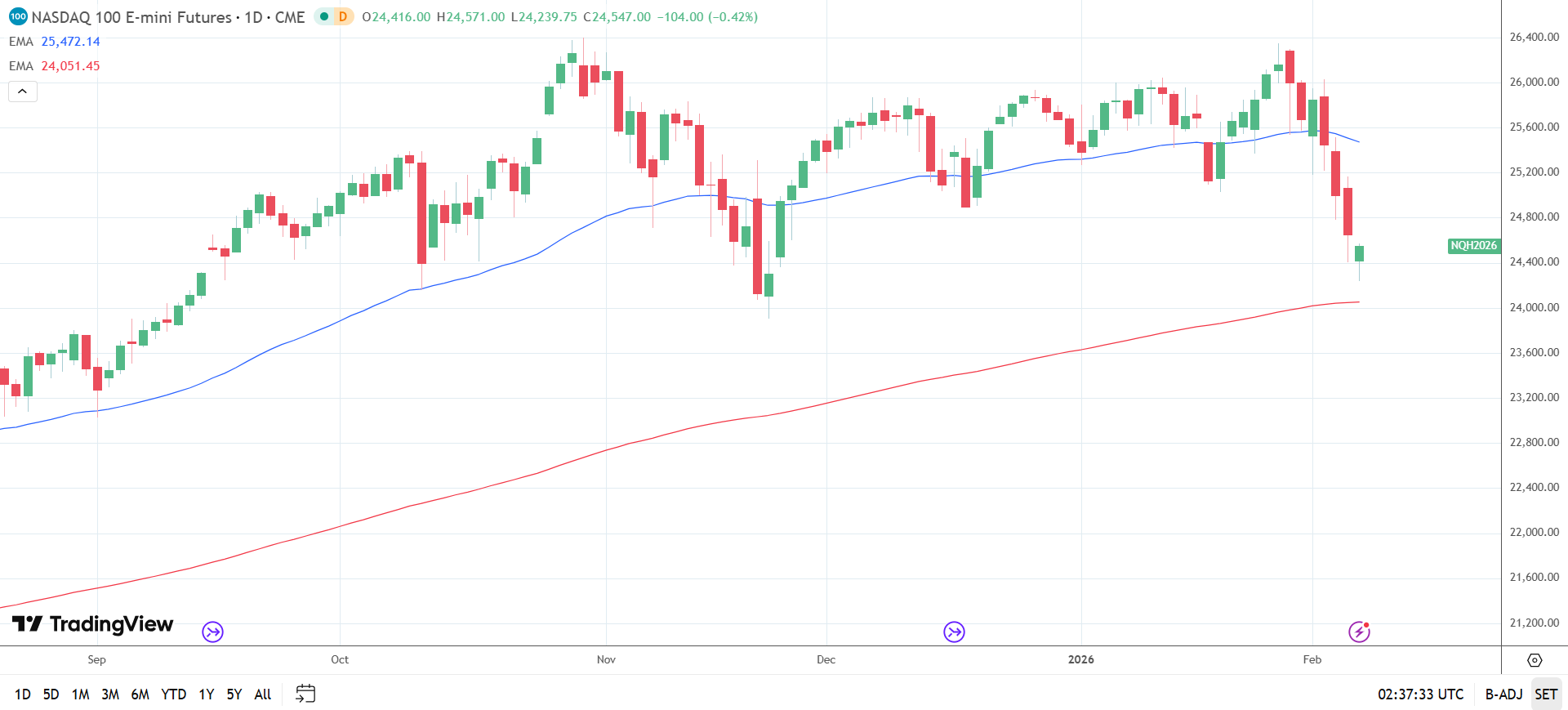
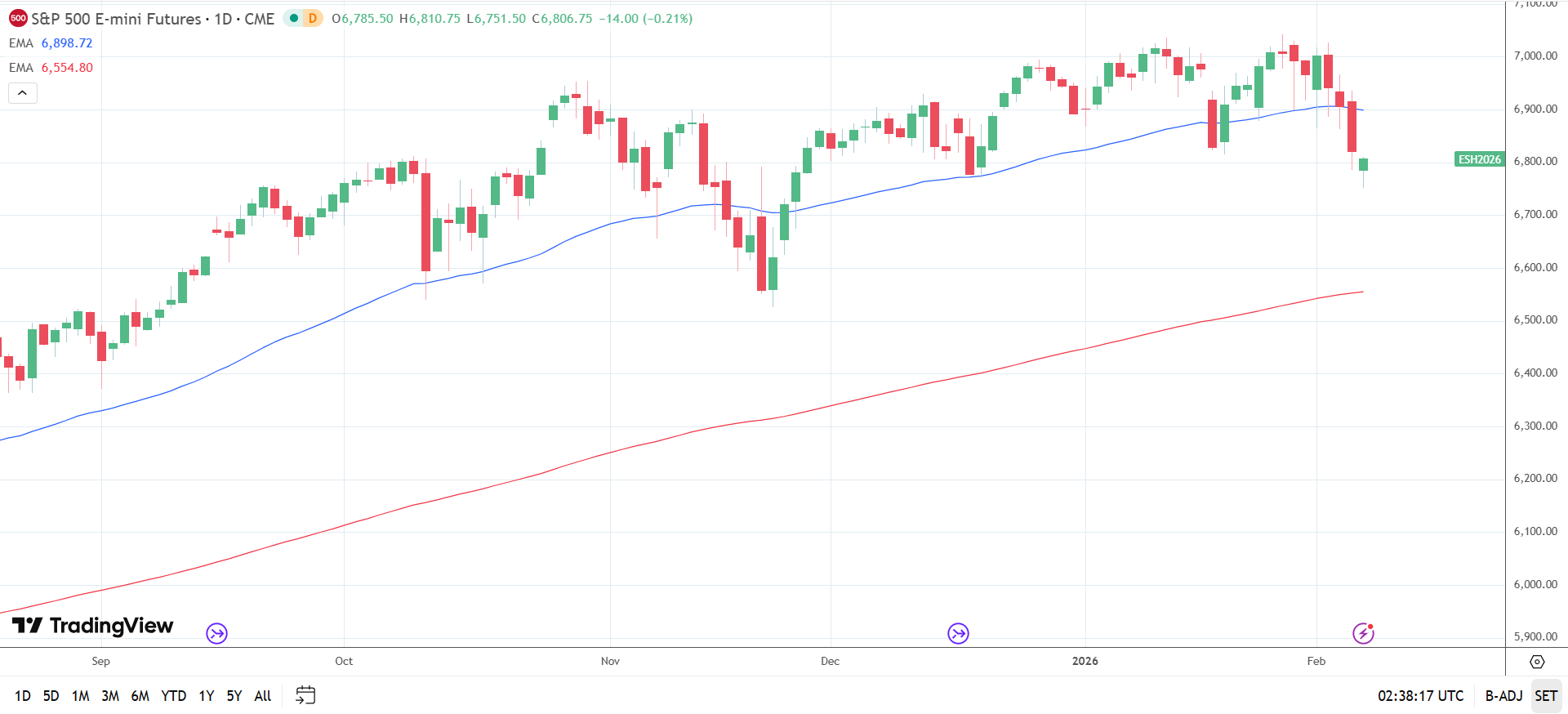
US futures were under pressure during the Asian session on February 6. The Dow Jones E-mini dropped 39 points, while the Nasdaq 100 E-mini and the S&P 500 E-mini declined 104 points and 14 points, respectively.
Later on Friday, the University of Michigan’s Surveys of Consumers will influence market sentiment. Economists expect the Michigan Consumer Sentiment Index to drop from 56.4 in January to 55.0 in February. A lower reading would signal a pullback in consumer spending, adversely impacting the US economy. For context, private consumption accounts for around 65% of US GDP.
Market sensitivity to today’s data will likely be heightened following the weaker-than-expected overnight US labor market data, which sent risk assets such as XRP sharply lower overnight.
AI-related spending concerns and weak US economic data sent US stock futures lower overnight, supporting a bearish short-term outlook. Nevertheless, expectations of an H1 2026 Fed rate cut affirm the bullish medium-term outlook.
According to the CME FedWatch Tool, the chances of a June Fed rate cut jumped from 57.5% on February 4 to 77.1% on February 5. Given the shifting sentiment toward the Fed rate path, traders should closely monitor FOMC members’ speeches. Rising support for a Fed rate cut would lift sentiment.
Key Technical Levels for Dow Jones, Nasdaq 100, and S&P 500
This week’s pullback left the Nasdaq 100 E-mini and the S&P 500 E-mini trading well below their 50-day EMAs, while holding above their 200-day EMAs. The EMA positions indicated a bearish near-term, but bullish longer-term outlook. Meanwhile, the Dow Jones E-mini held above its 50-day and 200-day EMAs, signaling a bullish bias, aligning with positive fundamentals.
Near-term trends will hinge on geopolitical risks, earnings, US economic data, and central bank chatter. Key levels to monitor include:
Dow Jones
- Resistance: 49,000, 49,500, and then the January 13 record high of 49,901.
- Support: the 50-day EMA (48,719), and then 48,500.
Nasdaq 100
- Resistance: 25,000, the 50-day EMA (25,472), and then the October 30 record high of 26,399.
- Support: 24,500 and then the 200-day EMA (24,052).
S&P 500
- Resistance: the 50-day EMA (6,899) and then the January 13 high of 7,036.
- Support: the 200-day EMA (6,555).
Outlook: Rate Cut Bets Support Bullish Sentiment
In my opinion, the short-term price outlook remains bearish. However, expectations of an H1 2026 Fed rate cut and positive sentiment toward broader Q4 earnings reinforce the bullish medium-term outlook. These fundamentals align with longer-term technicals for US index futures.
However, several factors would test the bullish medium-term outlook, including:
- Rising geopolitical risks. Crucially, the US and Iran enter negotiations in Oman today.
- The Bank of Japan declares a higher-than-expected neutral interest rate (potentially 1.5%-2.5%). A sharply narrower US-Japan rate differential may trigger a yen carry trade unwind. Such an event would affirm the bearish short-term outlook.
- US economic data fuels recession jitters and/or Fed speakers temper bets on multiple Fed rate cuts in 2026.
- Corporate earnings and outlooks disappoint.
Conclusion: Constructive Bias Intact
In summary, expectations of Fed rate cuts, earnings, and a cautious BoJ reinforce the medium-term outlook for US stock futures.
However, traders should monitor BoJ policy guidance, yen intervention threats, and USD/JPY trends. Hawkish BoJ rhetoric, a dovish Fed policy stance, and more intervention warnings could push USD/JPY toward 150, potentially triggering a yen carry trade unwind.
Despite risks of a yen carry trade unwind, US stock futures are likely to test new highs if the Fed signals an H1 2026 cut. Fed rate cuts are likely to counter yen carry trade risks, given the longer-term effects of lower borrowing costs on corporate earnings and valuations.
Follow our live coverage and consult the economic calendar for real-time market updates.