


The meeting of the Bank of England (‘the BoE’) on 5 February brought traders a significant surprise in the form of greater dovishness than predicted among the Monetary Policy Committee (‘the MPC’). The aftermath saw the pound decline, in some cases sharply, against most other currencies. This article summarises the reaction to the BoE’s statement and press conference, then looks briefly at the charts of GBPUSD and GBPJPY.
As widely expected, the BoE held its bank rate at 3.75% on Thursday, 5 February. However, the MPC was more divided than predicted, with four members voting to cut and five to hold. The consensus before the meeting had been 2-7 against cutting. The minutes of the meeting showed significant divergence in opinion on inflation among the MPC, although the hawks eventually won out, due in part to the recent rise in the annual headline rate of inflation:
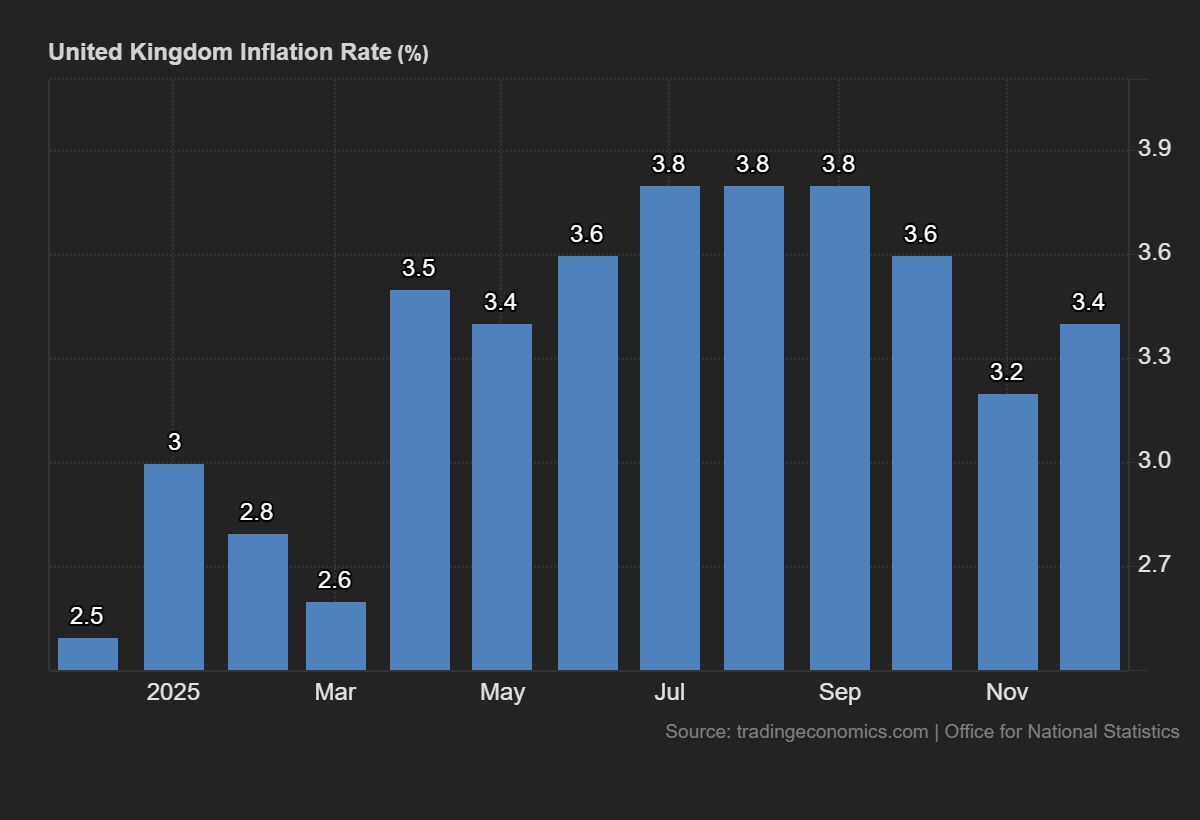
December’s 3.4% wasn’t much above the consensus of 3.3% but it was still a larger acceleration than expected and seemed at least initially to complicate expectations for two cuts by the BoE in 2026. Some forecasts point to about 3% for January’s inflation, but looking further ahead, there might be some inflationary pressure from recent gains in crude oil affecting prices at the pumps.
The BoE still expects annual headline inflation to reach the target of 2% this year. This might seem questionable, but for the clear signs of a persistent slowdown in the British job market:
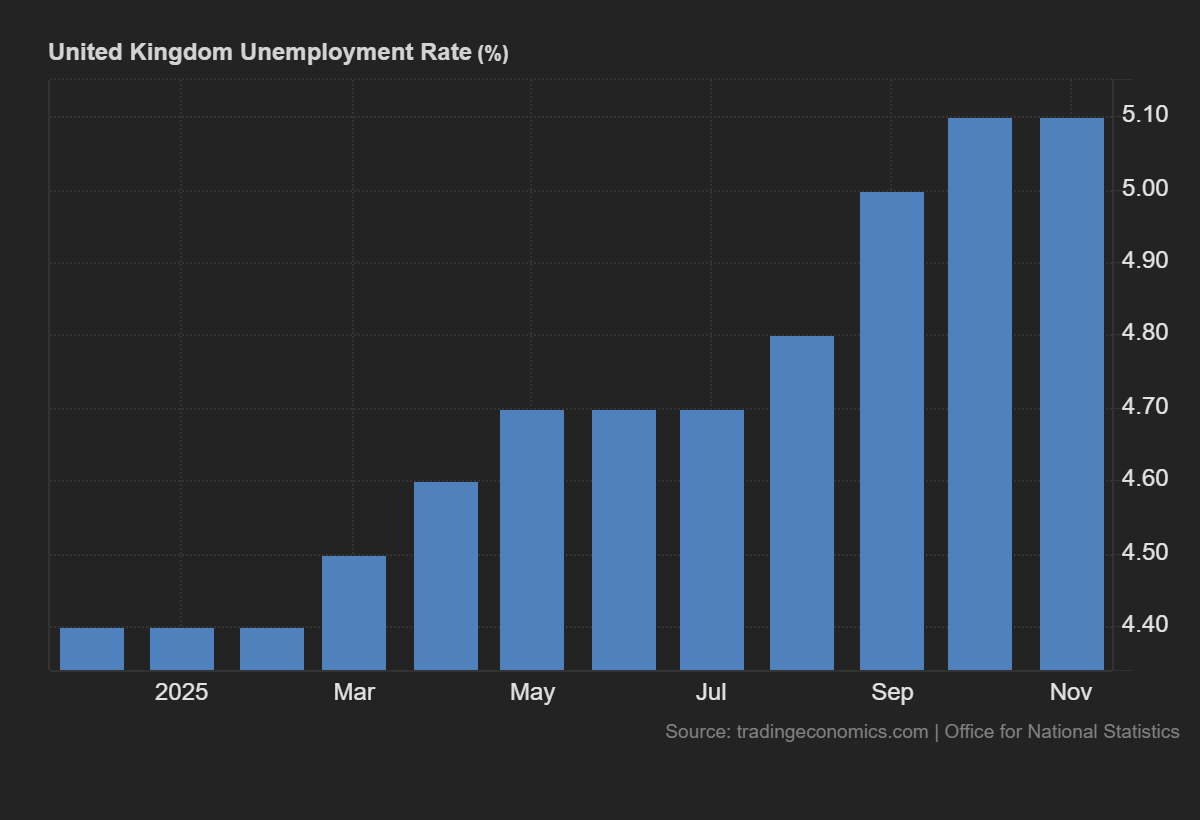
Although actual releases of British unemployment lag significantly more than most other major countries, there’s no immediate indication that the rate of joblessness might drop significantly in the first quarter of 2026. 5.1% in November is a high of more than five years, which would usually suggest lower consumer confidence and spending.
The rush to price in three cuts by the BoE in 2026 led the pound to drop significantly across the board. It now seems that the British inflation for January, to be released on 18 February, is a particularly important release that might affect the path of rates significantly. Participants in general now expect the bank rate to reach 3.5% on 19 March and 3.25% on 18 June.
Cable Tumbles After the BoE; $1.35 in Sight
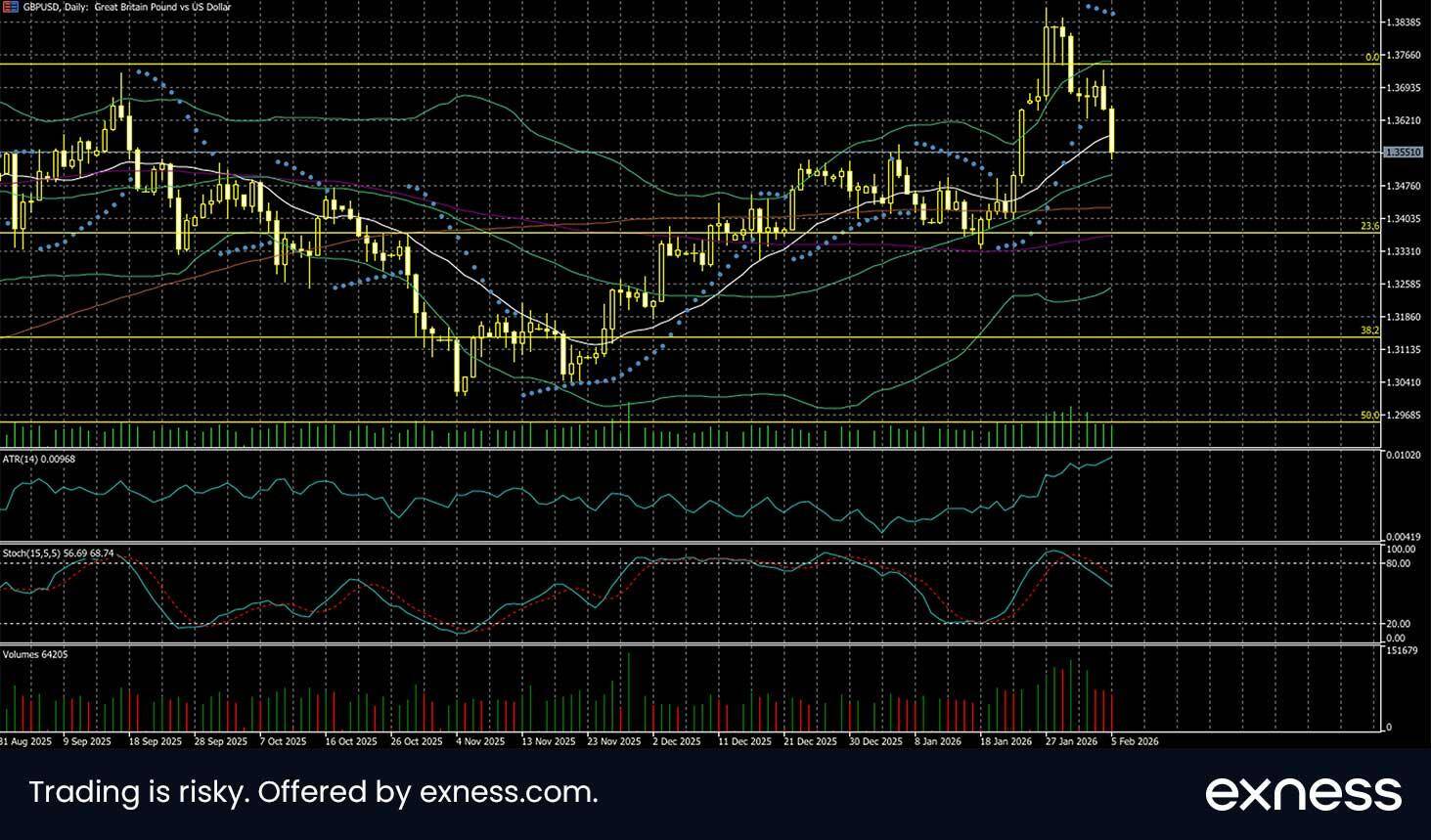
Cable declined strongly below $1.36 to reach lows of about a fortnight after the BoE held rates, but appeared clearly more dovish than expected. Political intrigue in Britain has also affected sentiment on the pound negatively in recent days as the prime minister faces further scrutiny over his relationship with Peter Mandelson. However, recent job data from the USA were broadly negative, so the focus is primarily on the pound’s weakness rather than the dollar’s strength.
As of the early evening GMT on 5 February, cable is on track for its largest daily loss since September 2025, with more possible in the near future. There was a clear downward crossover of the slow stochastic in overbought at the end of January and so far it seems that the 20 SMA isn’t a significant dynamic support, but confirmation should be sought from completion of 5 February’s period. Volume has increased since late last month, and ATR reached its highest since last summer, suggesting a possibly extended retracement lower.
The 23.6% weekly Fibonacci retracement around $1.337 is a possible static support, but before that, the 200 SMA, slightly above $1.34, might cap losses depending on the news. Traders are likely to concentrate on the rearranged NFP on 11 February and American inflation on 13 February; weaker releases from these might mean a bounce at least temporarily.
Pound-yen Retreats from Long-term Highs
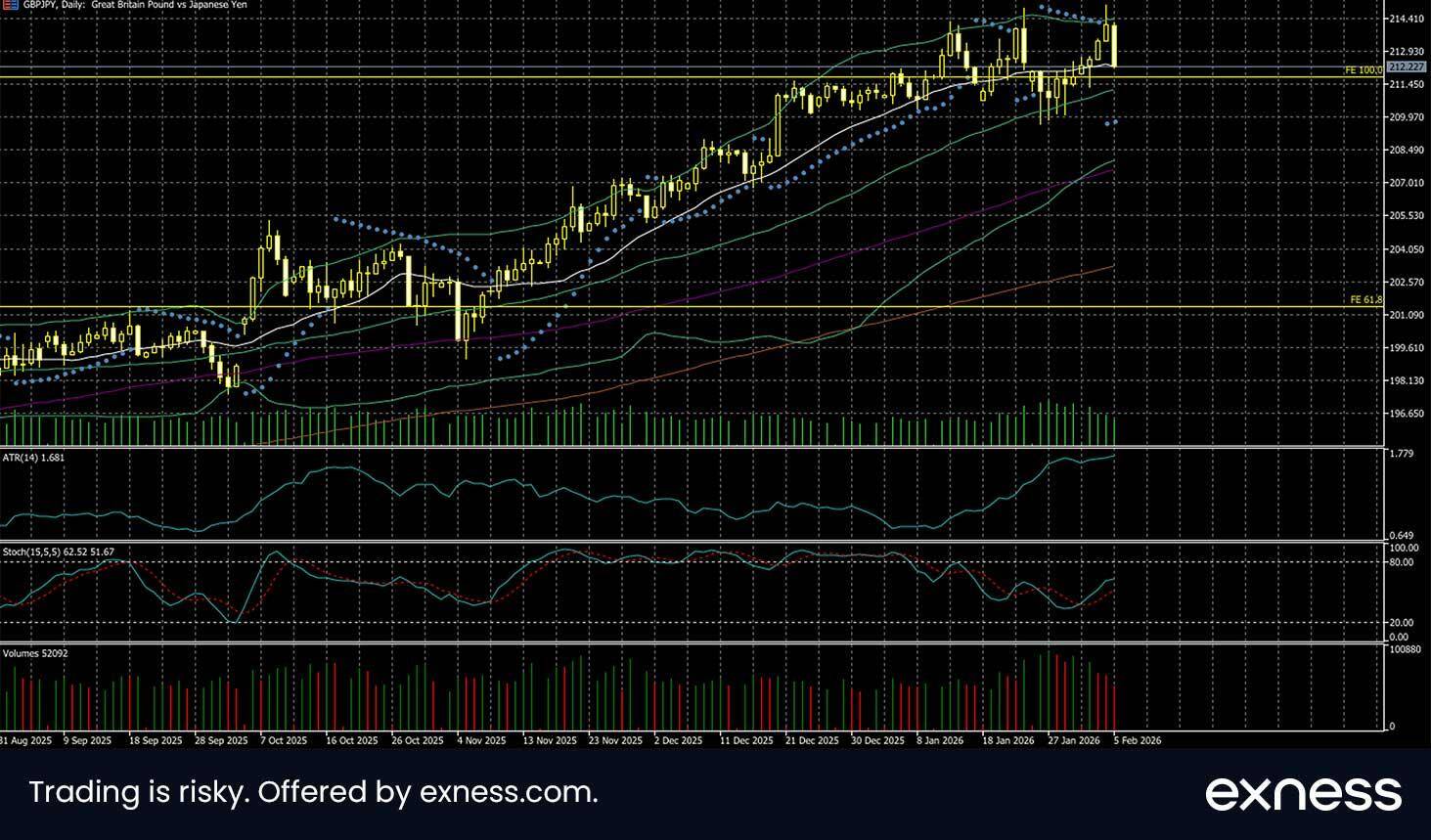
The apparently greater dovishness from the BoE on 5 February pushed the pound down in most of its pairs, including the yen. However, broad fundamentals don’t clearly favour the yen either, with upcoming elections in Japan at which the government might receive further popular support for more accommodative fiscal policy. Nevertheless, traders remain focused on the possibility of an intervention by the BoJ and possibly the Japanese government if dollar-yen reaches ¥160 again.
With the price not having definitely broken through the 20 SMA yet, it’s difficult to determine a favourable entry to buy or even whether this might be the beginning of a correction, and selling could be better. A double top could suggest losses to come, but this interpretation isn’t supported yet by indicators (primarily moving averages as dynamic supports) or volume.
¥220 remains a candidate for the next medium to longer term resistance, but buying in here and now seems highly questionable. The 50 SMA from Bands around ¥211 is a possible dynamic support, having overlapped with four consecutive tails from 26 January. Tuesday, 12 February’s preliminary British GDP for Q4 2025 might give a clearer direction or possibly a better opportunity to enter if buying.
This article was submitted by Michael Stark, an analyst at Exness.
For the latest analysis, ideas for trading and more, follow Michael on X: @MStarkExness.
The opinions in this article are personal to the writer; they do not represent those of Exness. This is not a recommendation to trade.