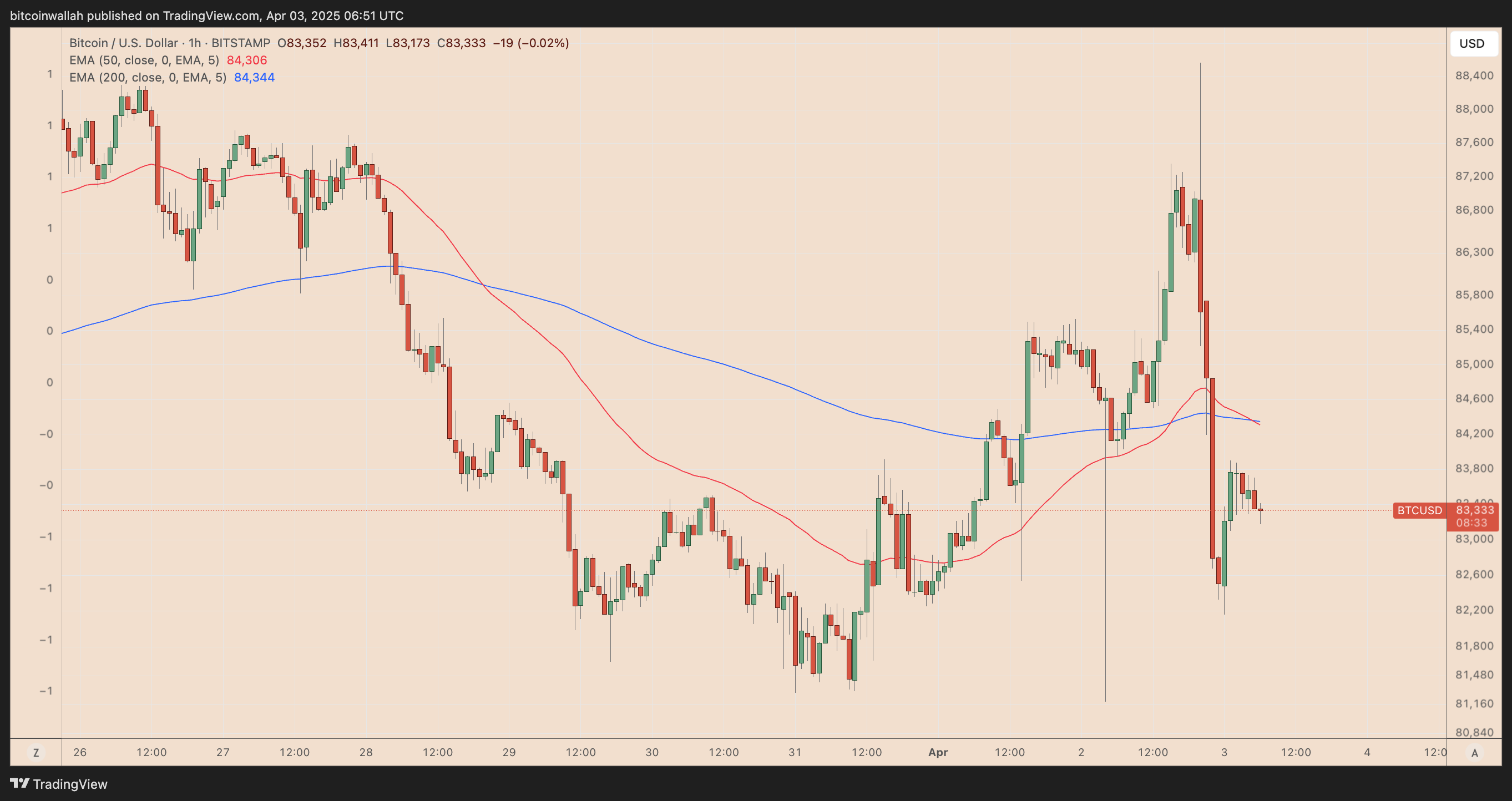
Bitcoin (BTC) was sheepishly bouncing on April 3, a day after U.S. President Donald Trump announced a tariff offensive against the country’s biggest trading partners.
But today’s 2% bounce should not excuse traders from going all-in on bullishness. Instead, they must practice caution, given how Trump’s tariffs can deepen the economic crisis. The hints are visible in the Smoot-Hawley Tariff Act of 1930.

What is the Smoot-Hawley Tariff Act of 1930?
The Smoot-Hawley Tariff Act of 1930 is a poignant example of how protectionist measures can inadvertently exacerbate economic downturns.
Enacted in June 1930, the Smoot-Hawley Tariff Act raised U.S. import duties to protect American farmers and businesses from foreign competition. The intention was to safeguard domestic industries.
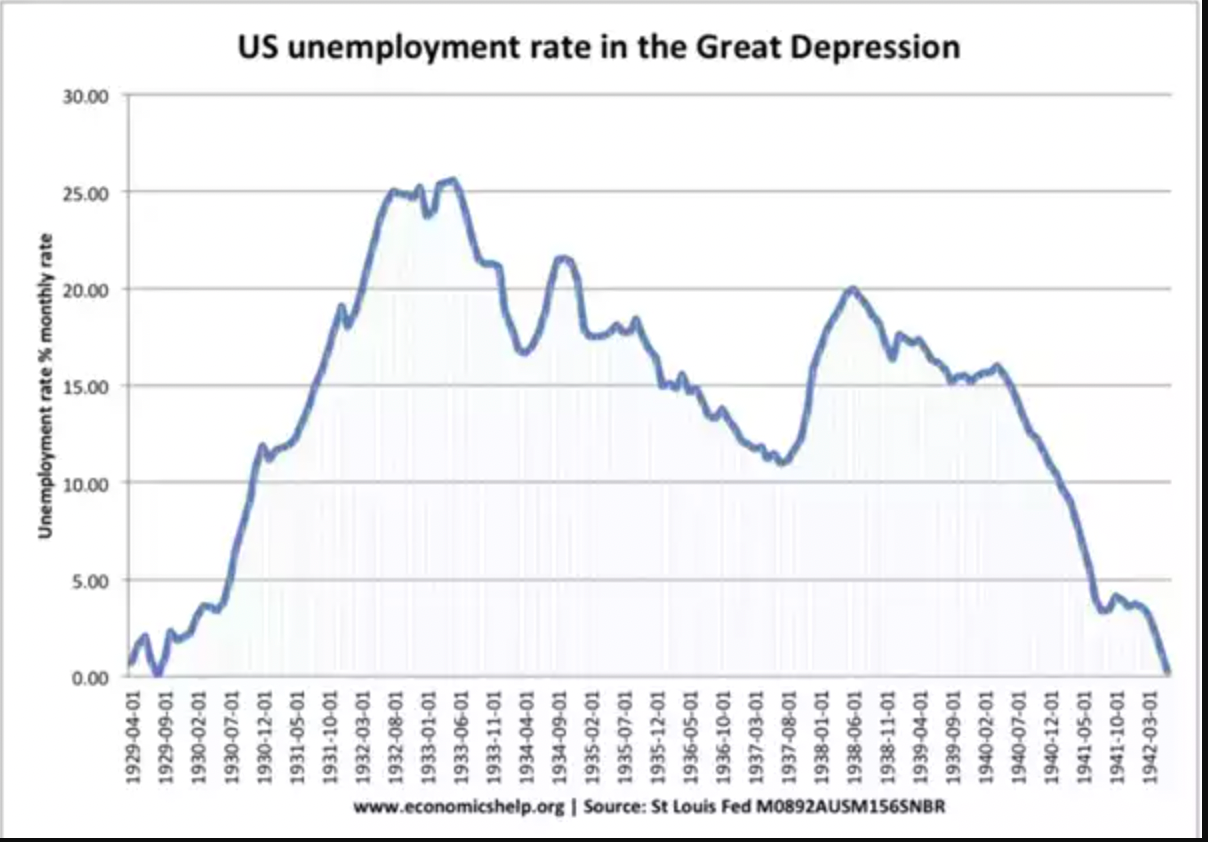
However, the act led to retaliatory tariffs from over 25 countries, resulting in a dramatic 66% decline in global trade between 1929 and 1934. This contraction severely deepened the Great Depression, with U.S. unemployment soaring from 8% to over 25%.
Stock Market Reaction
The stock market responded negatively to the tariff legislation. As the bill progressed through Congress, investor anxiety intensified. Notably, the Dow Jones Industrial Average experienced significant declines:
Bitcoin Price Forecast
Every new Bitcoin analysis as it publishes, today's technical signal and key levels, live price — on one page.
See all Bitcoin forecasts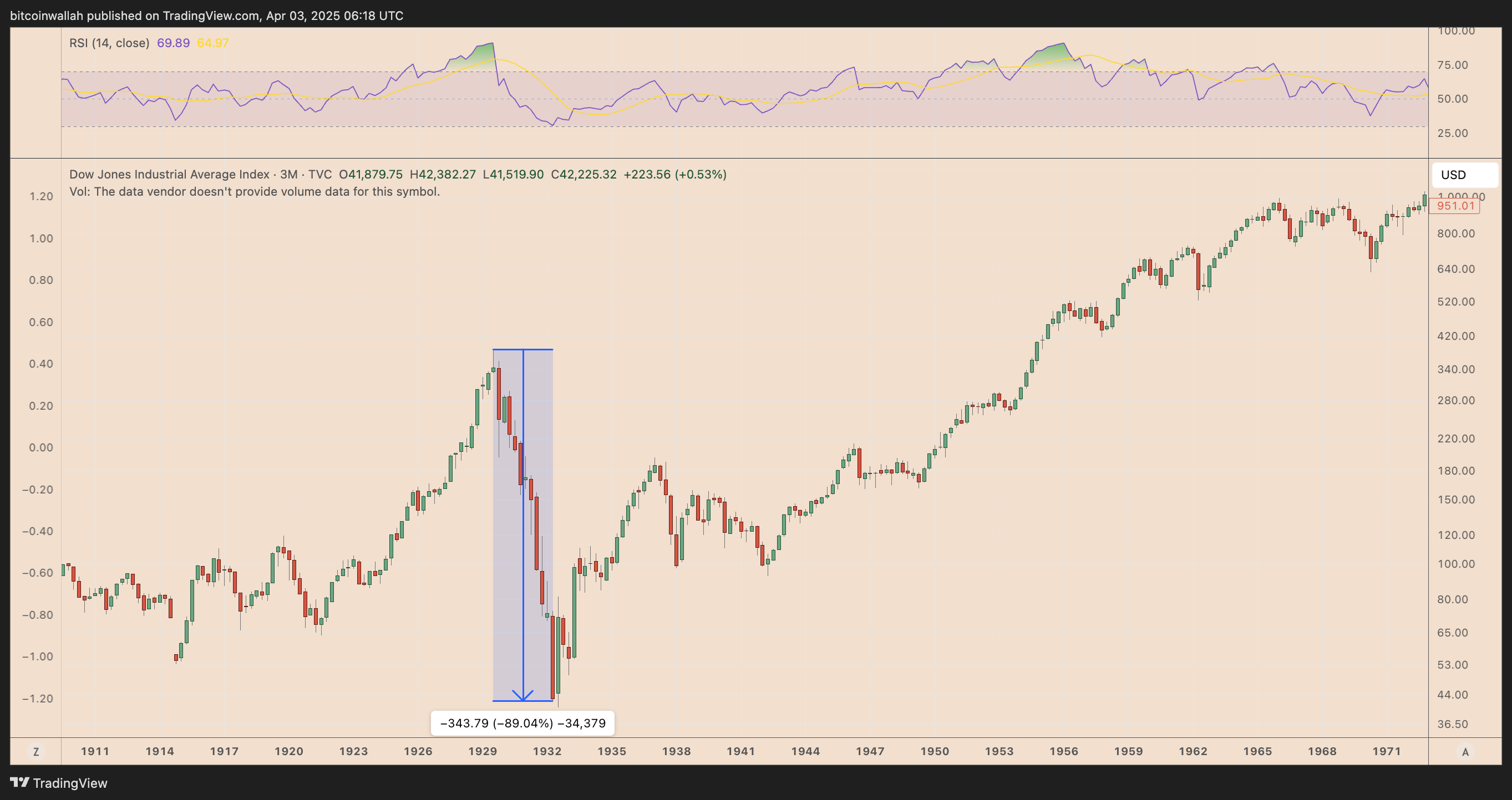
These declines reflected investor fears that heightened tariffs would stifle international trade and economic growth.
Parallels to Trump’s 2025 Tariffs
On April 2, 2025, President Trump announced sweeping tariffs, including a 10% baseline on all imports and higher rates for specific countries—46% on Vietnam, 34% on China, 24% on Japan, and 20% on the European Union.
The move, aimed at addressing trade imbalances, draws comparisons to the Smoot-Hawley Act due to its potential to incite retaliatory measures and disrupt global trade, further due to how the risk markets have reacted to the news.
S&P 500 futures plunged by over 3.5%. Meanwhile, the Nasdaq 100 contracts dropped 4.5%. Treasury futures surged, with the demand for haven assets lifting the Japanese Yen and Gold.
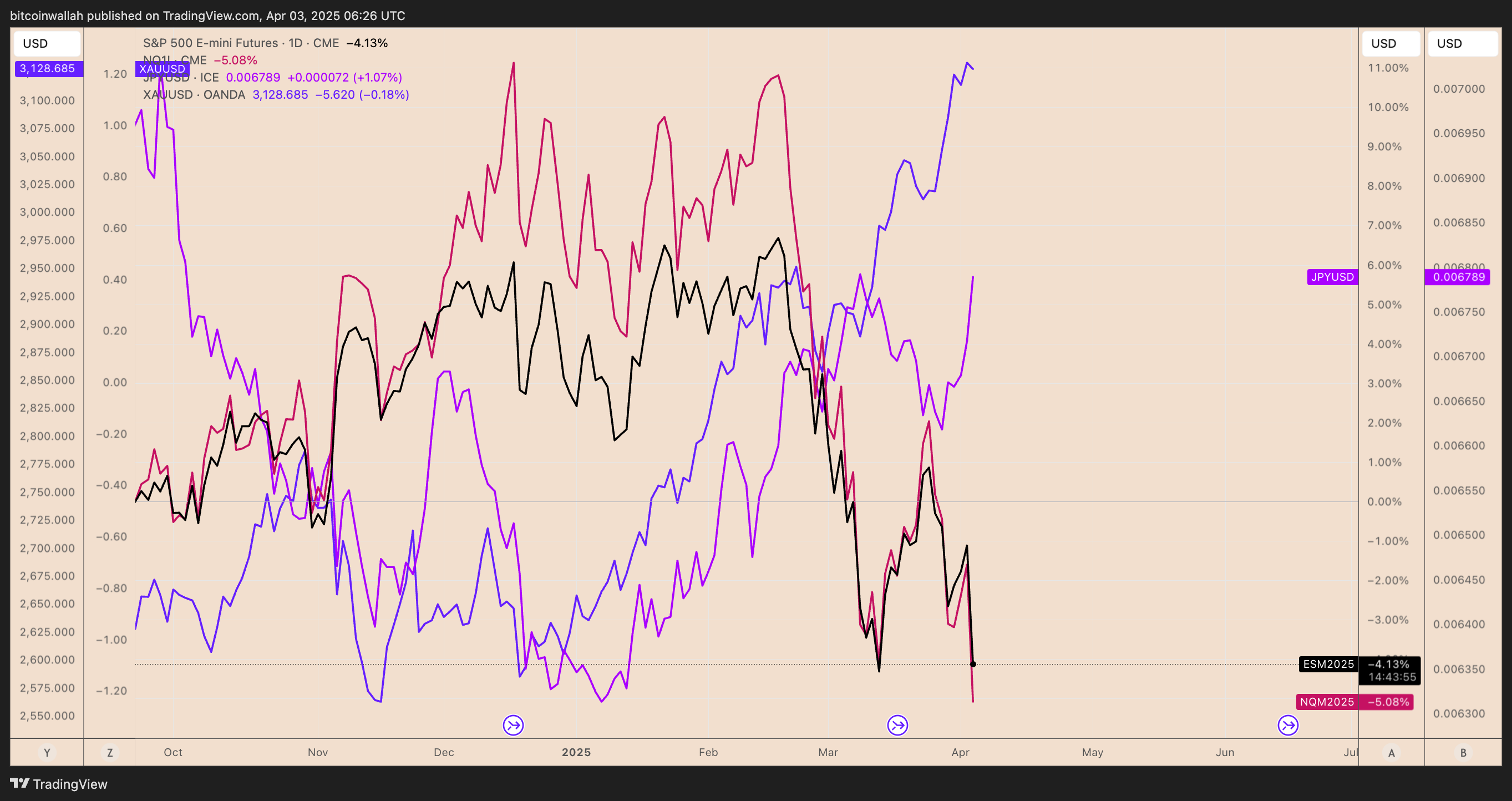
Investors expressed concerns that these tariffs could lead to increased inflation, disrupted supply chains, and slowed economic growth—factors that could precipitate a recession.
Goldman Sachs, for instance, has increased the probability of a U.S. recession in the next 12 months to 35%, citing tariff impacts on inflation and GDP growth. Similarly, analyst Jeffrey Frankel has highlighted trade tensions as a significant recession threat.
Implications for Bitcoin Traders
The cryptocurrency market—particularly Bitcoin—is no longer the uncorrelated hedge it was once believed to be. Since the COVID-19 market rout in March 2020, Bitcoin has increasingly behaved like a risk-on asset, closely tracking the movements of U.S. equities, especially tech stocks.
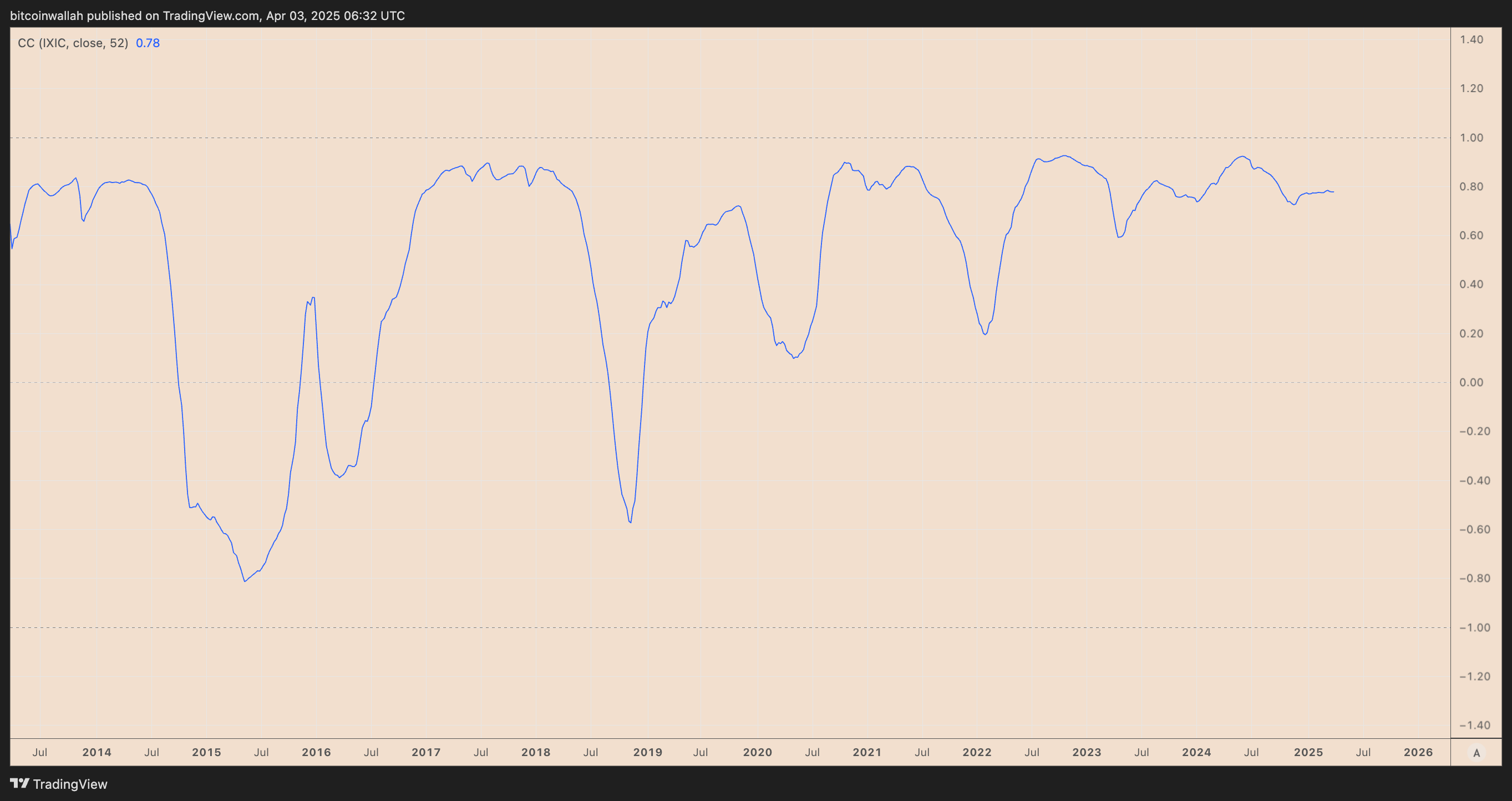
Bitcoin could face heavy downside pressure due to macro fear and liquidity constraints in risk markets if Trump’s 2025 tariffs escalate into a broader trade war or trigger a recession, similar to the Smoot-Hawley shock of the 1930s.
From a technical standpoint, Bitcoin is testing a key trendline at around $77,700, which aligns closely with its 50-week exponential moving average (EMA; the red wave).
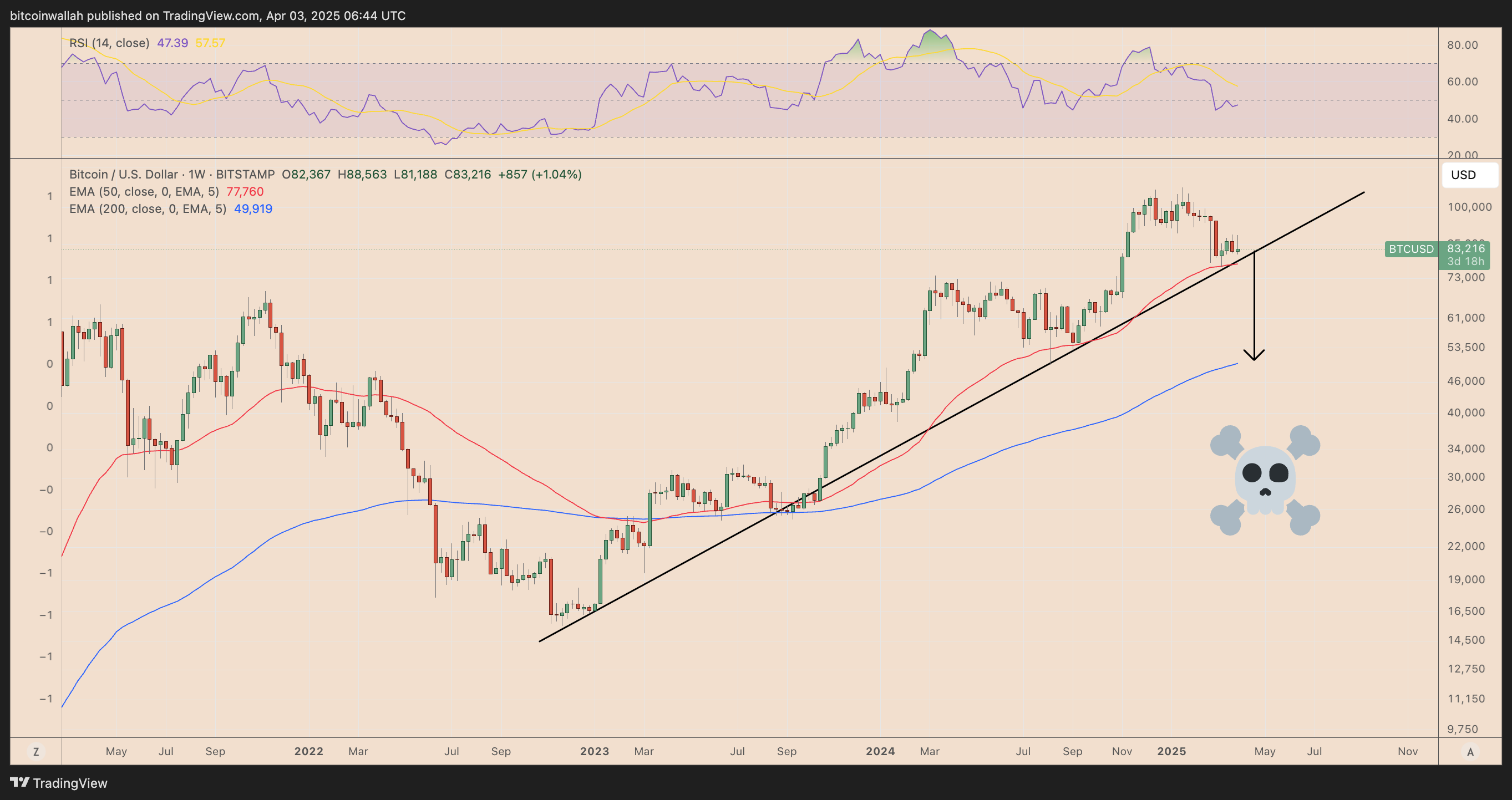
A breakdown below this confluence of support would mark a major technical shift, opening the door for a deeper correction toward the 200-week EMA near $49,900.
The echoes of the Smoot-Hawley Tariff Act in today’s economic landscape serve as a cautionary tale. For Bitcoin traders, staying informed about these developments is essential.