
The Bank of Japan faces pressure to raise interest rates again as inflation picks up. But the weak factory output could make the bank wait. The high oil prices and weak yen add to the costs of imports and squeeze household spending. The market now waits for the inflation report for Japan on October 23, ahead of the BOJ’s October 29-30 meeting. In my view, the pause in October would still leave room for the hike in December. This article discusses the key economic drivers and technical levels that could shape the next move in USDJPY, EURJPY and GBPJPY.

BOJ Interest Rate Forecast: Inflation and Growth Shape the Next Hike
Ueda Signals More BOJ Rate Hikes as Oil Nears $110
In the speech delivered by Deputy Governor Shinichi Uchida, Ueda said that the Japanese economy continued to recover moderately. The strong global demand for AI helped exports return to growth, while high corporate profits supported investment.
Household spending remained resilient as the conditions of employment and income improved. The steady economy gives the BOJ more room to raise borrowing costs without sharply weakening demand.
The same speech warned that firms continued to pass higher costs for input and wages into consumer prices. Ueda said that underlying inflation was approaching 2% while financial conditions remained supportive after the increase in interest rates in September. The BOJ is now more worried that inflation could increase further.
The IMF reinforced that message in an interview reported on October 17. Asia and Pacific director Krishna Srinivasan said that the BOJ may need to tighten faster if inflation increases more than expected. The rising energy prices further add to that risk.
Brent crude oil reached near the $110 level last week. The high oil prices and a weak yen raise the import costs for Japan. They can also squeeze household spending and company margins. This makes the pace of tightening harder to judge.
US Treasury Undersecretary Erin Browne said that Japan’s monetary policy and currency should reflect the shift away from deflation. She also warned that sharp moves by the currency could force investors to unwind positions and raise financing costs. These comments add to the scrutiny of yen weakness.
Brent Oil Price Forecast
Every new Brent Oil analysis as it publishes, today's technical signal and key levels, live price — on one page.
See all Brent Oil forecastsJapan Inflation and Factory Data Test the BOJ Outlook
Core inflation in Tokyo increased to 2.7% in September from 1.8% in August. That sharp increase gives the BOJ another reason to watch pressures on prices closely.
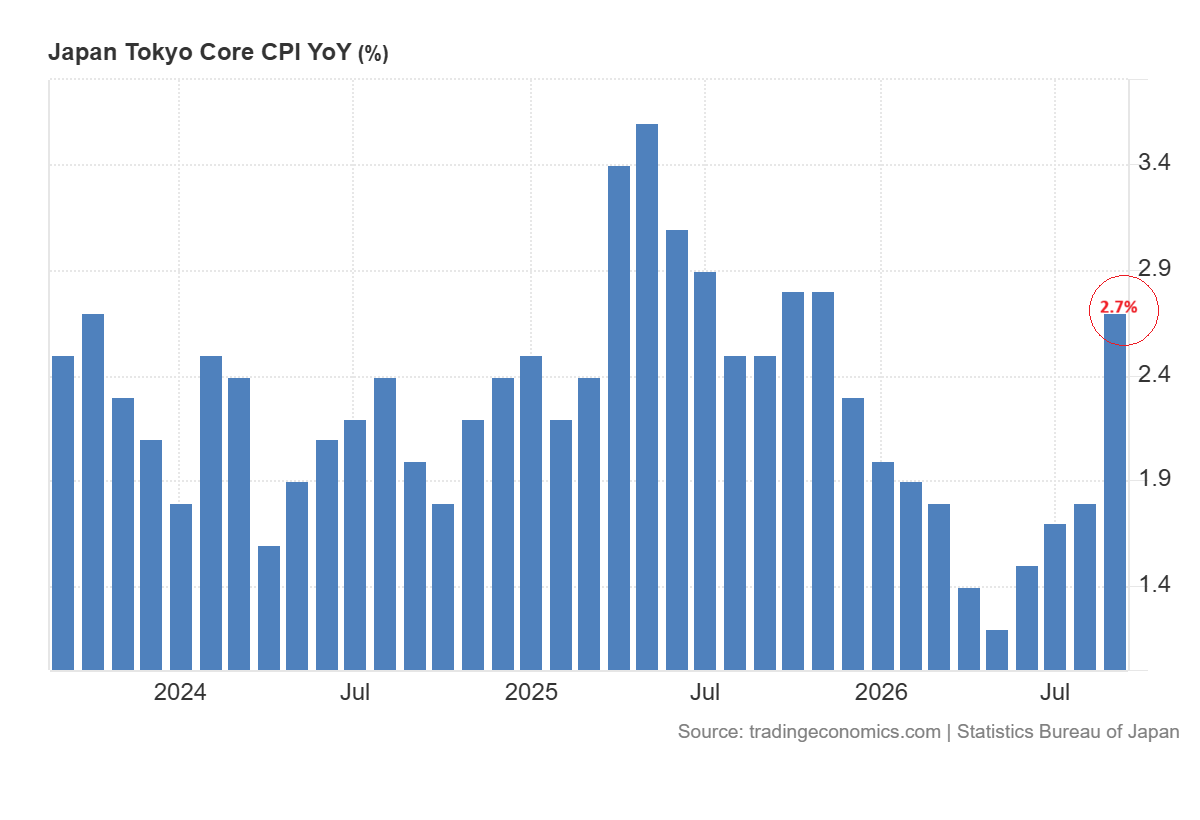
National core inflation is also expected to increase. The inflation data for Japan is due on October 23. A confirmed increase in national inflation would strengthen the case for another rate hike.
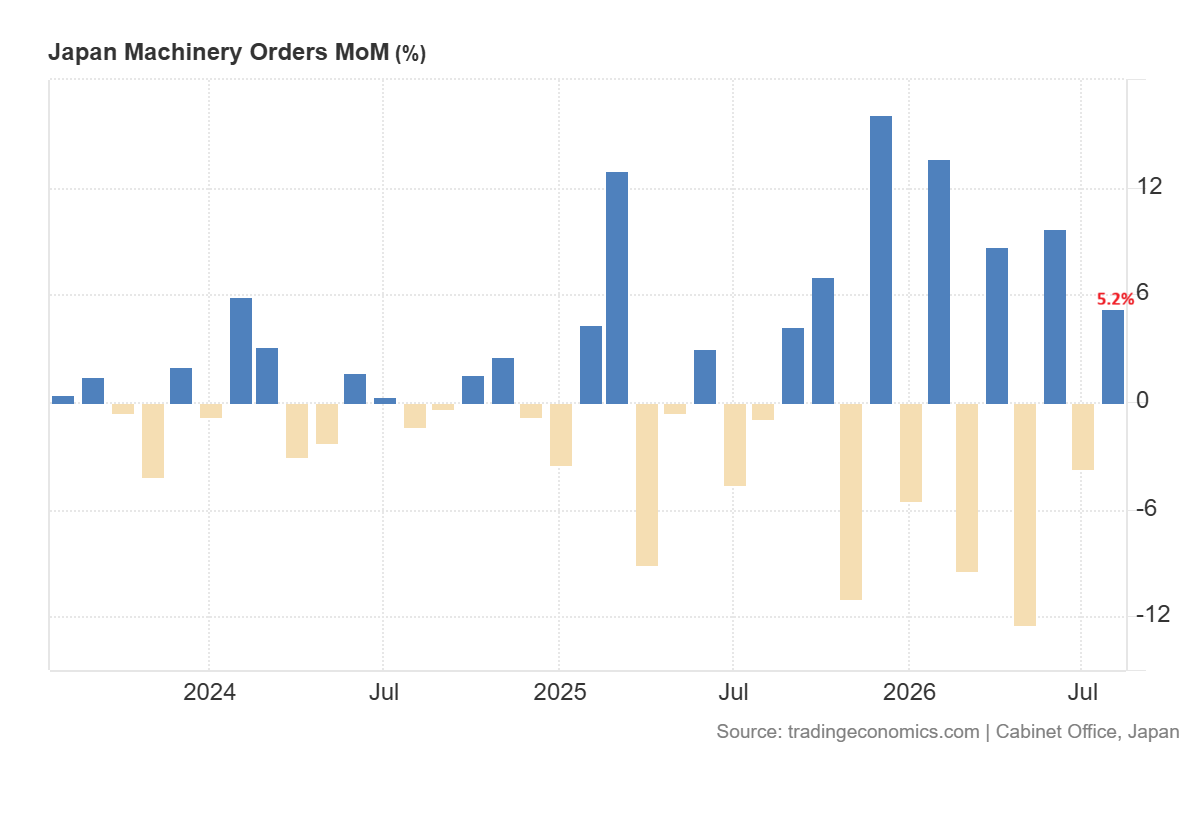
The latest activity data show that the BOJ may still move slowly. The chart below shows that the core machinery orders increased 5.2% in August from the previous month. This data beats the forecast for a 3% increase and reversed July’s 3.7% drop.
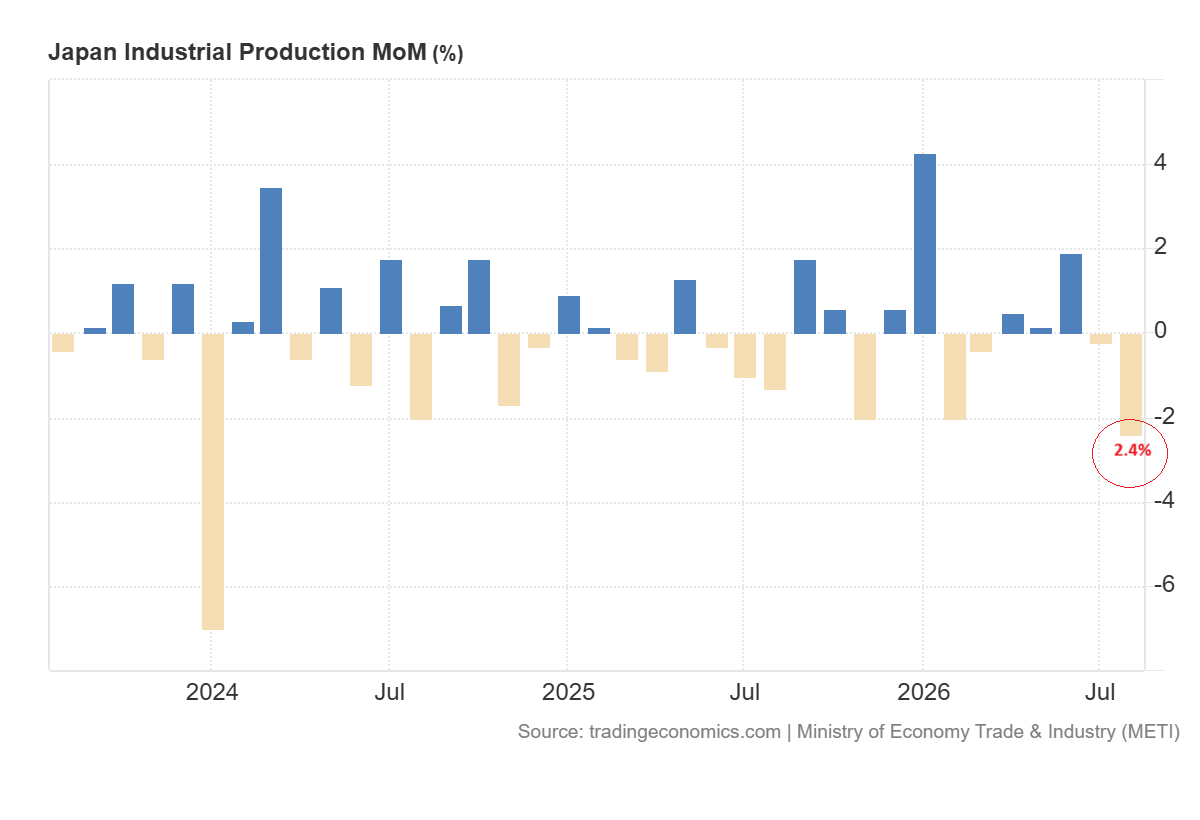
But the revised industrial production dropped 2.4% in August, compared with the initial estimate of a decline of 1.7%. The strong orders point to better demand for equipment, but the drop in output shows that the manufacturers still face pressure. This gives the BOJ a reason to check whether investment demand turns into stronger production before raising rates again.
USDJPY Forecast: Break Above 159 Could Open the Way to 160
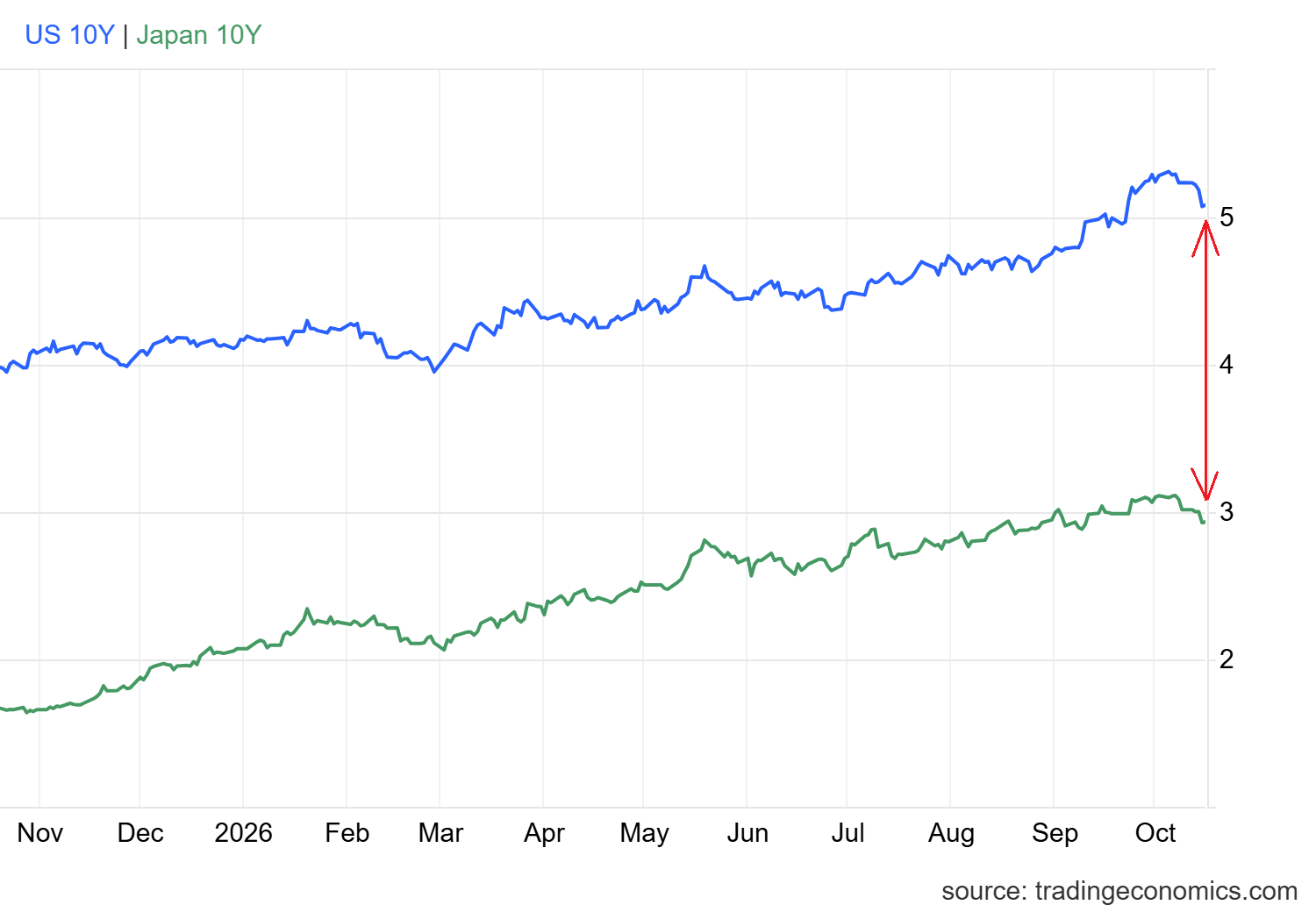
The chart below shows a big gap between the 10-year Treasury yields for the US and Japan. The gap of more than 2% still favors dollar assets. But the US dollar corrected lower on Friday towards the key support of 101.80. In my view, USD/JPY could weaken if US yields fall further or the BOJ signals an earlier increase. But the BOJ pause in October and renewed expectations of Fed tightening could support the pair.
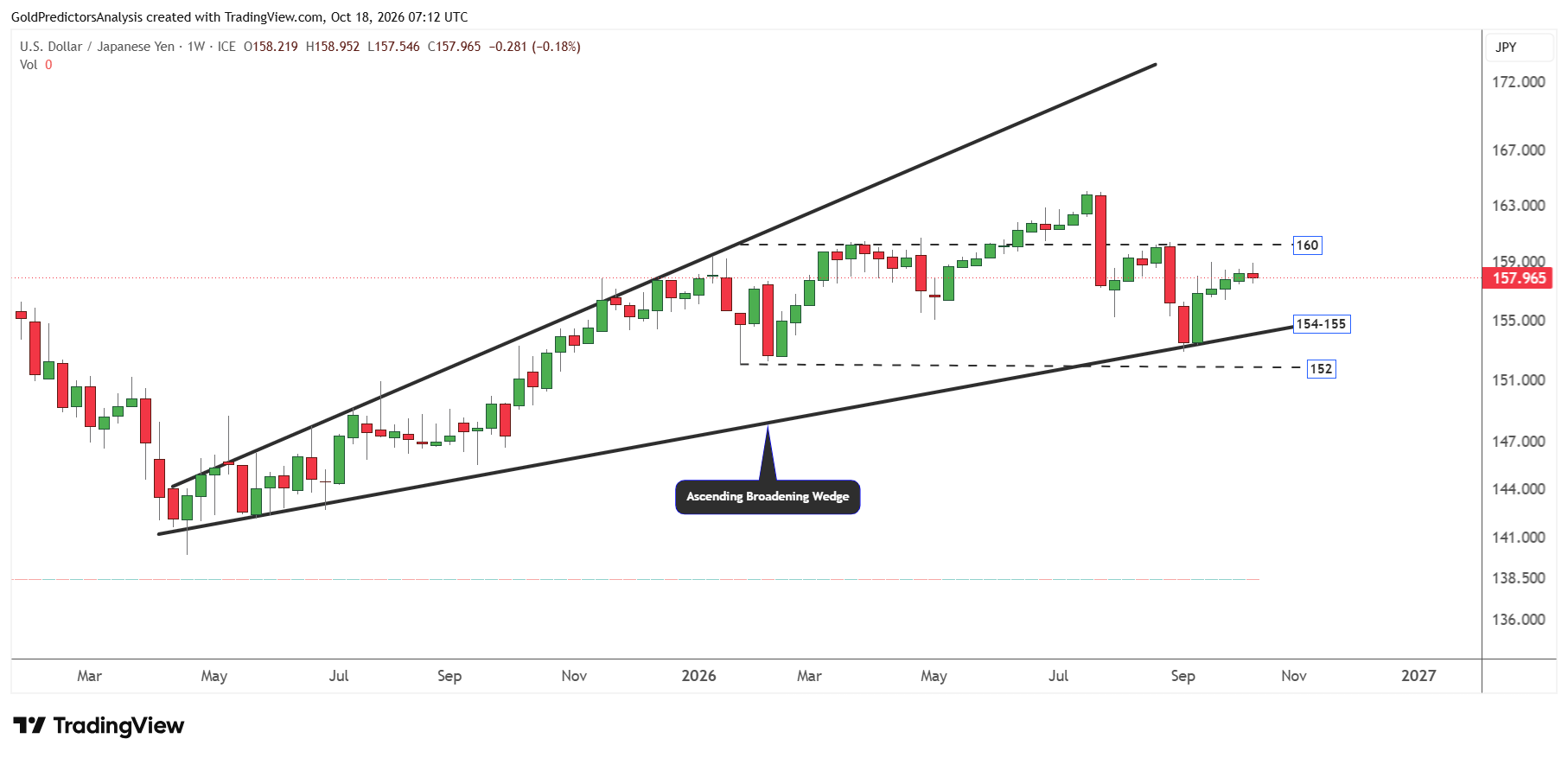
From a technical perspective, USDJPY produced a strong rebound in September from the long-term support at 153. This support is highlighted by the ascending broadening wedge pattern that stretches from the April 2025 lows.
This rebound has pushed the pair towards the key resistance in the 160 area. Last week’s candle was a little muted, and if the pair continues to trade above the 159 level, it will move towards the 160 area. On the other hand, if the pair moves below the 157 level, it will likely drop further towards the 154-155 range. The emergence of ascending broadening wedge patterns suggests strong volatility in USDJPY.
The importance of the current level is also highlighted on the daily chart, which shows that the price has been consolidating near the 50-day and 200-day SMAs over the past three weeks. Therefore, this marks the 159 level as important resistance in the short term.
A break above the 159 level will likely push the price above the 200-day SMA and open the way for a rally towards the 160 area or higher. On the other hand, a break below the 157 level will likely take the price below the 50-day SMA and push it lower.
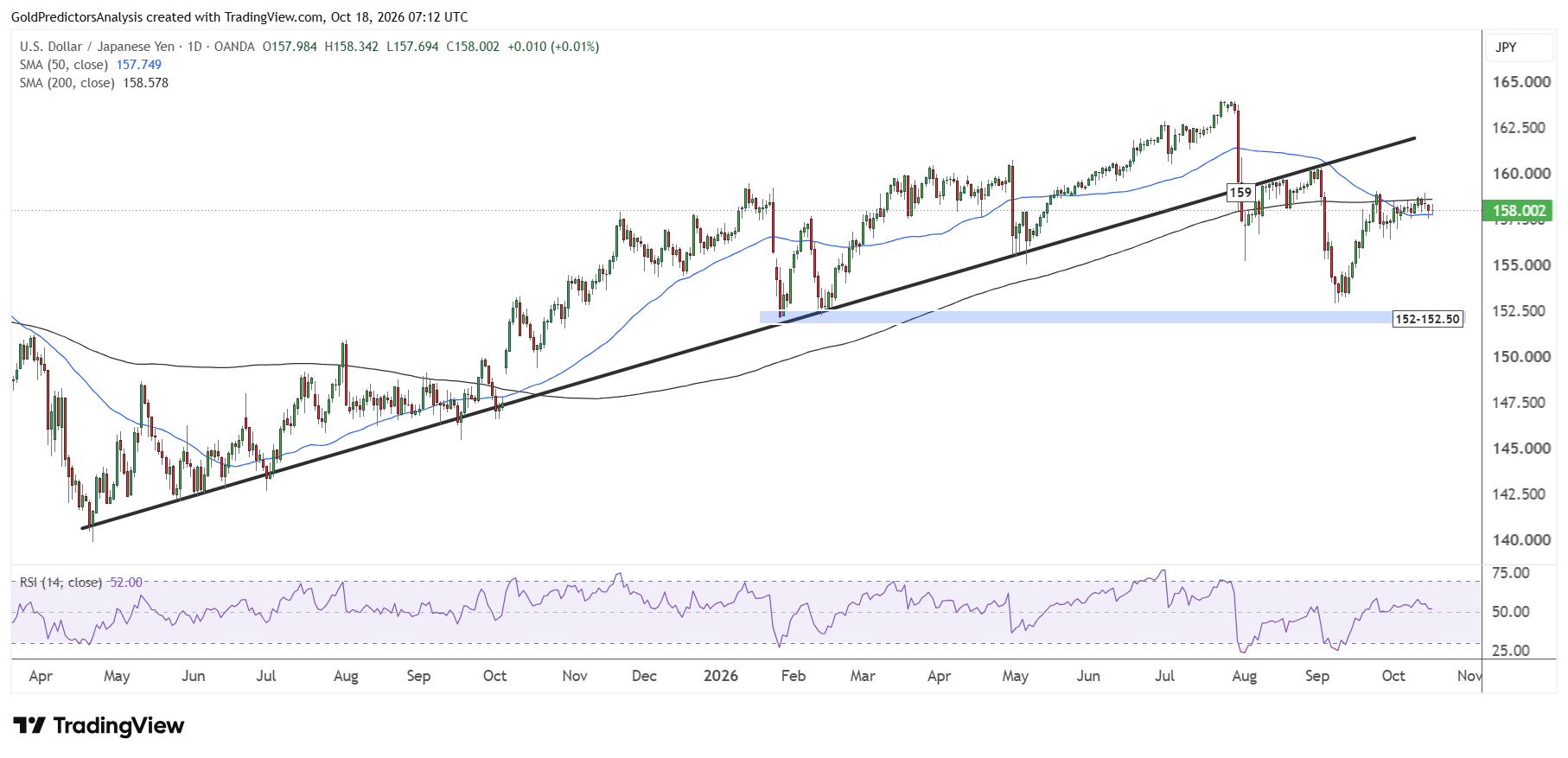
A break below the 154 level will likely push the price towards the key support zone between 152 and 152.50. However, the RSI still remains above the midline, which still supports positive momentum in the short term.
EURJPY Forecast: 174 Support Remains Key to a Recovery Towards 185
The expectation of another increase in interest rates by the ECB in December offers the euro some support. However, Christine Lagarde said that the high cost of borrowing would slow growth and reduce inflation pressure. This could reduce the need for further tightening by the ECB.
In my view, a pause by the BOJ in October could preserve support for EUR/JPY in the near term. The clear signals of faster Japanese rate increases would narrow the expected interest rate advantage of the euro and could weigh on the pair.
From a technical perspective, EURJPY has reached the strong support zone near the 175 level. The pair is now consolidating in the short term. However, the rebound last week did not suggest any meaningful recovery, and therefore the pair still remains under bearish pressure.
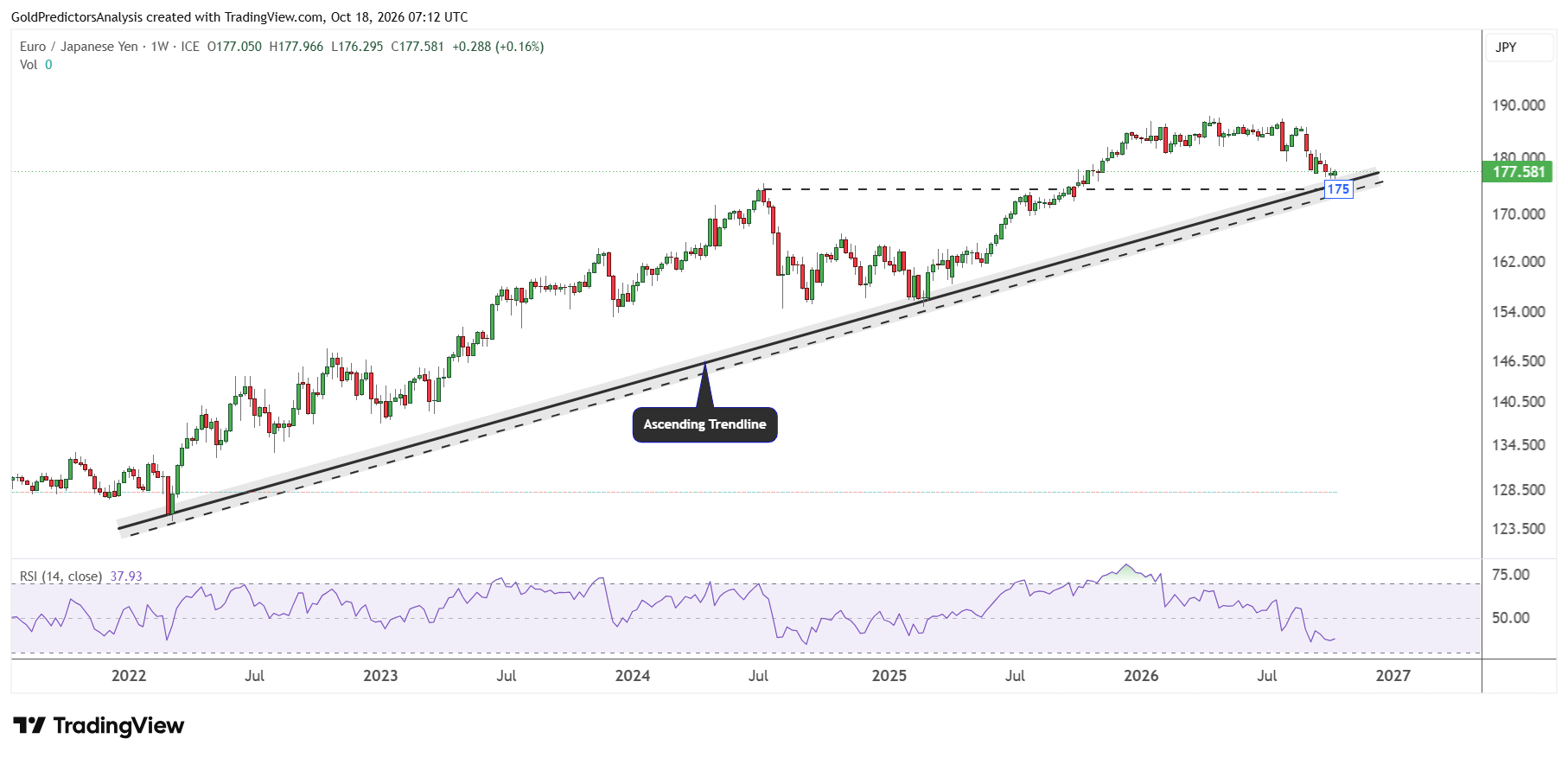
A break below the 176 level will likely push the pair towards the key support zone at 174-175. This support is highlighted by the ascending trendline that stretches from the March 2022 lows. As long as the 174 level holds, the possibility of another rally towards the 185 level is high. But a break below the 174 level will likely trigger a deeper correction towards the 165 area.
GBPJPY Forecast: Recovery Needs a Break Above 213
The expectation of an increase in the interest rate by the Bank of England supports the pound’s interest rate appeal. Andrew Bailey said on Friday that higher energy costs had shown limited wider effects on prices so far. He also said it was too early to draw strong conclusions.
In my view, a pause by the BOJ could support GBP/JPY to maintain its recent strength. Strong Japanese tightening signals or weaker expectations for UK rate increases could reverse some of that support.
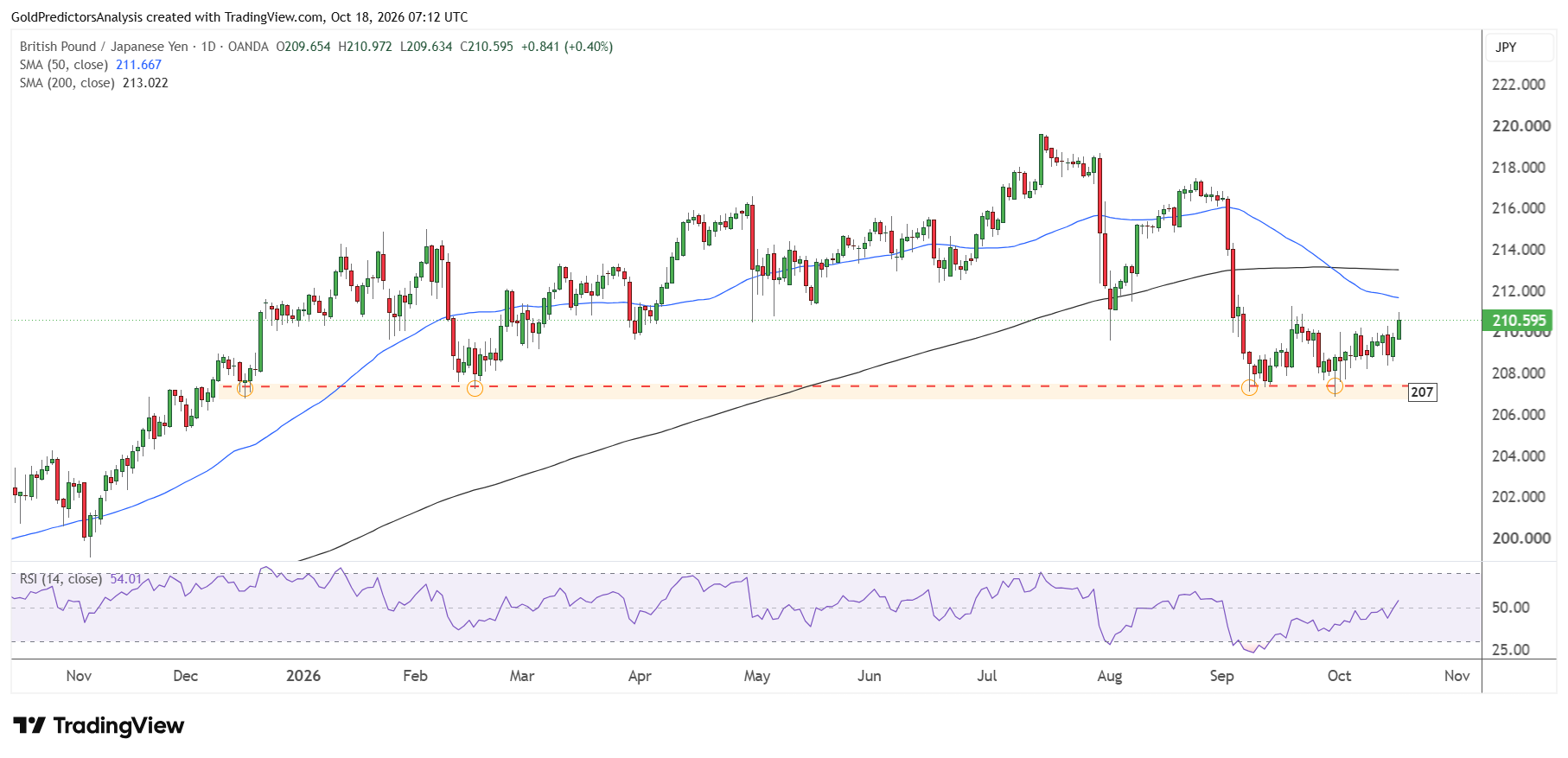
From a technical perspective, GBPJPY has produced a bottom at the key support level of 207. This area has been a strong key support zone since December 2025. Every time the price reaches this area, it triggers a rally that continues higher. But the 50-day SMA has crossed below the 200-day SMA this time. The pair must break above the 200-day SMA at the 213 level to open the way for further upside.
The immediate resistance now remains at 211. A break above 211 will push the pair towards 213. On the other hand, a break below the 207 area will likely indicate further downside towards the 204 level.
What to Watch Next
Japan’s inflation report on October 23 will be the next key test for the BOJ. Stronger price growth would support another rate hike. But weak factory output gives the bank a reason to move slowly. An October pause could still leave a December increase in view. The BOJ’s new forecasts and Ueda’s comments at the October 29-30 meeting should give traders more clues about the next move.
The yen pairs also need to break their key levels to show a clearer direction. USDJPY needs to clear 159 to open the way towards 160. A drop below 157 could instead lead towards 154-155. EURJPY must stay above 174 to avoid a deeper correction towards 165. GBPJPY needs to clear 211 and then 213 to strengthen the recovery. A break below 207 would increase the risk of a decline towards 204.
Read more: CPI to Test December Fed Hike Bets