Silver
Silver has seen a combination of renewed inflation pressure and easing in real Treasury yields this past week. Those influences can support its investment appeal, but the industrial side requires a separate judgment. Higher prices paid by businesses do not necessarily mean that factories are producing more goods or consuming more silver.
The assessment is that this week’s official releases strengthen the case for monitoring financing costs and industrial activity together, rather than treating an inflationary environment as an unconditional signal. The clearest new industrial warning came from Thursday’s September Producer Price Report. Final demand goods prices increased 2.6% month over month, seasonally adjusted, including a 10.8% rise in energy. Goods excluding food and energy rose a smaller 0.3%, while final demand services increased 0.8%.
The distinction matters. A manufacturer facing larger fuel bills may experience pressure on margins, even if its own sales volumes are flat. Those figures measure prices across broad categories, not silver consumption or the profitability of a particular mine or factory.

Inflationary Pressures Remain
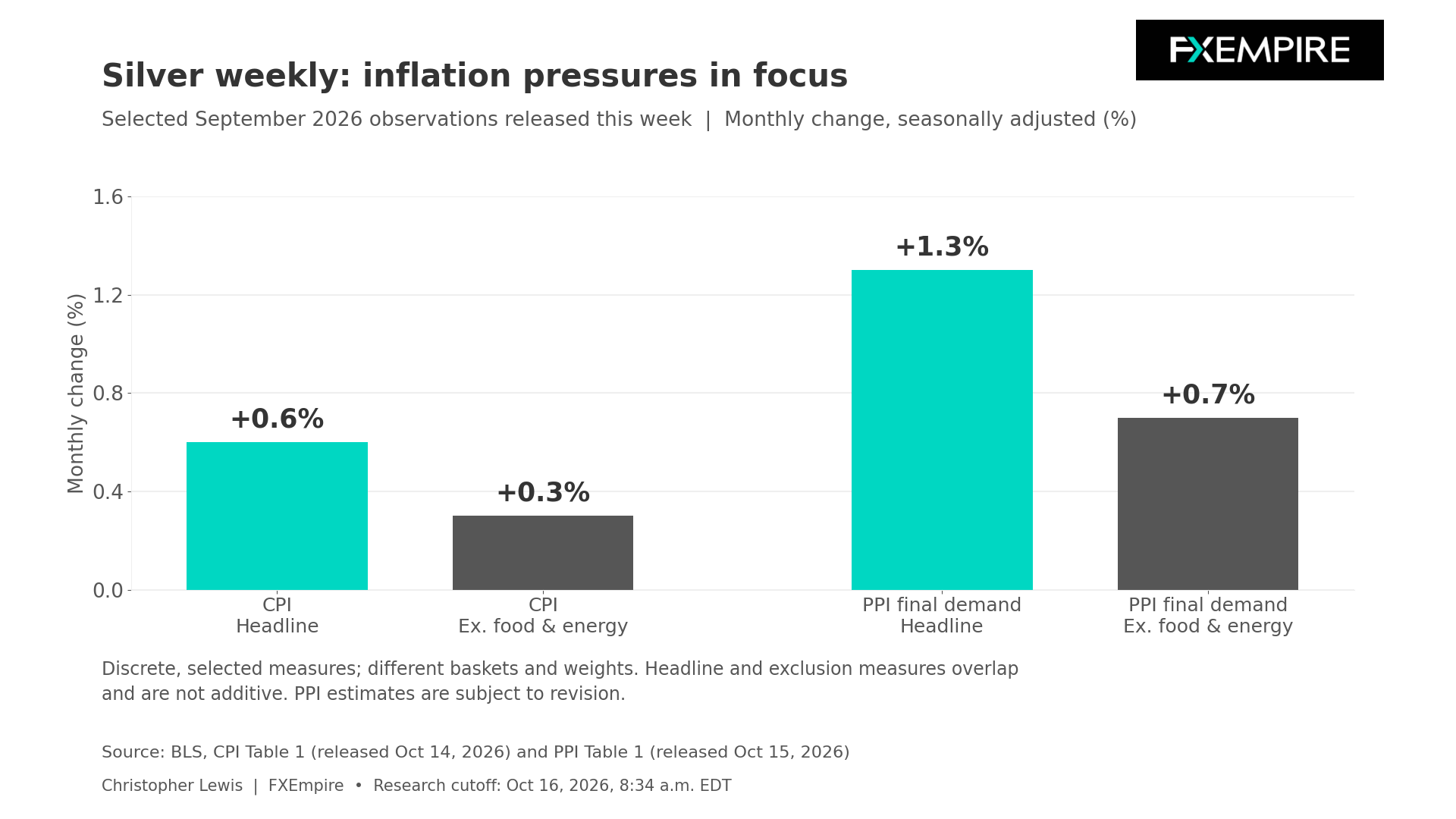
At the aggregate level, September headline PPI rose 1.3% monthly, while the measure excluding food and energy increased 0.7%. Wednesday’s CPI report showed corresponding monthly increases of 0.6% and 0.3%. The accompanying information suggests that both indices point to price pressure, but the baskets and weights in these indices differ. With that being the case, it is important to take them as part of a broader picture instead of adding them together.
Import Prices Rise
Friday’s important price release added another cost indicator. The BLS reported September increases of 1.1% for total imports and 0.7% for imports excluding fuel. Non-fuel industrial supplies and materials rose 1.4%. These are monthly price changes in a report released on Friday. They suggest that manufacturers also face external cost pressures, but provide no direct measurement of silver orders.
The financial backdrop was more accommodating by Thursday, with 10-year real par yield estimates from the Treasury falling from 2.9% to 2.78% by early Friday. Lower inflation-adjusted yields can reduce the opportunity cost of holding silver as an investment asset. However, these are daily curve estimates, not live quotes, so monitoring the inflation-versus-yield story will be crucial for those looking to trade silver.
Silver and Manufacturing
Silver’s exposure to manufacturing gives this qualification practical importance. USGS identifies established applications in electrical circuits, batteries, and solar cells. These uses can explain why activity and capital spending matter to the market, but they do not necessarily demonstrate an increase in installations or silver demand immediately. A durable improvement in manufacturing orders could reinforce investment demand, whereas weaker production could offset some benefit from easier yields. Neither outcome should be assumed simply by looking at the metal and assuming that it shares some monetary characteristics with gold.
Silver Price Forecast
Every new Silver analysis as it publishes, today's technical signal and key levels, live price — on one page.
See all Silver forecastsThe latest industrial production report available covered August. Released on September 18, it showed manufacturing output down 0.3% for the month. This is dated, though, rather than a fresh setback during the current week. September industrial production will be monitored as well.
An inventory draw will also need to be contextualized before it can confirm tightening silver supply. The location, reporting date, and category of stocks matter, and transfers between storage categories would not by themselves establish industrial consumption.
Fed Meeting Coming Up
The Federal Reserve’s October 27–28 meeting will help shape the financing environment. The supportive silver scenario would combine sustained easing in real yields with evidence that industrial activity can withstand higher costs. The weaker scenario would pair renewed yield pressure with soft factory output or reduced investment spending. Verified inventory changes and physical-demand information will help refine that balance.
The Technical Picture
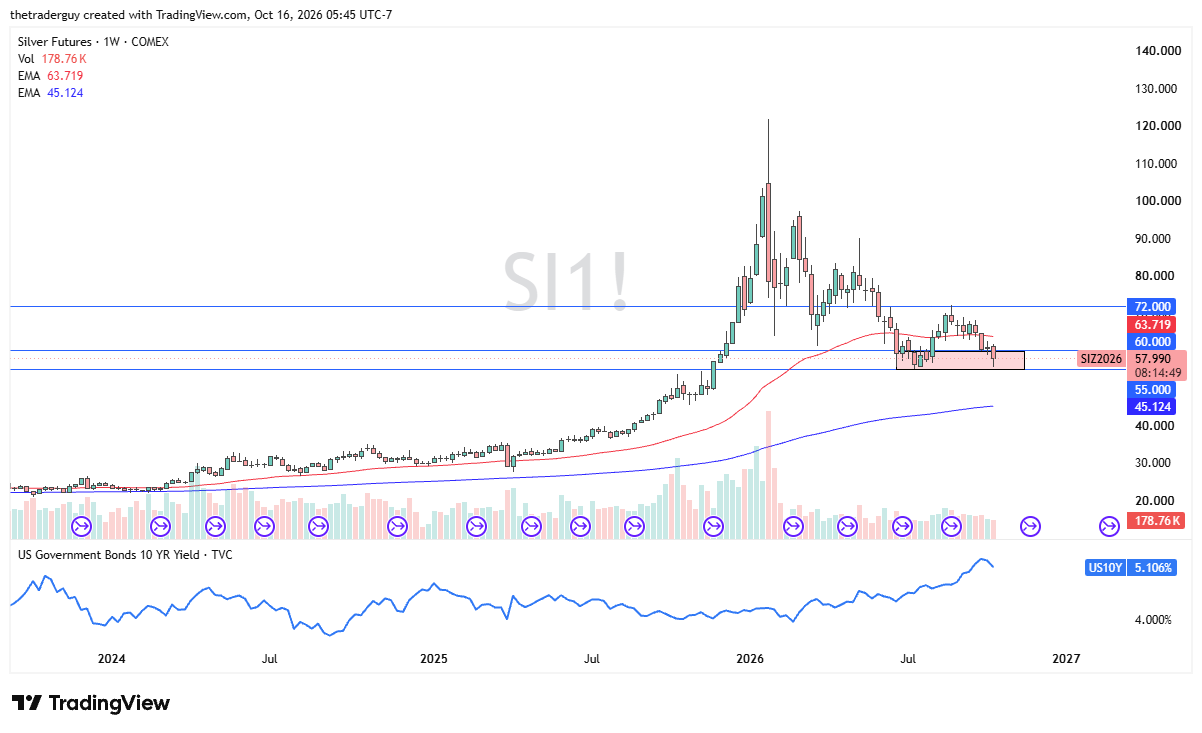
The charts have shown a significant drop during the week, but from a technical analysis perspective, it looks as if the $55 level continues to be an area where buyers return. If we were to breach that level, it would be a bad sign for silver, especially if it was accompanied by higher interest rates. As things stand right now, it looks like value hunters are interested. A break above $60 could lead to some sustained buying.