Gold
During the past week, gold has been shaped by a bit of an uncomfortable combination: stronger U.S. inflation readings alongside lower Treasury yields through Thursday, heading into Friday. That has seen a little bit of a turnaround on Friday, but it leaves investors weighing the appeal of protection against persistent price pressure and the possibility of a firmer Federal Reserve response.
The decline in real yields offers a more direct supportive influence for gold than inflation headlines alone. However, it does not establish how gold itself will perform, and Friday is seeing a rise in gold early as yields are trying to stabilize.

CPI Report Showed Pressures
Wednesday’s September CPI report provided the first major inflation test. The Bureau of Labor Statistics reported a seasonally adjusted CPI increase of 0.6%, with an annual rate at 3.7% before adjustment. Excluding food and energy, prices rose 0.3% over the month and 2.6% over the year. Gasoline increased 9.1% on the month and accounted for more than half the headline number.
This distinction matters for the outlook. An energy shock can increase demand for an asset associated with preserving purchasing power, and that’s what gold buyers are hoping for. But it also can constrain household spending and complicate monetary policy. Gold does not receive an automatic benefit from every higher inflation print, and that’s something that investors have been learning as of late. If they do anticipate that policymakers will respond forcefully, higher real financing costs could outweigh the appeal of inflation protection.
PPI Didn’t Help Either
Thursday’s Producer Price Index reinforced the concern. September final-demand PPI increased 1.3% month-over-month, seasonally adjusted, and 6.3% over 12 months before adjustment. This measure, excluding food, energy, and trade services, rose 0.5% monthly. The wider reading suggests that the week’s inflation discussion cannot be reduced entirely to gasoline. Regardless, producer prices cover a different basket from consumer prices, so you can’t put the two together necessarily.
Friday added another development, with the BLS reporting that September import prices increased 1.1% from August, while non-fuel import prices rose 0.7%. These figures broaden the evidence of price pressure beyond domestic consumer and producer measures, although import prices are a separate index and should not be added to either CPI or PPI.
Gold Price Forecast
Every new Gold analysis as it publishes, today's technical signal and key levels, live price — on one page.
See all Gold forecastsBond Market’s Weekly Comparison Offers a Bit of a Counterweight
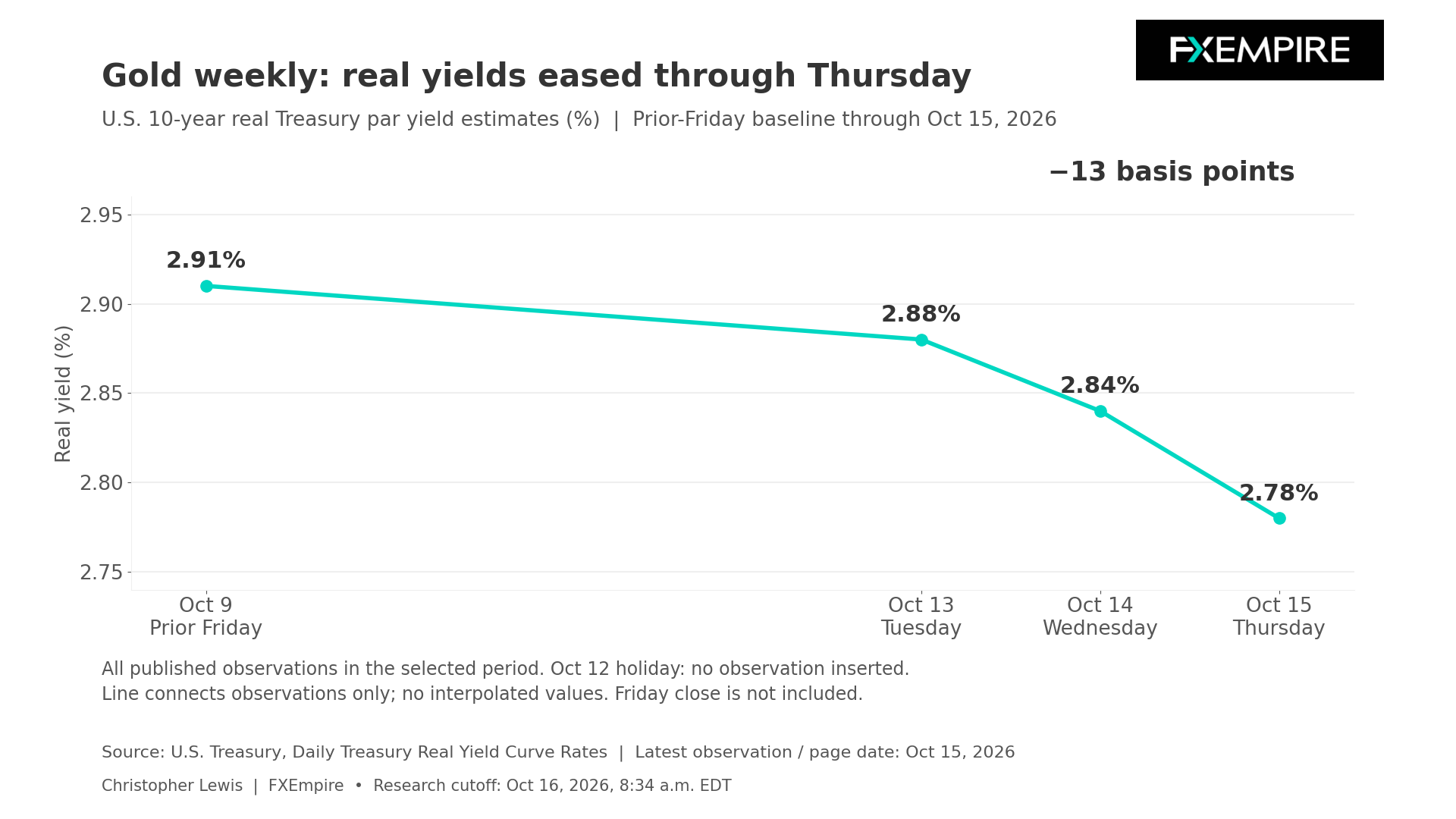
The Treasury estimated 10-year yield declined from 2.1% on Friday, October 9, to 2.78% early Friday morning. Over the same period, the nominal 10-year fell 14 basis points to 5.10%, while the 2-year yield fell 3 basis points to 4.77%.
Lower real yields can reduce the opportunity cost for holding a metal that pays no interest. That is the supportive part of the weekly outlook, but the level remains positive and the relationship is variable. Currency changes, liquidity needs, and shifts in portfolio demand can also alter the outcome.
For a weekly assessment, the persistence of the yield moves matters more than a single intraday action. Several lower daily observations will provide a clearer comparison than one isolated quote, but don’t necessarily establish a lasting trend. Confirmation would require subsequent observations, and equally, subtracting the latest 12-month CPI rate from a nominal bond yield doesn’t necessarily reproduce Treasury’s forward-looking inflation-protected yield measure.
The next policy choke point is the Federal Reserve’s October 27 and 28 meeting. Its September 16 decision to raise the federal funds target range to 3.75% to 4% is not a new decision this week, but the markets are still freshly considering whether or not the Federal Reserve will continue. Ultimately, it seems that the CME FedWatch Tool suggests that the 25-basis-point rate hike might be in December.
Technical Outlook
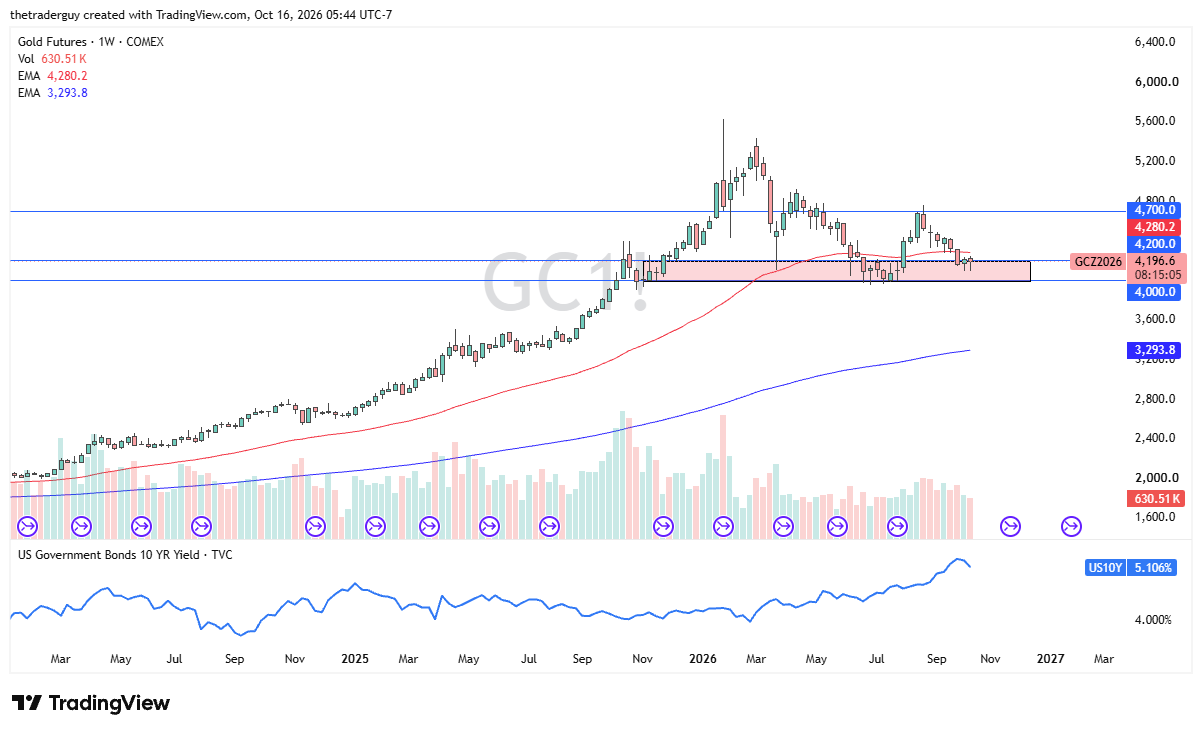
Looking at the gold chart, we have seen a bit of a sell-off during the week, but there has been a nice recovery on both Thursday and Friday, forming a bit of a hammer right at the same demand zone it had formed during the previous week. This suggests that there are plenty of buyers willing to take advantage of cheap gold at the moment. A breakdown below the $4,000 level would change the outlook, though.