


Commodities are delivering one of 2026’s most spectacular performances and The Gold & Silver Club believes this is only the beginning. With broad Commodity returns decisively outpacing other major asset classes, the scale of this opportunity is becoming impossible to ignore.
As 2026 moves through its final quarter, what analysts at The Gold & Silver Club declared in the opening months of the year – “2026 will be the Year of Hard Assets” – has now crystallized into the defining macro theme of the year.
For the firm, inflation, geopolitical fragmentation and supply insecurity are strengthening the case for the one area governments cannot print and central banks cannot manufacture: scarce physical assets.
From Crude Oil and Natural Gas to Copper, Tin, Aluminium, Coffee, Cocoa, Wheat and Soybeans, The Gold & Silver Club’s message is clear: the world is repricing the raw materials it cannot function without.
“What we are seeing is not a temporary spike in one isolated corner of the market,” says Lars Hansen, Head of Research at The Gold & Silver Club. “This is a broad-based Hard Asset repricing driven by inflation, scarcity, geopolitical fragmentation and resurgent physical demand. Commodities are no longer an alternative trade. They have become the dominant macro trade of 2026.”
But what if the gains already recorded are not the main event? What if they are the opening act?

The Scoreboard Leaves Little Room for Debate
Measured from their respective 2026 lows, the figures supplied by GSC Commodity Intelligence reveal the extraordinary breadth of the rally.
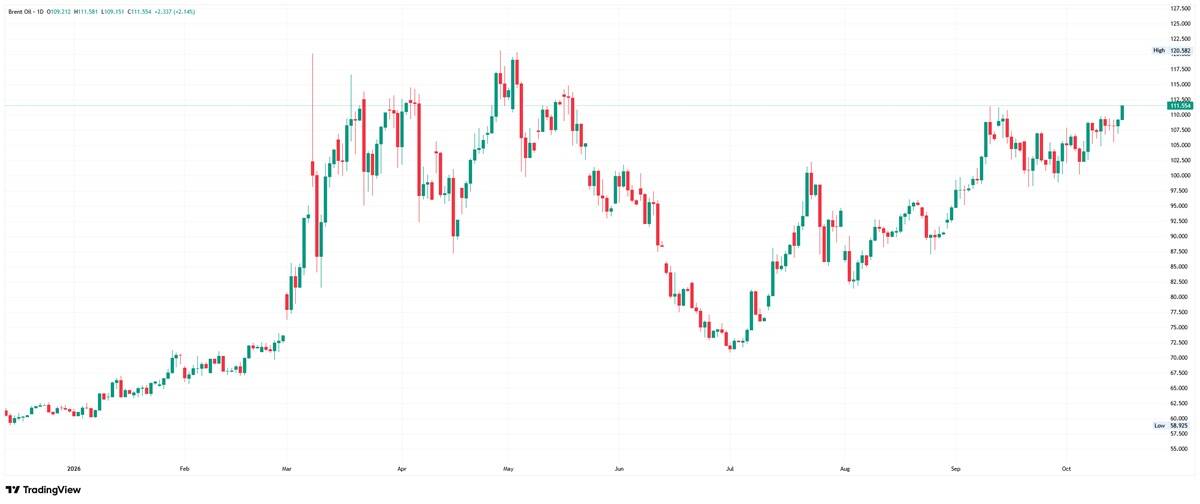
European Natural Gas has surged 209%, Heating Oil 148% and Gasoline 94%, while Diesel has more than doubled. Jet Fuel has climbed 98%, with WTI and Brent Crude Oil advancing 85% and 82%, respectively.
Agriculture is being repriced just as aggressively. Cocoa has roughly doubled, Rice has gained 66%, Wheat 45%, Cotton 41%, Sugar 35% and Corn 32%. Soybeans have risen more than 20%.
Tin, Zinc and Copper have rallied approximately 28–32% from their annual lows, while Aluminium has advanced around 14%. Separately, Arabica Coffee’s peak year-to-date gain reached 72%.
The broader index comparison is equally striking.
The S&P GSCI Commodity Index is up 60.03% year-to-date, against 14.16% for the S&P 500.
That is more than 4.24 times the S&P 500’s percentage gain.
Beyond the indices, an exceptional move in tanker freight illustrates how dramatically scarcity can be repriced.
The Breakwave Tanker Shipping ETF (BWET) has surged a whopping 7,051% over the past 12 months, according to data tracked by GSC Commodity Intelligence.
To put that into perspective, a $100,000 investment in BWET made a year ago would have grown to approximately $7.15 million.
“These are not price targets. These gains have already happened,” Hansen says. “It is a broad-based repricing of scarcity across the global Hard Asset complex.”
For The Gold & Silver Club, the most important question is no longer how much these markets have already risen. It’s how much bigger this opportunity could become if today’s extraordinary gains are just the opening chapter of a decade defined by scarcity.
Brent Oil Price Forecast
Every new Brent Oil analysis as it publishes, today's technical signal and key levels, live price — on one page.
See all Brent Oil forecastsThe Year of Hard Assets Was the Warm-Up. The Decade Is the Prize
For The Gold & Silver Club, the Year of Hard Assets is more than a description of 2026’s performance. It is the starting point for a much larger investment thesis.
The firm sees successive opportunities across Energy, Precious Metals, Industrial Metals and Agriculture – not merely whichever market dominates today’s headlines.
“A powerful annual rally can capture attention,” Hansen says. “A sustained repricing of essential resources can reshape how traders and investors build wealth.”
That is the ambition behind The Hard Asset Decade: the potential to capture opportunities across interconnected markets, rather than depend on one spectacular trade.
The underlying connection is simple: Hard Assets consume other Hard Assets.
Copper requires Energy to extract and process. Aluminium requires electricity. Agricultural production depends on fuel, Fertilizer, machinery and transportation. When Energy becomes more expensive, the pressure can travel through the cost of producing and delivering other essential resources.
“This is how a Commodity cycle broadens,” Hansen says. “Pressure can migrate from Metals into Energy, from Energy into production costs and ultimately into another major market. The opportunity is understanding where that pressure moves next.”
For traders and investors, that changes the question entirely.
Rather than asking whether they missed the last rally, they should be considering where the next supply constraint could emerge.
Capital can move in seconds. Physical supply cannot.
El Niño Could Supercharge the Next Phase
Another powerful catalyst is gathering strength. A potentially record-breaking El Niño is developing, with strong-to-very-strong conditions forecast to persist through the first quarter of 2027.
Shifting rainfall and temperature patterns could expose different global regions to drought, flooding, extreme heat, cyclones and wildfires – adding another layer of uncertainty to the physical economy.
The consequences can extend well beyond Agriculture.
During the 2023–24 El Niño, Natural Gas and Oil demand almost doubled in affected regions as hydropower came under pressure. It is a powerful illustration of how disruptive weather conditions can rapidly increase demand for alternative fuels.
For The Gold & Silver Club, the timing is critical: another weather-driven shock could arrive while governments are already drawing on emergency Energy reserves.
U.S distillate inventories, which include Diesel and Heating Oil, have fallen to their lowest levels for this time of year since 1982.
Meanwhile, IEA member countries agreed on 15 October to accelerate approximately 100 million barrels of remaining emergency-stock releases, including plans to release more than 20 million barrels of Diesel as soon as possible. Approximately 330 million barrels had already been released under the programme.
Emergency reserves can relieve immediate pressure. They cannot manufacture refining capacity.
Nor does drawing down a buffer eliminate the need to rebuild it.
“This combination of unfolding events defines The Gold & Silver Club’s Era of Scarcity thesis,” Hansen says. “The real question is: does the global economy have sufficient Hard Asset buffers to withstand the next economic shock?”
For the firm, El Niño is not the entire investment case. It is another potential accelerator – one that could intensify competition for essential resources and create further opportunities across the Commodities and Hard Assets complex.
The Hard Asset Decade Has Arrived – Are You Positioned?
The Gold & Silver Club’s thesis points to a possibility no one can afford to ignore: 2026 could be just the opening chapter of something far bigger.
Greater emphasis on supply security could increase the value of ownership, productive capacity and reliable access to the resources the world needs most.
There will be corrections. Supply can respond, demand can weaken and disruptions can reverse.
But the distinction at the heart of The Gold & Silver Club’s argument remains: physical supply cannot expand at the speed of financial demand.
Governments can create liquidity. Central banks can change interest rates.
They cannot instantly produce another barrel of Oil, tonne of Copper, cargo of Wheat or functioning refinery when the world needs it immediately.
“Scarcity changes the value equation,” Hansen says. “Hard Assets may prove to be more than another allocation. They could be the resources the world can least afford to be without.”
The world spent decades pricing abundance. It may now be entering a decade forced to price scarcity.
And that leaves one increasingly uncomfortable conclusion at the heart of GSC’s thesis: “None of us own enough Hard Assets.”
For The Gold & Silver Club, the Year of Hard Assets demonstrated the potential. The Hard Asset Decade is the bigger opportunity.
The question now is whether you are positioned to capitalize on what could become the greatest wealth-creation opportunity of our lifetime.
Where are prices heading next? Watch The Commodity Report now, for my latest price forecasts and predictions:


