Key Insights:
- On Monday, bitcoin (BTC) fell by 1.25% to end a three-day winning streak.
- Recession fears resurfaced, with PMIs from the EU and the US reflecting a sharp decline in private sector activity.
- The Bitcoin Fear & Greed Index fell from 22/100 to 20/100, highlighting investor sentiment following Monday’s economic indicators.
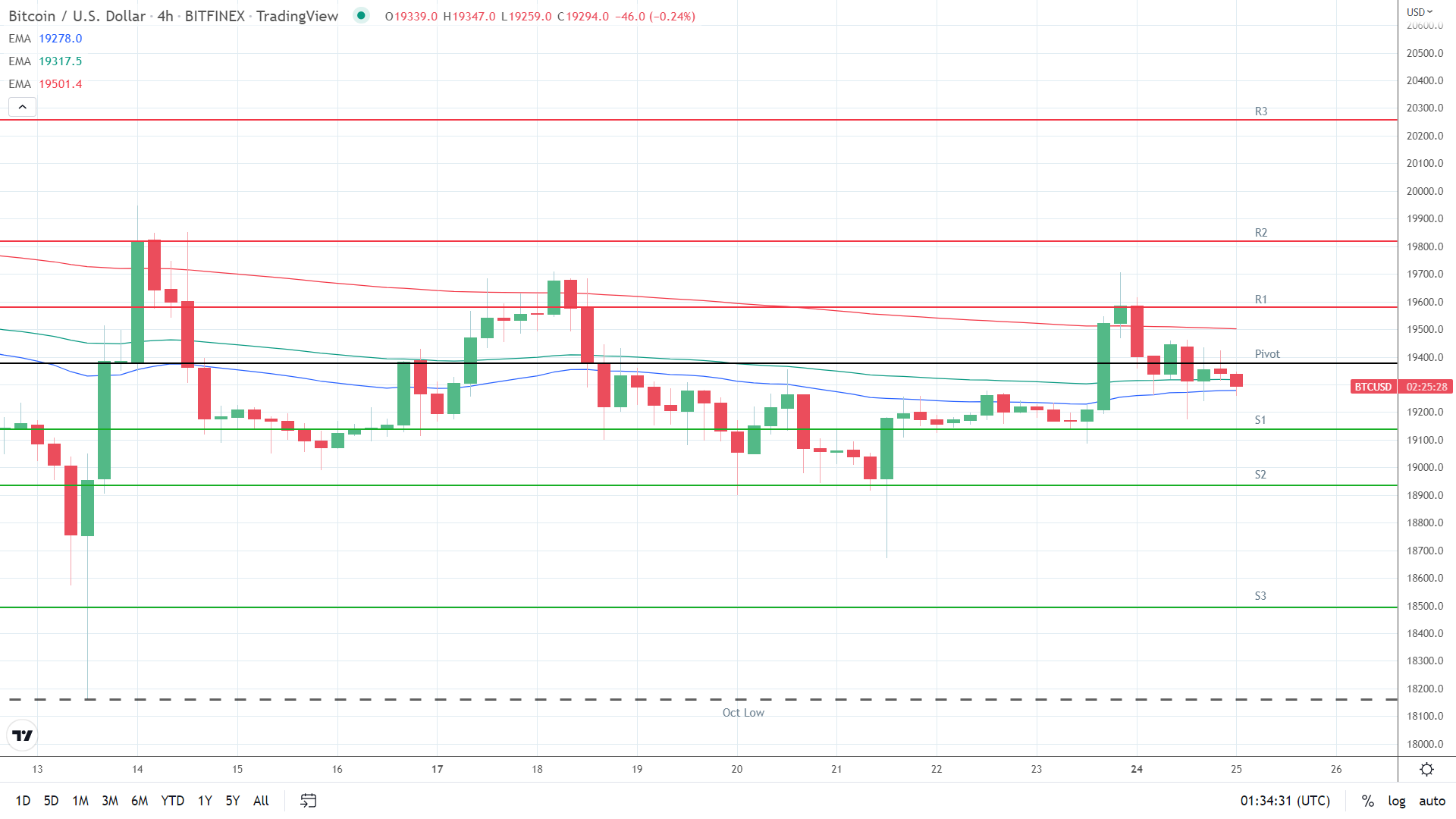
On Monday, bitcoin (BTC) fell by 1.25%. Partially reversing a 1.90% gain from Sunday, BTC ended the day at $19,340. Notably, BTC fell short of $20,000 for the seventeenth consecutive session while also avoiding sub-$19,000 for a third session.
A mixed start to the day saw BTC rise to an early high of $19,615. However, falling short of the First Major Resistance Level (R1) at $19,833, BTC slid to an early afternoon low of $19,174. BTC fell through the First Major Support Level (S1) at $19,212 before briefly revisiting $19,433. However, a bearish end to the session left BTC in the red.
Better-than-expected Q3 GDP numbers from China failed to deliver early support. Market reaction to Xi Jinping taking his leadership into a third term, with a government stacked with loyalists, set the tone.
Private sector PMIs from the EU and the US added to the bearish mood. Significantly, the US services PMI slid from 49.3 to a two-month low of 46.6, raising the threat of a US recession. While the numbers led to expectations of the Fed taking its foot off the gas, recession fears weighed on the crypto market.
On Monday, the NASDAQ 100 rose by 0.80% while the crypto market fell by 1.12%. However, the NASDAQ 100 Mini was down 26 points, supporting a bearish start to the Tuesday session.
Later today, US consumer confidence numbers will likely provide direction. A drop in the CB Consumer Confidence index to sub-100 would impact market risk sentiment.

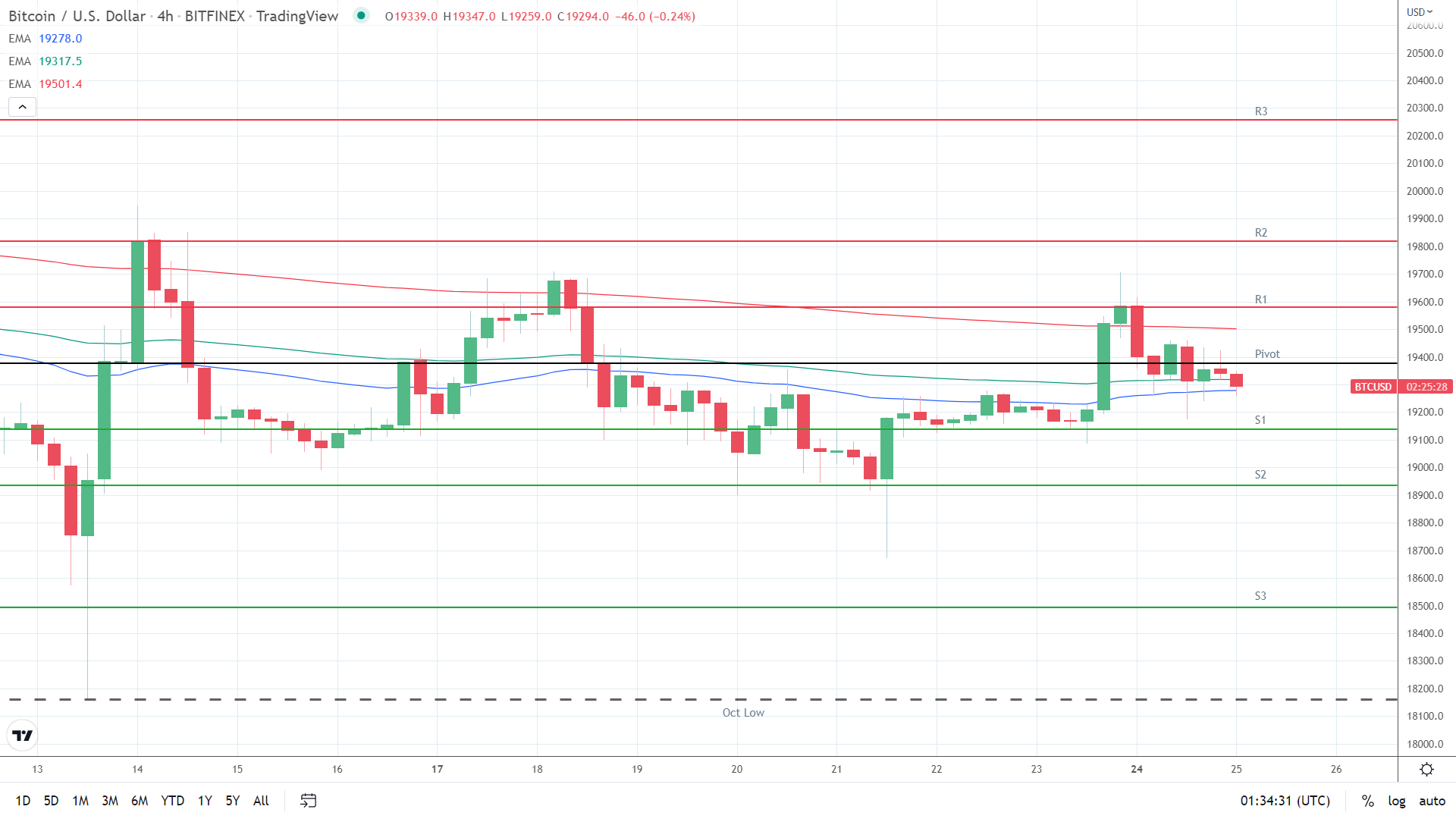
The Fear & Greed Index Falls to 20/100 Despite BTC Avoiding Sub-$19,000
Today, the Fear & Greed Index fell from 22/100 to 20/100. The fall deeper into the Extreme Fear zone came in response to the disappointing economic indicators from the EU and the US. Despite the weak numbers, the probability of a 75-basis point rate hike for November and December increased.
This morning, the FedWatch Tool had the probability of November and December rate hikes at 95.5% and 54.9%, respectively. One day ago, the likelihood of a 75-basis point hike in December stood at 45.6%.
For the bulls, the Index will need to continue avoiding sub-20/100 to support a shift in sentiment. However, a fall to sub-20/100 would signal a BTC slide to sub-$18,000.
Bitcoin Price Forecast
Every new Bitcoin analysis as it publishes, today's technical signal and key levels, live price — on one page.
See all Bitcoin forecasts
Bitcoin (BTC) Price Action
At the time of writing, BTC was down 0.25% to $19,292. A mixed start to the morning saw BTC rise to an early high of $19,347 before falling to a low of $19,259.
Technical Indicators
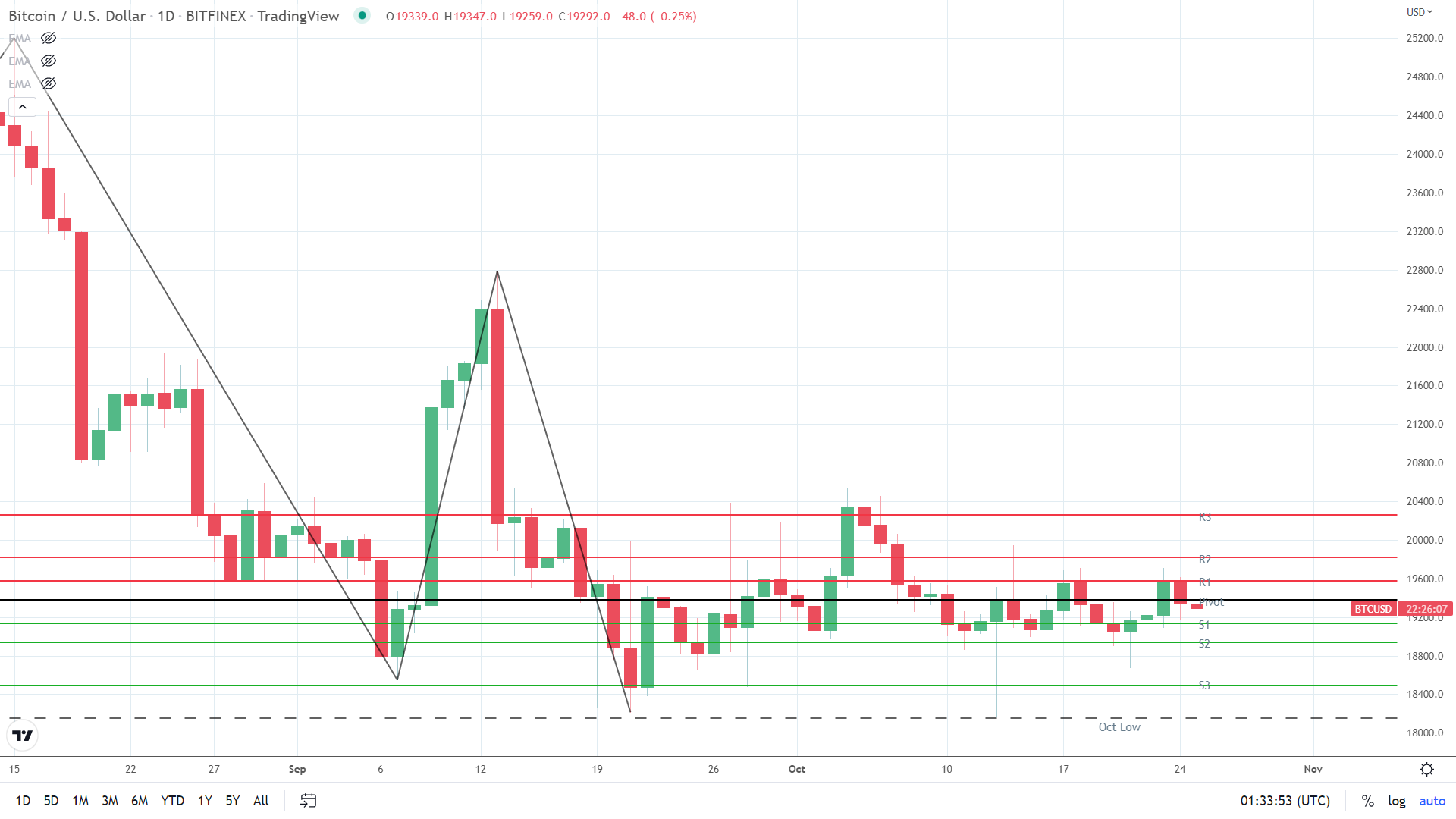
BTC needs to move through the $19,376 pivot to target the First Major Resistance Level (R1) at $19,579 and the Monday high of $19,615. Economic data from the US would need to be crypto-friendly to support a breakout from $19,500.
In the case of an extended rally, the Second Major Resistance Level (R2) at $19,817 and $20,000 would likely come into play. The Third Major Resistance Level (R3) sits at $20,258.
Failure to move through the pivot would leave the First Major Support Level (S1) at $19,138 in play. Barring an extended sell-off, BTC should avoid sub-$19,000 and the Second Major Support Level (S2) at $18,935.
The Third Major Support Level (S3) sits at $18,494.
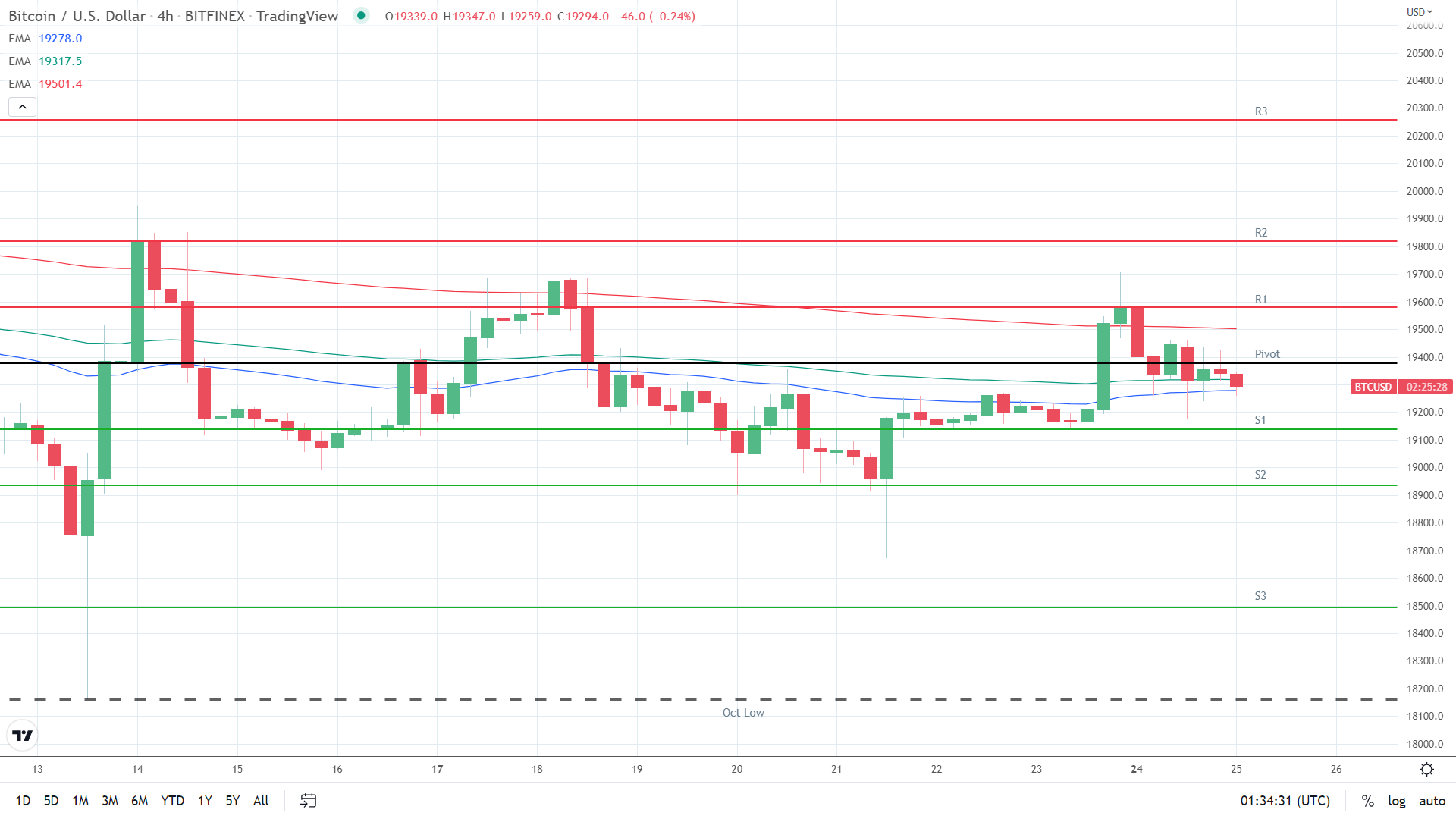
Looking at the EMAs and the 4-hourly candlestick chart (below), it was a bearish signal. This morning, bitcoin sat below the 100-day EMA, currently at $19,318. The 50-day EMA flattened on the 100-day EMA, while the 100-day EMA eased back from the 200-day EMA to deliver mixed signals.
BTC needs to break out from the 100-day EMA ($19,318) to give the bulls a run at the 200-day EMA ($19,501) and R1 ($19,578). However, a fall through the 50-day EMA ($19,278) would bring S1 ($19,138) into play.