One of the biggest is concern about France’s finances, and that is weighing on the euro. Elevated U.S. Treasury yields remain a challenge for equities, while softer American employment data have reduced expectations for another immediate Federal Reserve rate increase.
That being said, oil traders are balancing improving supplies against continuing geopolitical risks and a slow rollout of finalized products. The result is a very uneven market, with regional and company developments sometimes outweighing the broader economic picture.
Euro Is Under Pressure Again
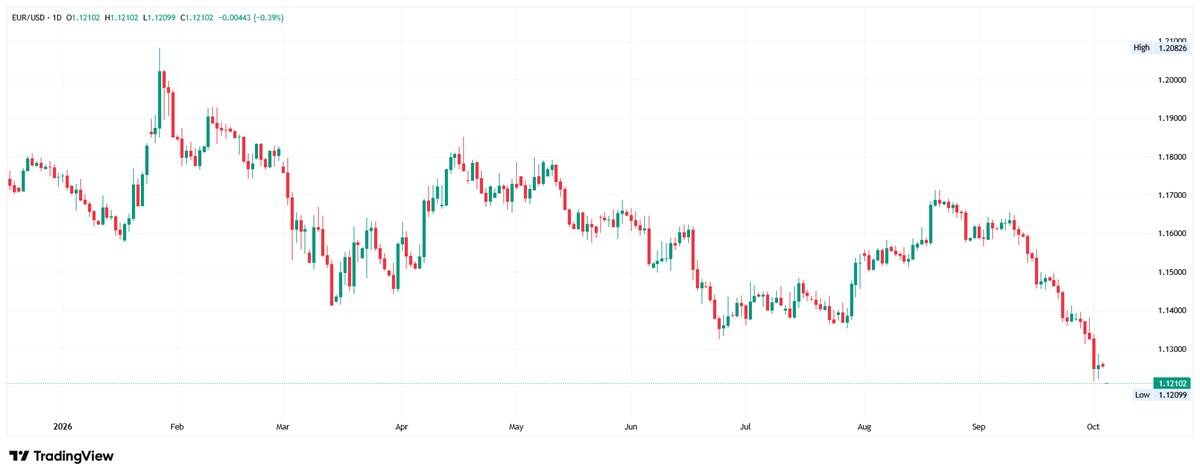
For the forex markets, the most consequential development is pressure on the euro again. The euro fell to 1.1160 at one point, reaching its lowest level in 17 months before recovering some ground.
French equities continued to weaken, with the CAC 40 declining about 1% during the early part of the session. These moves reflect concern about France’s debt burden and whether its government can deliver budget reforms needed to improve investor confidence.
Higher Bond Yields Do Not Always Support a Currency
This illustrates a significant distinction in analysis of forex markets. Yields rise because investors expect stronger growth or tighter monetary policy, and they do tend to attract capital. When they rise because investors demand compensation for fiscal or political risk, however, the currency can actually weaken.
This situation highlights why traders need to examine the reason behind a yield increase rather than just assuming that higher yields mean a bullish currency.
Brent Oil Price Forecast
Every new Brent Oil analysis as it publishes, today's technical signal and key levels, live price — on one page.
See all Brent Oil forecastsU.S. Treasury yields remain elevated, with the benchmark 10-year yield close to 5.28% this morning. That level continues to influence markets because bonds provide a reference point for borrowing costs and investment returns. Higher yields mean financing expenses for businesses and households will continue to be a potential drag on the economy.
With bonds offering a guaranteed return, they can become more competitive with equities over the longer term. Technology companies can be particularly sensitive—think Nasdaq—because investors often value them heavily on profits expected further into the future.
The other side of the coin is that the monetary policy outlook has offered a little bit of relief, as softer U.S. employment data now reduce expectations for another Federal Reserve rate hike this month. Early Monday pricing suggested roughly a 22% probability of an October hike, compared with 64% the previous week. That shift has helped support Asian equities at the beginning of the session, and it also explains why markets remain relatively resilient despite the cost of financing and borrowing capital.
Many Competing Forces for USD Attention
The dollar, therefore, faces a lot of competing influences. Reduced expectations for an immediate Fed rate hike can undermine its interest-rate advantage, but at the same time, concerns about European finances can make the dollar a little more attractive. If confidence in Europe deteriorates rapidly, the euro could remain under pressure, driving the value of the U.S. dollar higher against multiple markets.
Oil adds another layer to this problem. The oil market continues to see a bit of a recovery from Middle Eastern pressures, and the planned G7 release of 100 million barrels of crude and diesel is helping drive down prices. Persistently expensive oil can raise transportation and production costs for companies across the board, so it is not just an energy equity story.
Conversely, sustained improvements in supply could reduce inflationary pressure and give policymakers more room to pause. These relationships are conditional, however, because currency reactions and stock market movements depend on relative policy expectations, trade exposure, and whether investors interpret falling oil as supply relief or weakening demand.
The central task today will be to determine which of these forces dominates each asset: monetary policy, fiscal confidence, energy costs, or news involving a particular country or company. Taking these distinctions into account should provide a clearer analysis than treating every move as part of one uniform risk-appetite story.