WTI Crude Continues to Watch the Gulf of Mexico for a Return

WTI crude oil is being shaped by the return of offshore production in the Gulf of Mexico after the hurricane, alongside an American inventory picture that had been tightening before the storm. The question at this point in time is going to be whether or not supply outweighs continuing demand for crude from refiners and overseas buyers.
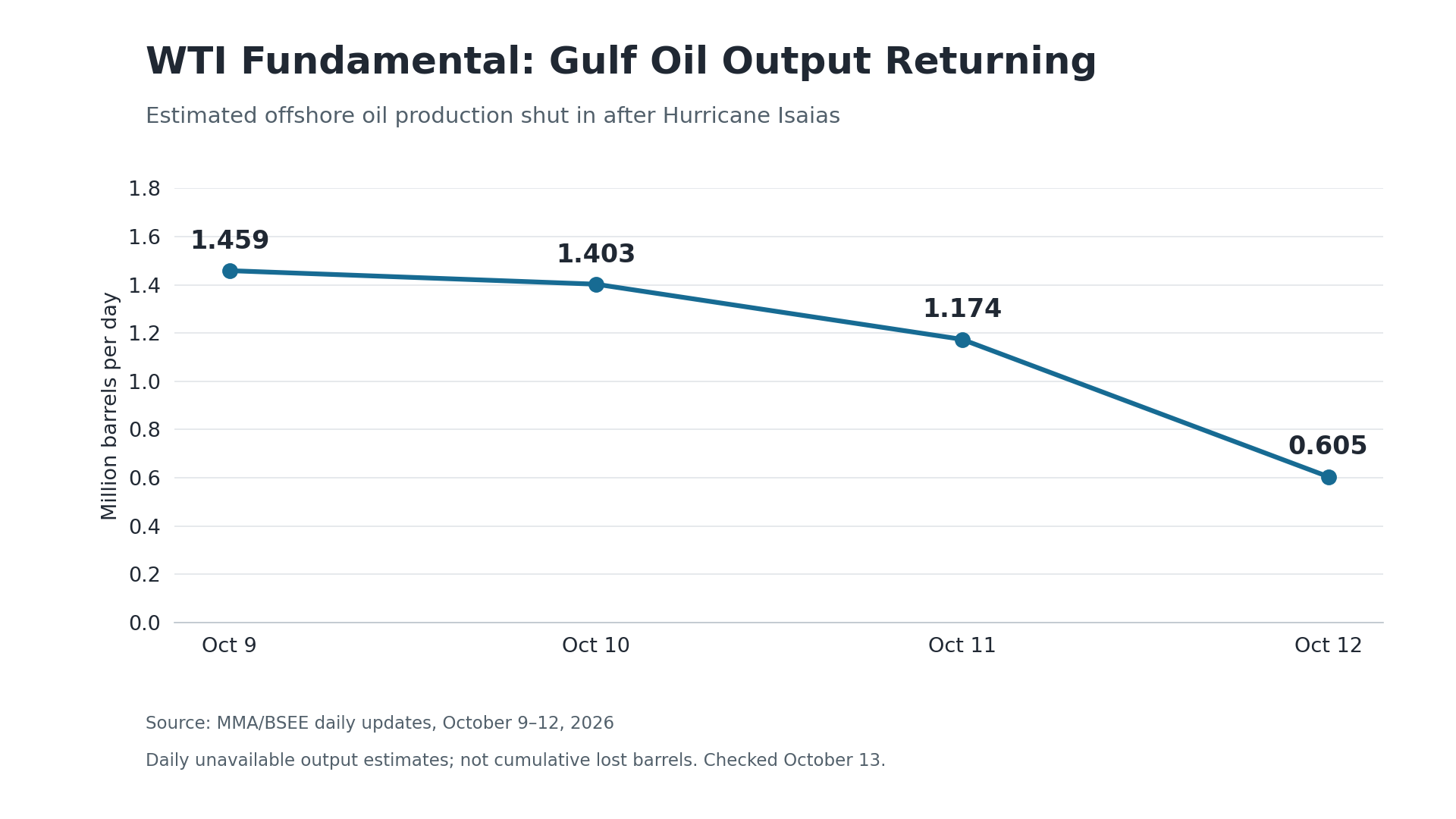
The latest federal offshore update from yesterday shows that an estimated 604,000 barrels per day of Gulf crude oil production remained shut in, representing 29.63% of regional output. This compares to 1.45 million barrels, or 71.51%, on October 9. The decline indicates that we are starting to see a bit of a recovery in available supply, and for WTI, this removes part of the immediate support associated with storm precautions.
That being said, almost 605,000 barrels daily remained offline, and this is going to be extended a bit as federal regulators say facilities require inspections before restarting. Damaged infrastructure could take longer to return to production if they do, in fact, find it.
The latest EIA weekly balance sheet from October 2, before the shutdowns, suggested commercial crude inventories fell 3.2 million barrels to 424.1 million barrels. Refinery crude inputs increased by 223,000 barrels daily to 16.48 million, while exports rose to 4.765 million barrels daily from 3.57 million barrels during the previous week.
This suggests that stronger refinery processing and export demand continues rather than proving acceleration in consumer demand in the United States. Four-week gasoline supply was slightly below its level from the previous year, with distillate inventories standing at 105.1 million barrels, 13.5% below a year earlier, showing the vulnerability of fuel supplies as conflicts continue in the Middle East and Russia, alongside the hurricane impact.
Refiners have an incentive to secure feedstock when availability of diesel is constrained, although their ability to respond will depend on operating capacity and, in this case, logistics. Recovering offshore output could replenish supplies and reduce urgency among buyers.
The next EIA weekly petroleum status report is on Thursday at noon Eastern Standard Time due to Monday’s federal holiday. The balance in this market remains conditional. Restoration of Gulf output eases some scarcity, while fuel shortages and export requirements offer some support.

Potential Targets
Currently, the market looks as if it is consolidating above the 50-day EMA but below the $95 level. Until the next EIA report comes out, barring any shock headlines, the market looks content to wait to see what the supply chain looks like after the hurricane.
Brent Sees Insurance and Delivery Problems as Major Issues
In the Brent market, we see a lot of interest paid to maritime disruption in the prospect of faster emergency fuel deliveries. Policymakers are trying to relieve shortages at the same time while producers warn that transport costs continue to obstruct flows of energy across the planet. On October 12, ministers from countries participating in the OPEC+ Declaration of Cooperation emphasized the importance of protecting maritime routes.
Brent Oil Price Forecast
Every new Brent Oil analysis as it publishes, today's technical signal and key levels, live price — on one page.
See all Brent Oil forecastsThe statement said energy-flow interruptions had driven shipping insurance costs above one-third of the commodity’s value. This is the ministers’ assessment as a whole on the state of the situation and does not necessarily apply to every cargo.
For Brent, these costs will matter more for this asset, as it does not automatically restore affordable deliveries due to production. Longer journeys, insurance premiums, and constraints on logistics can keep refiners’ acquisition costs elevated.
The International Energy Agency’s October 11 statement reinforced a concern about diesel availability. The executive director urged members to accelerate previously pledged stock releases, prioritizing diesel, and it should be noted that, as of late, Donald Trump in the United States has been mentioning diesel quite a bit. The agency also noted that renewed attacks on Saudi civilian and energy infrastructure only complicate the situation.
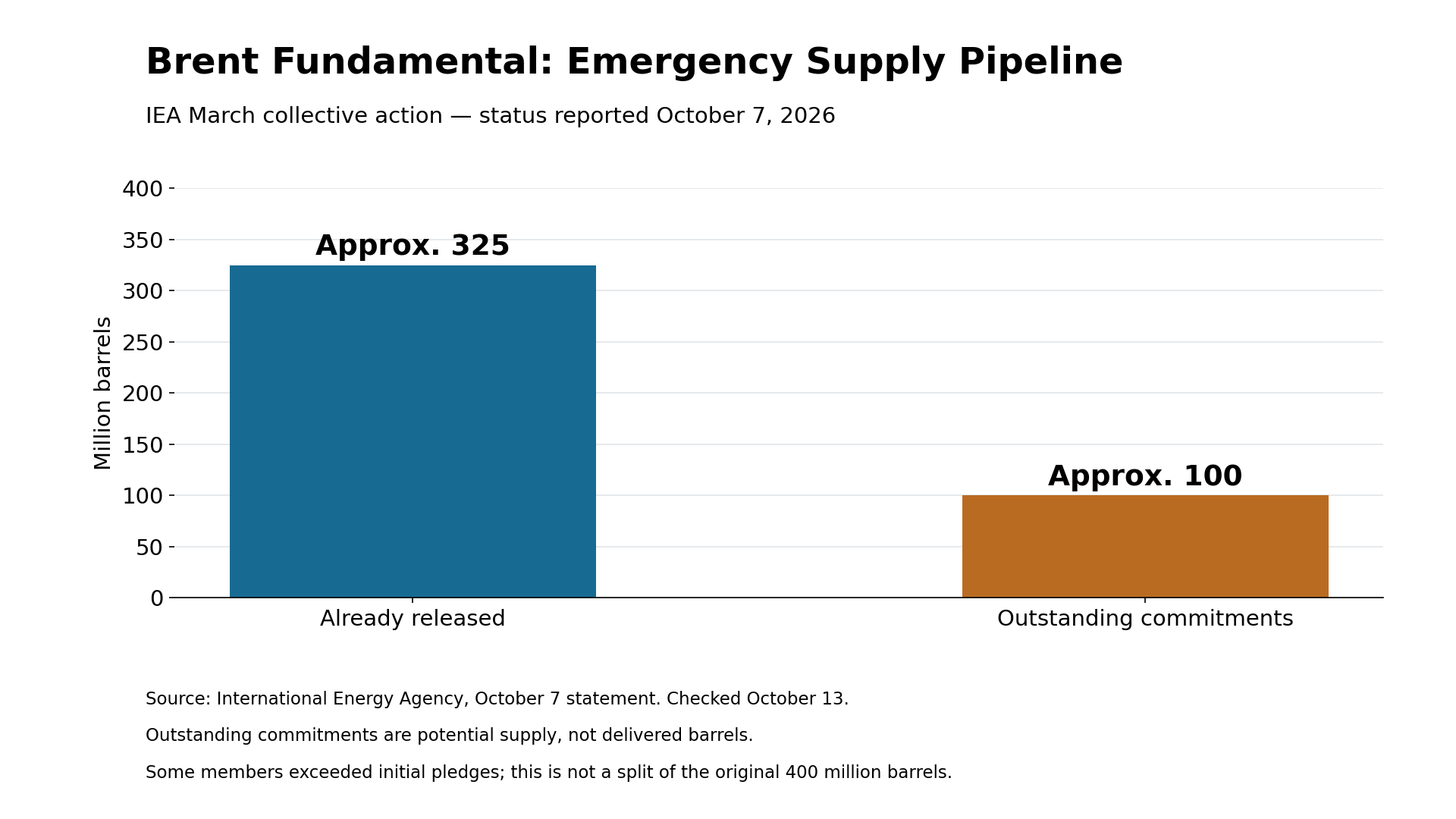
These are not new deliveries. These are a continuation of previously decided-upon action in March of roughly 325 million barrels. Completing the outstanding commitments would bring approximately another 100 million barrels to market, although some countries have exceeded their original pledges.
The potential supply relief is somewhat meaningful if diesel reaches buyers quickly. However, emergency stocks provide temporary assistance rather than replacing production, refineries, or shipping routes. The effectiveness will depend on product composition, location, and delivery timing.
The EIA has an October outlook that supplies context for what is going on. It estimates global inventories declined by 1.9 million barrels daily in the third quarter and forecasts another 700,000-barrel daily draw in the fourth quarter. Its $105 fourth-quarter Brent forecast is a spot-priced average, not necessarily written in stone.
The IEA governing board meets October 15, and this should give us a heads-up to the next policy. Brent faces competing forces: costly, vulnerable transport supplies and scarcity premiums, while accelerated reserve deliveries could relieve some of the pressure.
Potential Targets
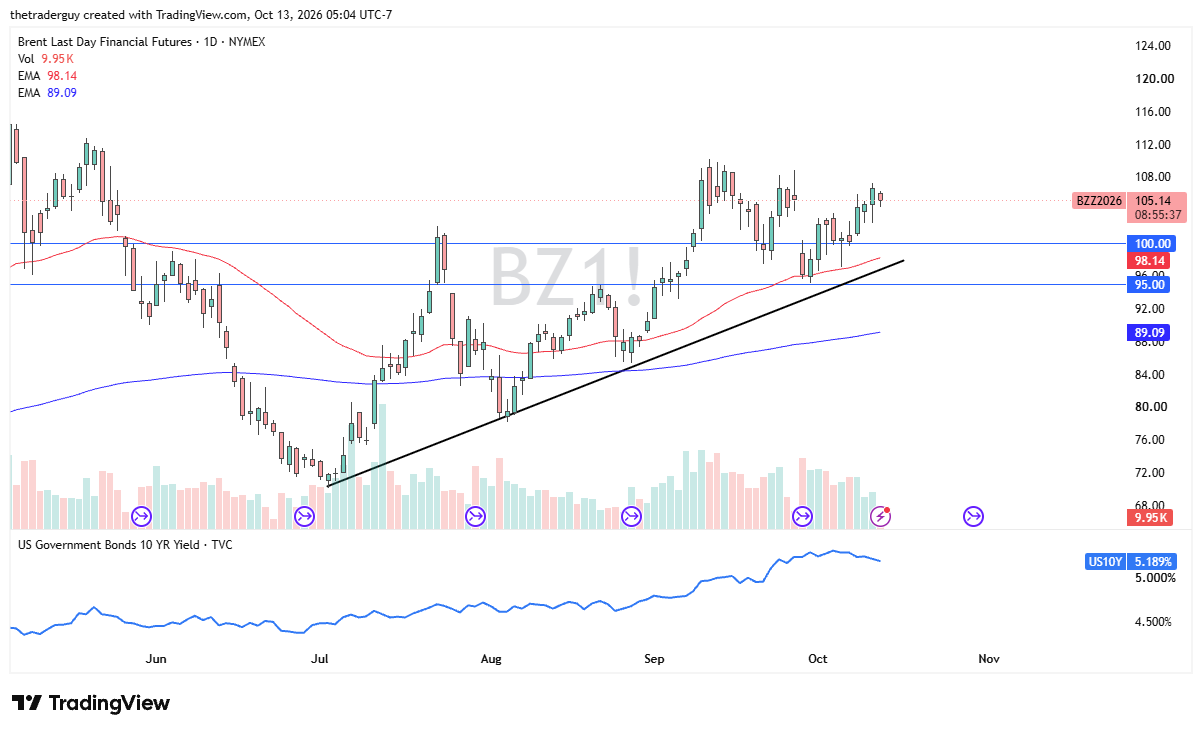
The market currently looks as if the $100 level is offering significant support, and a pullback to that area could very well attract value hunters. The $111 level above is an area that I suspect the market could go looking to with signs of supply constraint again. If the market were to break down below the 50-day EMA, I would be looking for support near the $95 level, where we had seen action previously.
If you’d like to know more about how to trade natural gas, please visit our educational area.