
The Dow Jones Industrial Average remains caught between hopes for trade deal and pressure from high borrowing costs. The index recovered on Friday after a sharp decline on Thursday, but elevated Treasury yields, rising oil prices and weaker consumer spending continue to limit the upside. The progress in tariff talks between U.S. and Canada could ease cost pressures on major industrial companies and improve market sentiment. The record AI investment continues to support economic growth but expensive financing and uncertain returns create new risks.

Trump-Canada Tariff Talks Could Support Dow Jones
The U.S. and Canada are attempting to draft a trade deal before the new tariffs go into effect. Negotiators met for a third straight day on Friday. If the two countries don’t reach an agreement, President Trump has threatened to impose a 50% tariff on approximately $20 billion in Canadian products.
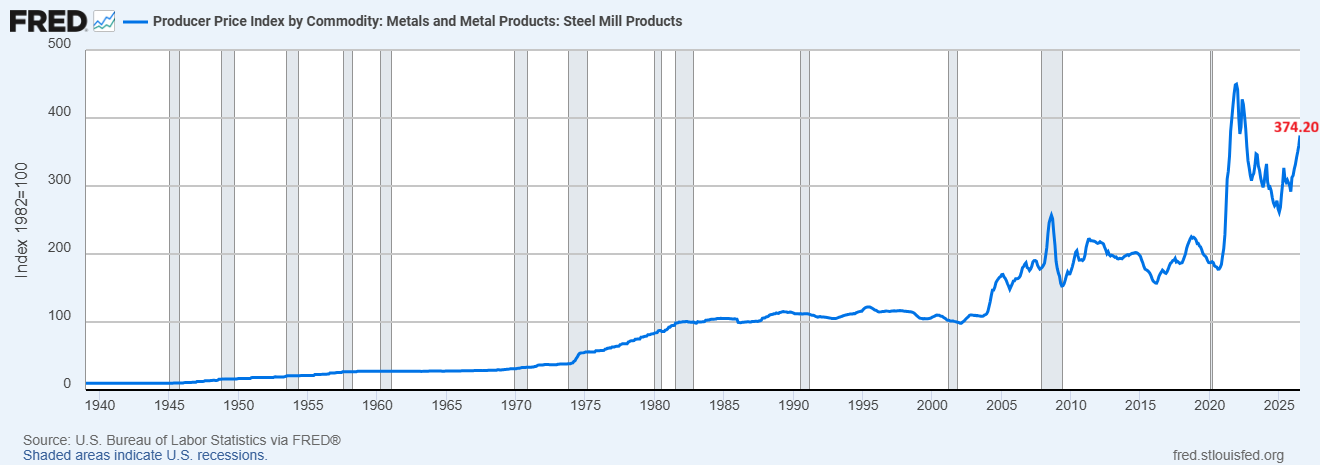
Canadian officials said that the two sides were quite near a deal. The proposed terms could include a cut in tariffs on Canadian made vehicles from 25% to 15%. They might also be able to reduce the tariffs on steel and aluminum from Canada from 50% to 25%.
A confirmed deal would eliminate the immediate concern for Dow. Industrial companies may be able to save on input costs if metal tariffs are reduced. The reduced pressure on the supply chain might be good for Caterpillar Inc.(CAT), Boeing Company (BA), Honeywell and 3M Company (MMM). A deal also could mitigate inflation as tariffs tend to drive up prices of imported goods and products.
Dow Jones Price Forecast
Every new Dow Jones analysis as it publishes, today's technical signal and key levels, live price — on one page.
See all Dow Jones forecastsTrump Tariff Talks With Brazil and Beef Imports Target Inflation
President Trump also had a phone call with Brazil’s President, Luiz Inácio Lula da Silva, on Friday. The two leaders touched on the U.S. tariffs imposed on Brazil’s exports. The U.S. levied duties of 25% on certain products and 12.5% tariff on products related to forced labor. President Trump indicated that there should be a meeting between officials of the two countries soon. This creates an opportunity for negotiations, although there is still a possibility of countermeasure activities from the Brazilian side. According to some sources, Brazil already had a process underway that could culminate in action against the United States.
President Trump also said that the easing of beef prices is also a temporary step. The plan proposes to import as many as 300,000 metric tons of ground beef over the next three months without impacting current tariff quotas. The imported meat would be priced “25% lower” than meat now available. The measure may help to relieve some of the food inflation, but its impact on general inflation may be limited.
The developments indicate that President Trump is still ready to apply tariffs as a negotiating tool. But he is also willing to lower barriers to trade when high prices are a concern. This solution may be a short term market relief, but it may not reduce the broader uncertainty of multinationals.
Higher Treasury Yields Pressure the Dow Jones
The Dow Jones dropped 0.84% on Thursday and closed at 53,265. The S&P 500 dropped 1.43% and the Nasdaq 100 dropped 2.52%. The Walmart Inc. (WMT) stock fell by over 10% after the company posted lower comparable sales in the U.S. and a disappointing earnings forecast. This drop had a big impact on price weighted Dow.
The market bounced back on Friday, but the recovery failed to eliminate the key risk. The 10-year Treasury yield closed in at 4.74%, while the 30-year yield stayed near 5.27%. The technology and other growth-sensitive stocks continued to be weighed down by higher yields.
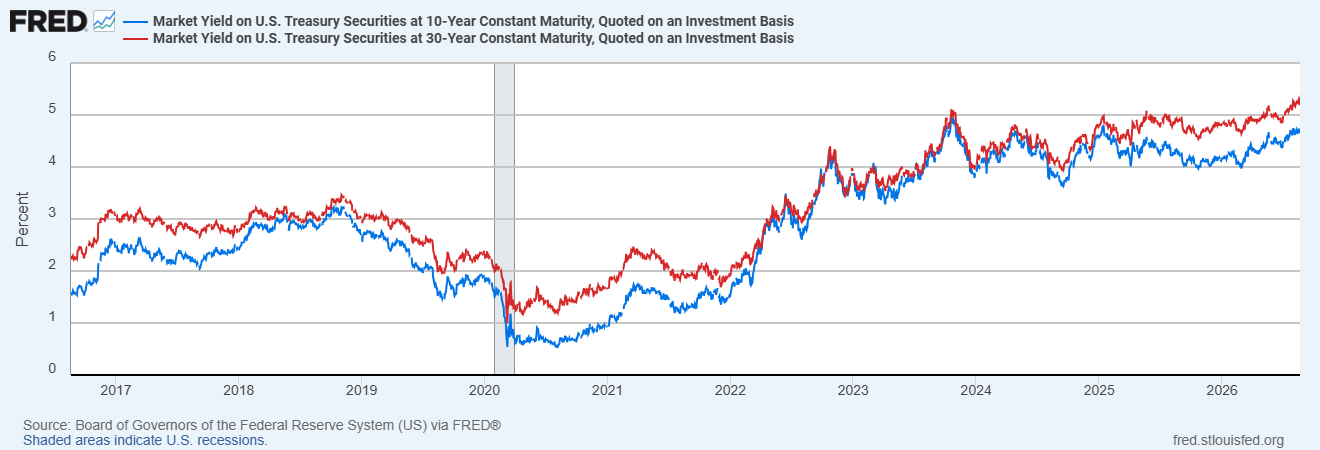
The big debt-buyback programme, launched by the Treasury Department, provided only a short term relief. The government will at least double its purchases of longer-term debt from $2 billion to $4 billion per operation. Treasury Secretary Scott Bessent also suggested that the amount could rise further. But investors remain concerned about government debt, inflation and the large volume of bonds entering the market.
An increase in yields increases the cost of borrowing for households and businesses and enhances the appeal of bonds over stocks. This can decrease valuation of future earnings that investors are willing to pay for. Therefore, the high Treasury yields increase the risk for the US stock market.
Rising Oil Prices and Walmart Weakness Raise Consumer Risks
Another risk comes from the oil market. WTI oil trades near $87 per barrel and Brent oil trades near $94. The increase in oil prices supports Chevron Corporation (CVX) and other energy firms. But this also drives up transportation and production expenses for the economy as a whole. They also decrease the purchasing power of consumers for other products.
The performance of Walmart could be a sign of trouble. An increase in the price of gasoline and other expenses can lead households to cut down on discretionary items. This could impact Amazon.Com Inc. (AMZN), Home Depot Inc. (HD), Nike, Inc. (NKE) and other consumer focussed Dow companies. It might also help to keep inflation high and the Fed rates high.
Record AI Investment Supports U.S. Economic Growth
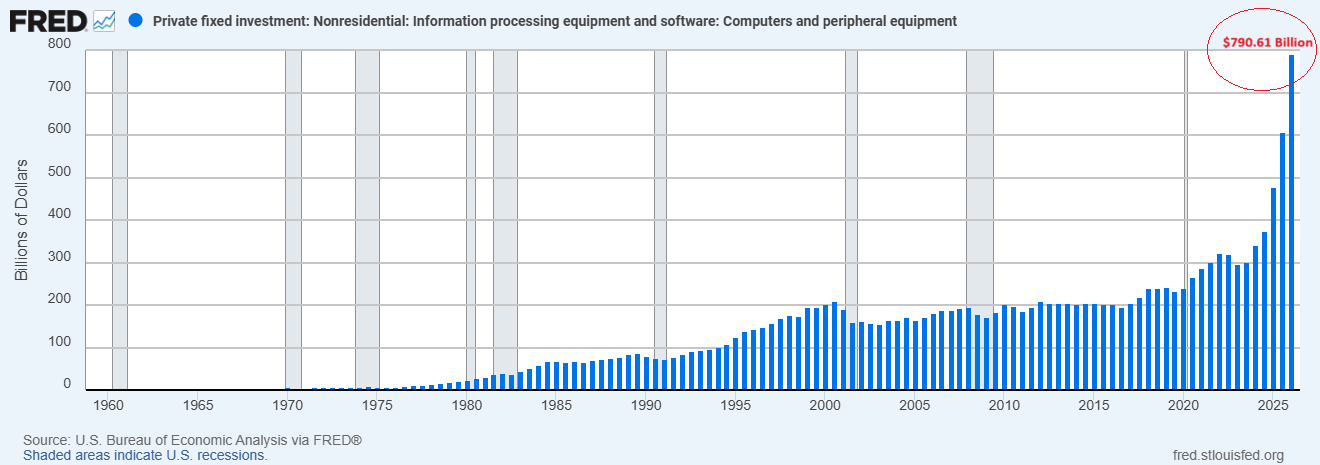
The AI investment boom provides strong support for the economy of the United States. The chart below shows a sharp increase in private investment in computers and peripheral equipment. The investment amounted to $790.61 billion in the first half of 2026. The investment peaked at around $210 billion during the peak of the Dotcom boom in the second half of 2000.
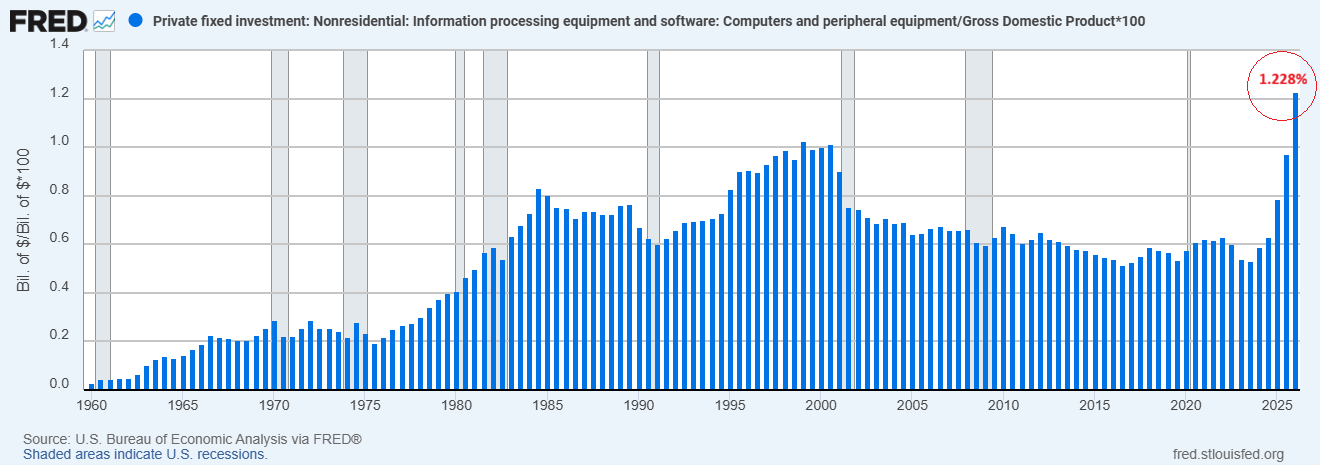
The same investment relative to nominal GDP was 1.23% in the first half of 2026. This was higher than what happened during the Dotcom boom.
This is backed up by the larger time frame chart. It contrasts the expected growth in AI with past investment cycles. These are canals, railroads, electrification, highways and telecommunications. The AI buildout in 2025-2032 is nearly 2.8% of GDP. This is much higher than the railroad boom and many times greater than the electrification cycle.
The above data measure various phases of the investment cycle. This data covers computers and peripheral equipment while the historical estimate provides the broader AI ecosystem. This encompasses data centers, power systems, cooling equipment, networking and specialty chips. Both are still indicative of unusually high level of investment boom.
Big Tech AI Spending Supports Growth but Raises Debt Risks
The big cloud firms’ spending plans are still good. Amazon has raised the capital expenditures forecast for the 2026 fiscal year to some $220 billion. Alphabet Inc. (GOOG) jacked up its forecast to $195 billion to $205 billion. Meta Platforms (META) is projected to spend $130 billion to $145 billion and Microsoft Inc. (MSFT) is still looking at $190 billion.
Cloud CapEx will grow by approximately 29% in 2027, according to Morgan Stanley. The consensus estimates are close to $1.2 trillion with Morgan Stanley projecting spending to $1.4 trillion. There is still shortage of computing capacity as demand remains strong. This supports Nvidia Corp (NVDA), Microsoft and Amazon. It also supports construction, power and industrial companies with ties to data center construction.
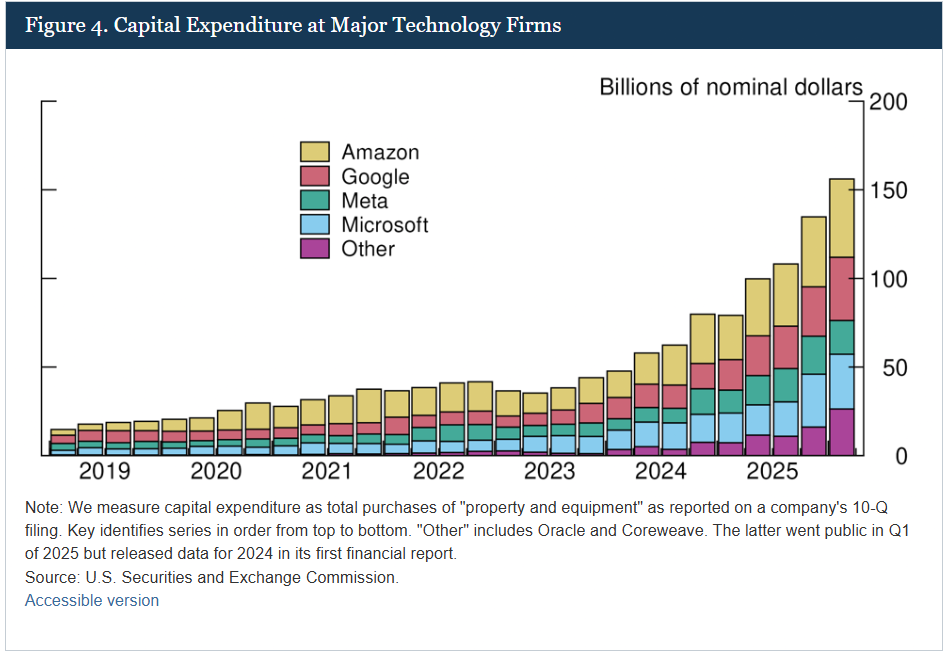
But this large spending also creates risks. AI businesses need to make sufficient revenue to justify the investment. The competition could reduce the price of AI services and squeeze profits. Higher interest rates may also make new data center projects more expensive.
The financing structure may need attention. Hyperscalers use leases, private credit and off balance sheet arrangement to fund deployment. These structures can make an investment grow faster and can diversify risks throughout the financial system.
Dow Jones Technical Analysis: Break Above 55,000 Targets 60,000
The weekly chart for the Dow Jones shows that the index has hit the target of 55,000 as discussed multiple times in previous analyses. This target was defined by the strong formation of an inverted head and shoulders pattern from September 2021 to October 2023, followed by the formation of an ascending broadening wedge pattern from February 2024. The emergence of a V-shaped recovery in March further supported this target.
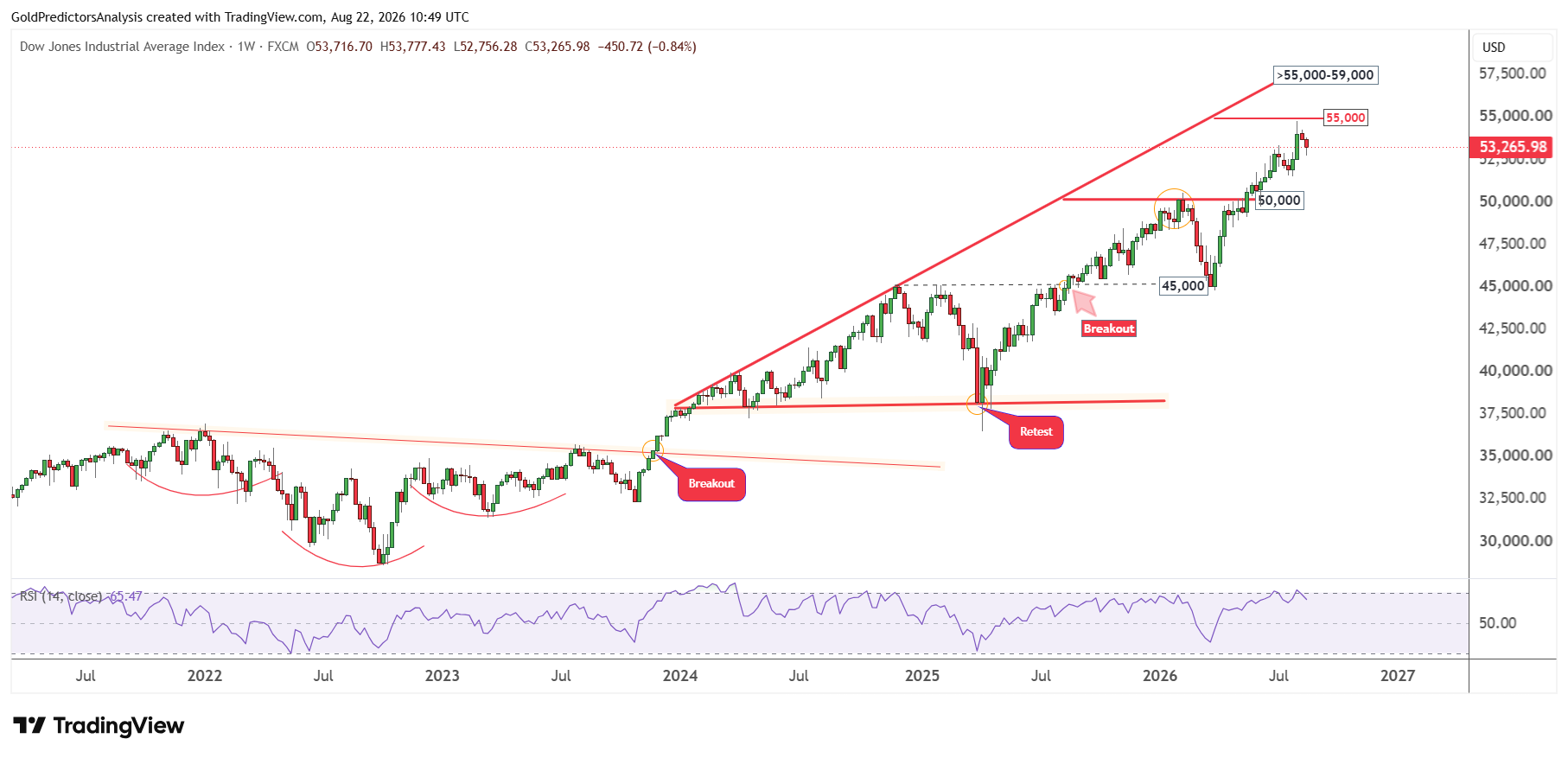
After hitting the target, the index dropped lower to mark a low at 52,756 and is now consolidating at lower levels. As long as the 50,000 levels hold in the Dow Jones, the possibility of an upside breakout above the 55,000 level is higher. A break above 55,000 will open the door for a strong rally toward the 60,000 area.
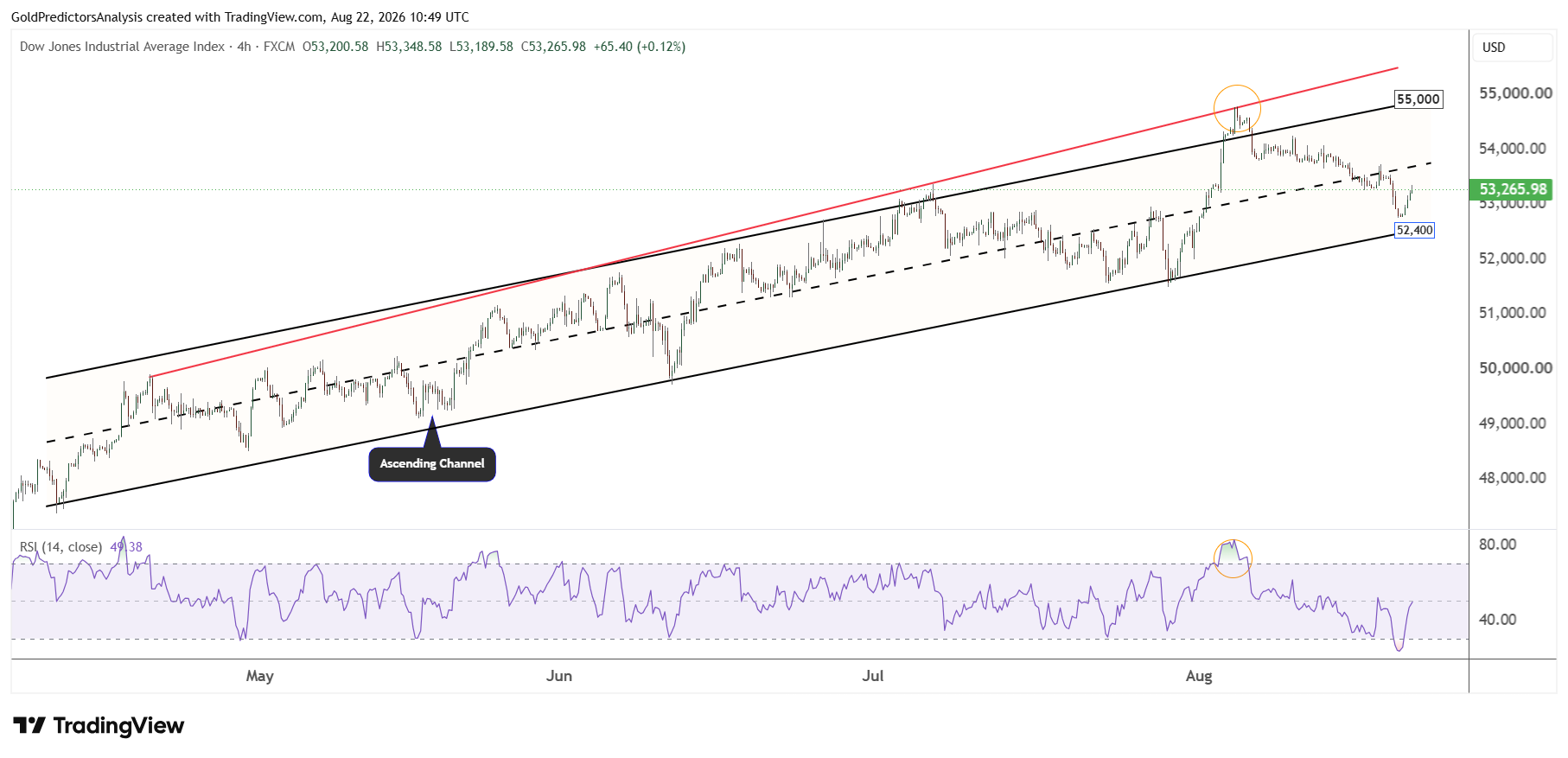
The short term price action for the Dow Jones shows that the price formed strong support at 52,700 last week and has now rebounded higher. Additional support remains at 52,400, which is defined by the lower boundary of the ascending channel pattern. As long as the 54,400 level holds, the possibility of another move toward the 55,000 level is higher in the short term.
What to Watch Next
The outlook for Dow Jones remains bullish but several risks could limit the rally. A trade deal with Canada could reduce cost pressures and improve market sentiment. But the main risks are still the elevated Treasury yields, positive outlook for oil prices and the drop in consumer spending. The strong AI investment supports economic growth but rising financing costs and uncertain returns could test the boom.
The technical outlook for Dow Jones depends on the 52,400 support and the 55,000 resistance. A break above 55,000 could open the way toward 60,000. But a break below 52,700 could introduce deeper decline to 50,000. The broader picture for Dow Jones remains bullish as long as the index holds 50,000.
Read more: Softer Inflation Supports Rally in US Stocks Despite Trump Tariffs