



The real debate begins after September.
Financial markets have started to price the possibility of at least one additional ECB rate increase, while a large majority of economists expect the central bank to stop at 2.50% and keep rates there well into 2027. The difference reflects two very different interpretations of the inflation shock caused by the war involving Iran.
Markets are increasingly concerned that higher oil, gas and transportation costs could eventually spread beyond energy and create broader inflationary pressures. Many economists, however, still see the current increase as primarily a supply-side shock—one that pushes prices higher without necessarily creating the kind of persistent domestic inflation that requires a prolonged tightening cycle.
A September Hike Looks Certain
The ECB has already raised its deposit rate once this year, taking it to 2.25% in June after a long period of easing. The central bank then kept rates unchanged in July, but policymakers increasingly signalled that another increase could be necessary.
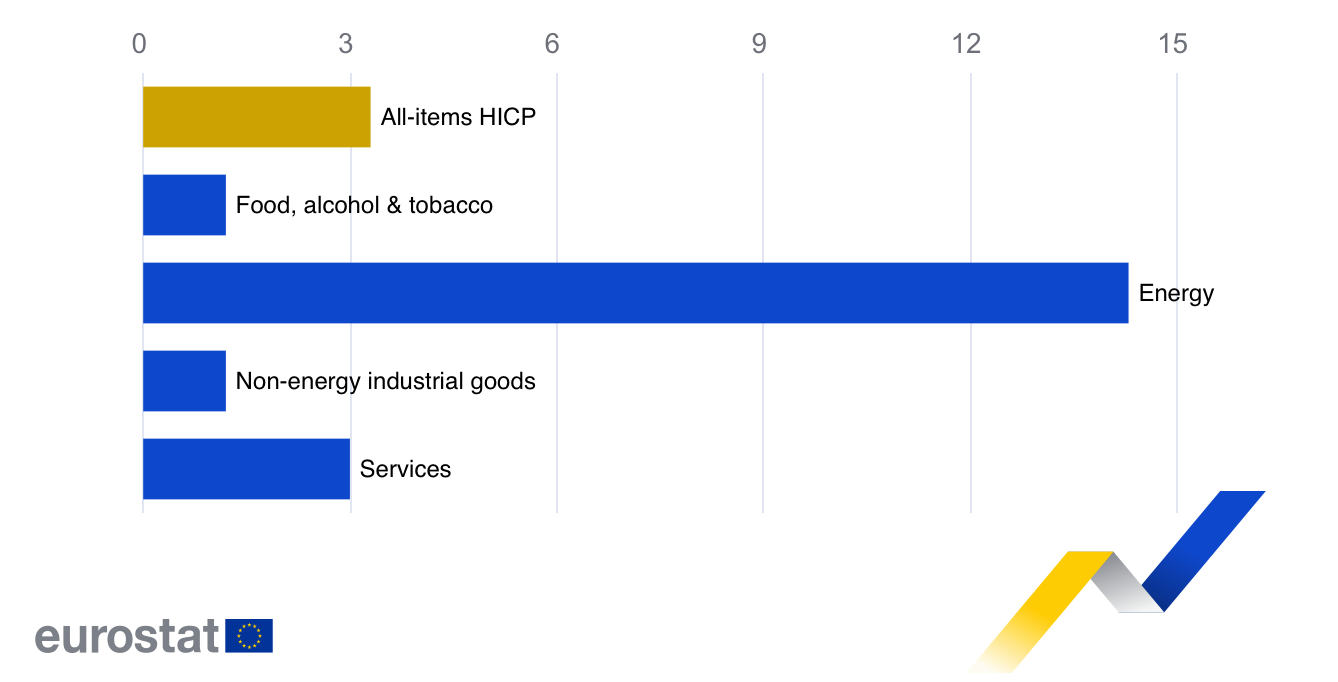
The case for September has strengthened considerably since then. Eurozone inflation accelerated to 3.3% in August from 2.9% in July, its highest level since September 2023. However, the composition of that increase matters. Energy inflation surged to 14.3% (vs 10.3% in July), while core inflation—which excludes energy and food—actually eased to 2.4% from 2.5%.
This is the central argument behind the disagreement over what comes next. If inflation is rising primarily because oil and gas have become more expensive, raising interest rates cannot directly solve the problem. Higher borrowing costs cannot increase the supply of energy or reopen disrupted shipping routes.
But the ECB has another concern: second-round effects. If consumers face persistently higher fuel, electricity and food prices, they may demand higher wages. Companies could then increase prices to compensate for rising labour costs, potentially creating a feedback loop in which an initial energy shock becomes a broader inflation problem.
That is where the ECB’s policy dilemma becomes much more complicated.
Brent Oil Price Forecast
Every new Brent Oil analysis as it publishes, today's technical signal and key levels, live price — on one page.
See all Brent Oil forecastsWhy Markets Are Pricing More Hikes After September
Interest-rate markets are increasingly taking the more cautious view.
Financial futures have been pricing another ECB increase beyond September, despite economists remaining considerably more reluctant to forecast one. Reuters reported that markets were pricing in as many as two additional increases over the following year.
Why? Because the Iran conflict has made the outlook for European energy prices unusually uncertain. Europe is particularly exposed to energy shocks because higher oil and gas costs can quickly feed into transportation, electricity and industrial production.
The latest inflation figures demonstrate how quickly this transmission can occur. Headline inflation has already moved above 3%, while energy inflation has accelerated sharply.
There is also evidence that the eurozone economy has been more resilient than initially feared. That matters because a central bank is more likely to tolerate higher rates when economic activity is holding up.
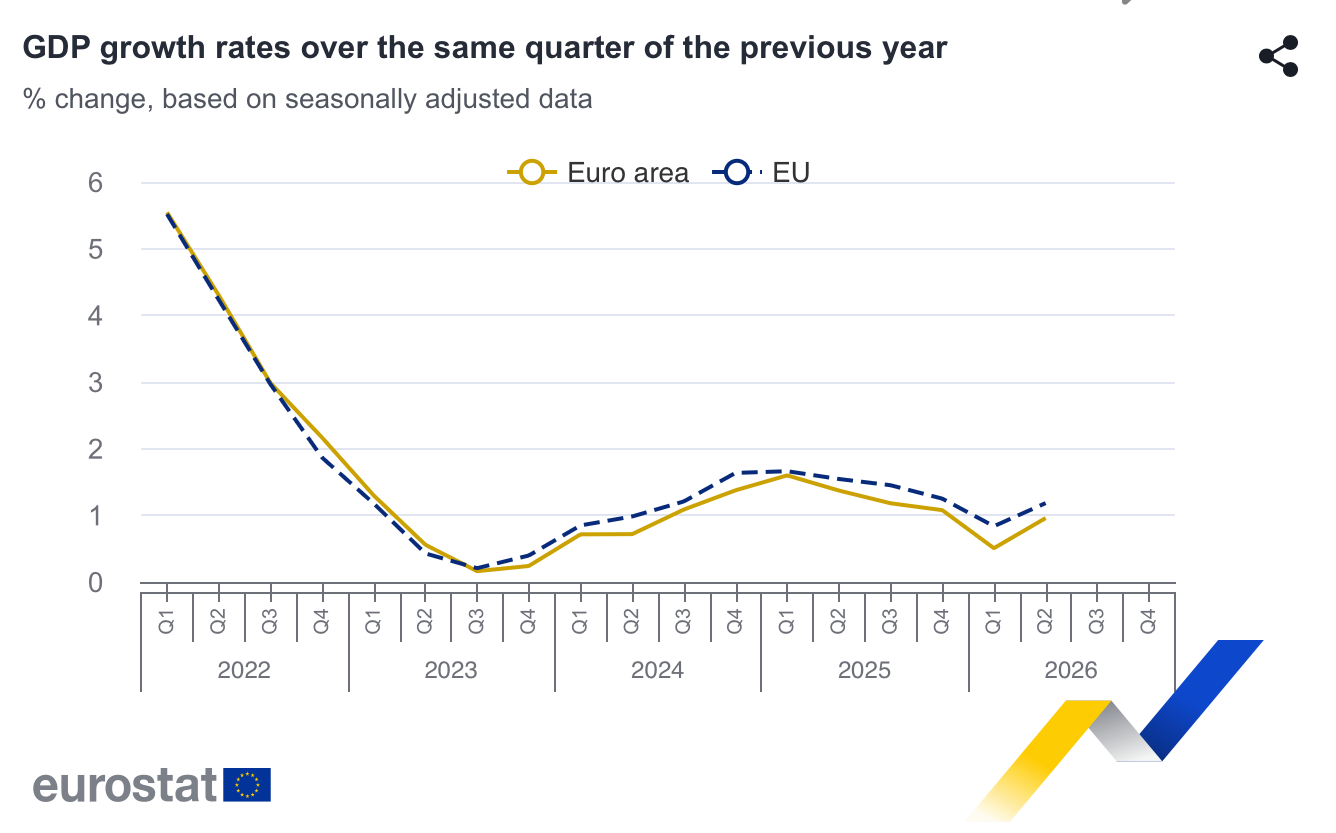
ING argues that the combination of resilient growth, higher headline inflation and elevated oil prices makes a September hike increasingly compelling. The bank characterises the move as an “insurance rate hike” designed partly to protect the ECB’s credibility and prevent temporary energy inflation from generating broader second-round effects.
From this perspective, waiting until wage growth and services inflation accelerate would risk leaving the ECB behind the curve.
ECB Executive Board member Isabel Schnabel has taken a similar, more hawkish position, arguing that interest rates may need to rise further because current policy settings may not be sufficient to bring inflation back to target over the medium term.
Why Many Economists Expect the ECB to Stop
The economists’ argument is different. The latest Reuters survey found that around 91% expect the ECB deposit rate to end 2026 at 2.50%, while 78% expect it to remain there through the middle of 2027.
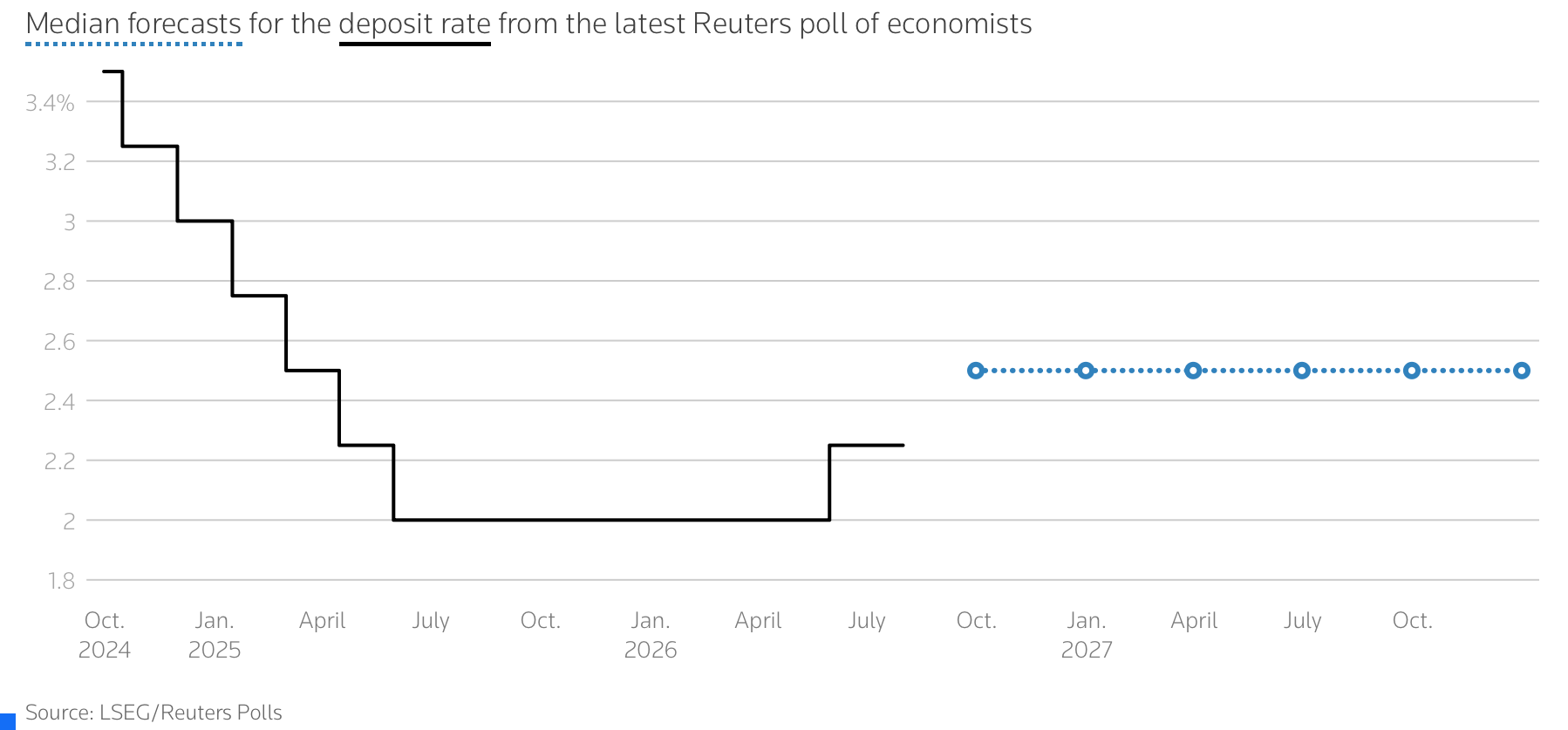
Their reasoning starts with the nature of the inflation shock. The eurozone’s current inflation problem is largely being created by energy prices. Core inflation remains much lower than headline inflation, while long-term inflation expectations remain relatively well anchored.
That is important because monetary policy is primarily designed to control demand-driven inflation. If households are spending too much, wages are accelerating rapidly and businesses are raising prices because demand is excessively strong, higher interest rates can cool the economy.
But if prices rise because oil becomes more expensive following a geopolitical crisis, higher rates can instead reduce consumption and investment without addressing the underlying cause of inflation.
That creates a difficult trade-off for the ECB.
ING’s analysts argue that going beyond 2.50% would represent a significant change in the nature of monetary policy. At 2.50%, rates would still be within the ECB’s estimated neutral range. Additional increases would indicate that policymakers believe genuinely restrictive monetary policy is necessary.
That is a much bigger decision than simply providing insurance against a temporary energy shock.
The Iran War Is the Variable that Could Change the Forecasts
The biggest risk to the economists’ “one-and-done” scenario is that the Iran conflict lasts longer than expected or intensifies. Higher oil and gas prices are manageable if they eventually stabilise. They become much more problematic if they continue rising for months.
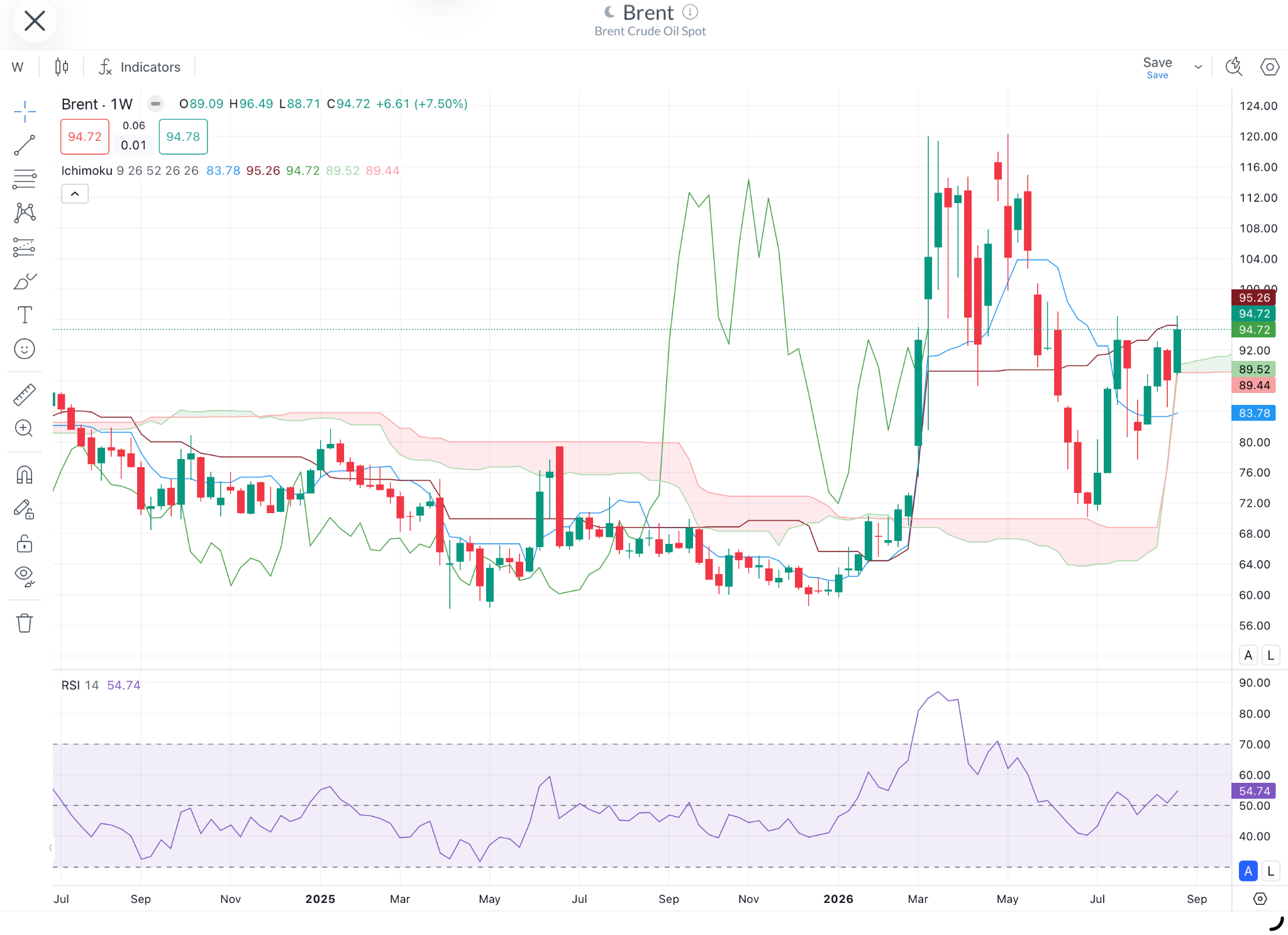
Natixis has highlighted the potential transmission mechanism: persistent increases in diesel, gasoline and food prices could lift consumers’ short-term inflation expectations. If that feeds into wage negotiations, the original energy shock could begin producing broader domestic inflation. That would change the ECB’s calculation.
Economists have already raised their 2026 eurozone inflation forecasts repeatedly this year, with the latest Reuters survey putting the average at 2.9%. Inflation is not expected to return to the ECB’s 2% target until late 2027.
In other words, analysts are not dismissing the inflation problem. They simply disagree over whether the ECB needs to keep raising rates to solve it.
Rising Bond Yields Create Another Reason for Caution
There is another factor that could discourage the ECB from tightening aggressively: the sharp increase in European bond yields.
Higher government bond yields automatically tighten financial conditions by increasing borrowing costs for governments, companies and households. From the ECB’s perspective, this can partly achieve the same objective as a policy-rate increase.
But the problem becomes more serious if borrowing costs rise unevenly across eurozone countries. A widening gap between the borrowing costs of stronger and more indebted governments could create renewed concerns about debt sustainability and financial fragmentation.
This means the ECB may have to balance two opposing risks: doing too little to contain inflation or doing too much and unnecessarily damaging economic growth and sovereign debt markets.
Sources: Reuters, ING, The Wall Street Journal, ECB, CNBC, Eurostat, MorningStar, Bloomberg