


Gold Lost Its Thursday Rally When Payrolls Put the Rate Trade Back in Control
Gold slid Friday after August payrolls came in at 162,000, triple the 53,000 estimate. The number pushed September rate-hike odds higher, lifted Treasury yields and gave the dollar an early bid. Gold fell from $4,490.89 to $4,365.57 before recovering part of the break.
At 19:08 GMT, Spot Gold (XAUUSD) is trading at $4,423.81, down $49.15 or 1.10%.
Thursday’s $101 rally had come from lower yields and a weaker dollar after Waller said he would lean toward holding rates steady. Friday’s jobs report gave traders a reason to put Warsh’s rate-hike warning back in front of the market.
Daily Spot Gold (XAUUSD) Technical Analysis
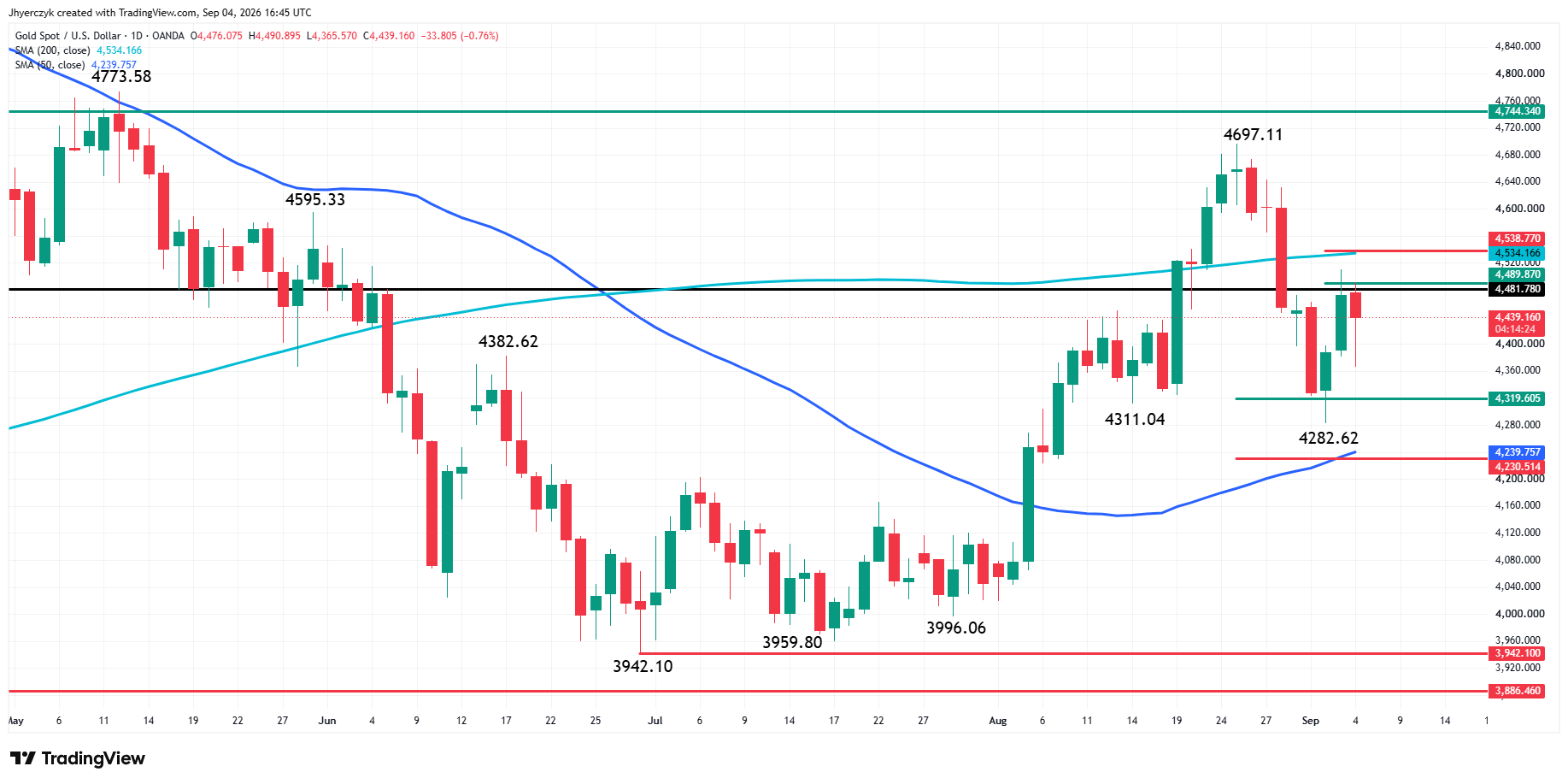
Spot Gold (XAUUSD) is lower late Friday but well off the session low. After a steady opening, gold plunged to $4,365.57 before rebounding to $4,440.00. The recovery showed buyers were willing to defend the break, but it did not produce a clear daily trend reversal.
The first resistance is the short-term 50% level at $4,489.87. The 200-day moving average at $4,534.09 and the short-term 61.8% level at $4,538.77 form the core resistance area above it.
The key support remains the intermediate retracement zone at $4,319.50 to $4,230.51. It stopped the selling Wednesday when gold reached $4,282.62. The 50-day moving average at $4,239.55 is inside that zone.
The intraday tone is constructive after the rebound from $4,365.57, but the pre-holiday session is producing a choppy trade with no clear trend. Gold needs to clear $4,489.87 to show buyers are taking control again. A failure to hold the recovery puts the $4,319.50 to $4,230.51 support zone back in play.
Gold Price Forecast
Every new Gold analysis as it publishes, today's technical signal and key levels, live price — on one page.
See all Gold forecastsPayrolls Gave the Hawks Their Number
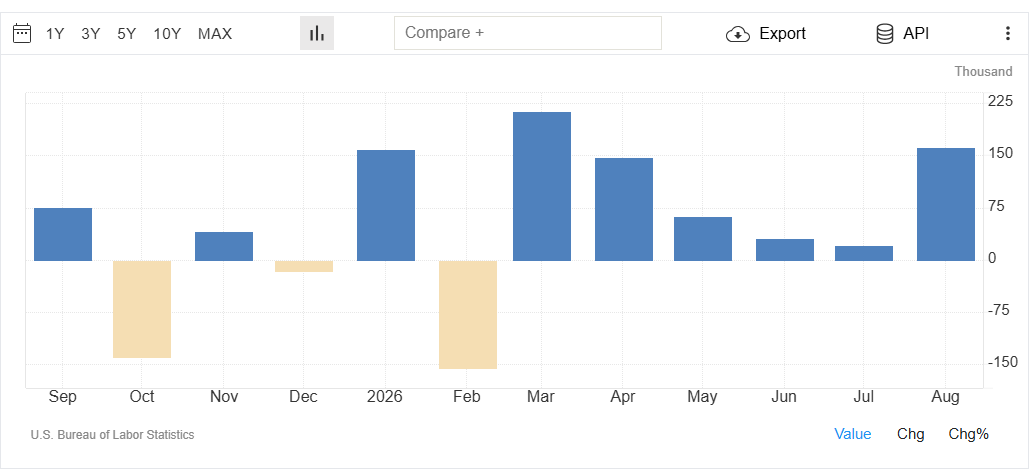
The market expected a weak labor report after July’s 23,000-job decline. August showed 162,000 new jobs. The unemployment rate held at 4.1%. June and July were revised higher. Traders lifted September hike odds to about 58% from 49.4% before the data.
Warsh said at Jackson Hole that the Fed could have more work to do if inflation did not move toward target. Waller pushed back Thursday by saying recent inflation data was improving enough to justify waiting one meeting. Friday’s number put Warsh back in front.
Gold had been trading the possibility that Waller’s view would pull yields and the dollar lower. The payrolls report took that away in the first hour.
The Two-Year Yield Led the Move
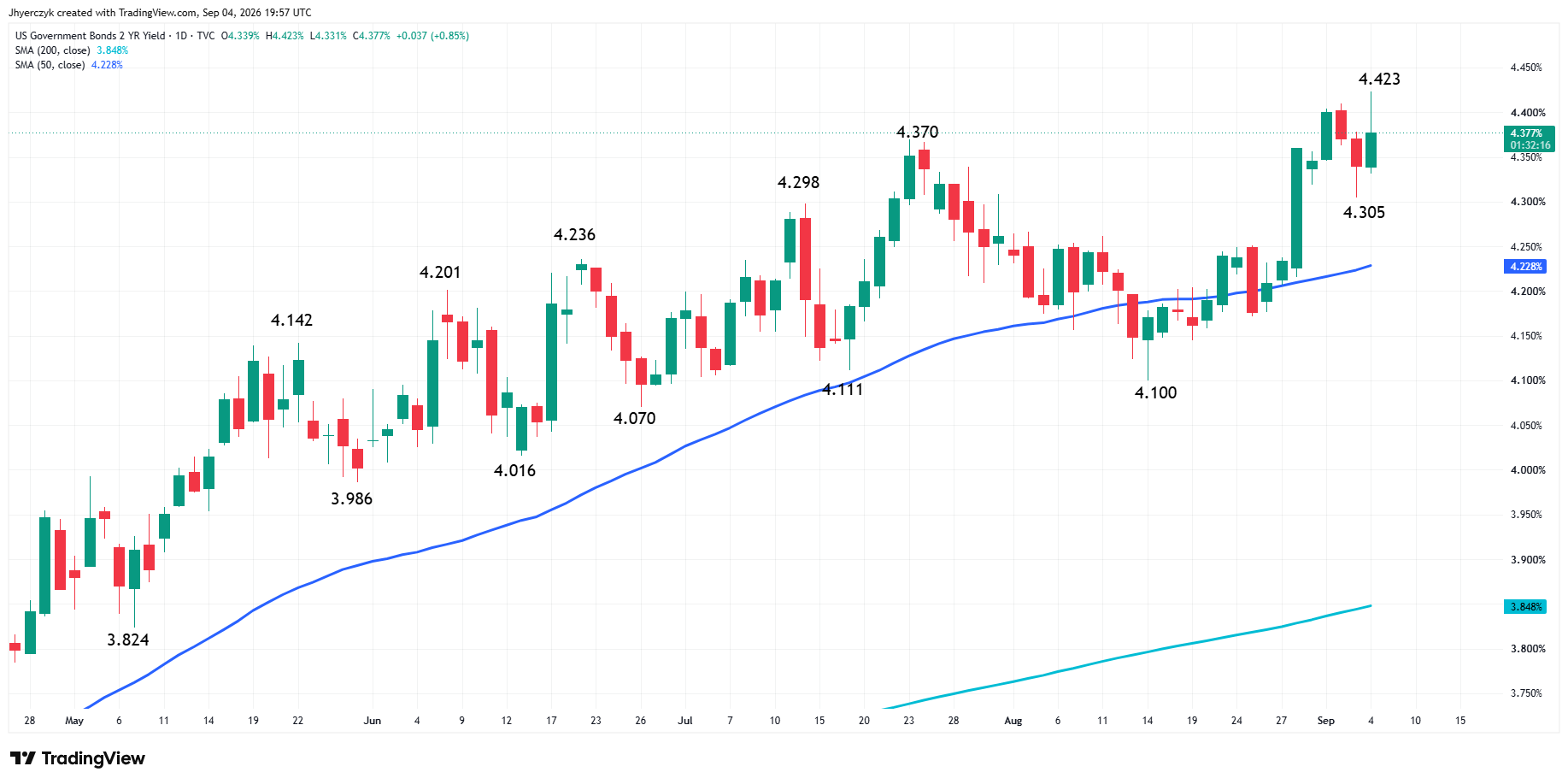
The two-year Treasury yield rose to about 4.38%, its highest since January 2025. The 10-year traded near 4.78%. The 30-year held near 5.24%. The short end led because the report changed the market’s view of what the Fed could do in less than two weeks.
The dollar index jumped after the report then gave back part of the advance. That helped gold recover from $4,365.57. Gold bounced off the low rather than extending straight down because other parts of the report were less clean for the hawks. The unemployment rate did not decline. Annual wage growth was at its lowest level since June 2021. The dollar rally faded after the first reaction as traders looked ahead to next week’s inflation reports.
Waller Can Still Point to Wages
The headline number was strong. The wage number was not. Waller said Thursday he would support holding rates steady if the next data confirms inflation pressure is easing. Slower wage growth gives him something to work with. Warsh can point to 162,000 new jobs, higher oil and inflation still above target.
The Fed does not have one message right now. Gold is caught between those two reads and Friday’s price action showed both sides. The metal fell $125 from Thursday’s high to Friday’s low. Then it recovered $58 from the low. Neither side had full control by late afternoon.
What to Watch
Next week’s inflation data takes over the gold trade. The Producer Price Index lands Thursday. Consumer inflation follows Friday. Core CPI is expected to ease to a 2.4% annual rate from 2.5% in July. Waller asked for cooler inflation to justify holding. Friday’s payrolls gave Warsh the stronger hand at 162,000 jobs with upward revisions.
PPI and CPI decide whether Waller gets it back. The two-year yield is at its highest since January 2025. The dollar jumped on the report and only gave back part of the move. Gold bounced from $4,365.57 but is still down $49 on the session after giving back most of Thursday’s $101 rally.
Gold is sitting between the 50% level at $4,489.87 above and the intermediate retracement zone at $4,319.50 to $4,230.51 below. The 200-day at $4,534.09 and the 61.8% at $4,538.77 are the resistance cluster that matters if buyers can get through the 50% level. The retracement zone stopped the selling Wednesday at $4,282.62 and the 50-day at $4,239.55 sits inside it.
Friday’s rebound from $4,365.57 was constructive but the pre-holiday session left no clear trend. Next week’s inflation numbers decide whether gold recovers toward the 200-day or retests the support zone that has been holding the market since Wednesday.
If you’d like to know more about how to trade gold, please visit our educational area.