
Impact of Fed’s Hawkish Stance and Market Expectations
At the end of the June policy meeting, the Fed adopted a more hawkish stance, forecasting only one rate cut this year.
Despite this, markets are still pricing in the possibility of two rate cuts in 2024, driven by signs of easing inflation in the U.S. Weaker U.S. Retail Sales data released on Tuesday showed a 0.1% increase in May, down from a revised 0.2% fall in April.
This points to consumer exhaustion and bolsters expectations for the first Fed rate cut in September, followed by another in December.
Fed Officials’ Comments and Inflation Outlook
Uncertainty about the Fed’s rate-cut path continues to keep Gold prices subdued and range-bound. Recent comments from Fed officials provide mixed signals. New York Fed President John Williams noted that recent inflation data has been encouraging, expecting a continued decline.
Conversely, Boston Fed President Susan Collins highlighted that inflation remains stubbornly high and will take longer to bring down to the 2% target.
Influence of U.S. Dollar and Treasury Yields
The U.S. Dollar remains defensive following an overnight decline in U.S. Treasury bond yields, offering some support to the non-yielding yellow metal.
The absence of significant economic data further contributes to the current trading environment for Gold.
Short-Term Forecast
Gold (XAU/USD) struggles to build on the previous day’s rebound from around $2,300, fluctuating within a narrow range during the early European session. Market participants await clearer signals from the Federal Reserve regarding future rate cuts, keeping the precious metal’s price action subdued and confined within recent trading bands.
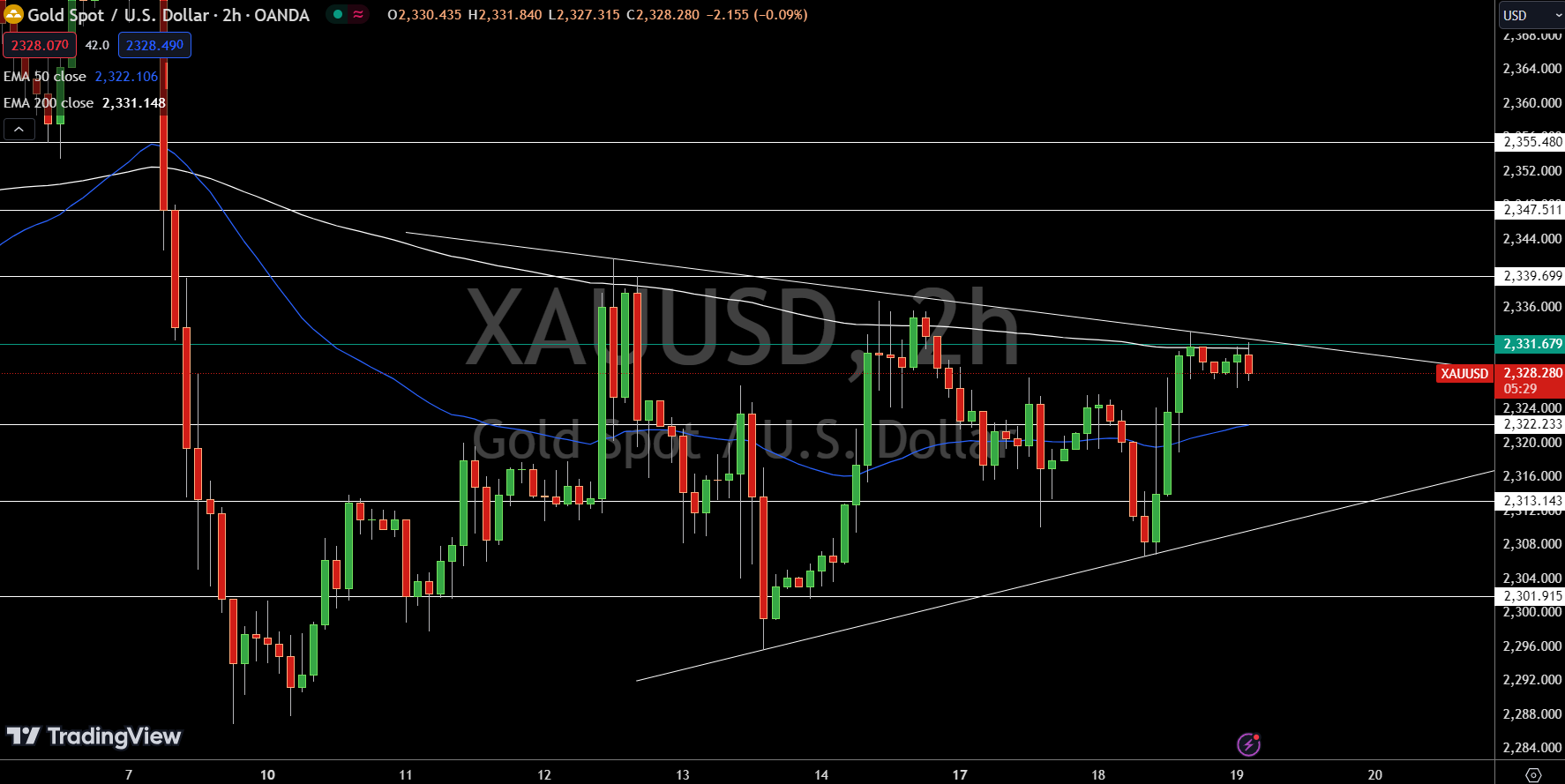
The 50-day Exponential Moving Average (EMA) stands at $2,322.11, while the 200-day EMA is at $2,331.15. The overall outlook remains bearish below $2,331.68. A break above this level could enhance bullish momentum, while a break below may trigger further selling