



Gold Prices Consolidate After Record Highs
Gold prices held steady Friday after hitting record highs earlier in the week, reflecting investor indecision and anticipation of upcoming volatility. Following the peak at $2758.53, prices have since pulled back, with Friday’s consolidation signaling a potential shift.
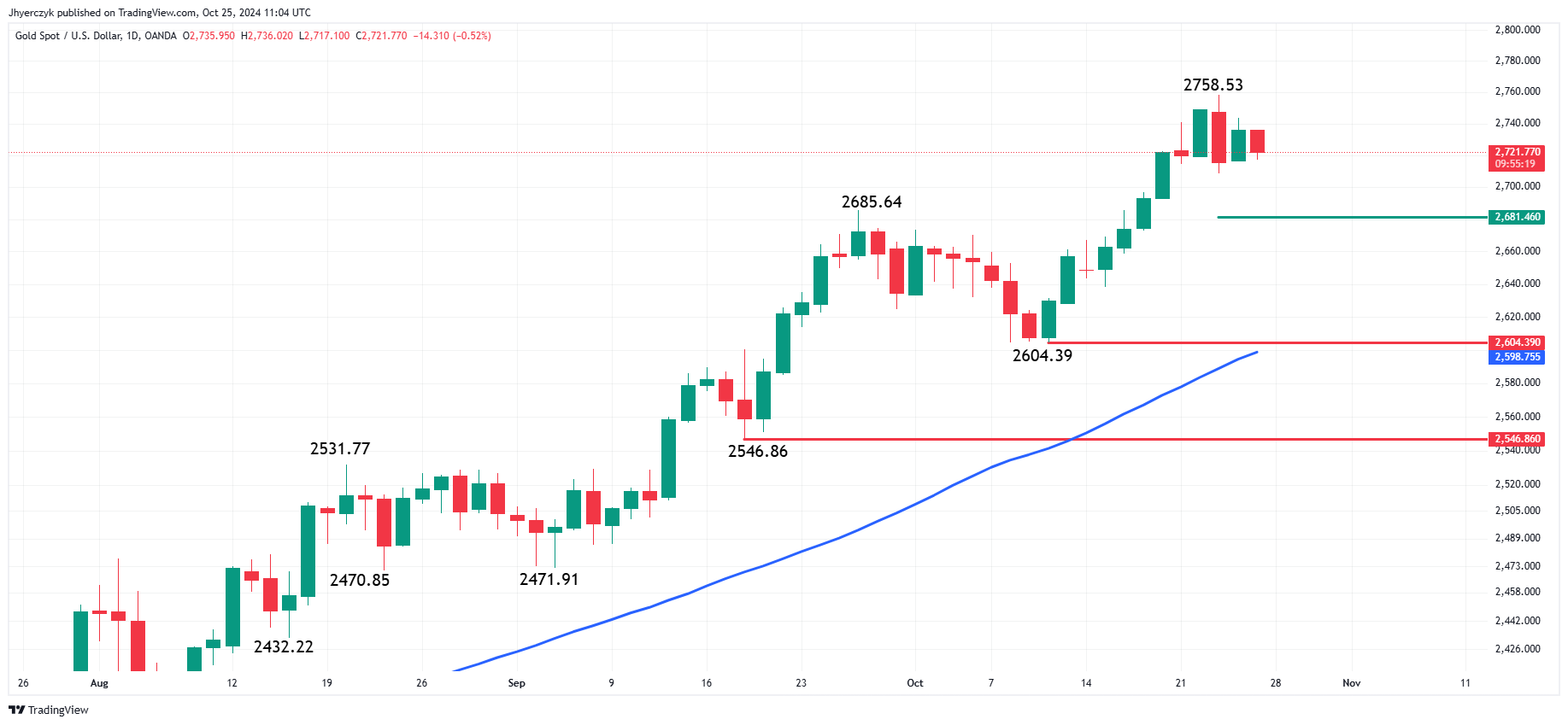
A close above $2758.53 would confirm the uptrend, while a drop through $2708.75 could trigger a near-term decline toward a pivot at $2681.46. Currently, the market is shaped by a closing price reversal top—a pattern that implies bearish pressure but doesn’t necessarily confirm a trend change.
Traders see $2604.39 as a pivotal support level, though the 50-day moving average at $2598.78 is gaining attention as a broader trend indicator.
At 11:32 GMT, XAU/USD is trading $2736.02, down $9.77 or -0.36%

Profit-Taking and Geopolitical Tensions Impact Gold
Gold’s pullback Friday largely reflects profit-taking by investors capitalizing on recent gains, while geopolitical concerns continue to support the metal’s value. Heightened tensions in the Middle East, particularly the Israel-Hezbollah conflict, are driving safe-haven demand. U.S. Secretary of State Antony Blinken emphasized diplomatic efforts to de-escalate the conflict, though volatility in the region remains a key risk factor for gold investors.
Upcoming Economic Data Could Influence Gold Prices
Next week, the U.S. economic calendar will be pivotal for non-yielding gold assets as key data on inflation and GDP growth are expected to provide insights into the economy’s health. Analysts predict these releases may influence Fed policy expectations, adding further potential for gold price volatility. WisdomTree’s commodity strategist, Nitesh Shah, notes that inflation data will be critical for shaping market expectations around the Federal Reserve’s next moves.
Gold Price Forecast
Every new Gold analysis as it publishes, today's technical signal and key levels, live price — on one page.
See all Gold forecastsGold Rally Faces Demand Challenges in Asia
Despite its year-to-date gain of 31.9%, making it gold’s largest annual rally since 1979, the surge has dampened physical demand in key Asian markets. Higher prices have led to increased discounts in China, and consumers in India are purchasing less, affecting overall volume demand. This reduction in physical buying could moderate price gains unless a new catalyst supports further rallies.
Dollar Strength and Treasury Yields Add Pressure
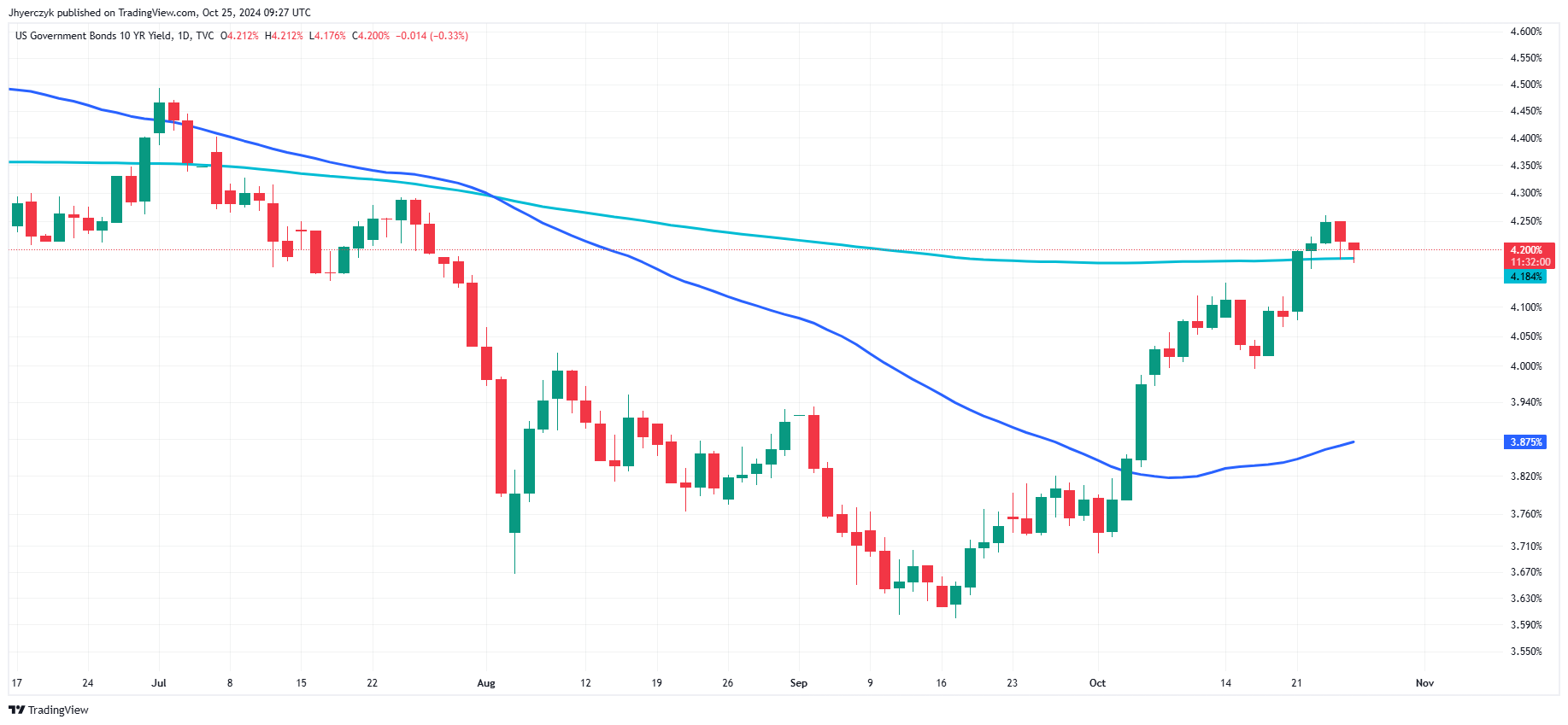
The U.S. dollar is set to close a fourth consecutive week of gains, driven by elevated risk aversion and expectations for reduced Fed rate cuts. Concurrently, Treasury yields remained steady on Friday, with the 10-year yield at 4.2% after peaking at 4.25% earlier in the week. Fed officials continue to signal a cautious approach to future rate cuts, reflecting persistent inflation concerns.
Market Forecast: Cautious Optimism Amid Volatility Risks
While profit-taking and strong dollar fundamentals present short-term headwinds for gold, the prevailing safe-haven demand amid geopolitical concerns, coupled with inflationary pressures, suggest further gains could emerge.
Gold remains positioned for a potential bullish breakout, particularly if geopolitical risks escalate or if inflation data stokes dovish Fed expectations. Traders should watch for support at $2598.78 and resistance near $2758.53 as critical levels shaping the outlook for gold prices.


