
The interest rate outlook for Japan has turned more hawkish after the latest inflation data for July. The higher import and energy costs are moving through the economy. Companies are also passing more of these costs to consumers. This raises the chance that the Bank of Japan will lift the policy rate from 1.00% to 1.25% in September. But the effect on the yen will depend on the rate decisions of the Federal Reserve, European Central Bank and the Bank of England.

Japan Inflation Strengthens Case for BOJ September Rate Hike
The core inflation rate in Japan increased to 1.8% YoY in July. This was up from 1.6% in June and in line with market expectations. Core inflation remained below the BOJ’s 2% target for a seventh month. The latest data suggest that inflation pressures are broader than the core figure alone indicates. They also strengthen the case for a hike by the BOJ at its September 17-18 meeting.
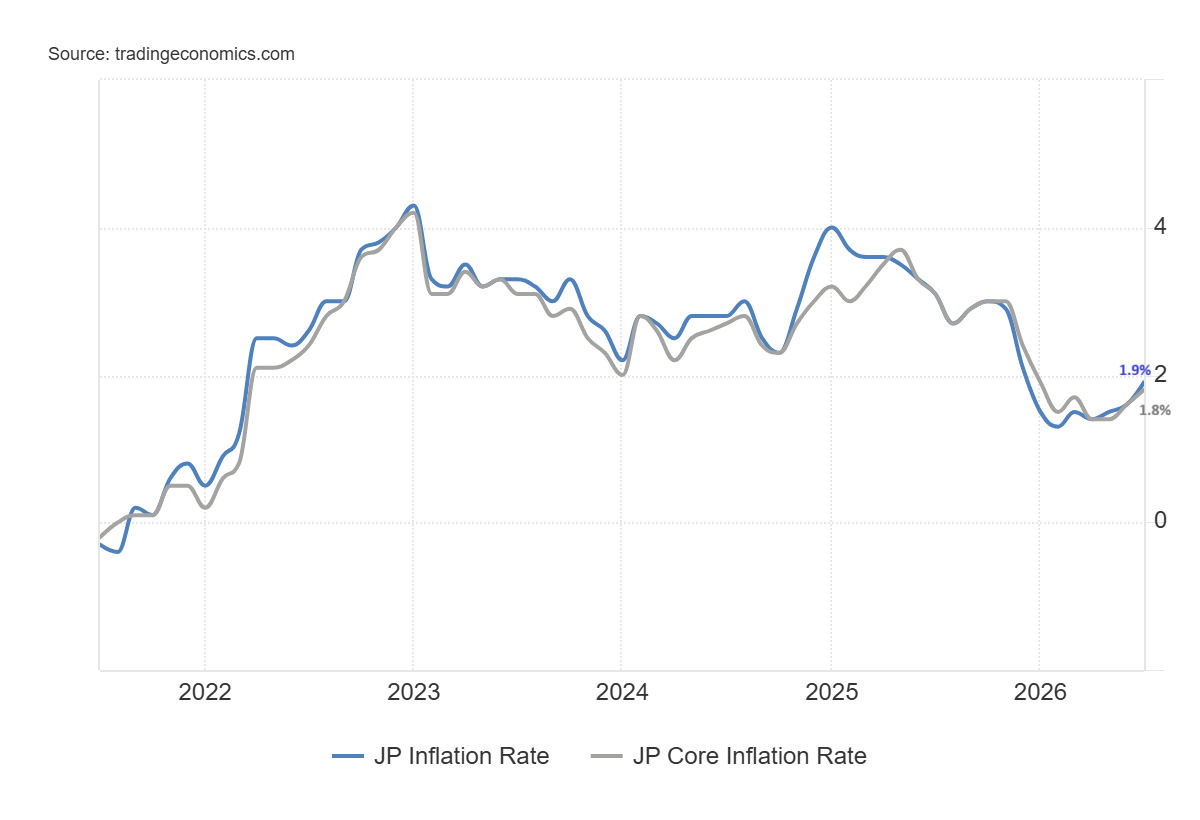
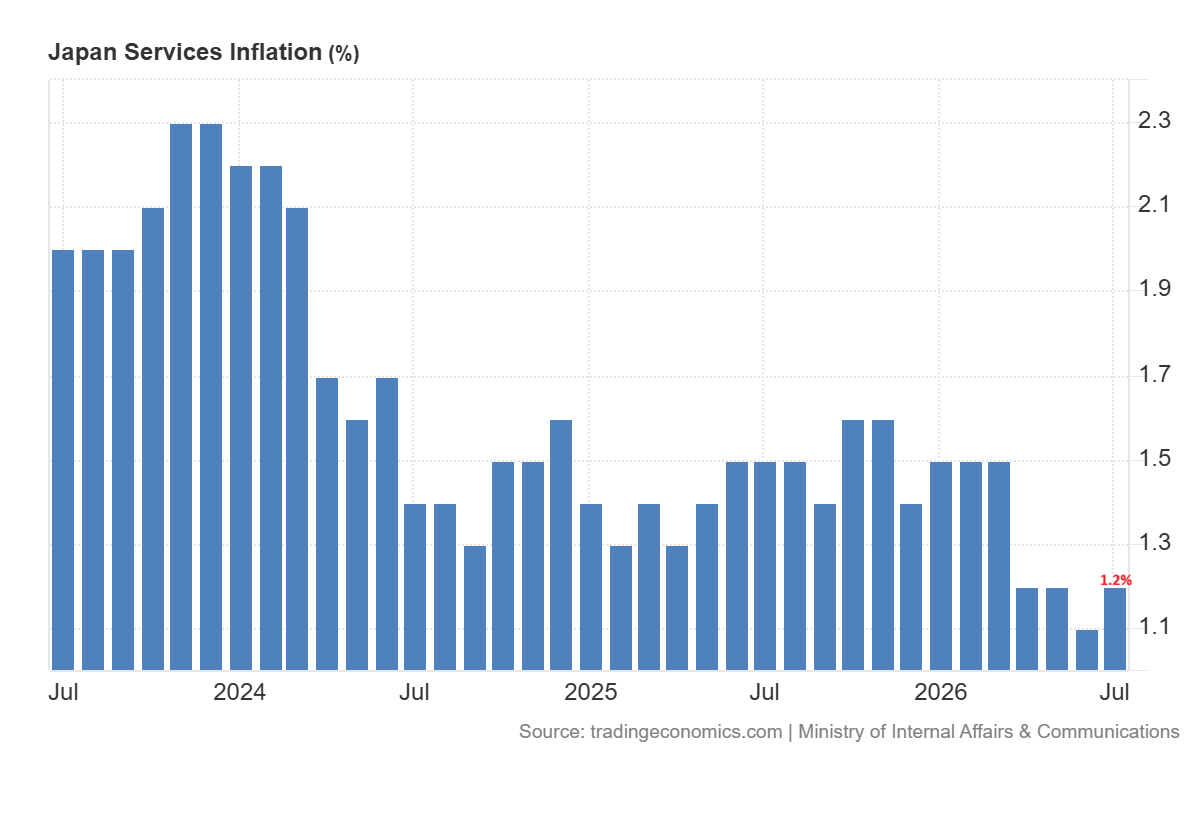
The headline inflation rate also increased to 1.9% in July as compared to 1.6% in June. The chart below shows that the service inflation increased to 1.2% as businesses charged customers more for higher labor costs. This is important signal as service prices reflect domestic demand and wages. The increase in service inflation suggests that inflation is not only in imported items but is also spreading.
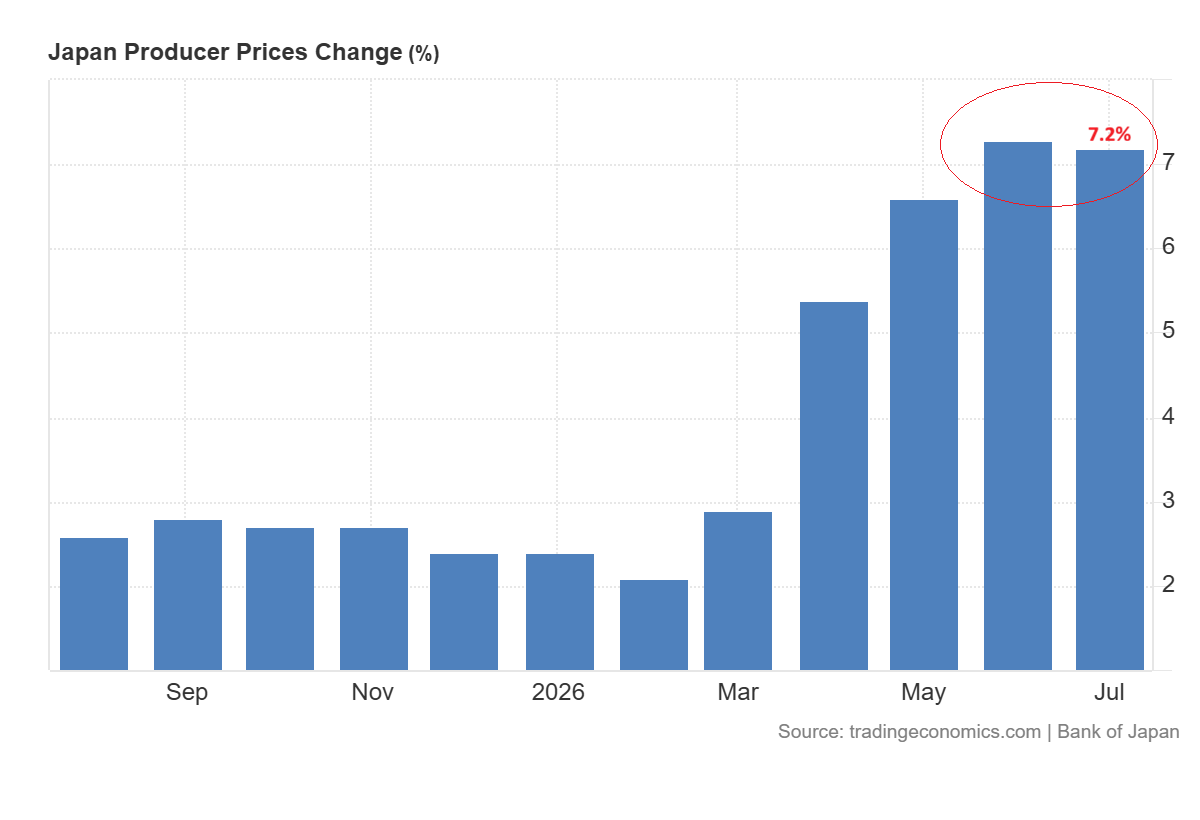
Producer prices also warn the central bank. Wholesale inflation in Japan hit 7.2% in July. The high oil prices and weak yen have raised the cost for energy, chemicals and other imported materials. The companies could pass these costs to consumers in the next few months. This may push core inflation to over 2% in the next few months. A lower yen would further increase pressure as Japan is net importer of energy supplies.
The base case assumes the BOJ will increase the policy rate by 25 basis points to 1.25% in September. If the underlying inflation continues to increase, the central bank may consider another increase in early 2027. But it will move with caution as it fears higher borrowing costs could reduce household spending and business investment. The September decision will thus hinge on inflation, wages and financial conditions. The prospect of tightening cycle becomes more likely if core inflation begins to exceed the 2% target and the yen starts to lose further ground.
USD/JPY Forecast: Fed-BOJ Rate Gap Puts 162 Breakout in Focus
The Federal Reserve currently holds the target range at 3.50%-3.75% while the BOJ rate stands at 1%. This wide gap continues to support the dollar against the yen. But the BOJ rate hike to 1.25% would narrow the gap if Fed holds rates steady in September. That scenario could push USD/JPY lower. The outlook would change if both central banks increase the interest rates by 25 basis points as the rate gap would remain broadly unchanged.
The daily chart for USDJPY shows constructive price action above the rising trend line that stretches from the January 27, 2026 low. The price has produced a sharp shadow on the daily candles and found support above this level, which indicates upside momentum.
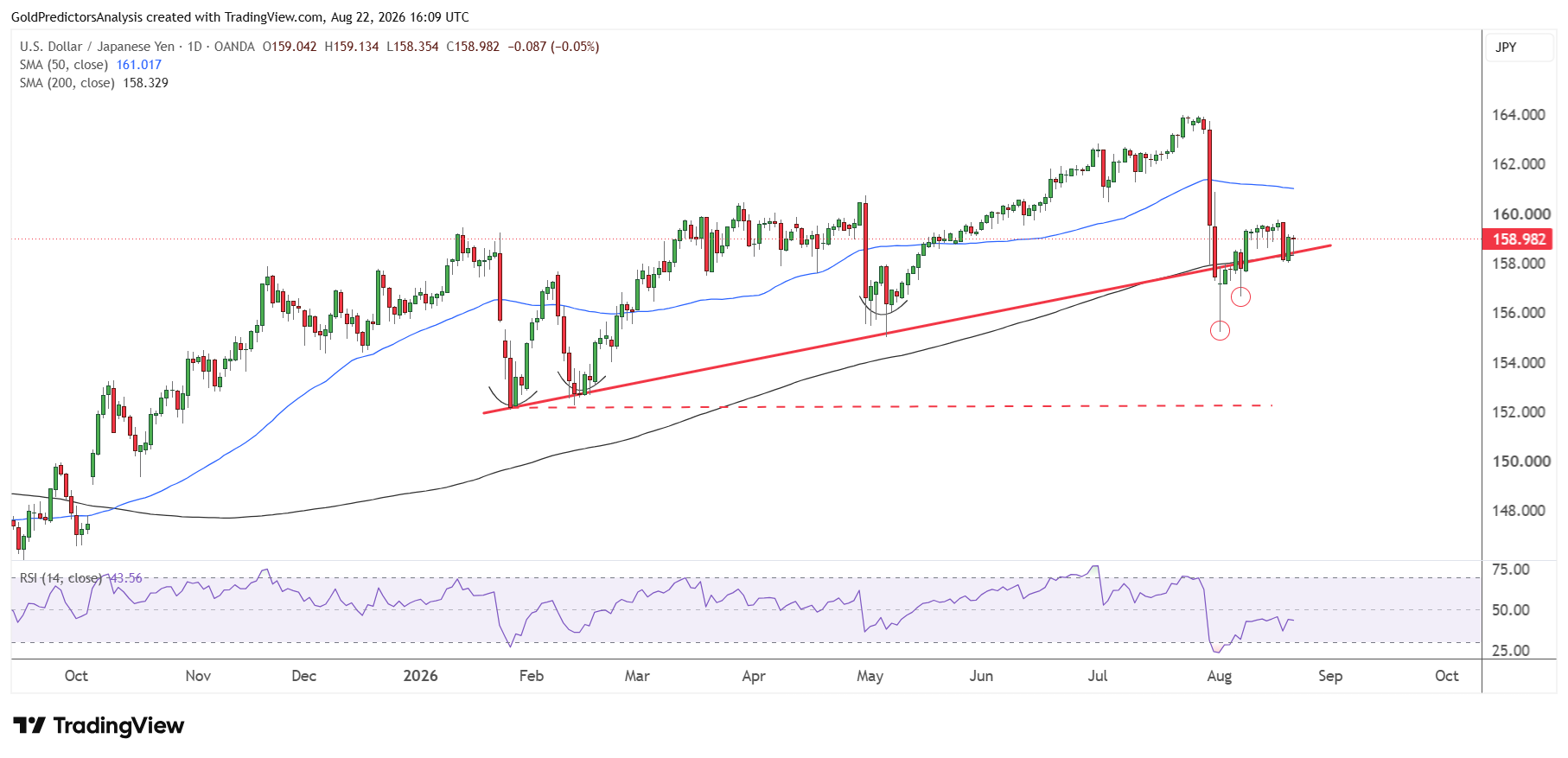
This support line also intersects with the 200-day SMA, which suggests that the pair will likely continue to the upside. But the pair must break above the 50-day SMA at the 161.20 level to open the door for another rally. The strong bullish momentum in USDJPY is further supported by the weekly chart, which shows the formation of bullish hammer candle in the first week of August 2026. This bullish candle indicates an upside move toward 162.
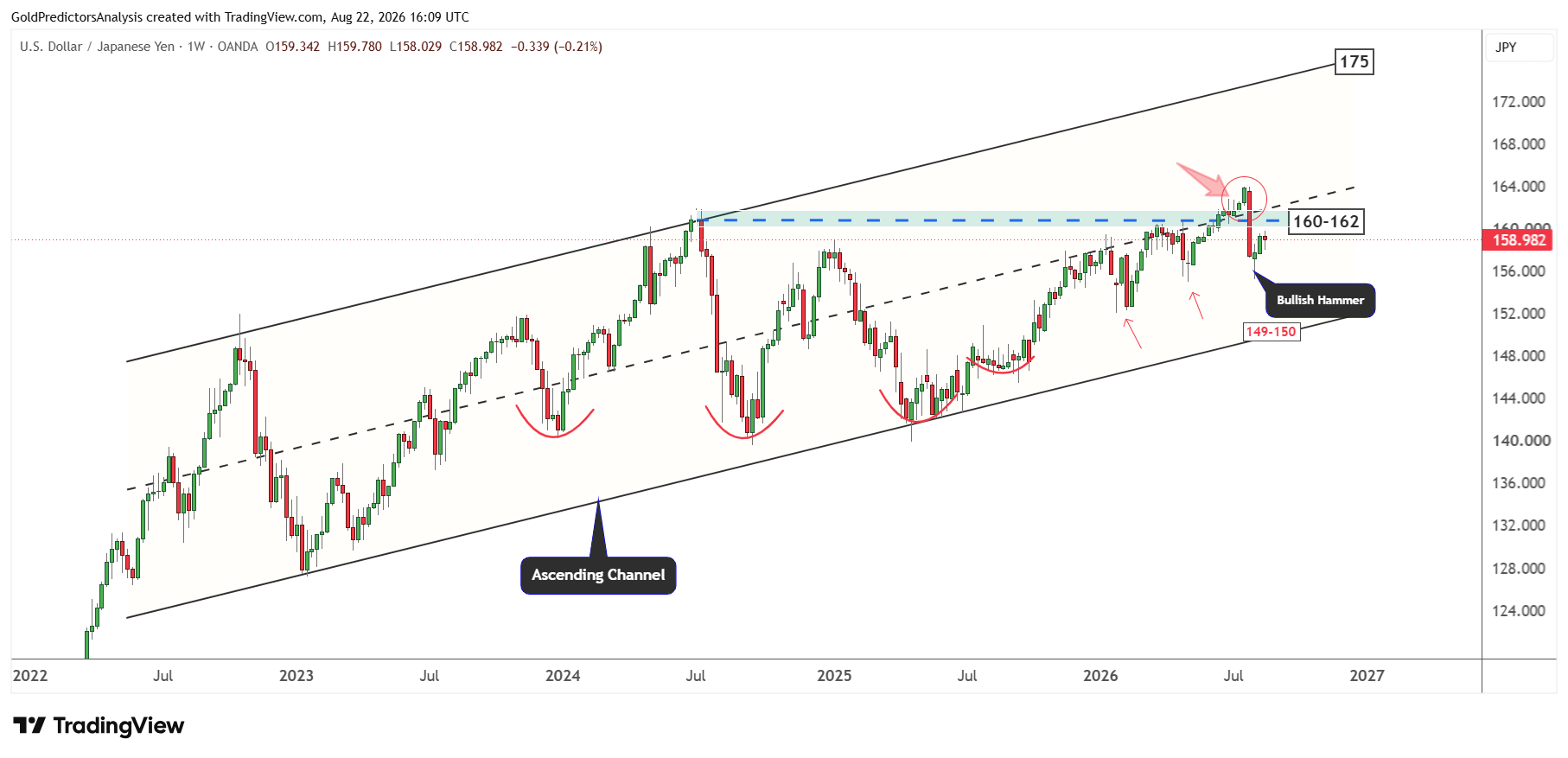
A confirmed break above 162 this time will break the long term structural pattern and open the door for a strong surge toward the 175 level. The target of 175 in USDJPY is set by the ascending channel pattern that stretches from the January 2023 lows.
EUR/JPY Forecast: ECB-BOJ Rate Outlook Puts 188 in Focus
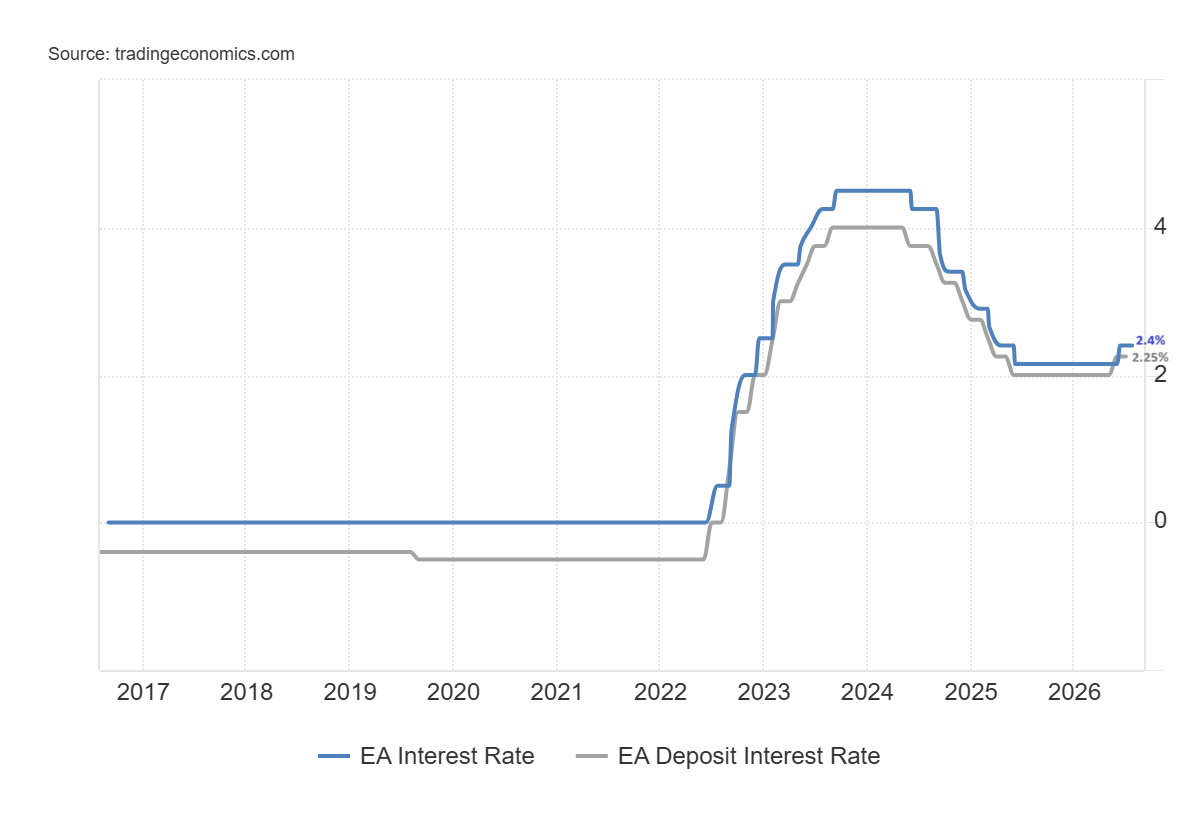
The interest rates for the ECB stand at 2.40% while its deposit rate is 2.25%. The markets have grown more hawkish as higher energy costs keep the inflation risk elevated. If the ECB and BOJ both increase the interest rates by 25 basis points, the yield gap would remain largely unchanged. This could keep EUR/JPY supported. A sustained decline would become more likely only if the BOJ signals faster series of increases while ECB pauses.
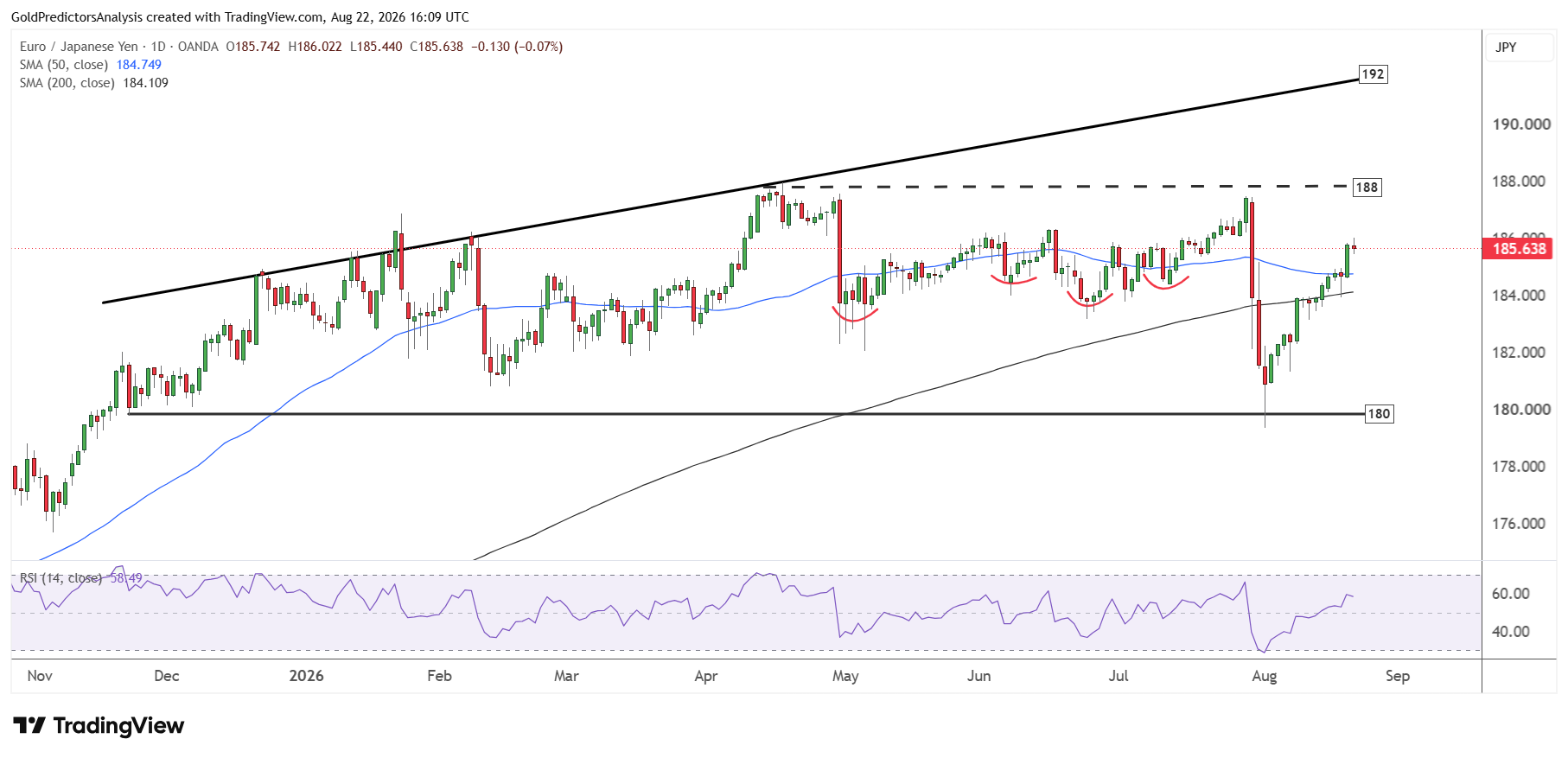
EURJPY is trading within the bullish pattern as seen in the chart below. The price hit the lower boundary of the wedge at the 180 level and rebounded strongly above the 50- and 200-day SMAs. The pair is now continuously moving higher toward the previous high. The RSI has also recovered above the midline as the pair broke the 50-day SMA. A break above the 188 level will likely open the door for strong surge toward the 192 level.
GBP/JPY Forecast: BoE-BOJ Rate Gap Supports Retest of 219
The Bank of England holds the interest rate at 3.75% and three policymakers supported an increase to 4.00% at the July meeting. This gives the pound a large yield advantage over the yen. If the BOJ hikes rates to 1.25%, the gap would remain 2.50 percentage points if the BoE leaves the interest rate unchanged. This could keep GBP/JPY supported. But a more hawkish BOJ surprise may trigger a pullback. A stronger bearish trend would require faster BOJ tightening and clear shift toward a neutral stance from the BoE.
The daily chart for GBPJPY shows constructive price action from January 2026 to April 2026. This constructive price action is shown by the inverted head and shoulders pattern with the head formed in February 2026 and the shoulders formed in January 2026 and March 2026. The strong surge after the breakout from this pattern formed strong resistance at the 219 level. After reaching this resistance, the pair dropped back toward the 211 level which is defined by the 200-day SMA.
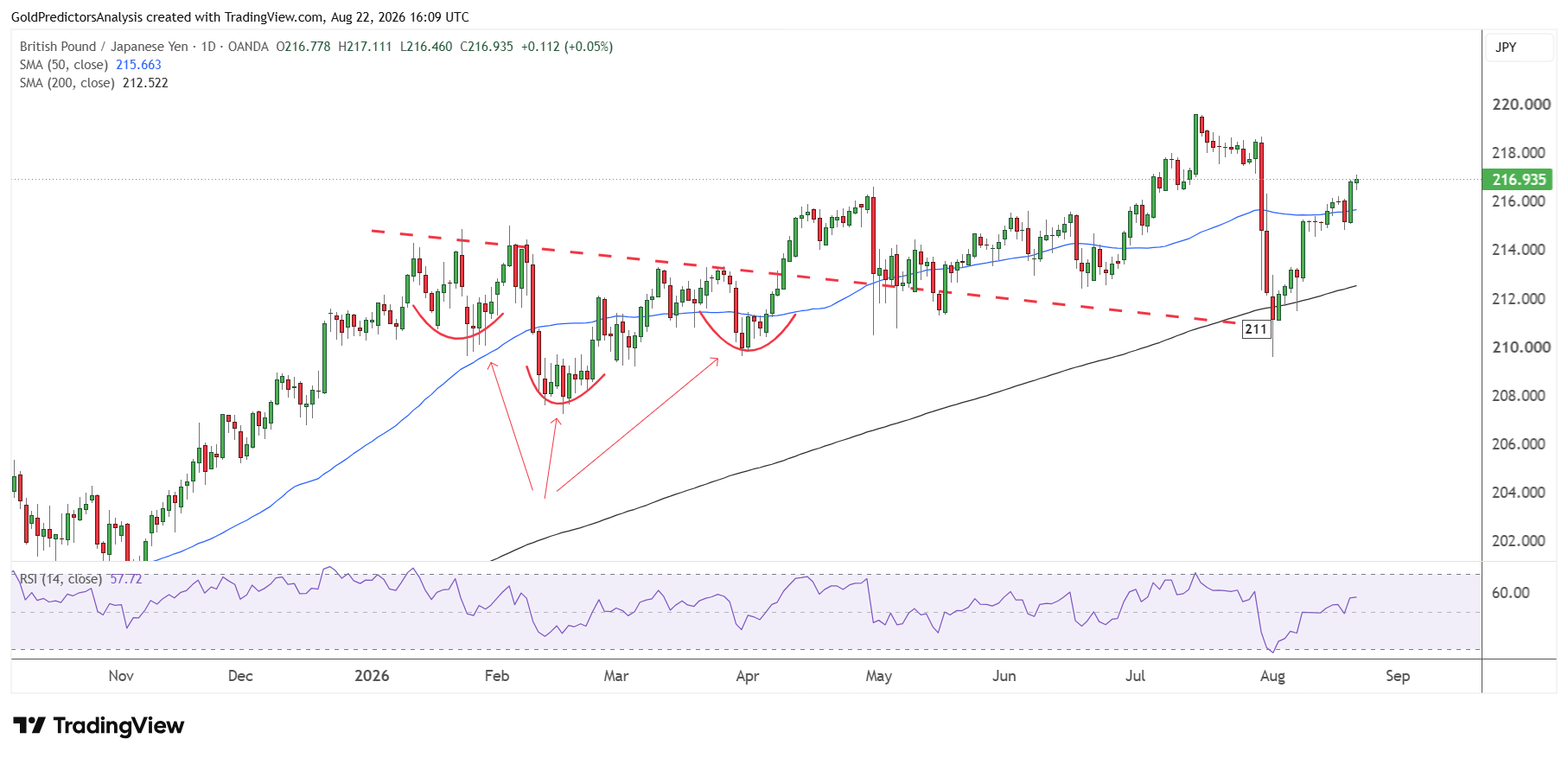
The 211 level is also defined by the neckline of the inverted head and shoulders pattern. This indicates that GBPJPY has formed a bottom and will likely continue moving higher during the next few days and weeks. The RSI remains above the midline on the daily chart, which suggests continued upside momentum.
BOJ Rate Hike Outlook: What It Means for Yen Crosses
The interest rate outlook for Japan now supports a 25 basis point hike to 1.25% in September. The increase in consumer and producer prices gives the BOJ a clear reason to act. But the central bank will likely remain cautious as rapid tightening could hurt spending and investment. The Japanese yen may receive lasting support only if BOJ narrows the rate gap with other major central banks. If the Fed, ECB and BoE also raise rates, their currencies may retain their yield advantage.
The technical outlook therefore remains constructive for the yen crosses despite the risk of BOJ hike. USDJPY must break above 162 to open the way toward 175 while EURJPY needs to break 188 to target 192. GBPJPY remains supported above 211 and could retest the resistance of 219. These bullish scenarios would weaken if BOJ signals faster tightening or the pairs fall below the key support levels.