
Oil prices remain under pressure as supply fears in the Middle East diminish. Tankers are now departing from the Strait of Hormuz after the initial agreement to end the US-Iran war. This has helped ease concerns of a large supply shock. Traders now are factoring in a quicker restoration of Middle Eastern oil flows. This is why Brent oil and WTI oil are dropping towards pre-war levels.
The short term structure is also indicating lower prices. August Brent is below September Brent, indicating sufficient near-term supply. That is bearish as traders are no longer willing to pay a premium for barrels that can be delivered immediately. The sharp drop in oil prices also indicates a quick reduction in the war premium. The market is focusing less on geopolitical risk and more on actual supply.
The decline in oil stocks normally boosts oil prices. But traders are placing greater emphasis on the resumption of Hormuz traffic. Demand from the refining industry and lower inventories could prevent the downside later in the move, but they are not enough to reverse the current move. Oil prices could remain low as long as the market thinks the Strait will remain open.

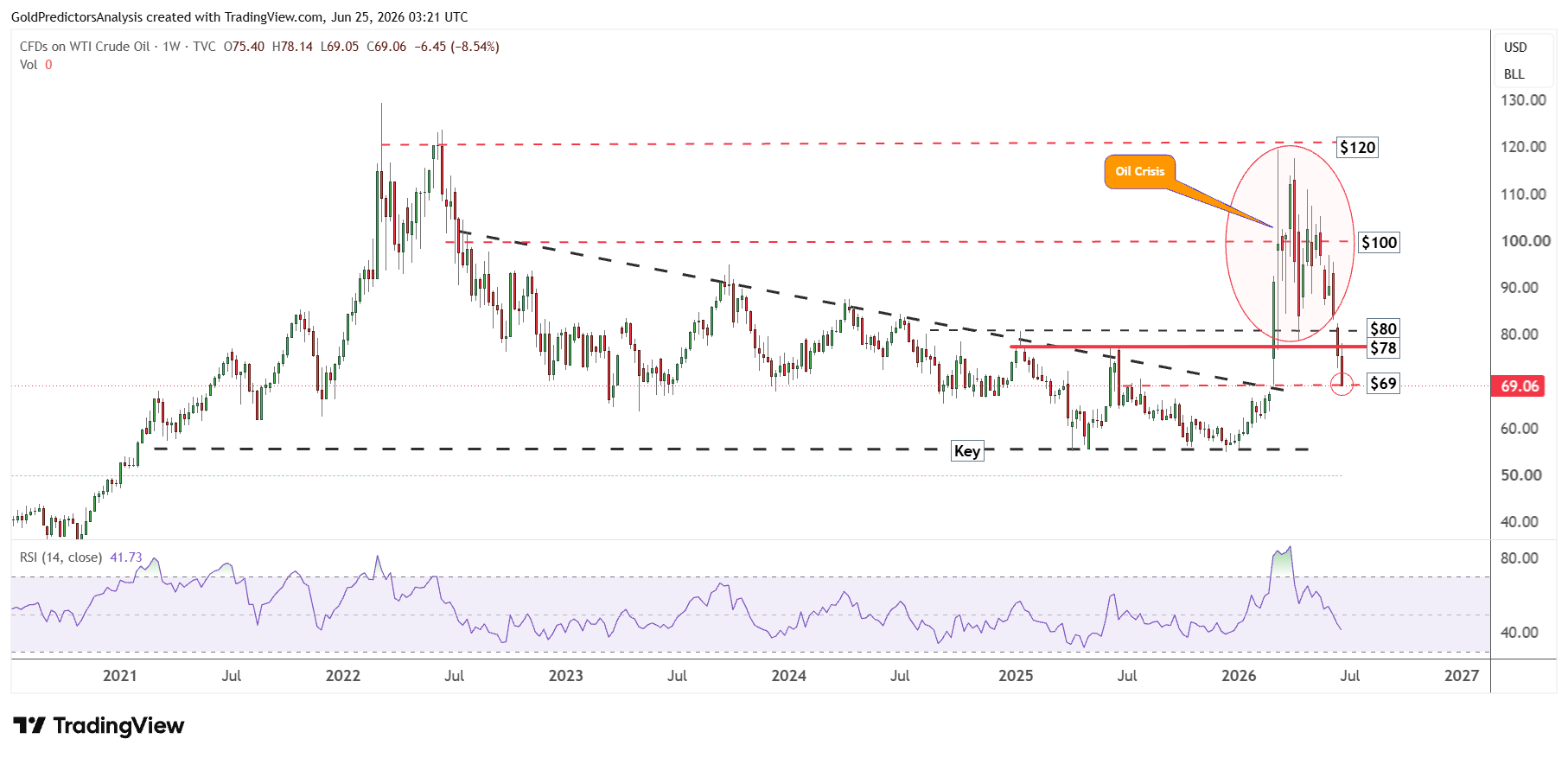
WTI Crude Oil Breaks $80 as Bearish Momentum Builds
The daily chart for WTI crude oil shows that the price has broken $80 and is continuing to slide toward $69. Based on the recent bearish momentum, WTI crude oil is likely to continue further downside. The RSI has also broken below the midline, which indicates further downside in the next few days. But the significant uncertainty in the crude oil market comes from the U.S.-Iran peace agreement. This suggests that the oil price may trade lower in the short term.
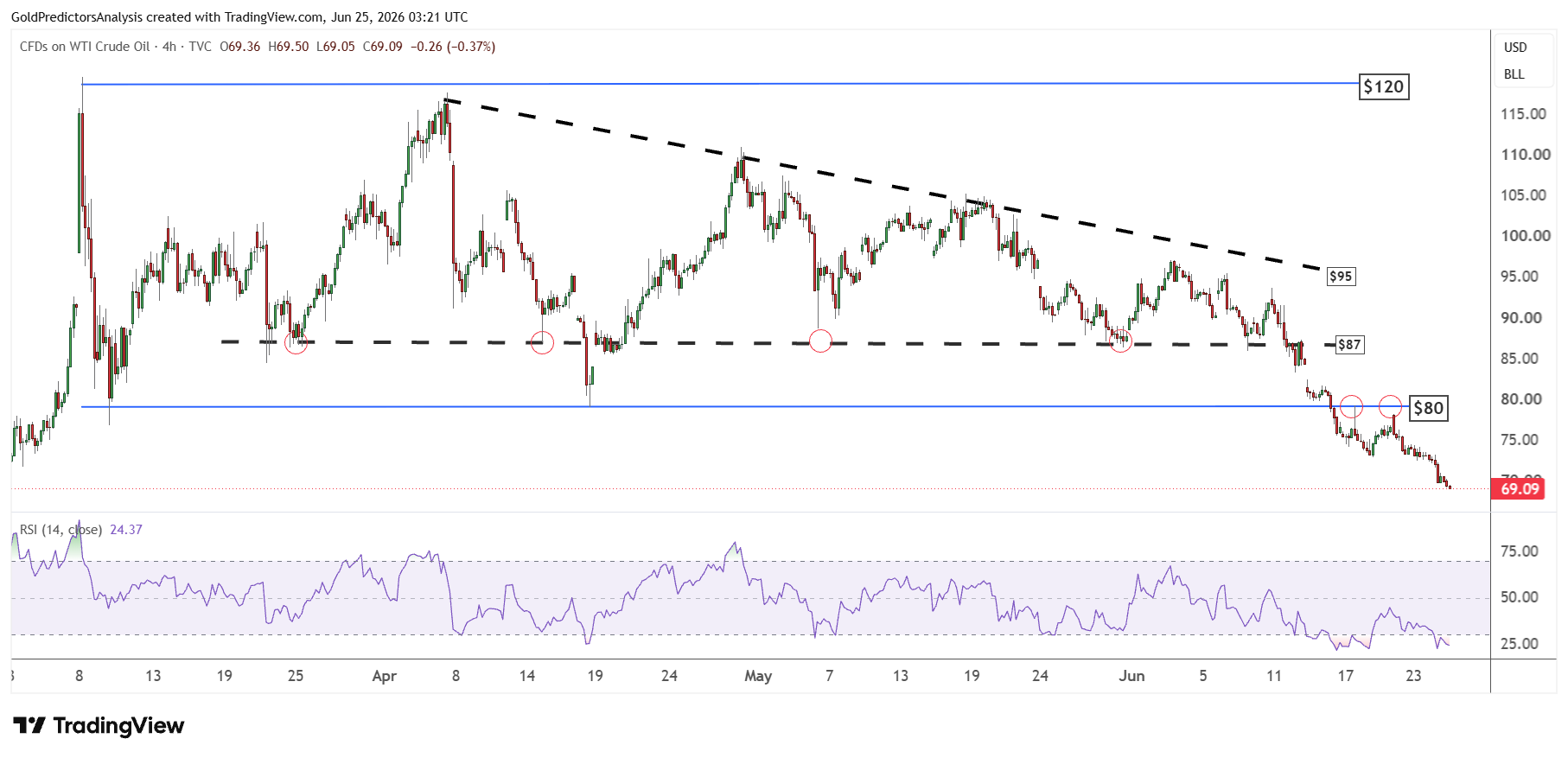
The 4-hour chart for WTI crude oil also shows that the $80 level has been broken. After the breakout, the price formed resistance at $80 on 17 and 21 June. This indicates that price may continue to decline under bearish pressure. WTI crude oil must break back above $80 to signal a rally toward $87.
Brent Oil Price Forecast
Every new Brent Oil analysis as it publishes, today's technical signal and key levels, live price — on one page.
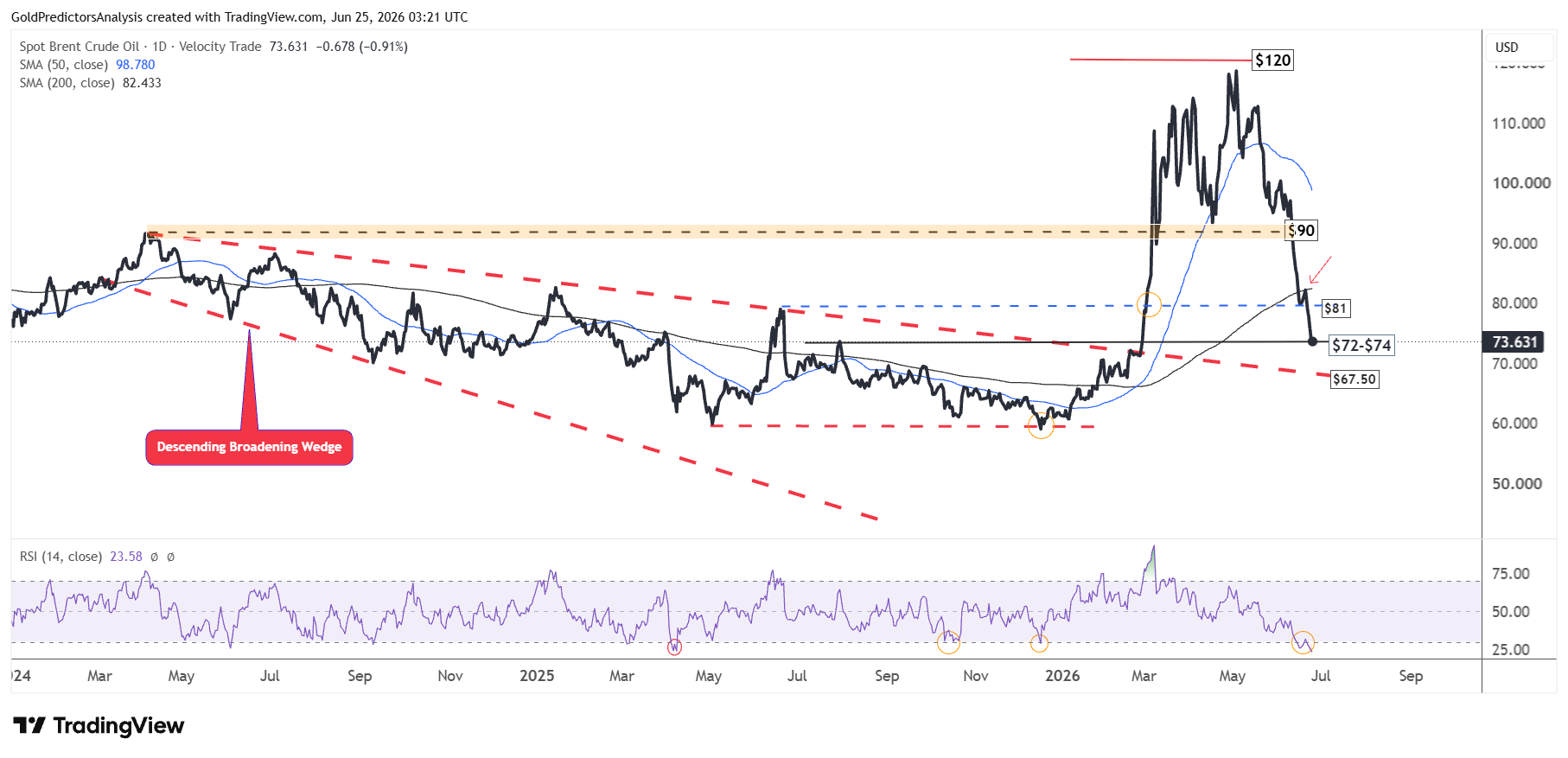
See all Brent Oil forecastsBrent Crude Oil Faces Pressure Near $72–$74 Support
The daily chart for Brent oil also shows strong bearish pressure as the price approaches $72 to $74 range. The failure of the 200-day SMA and then the resistance at that same SMA suggest that prices might continue to slide toward $67.50 in the short term. The RSI has already reached extremely oversold levels not seen since April 2025. But there is still no sign of reversal in the oil market.
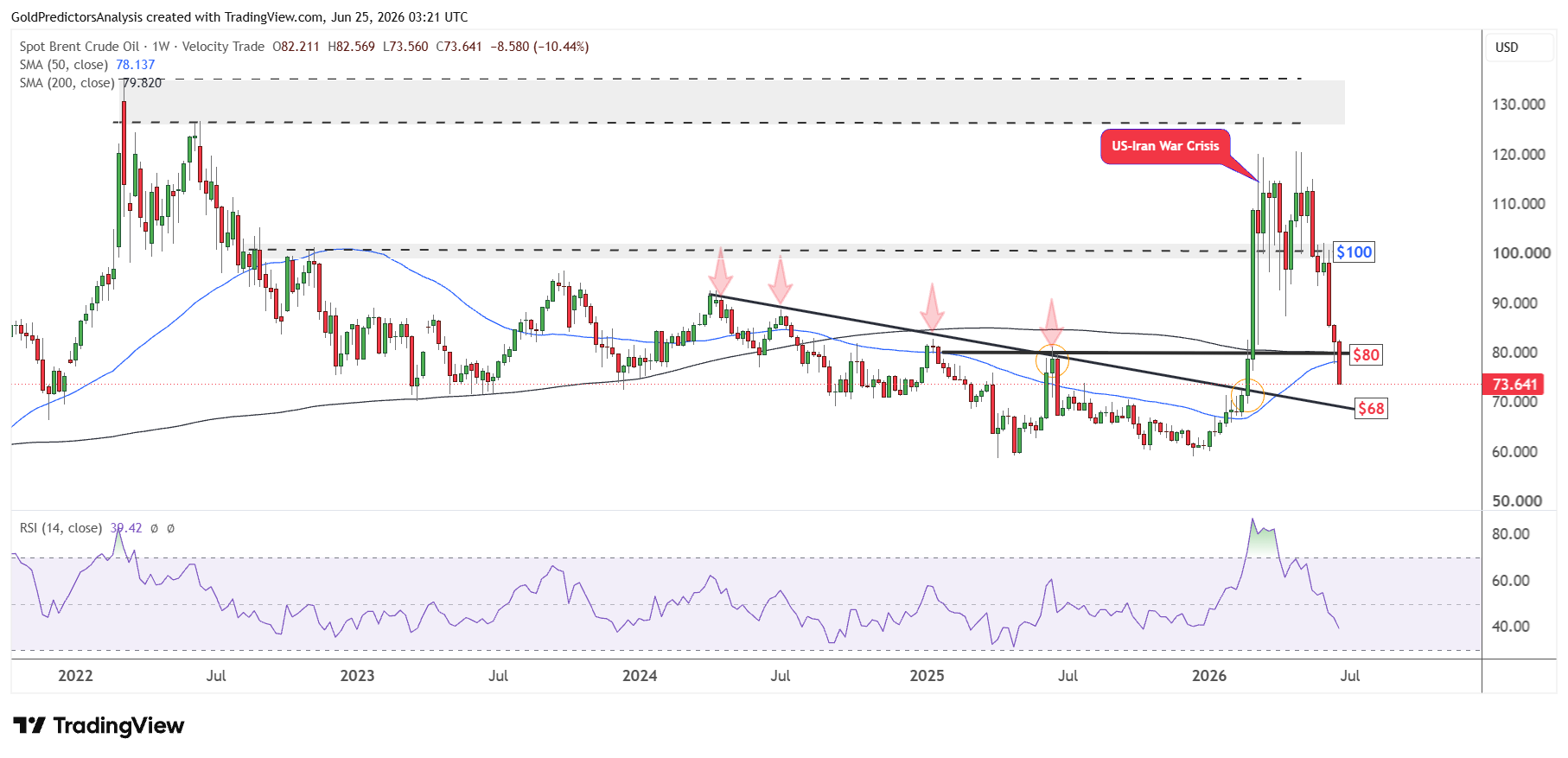
The weekly chart for Brent crude oil also shows that the price has broken the 50-week SMA and continues to slide toward $68. The support of $68 comes from the descending trend line. A rebound from $68 may push Brent crude oil prices toward $80. But the short-term momentum does not show any signs of reversal in the Brent crude oil market.
Bottom Line
Oil prices remain under bearish pressure with the easing of war premium and improving supply through the Strait of Hormuz. Tanker activity has reduced the threat of a big supply shock, and the technical setup remains bearish for both the WTI and Brent. WTI could continue to move in a downward trend in the $69’s range as long as it remains below $80. Meanwhile, Brent is also looking to drop to $68. A clear reversal signal is required for the recovery in WTI and Brent oil. Until then, oil prices may continue to slide.
Read more: Brent and WTI Slide as U.S.-Iran Deal Pressures Crude