
Oil prices remain negative as markets attempt to interpret the latest signals from global politics. Hopes of easing tensions between the United States and Iran abated fears of supply disruption. That was a relief on prices after Monday’s sharp drop. The market is waiting for the next direction after a strong rally in January 2026 from the long term support.
The U.S. dollar was also involved in keeping prices in check. A stronger dollar makes oil more costly to those outside the United States. This slows demand and puts pressure on prices. As a result, oil struggled to gain momentum despite geopolitical uncertainty.
On the other hand, recent comments from US leaders show that talks with Iran could resume soon. When risk of conflict disappears, the additional “fear premium” in oil prices disappears. This explains why prices took a hard drop on Monday.
Meanwhile, supply factors added another overlay to this balance. OPEC+ decided not to alter output for now, which was reassuring to market. There was no new supply shock and no urgent signal of shortage. For now, oil prices are stuck between reduced political risks and a tight global energy picture.

Oil Weekly – Bearish Triangle Still Dominates
The long-term outlook for WTI crude oil remains strongly bearish, as the price is trading within the triangle pattern, as shown in weekly chart below. The oil price has produced a strong rebound from long-term support at $55 and marked a high at $66.
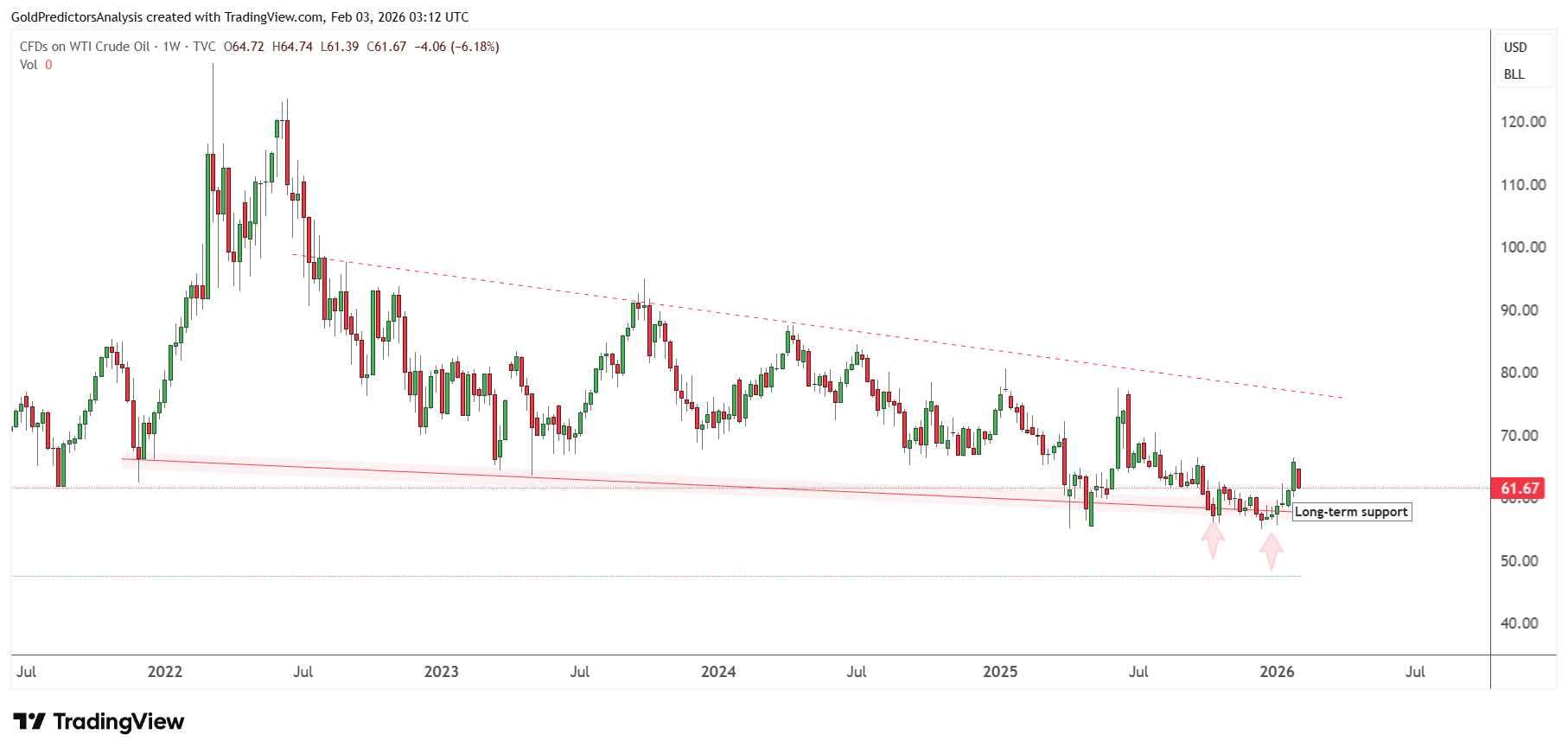
After hitting this resistance at $66, oil prices dropped, falling below the
$62 region, which indicates price uncertainty. A break below $55 will confirm strong negative price action and indicate further downside to $50. However, a breakout above $65 will initiate a strong rally toward $75. Overall, the picture remains bearish, and the price requires a break of one of these levels to find the next move.
Brent Oil Price Forecast
Every new Brent Oil analysis as it publishes, today's technical signal and key levels, live price — on one page.
See all Brent Oil forecastsOil Daily – Below 200-Day SMA Signals Risk
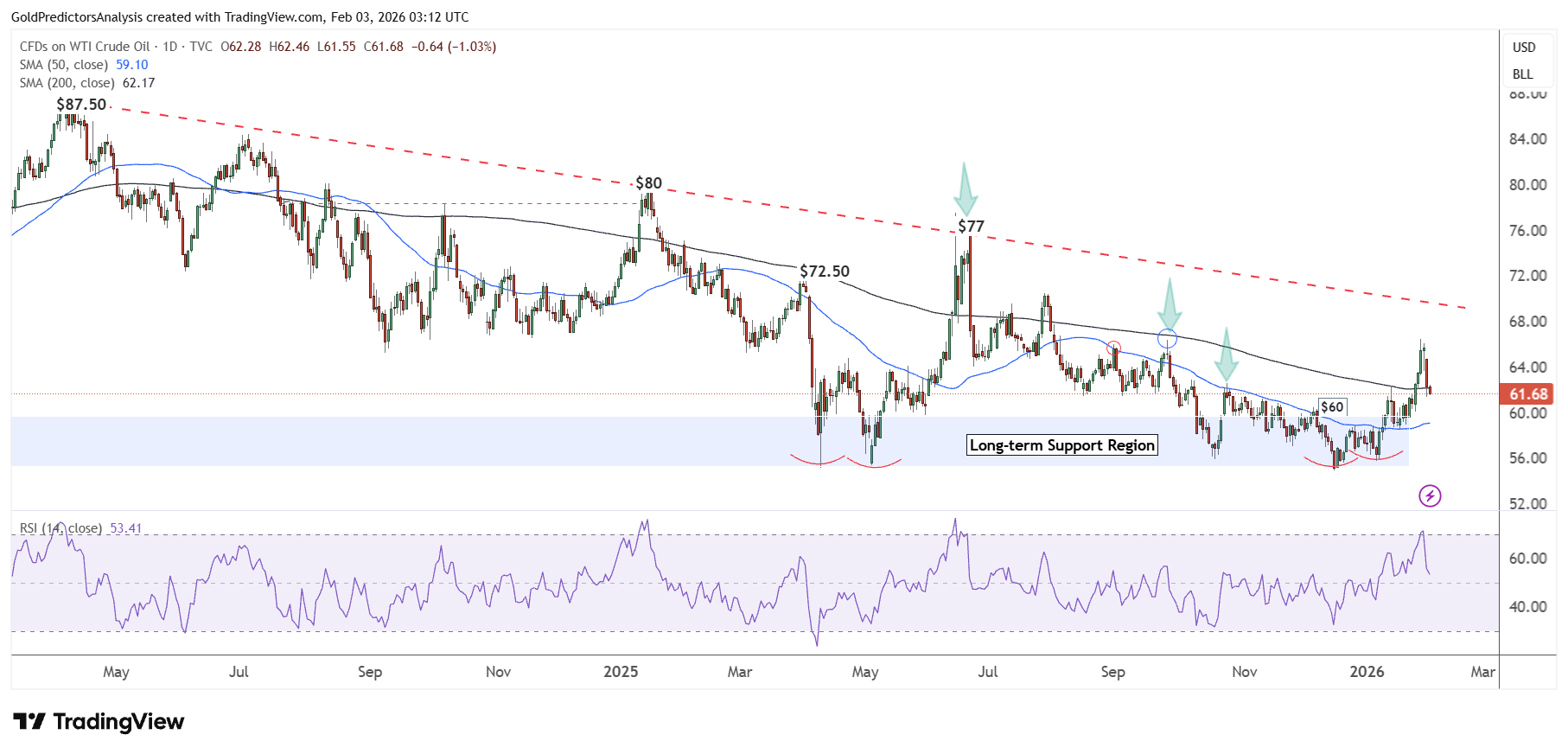
The daily chart for WTI crude oil also shows a strong negative price section, as the price dropped below 200‑day SMA. Now the price is moving toward the $60 region, which indicates buildup of negative price action. A break below $58 will introduce further downside to $55. However, a break below $55 will confirm negative trend and introduce a strong drop.
Oil 4H – Short-Term Range Builds Uncertainty
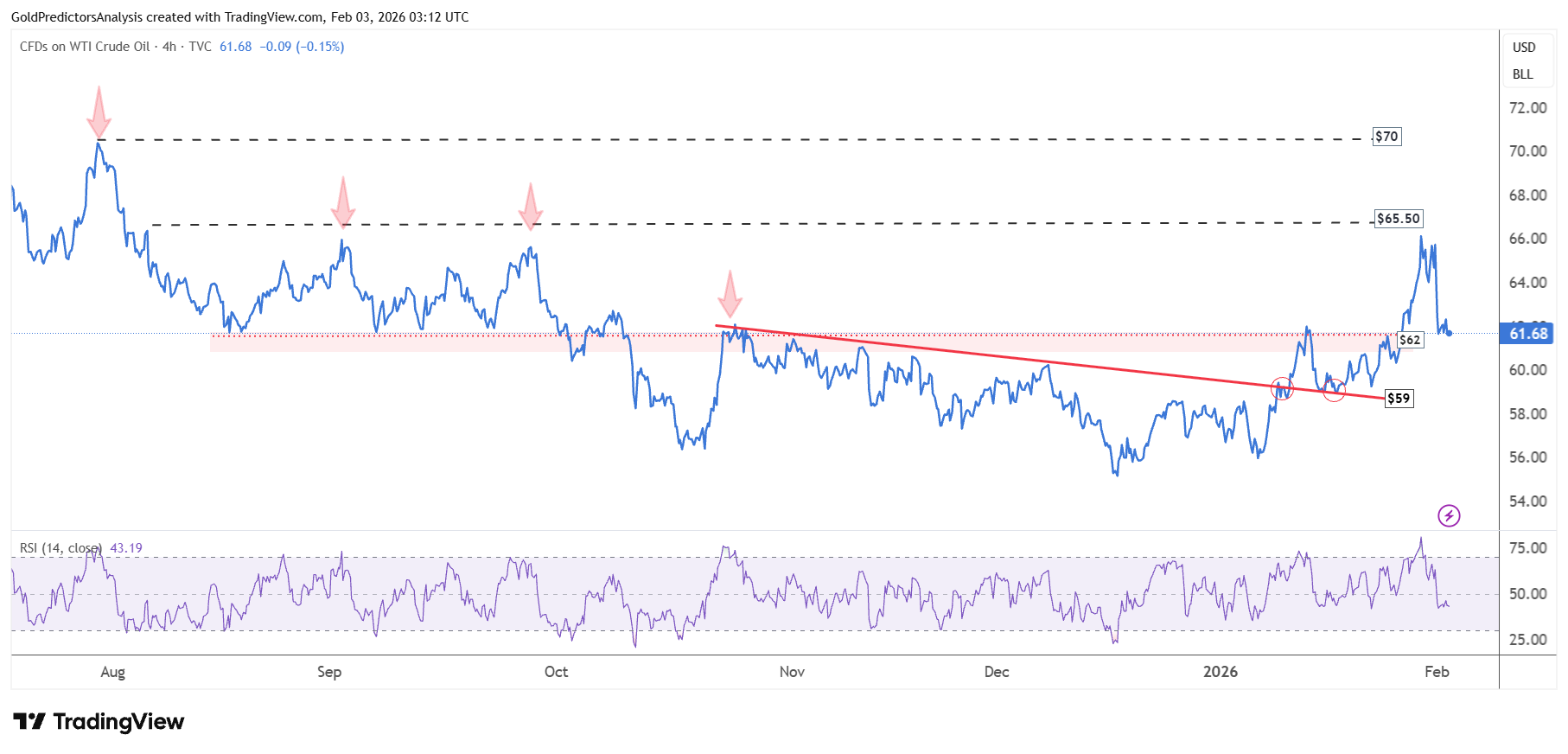
The 4-hour chart for WTI crude shows that the price has formed strong resistance at $65.50 and initiated a strong drop toward $62. A break below $60 will introduce further downside toward $55. Overall, the price structure for WTI crude remains sideways in the short term, and the price is struggling within these levels to find next move.
Final Words
Oil prices are under pressure as market is watching events around the world closely. The recent hopes of US-Iran peace eased fears and helped prices to settle. But the stronger dollar and tight supply keep the outlook uncertain. The technical outlook shows price weakness and until key levels are broken, it is likely that oil will remain in a sideways.
If you’d like to know more about how to trade crude oil, please visit our educational area.