
The US dollar has generally strengthened against most major currencies in recent days, with the symposium of central bankers in Jackson Hole, Wyoming, ongoing, and Kevin Warsh, the chair of the Federal Reserve (Fed), due to speak on Friday, 28 August. This article summarises recent data affecting the dollar, then looks briefly at the charts of euro-dollar and dollar-loonie.
American GDP data on 26 August, the second estimate for the last quarter, didn’t produce a surprise, with the figure matching the advance:
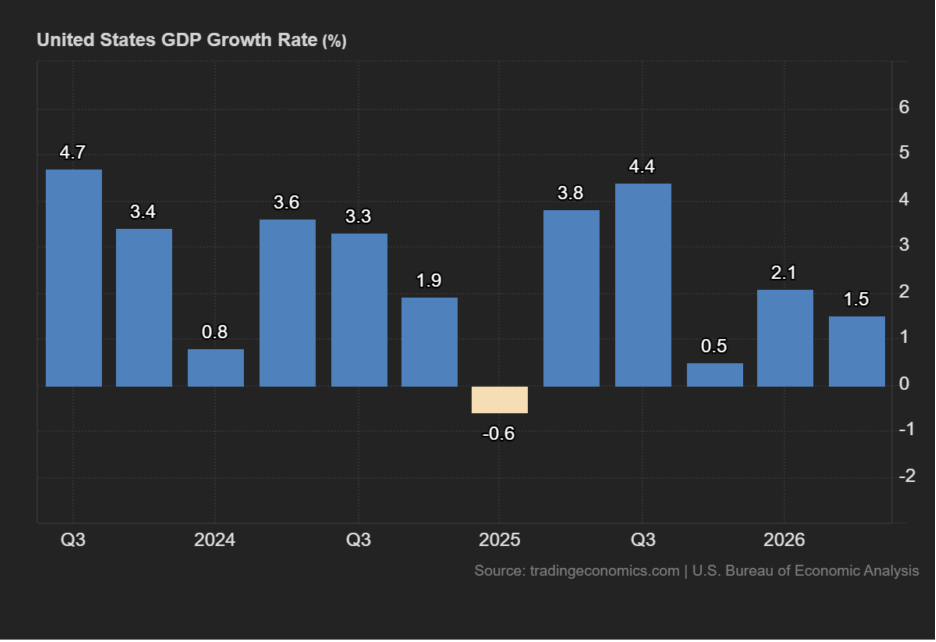
American growth seems to have been significantly slower than in the first quarter of 2026 but still relatively strong compared to various other major advanced economies. In Q2, personal consumption rose significantly, but governmental spending was again a drag on growth as non-military spending declined significantly. Overall, though, there doesn’t seem to be immediate pressure from GDP data on monetary policy, although traders should be prepared for a possible revision in the final figure due on 30 September.
Annual PCE, also released on 26 August, didn’t show a significantly different picture from headline CPI:
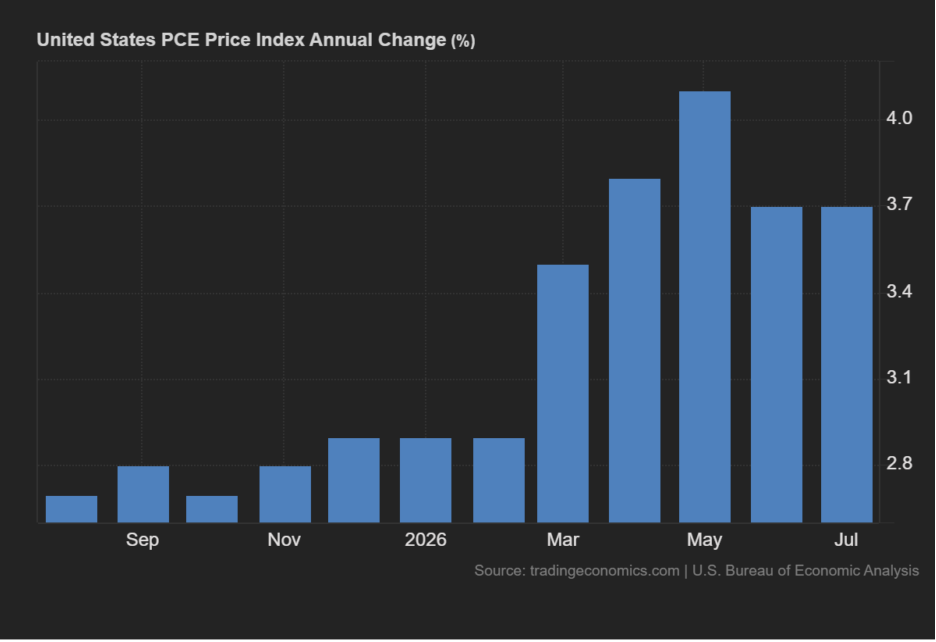
3.7% annual headline PCE in July was slightly higher than the consensus of 3.6% but within the range of estimates. The overall shape of the chart remains similar to headline CPI, while core CPI for July (annual and monthly) was also in line with expectations. Inflation in the USA might have peaked for now, given that oil has retreated from highs around the middle of August, but this depends on the developing situation in the Gulf.
The situation of negotiations seems to be slightly positive since around 25 August, when Iran and Oman reached an agreement to share revenue from exports through the Strait of Hormuz. When this might be fully implemented, and the Strait reopen something like the pre-conflict normal remains unclear. Traders are also concentrating on recent escalations of the Russo-Ukrainian war as Ukrainian armed forces continue to strike Russia’s oil infrastructure, particularly in and around Kuban.
The United States’ trade war with Canada has received significant attention in the last few days as negotiations broke down spectacularly around 23 August. Canada’s Prime Minister Mark Carney published his letter outlining the main unresolvable issues and his refusal to continue to debate what he called unreasonable demands from the American government. The latter responded with the announcement of tariffs of up to 50% on various Canadian products from early next year, while the Canadians retaliated with further tariffs on American imports.
Probabilities for the Fed’s meeting on 16 September remain similar to last week, with around 65% hold and 35% single hike according to CME FedWatch; around 75% of participants expect at least one hike by the end of 2026. Traders will monitor the speech by Kevin Warsh at Jackson Hole on Friday, 28 August, for possible hints on upcoming policy.

Euro-dollar Retreats from Three-month Highs
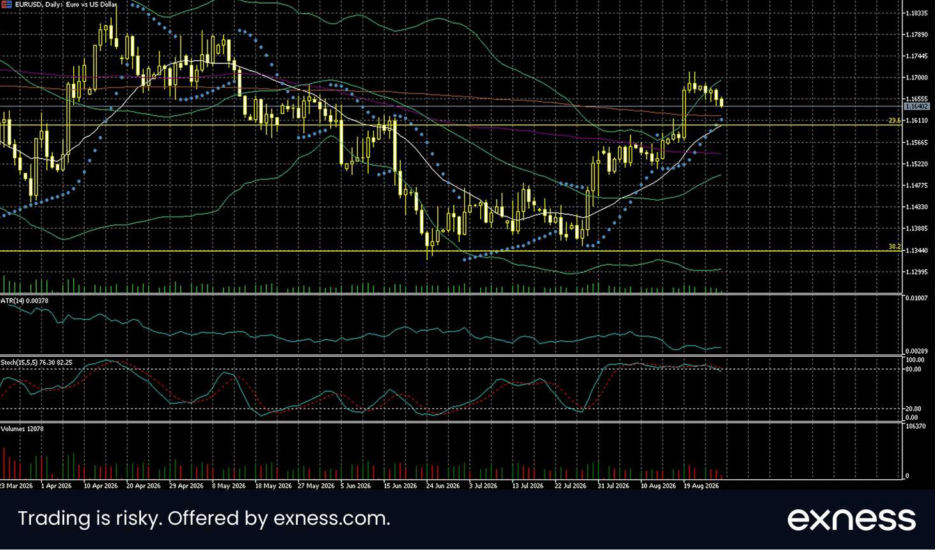
The euro continued its recent decline against the greenback on 27 August after moderately negative German consumer confidence and as traders assessed probabilities for monetary policy later this year. Although the Fed seems, for now, unlikely to hike next month, a hike by the ECB seems to be priced in for 10 September. That would take the main refinancing rate to 2.65%. The situation in the Gulf remains somewhat unclear: Iranian domestic concern about the economic fallout has grown but there’s no immediate indication of serious negotiations with the USA resuming.
$1.17 seems like a particularly obvious candidate for resistance, with the price having moved back from there since 21 August. The 23.6% weekly Fibonacci retracement around $1.16 is a possible technical reference, but potential sellers will monitor interaction with the 200 SMA near $1.162. Volume and volatility overall have remained low in August, as seasonally normal, although the slow stochastic has recently exited the area of overbought.
$1.15 would be a possible stretch target for selling but the price seems unlikely to reach that low in the runup to Dr Warsh’s speech and next week’s NFP. The latter is in particular focus because of recent negative sentiment on the American labor market, but the key upcoming events in September are likely to be the meetings of the ECB and the Fed on 10 and 16 September, respectively.
EUR/USD Price Forecast
Every new EUR/USD analysis as it publishes, today's technical signal and key levels, live price — on one page.
See all EUR/USD forecastsDollar-loonie Bounces with Renewed Focus on the Trade War
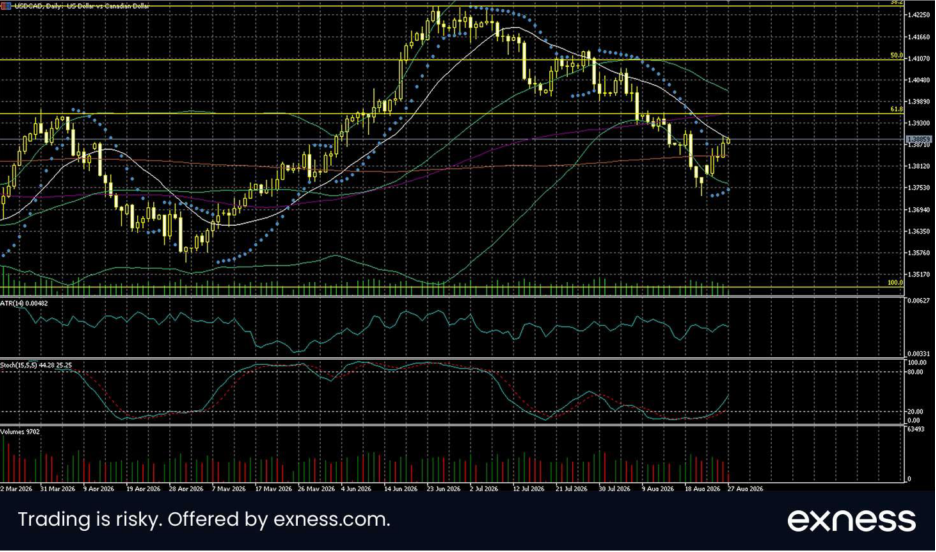
Unlike some other major forex pairs, which recently seem to have moved more on the conflict in the Gulf and expectations for monetary policy, USDCAD moved up recently as trade talks between the USA and Canada collapsed. The Canadian government views American demands as being excessive, so it withdrew from the discussion and announced reciprocal tariffs. The impact is likely to be more negative for the loonie with a hike by the BoC before the end of the year now seeming very unlikely.
The bounce so far from around $1.375 has been fairly aggressive, and the slow stochastic no longer signals selling saturation, being now close to neutral. Currently, the price is testing the 20 SMA, having broken above the 200 on 26 August. If recent gains continue, the convergence of the 100 SMA with the 61.8% weekly Fibonacci retracement around $1.396 is a possibly strong resistance, while the 50% Fibo around $1.41 is a possible longer term resistance.
Volatility has remained relatively high for USDCAD over the summer after a lull in late May. An immediate movement back down to three-month lows around $1.375 seems unlikely unless Kevin Warsh’s upcoming remarks at Jackson Hole are interpreted as being particularly hawkish. The main event next week is the concurrent release of both the USA and Canada’s job reports for August.
This article was submitted by Michael Stark, financial content lead at Exness.
For the latest analysis, ideas for trading and more, follow Michael on X: @MStarkExness.
The opinions in this article are personal to the writer; they do not represent those of Exness. This is not a recommendation to trade.