Silver Buyers Take a Second Shot at Last Week’s High
Spot Silver is pushing higher early Monday after last week’s pullback couldn’t hold. The rate trade that lifted precious metals on the back of soft payrolls, contained CPI and flat PPI is still alive, and this time the dollar is finally cooperating. That was the missing piece last week when the market ran to the highs and got turned back. Sellers had their chance after the inflation reports and they could not keep the pressure on.
The Strait of Hormuz is adding support underneath, but the conflict is also feeding the inflation risk that could bring hike expectations back into play. Silver is still trading on the bullish side of the 50-day moving average and Monday’s bid is saying the pullback was a shakeout, not a reversal.
At 08:11 GMT on August 17, Spot Silver (XAGUSD) was trading at $65.58, up $0.89 or 1.38%.
Fading Hike Odds Gave Silver a Bid but the Fed Is Not Done
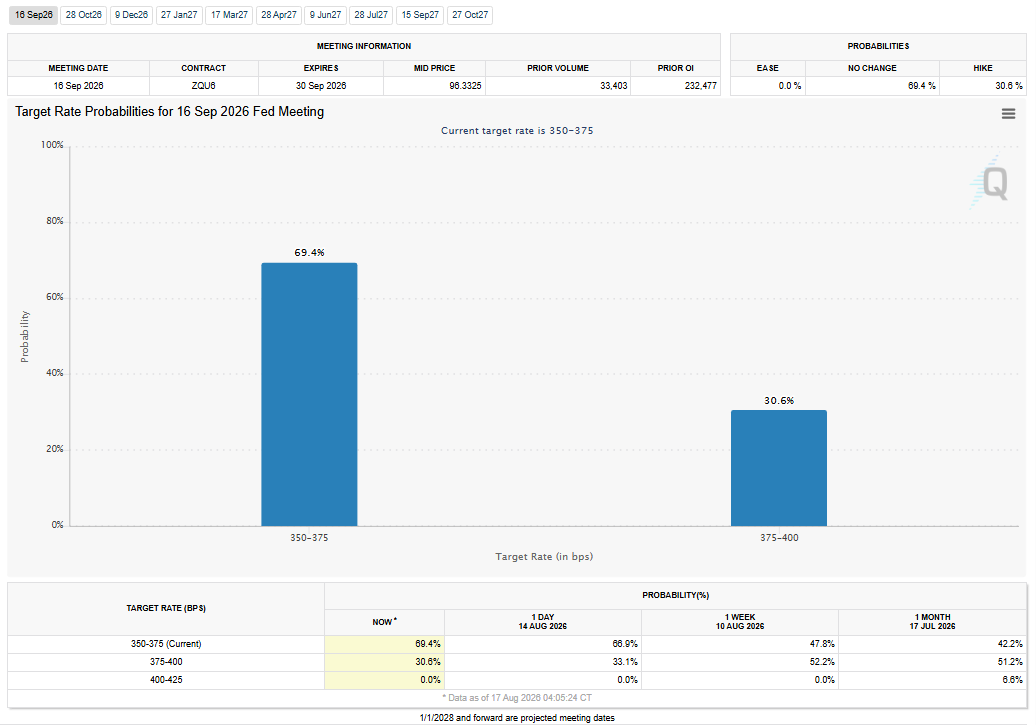
Silver caught a bid last week when the case for a September rate increase weakened across the board. Payrolls missed expectations and CPI came in contained. PPI printed flat when the market expected an increase, then retail sales and consumer sentiment piled on. Fed-funds futures moved quickly. The market is now pricing the chance of a September hike near one-third, down sharply from where odds stood before the inflation data landed.
That does not mean the Fed is ready to cut or declare victory. It means the argument for another increase is harder to build with the data running the wrong direction, and that shift in probabilities is what gave silver room to run.
The rally stalled last week because the dollar would not confirm the rate move. Yields eased while the currency stayed firm. Monday’s setup is different. The dollar is softer and yields are edging lower at the same time, which is the combination silver needed and could not get five sessions ago.
The Fed is still split and energy prices remain a problem for officials who are not ready to step back from the inflation fight. The next round of data matters more than last week’s because it will capture the recent move in crude oil prices.
Silver Price Forecast
Every new Silver analysis as it publishes, today's technical signal and key levels, live price — on one page.
See all Silver forecastsThe Dollar Blocked Last Week’s Breakout and Can Do It Again
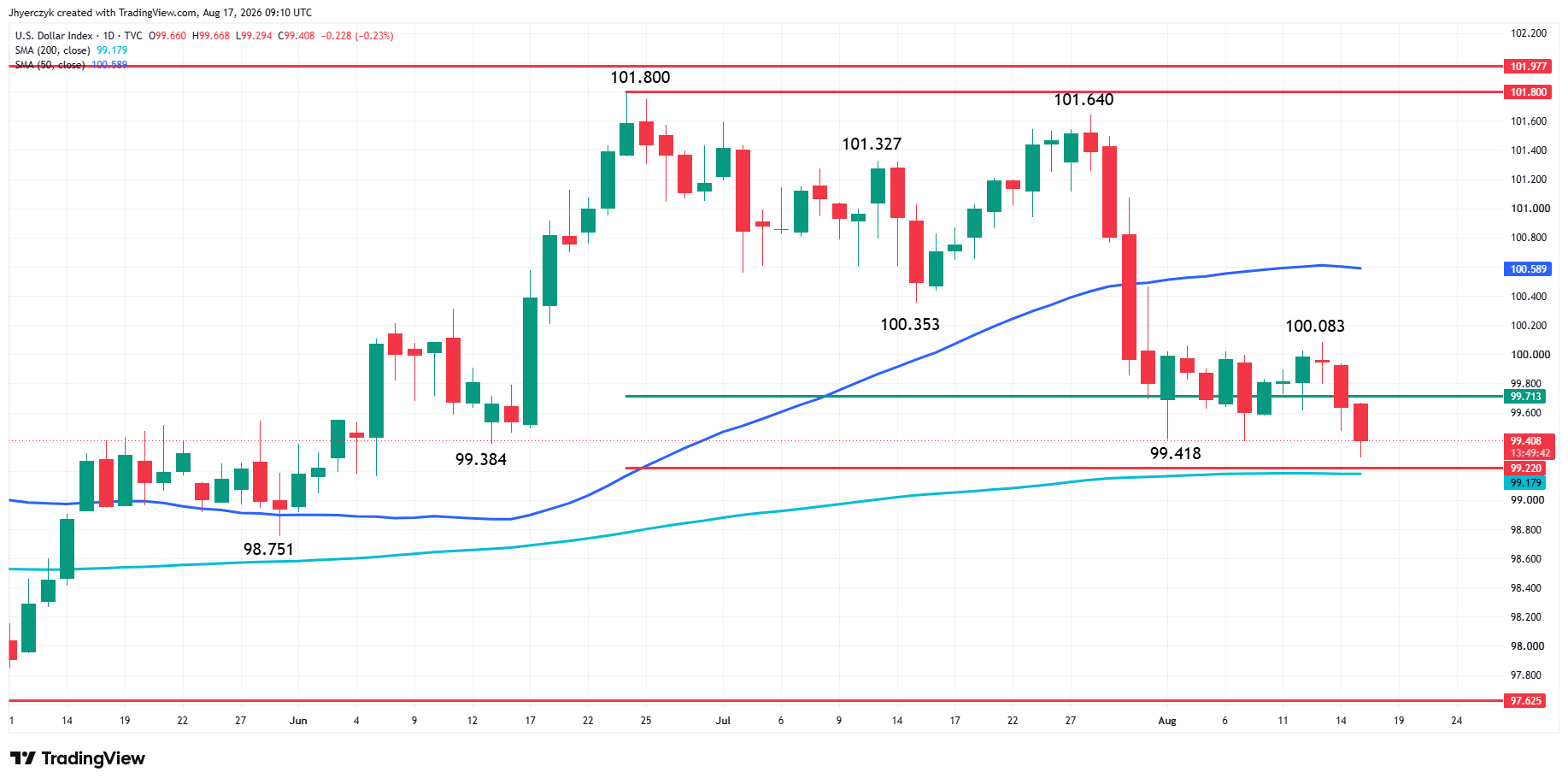
Spot Silver got everything it wanted from the inflation reports and still finished the week lower after reaching $66.80. The market ran above $66.00 and hit sellers who were not reacting to the numbers. They were taking profits because the dollar was not confirming the move in yields. That disconnect turned what should have been a breakout into a selling opportunity.
That pattern is the risk again. The dollar is softer early Monday, which is why silver is running, but the currency has been stubborn through the entire summer rally. The question is whether Monday’s buying is fresh demand or another round of short-covering in a market that turns every time the dollar pushes back. Silver has gained more than 16% over the past month and is roughly 73% higher year-over-year. The trend has attracted money and it has attracted profit-taking every time the currency refuses to cooperate.
Hormuz Risk Supports the Floor but Threatens the Rate Trade
The Middle East is working two ways for silver right now. The United States has threatened an indefinite naval blockade of Iran, tanker traffic through the Strait of Hormuz remains restricted and attacks on vessels have kept crude oil elevated. That keeps safe-haven demand underneath precious metals on the breaks.
The problem is the inflation side. Crude staying elevated can rebuild the case for tighter policy that the soft July data just weakened, and that can push rate expectations higher faster than the bulls want. Silver is caught between the geopolitical bid and the rate consequences that come with elevated energy prices.
The physical market gives buyers another reason to hold. Silver has been running through a multi-year supply deficit with mine output failing to keep pace and recycling not filling the gap. That does not force prices higher on any given session, but it keeps the floor firm when financial buyers step in after a pullback.
Daily Spot Silver (XAGUSD) Technical Analysis
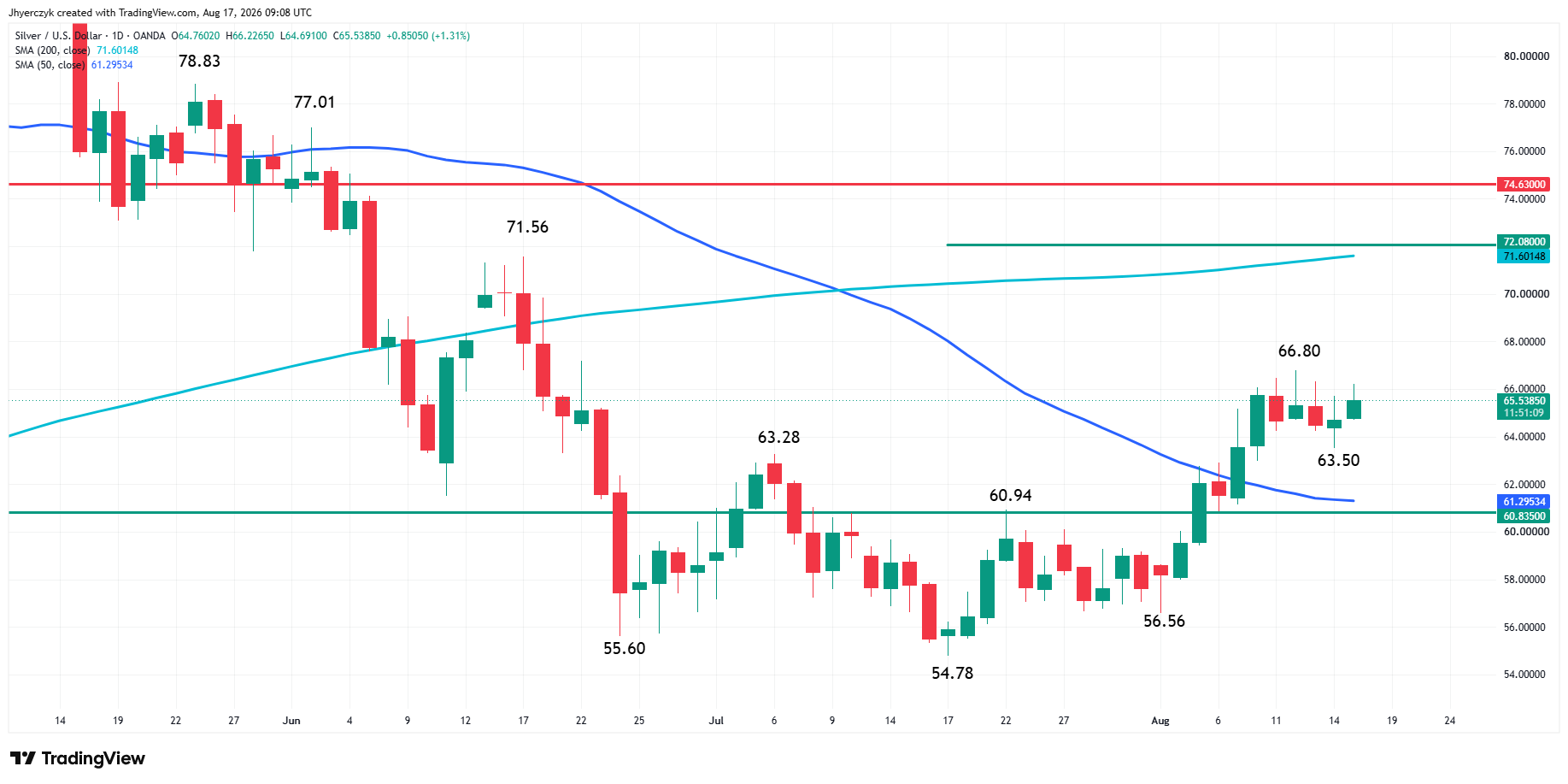
Spot Silver is edging higher early Monday, reaffirming Friday’s minor swing bottom at $63.50 and putting the market in a position to challenge last week’s two-month high at $66.80. The new minor range is $66.80 to $63.50. Its pivot at $65.15 may be controlling the direction of spot silver into the close.
If the market continues to hold $65.15 then it could have a shot at $66.80, but buying volume will be the key. A failure at $65.15 and traders will be talking about a test of $63.50 again.
A breakout over $66.80 will have bullish traders talking about the 200-day moving average at $71.60 again. This is the indicator that some believe must be overcome in order to bring institutional money back into the market. On the downside, the major support remains the support zone formed by the 50-day moving average at $61.30 and 50% of the all-time high at $60.835.
With the 50-day MA at $61.30 and the 200-day MA at $71.60, some speculators are eyeing their midpoint at $66.45 as the key pivot. This pivot has been tested several times over the past week and it appears to be worth watching if it supports your trading style.
What to Watch
The dollar decides this week. Hike odds are lower and the inflation data came in soft, but the currency has to confirm by staying weak or the same pattern from last week plays out again. Energy prices are the second force. Crude staying elevated keeps the safe-haven floor under precious metals but simultaneously rebuilds the inflation argument that can push rate expectations higher. Monday’s rally is a second attempt at $66.80 and the trade comes down to whether the dollar gives the market enough room to convert the attempt into a breakout.
Silver is range-bound between the major moving averages and the midpoint pivot near $66.45 has been the battleground. The entire conversation changes at $66.80, which is where the 200-day MA starts pulling institutional interest back toward the market. Below there, the 50-day has held the base through the entire summer move and that is where the structure of this rally gets tested.
More Information in our Economic Calendar.