Waller Cut the Rate-Hike Odds and Stocks Found Buyers
U.S. stocks are higher Thursday after Fed Governor Christopher Waller said he would be inclined to hold rates steady at the September meeting if the next inflation data does not surprise. That was the first direct pushback against the rate-hike trade that had been running since Warsh spoke at Jackson Hole last week. Fed funds futures cut September hike odds to 50.4% from 63.2%. The 10-year Treasury yield pulled back to about 4.75%. The dollar lost more than 1% against the yen.
The Dow Jones Industrial Average is up about 305 points, or 0.6%. The S&P 500 has gained 0.5%. The Nasdaq Composite is leading with a 0.9% advance.
Oil remained above $90 WTI and Brent stayed above $96. The ISM services prices gauge rose to 72.6. Waller gave the market one voice. The inflation data is still giving it another.
Daily S&P 500 Index (SPX) Technical Analysis
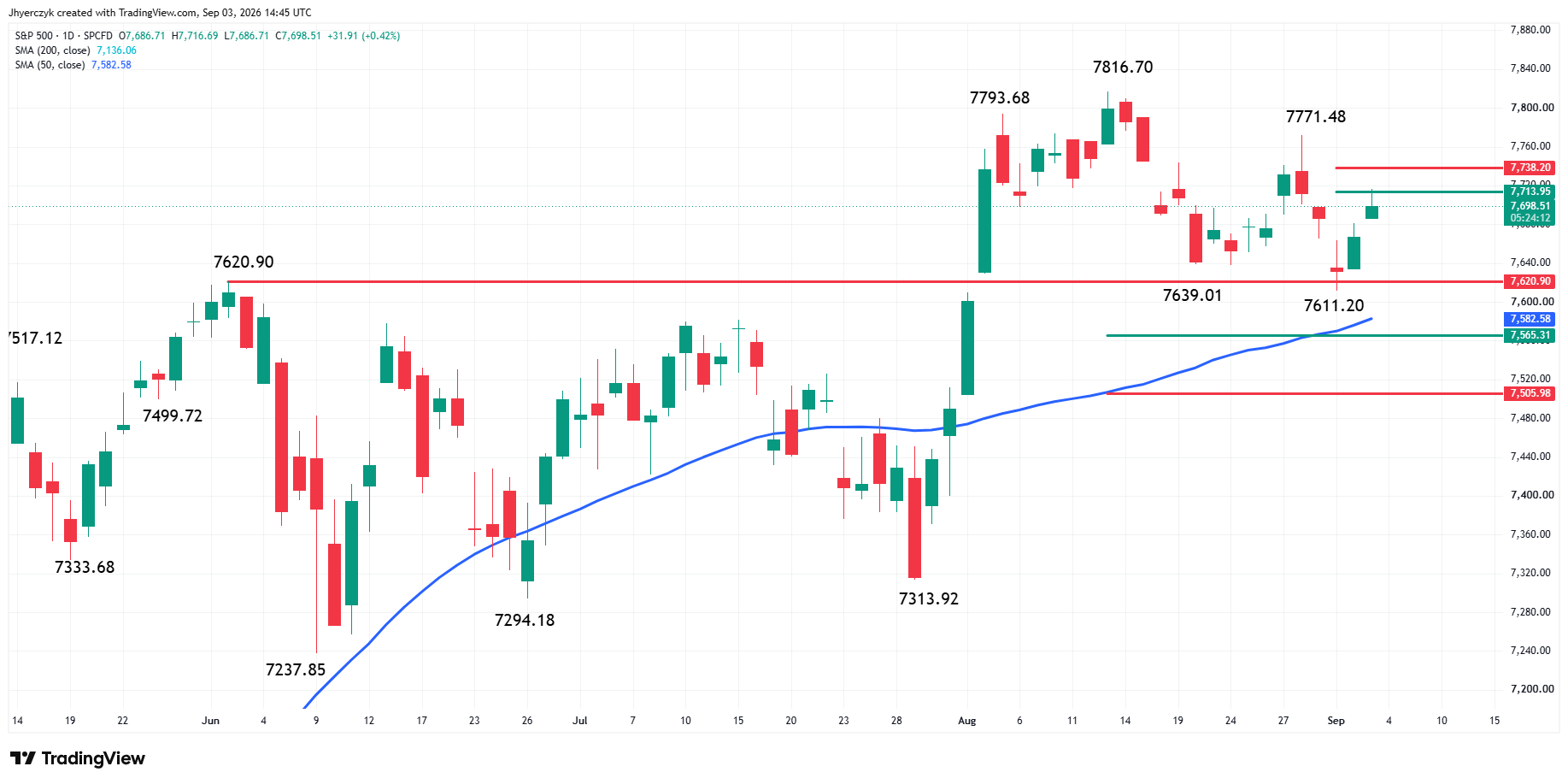
The S&P 500 Index is higher after the first hour of trading on Thursday. Two days of higher-highs has produced a new main bottom at 7611.20. The main trend is down. A trade through 7771.48 will change the main trend to up. Taking out 7611.20 resumes the downtrend.
The major support remains the 50-day moving average at 7582.65 and the intermediate retracement zone at 7565.31 to 7505.98.
The new short-term range is 7816.70 to 7611.20. Earlier today, the index tested the short-term 50% level at 7713.95, briefly piercing it to 7716.69. If buyers can overcome this level with conviction then the next upside target would be the 61.8% level at 7738.20. This is the last potential resistance before the 7771.48 swing top.
Trader reaction to the retracement zone at 7713.95 to 7738.20 is likely to determine the near-term direction. Taking out 7738.20 could extend the rally toward 7771.48. A sustained move under 7713.95 will indicate the return of sellers. This could possibly lead to a resumption of the downtrend under 7611.20 and a possible test of the 50-day MA at 7582.67.
Dow Jones Price Forecast
Every new Dow Jones analysis as it publishes, today's technical signal and key levels, live price — on one page.
See all Dow Jones forecastsWaller Gave the Bond Market a Different Read From Warsh
Warsh said last week at Jackson Hole that policymakers had more work to do if inflation did not move toward target. The 2-year yield jumped. The dollar rallied. Technology, gold and silver all sold off. The market treated it as a live warning.
Waller acknowledged Thursday that inflation remains above the Fed’s 2% target. He also said recent data shows signs of disinflation. He does not see tariff effects spreading broadly and he said higher energy costs have not created a larger inflation problem outside energy.
The yen strengthened sharply against the dollar near 156.1, helping pull U.S. yields lower before and after Waller’s comments. The global yield trade that had been moving in one direction since Jackson Hole finally got a counter-move. September hike odds dropped 13 points in one session.
ISM Services Prices Rose to 72.6 and Oil Is Still Above $90
The ISM services index came in at 55.4 in August, above the 54.1 expected and up from July’s 54.1. New orders, inventories, backlogs and export orders all improved. The employment index rose to 47.8 but stayed in contraction.
The prices gauge rose 2.3 points to 72.6 with its 12-month average at the highest level since April 2023. That is the number that keeps the Fed debate from closing. Waller pulled rate odds lower on the larger inflation trend. The services prices index says the pressure has not gone away in the part of the economy that matters most to consumers.
The U.S. trade deficit jumped 24.4% in July to $88.6 billion, the highest since March 2025. Imports of capital goods rose $14.4 billion. Computers accounted for $6.9 billion. Accessories added $6.6 billion. Semiconductor imports rose $1.2 billion. The AI buildout is still running through the trade data. Initial jobless claims rose by 2,000 to 206,000. Continuing claims increased to 1.78 million.
Snowflake Pulled Software Higher and Broadcom Could Not Hold Its Bid
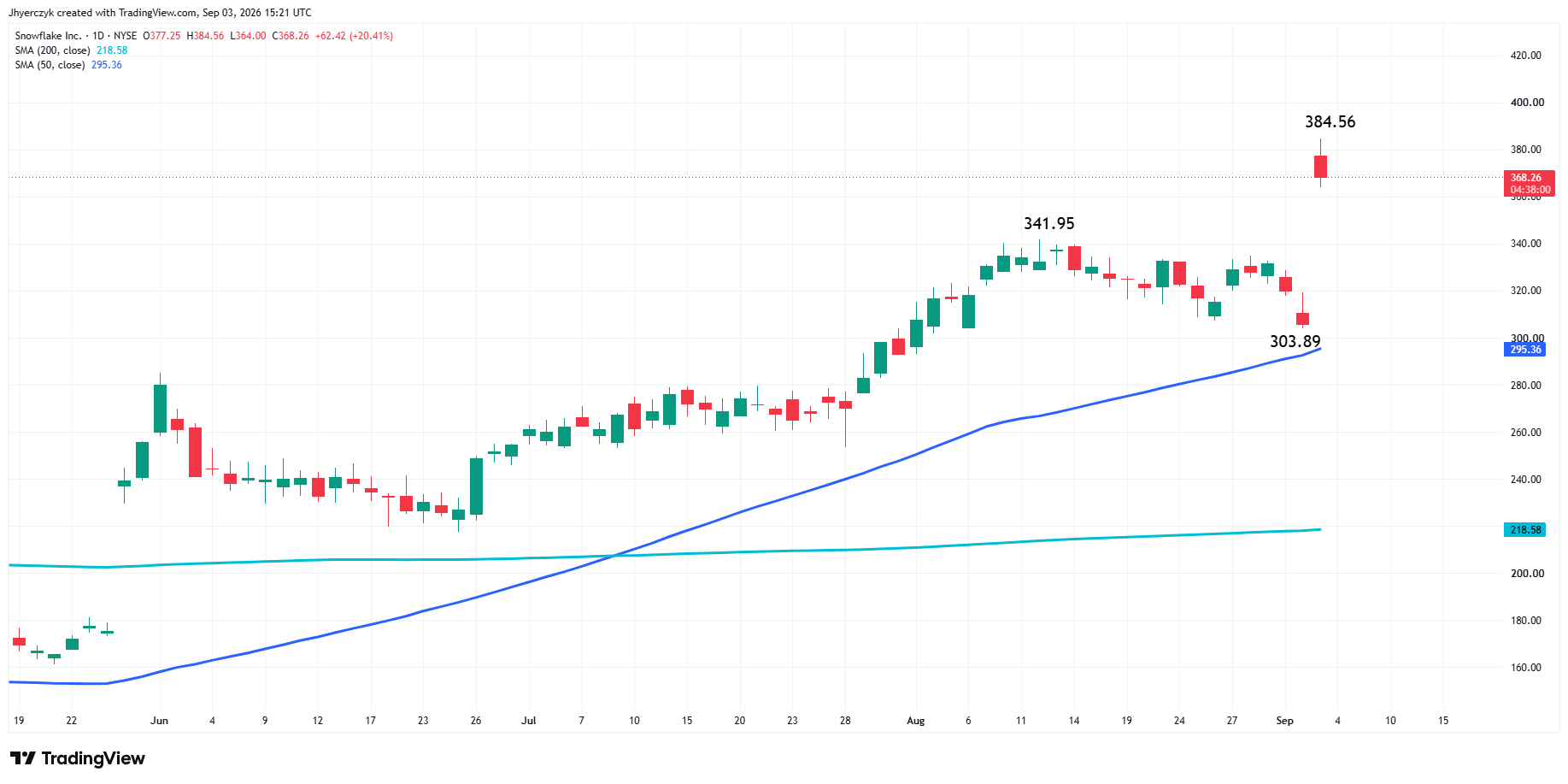
Snowflake jumped more than 23% after reporting adjusted earnings of 62 cents per share on $1.55 billion in revenue. The street expected 45 cents on $1.48 billion. The company raised its full-year product revenue outlook. Datadog rose more than 5%. ServiceNow gained about 3%. Salesforce added more than 1.5%. Snowflake pulled the entire software group with it.
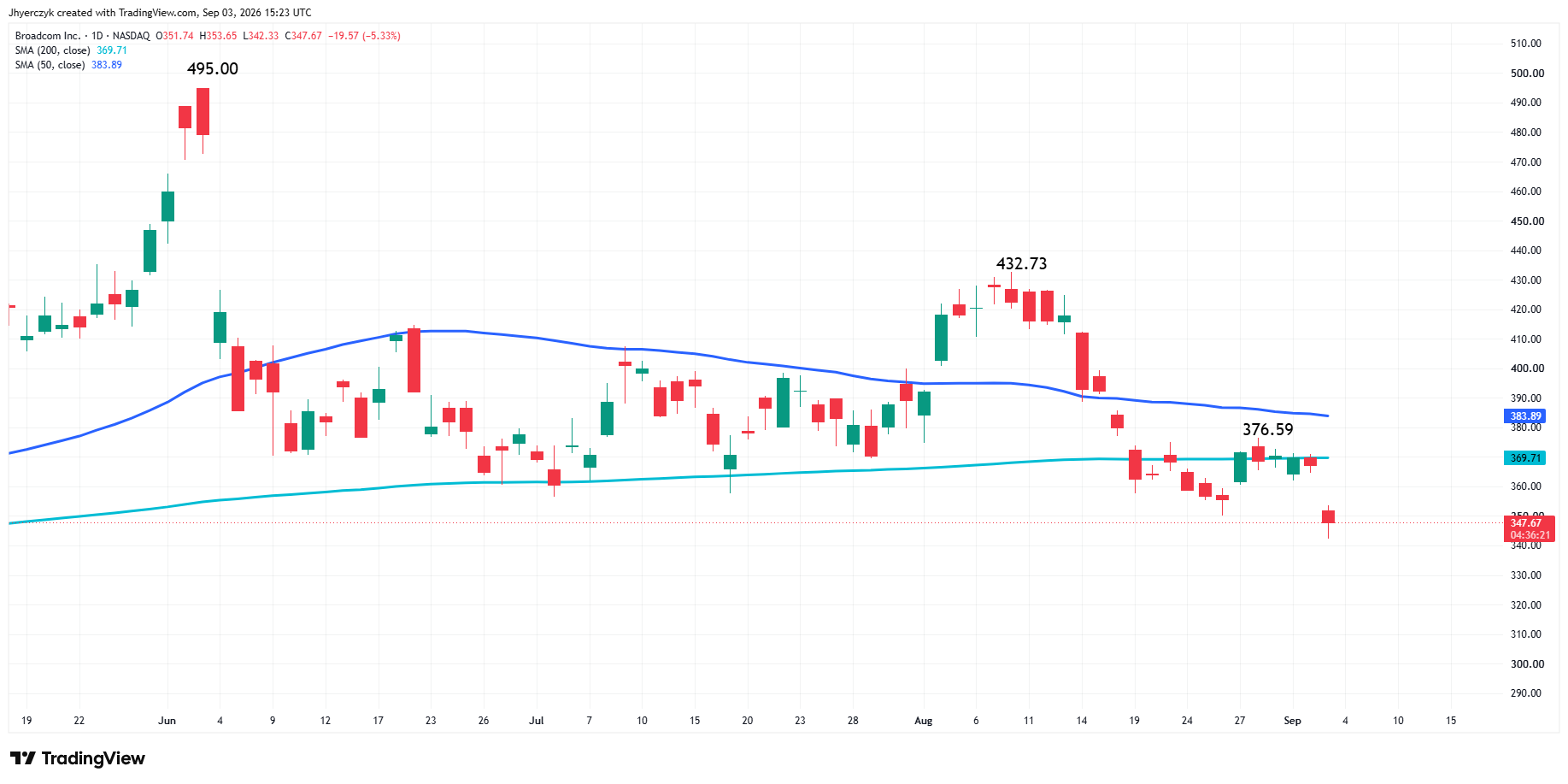
Broadcom was the other side of Thursday’s tech trade. The stock fell after its fourth-quarter revenue forecast came in at $34.8 billion, below the $35.03 billion estimate. Its projected non-GAAP operating margin of 66% also missed the 66.5% the market wanted. Broadcom reported a strong third quarter. Expectations are still high enough that a modest guidance miss triggers selling.
Nvidia agreed to buy open-source AI platform Hugging Face for nearly $13 billion. That would be the company’s second-largest deal after its December purchase of Groq assets for $20 billion.
Stocks in the News
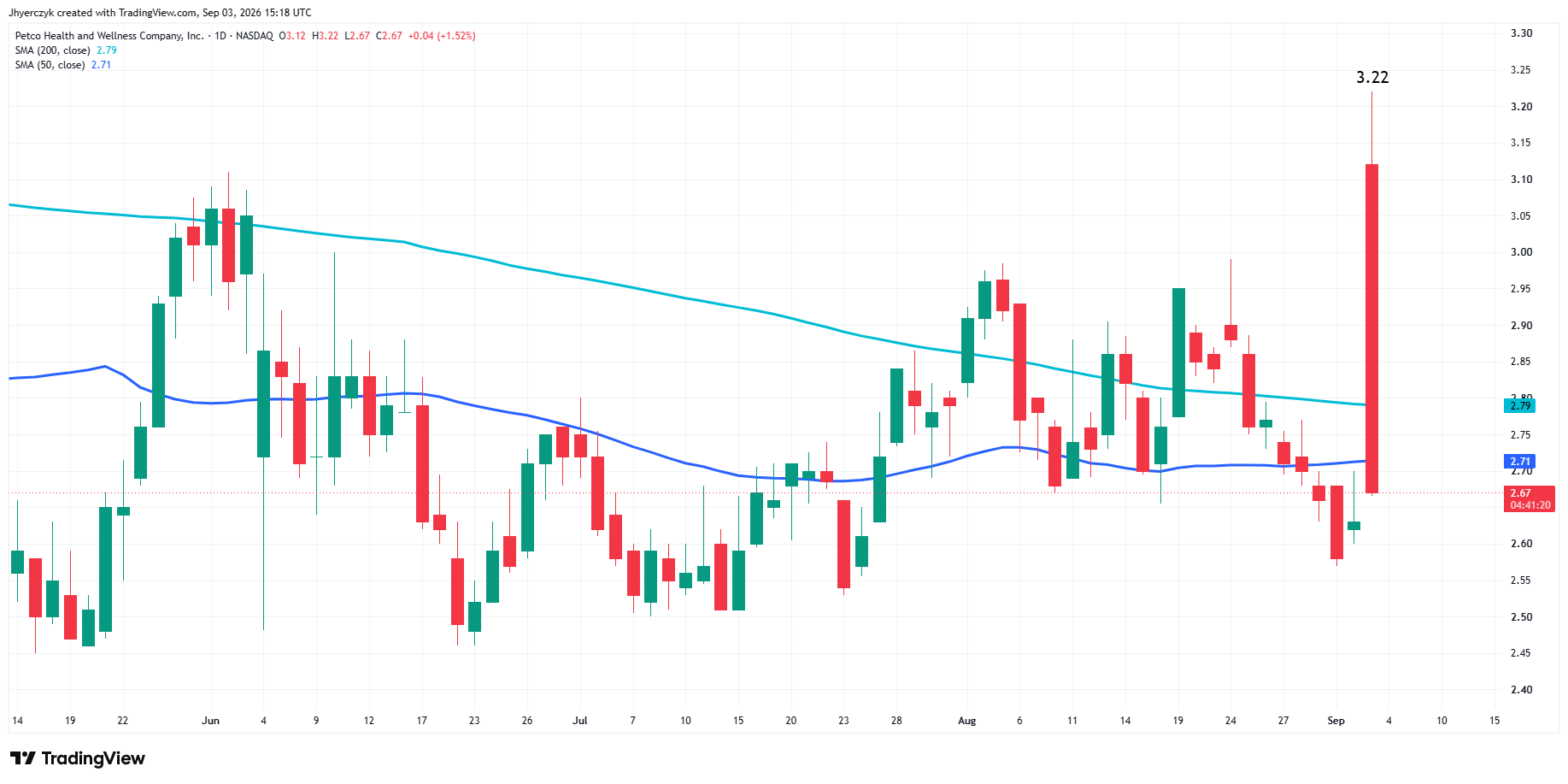
Petco rose nearly 9% on an EBITDA margin beat. Five Below gained 4.5% after topping earnings and revenue with same-store sales above estimates. Argan jumped about 7.5% on earnings and revenue well above expectations. Netskope rose 12% after raising its full-year revenue outlook.
Campbell fell after cutting its quarterly dividend to 25 cents from 39 cents and guiding fiscal 2027 sales down 2% to 4%. Victoria’s Secret dropped more than 18% on a revenue miss and weak operating-income guidance.
Ultragenyx plunged more than 46% after a Phase 3 Angelman syndrome trial failed to meet its primary endpoint. Hewlett Packard Enterprise and NetApp also fell on soft outlooks.
What to Watch
Waller gave the stock market the voice it needed to challenge the rate-hike trade. September odds dropped from 63.2% to 50.4% in one session. The 10-year pulled back to 4.75%. The yen rallied more than 1% against the dollar. Yields need to stay lower for buyers to keep control. The ISM services prices gauge at 72.6 and crude above $90 WTI are still sitting on the other side of the argument. Friday’s payrolls report decides which Fed voice carries more weight into the September meeting.
The S&P 500 tested the 50% level at 7,713.95 Thursday morning. Getting through 7,738.20 opens the swing top at 7,771.48 and a trade through that level changes the main trend to up. Holding under 7,713.95 brings sellers back with the downtrend still intact and the 50-day at 7,582.67 underneath. Thursday gave buyers room. The payrolls number decides whether they get to keep it.
More Information in our Economic Calendar.