



U.S. Personal Income and Spending Rise in December, PCE Inflation Remains Stubborn
Personal income in the U.S. rose by $92.0 billion, or 0.4%, in December, according to the latest report from the Bureau of Economic Analysis. Disposable personal income (DPI), which measures income after taxes, also climbed 0.4%, while personal consumption expenditures (PCE) surged by $133.6 billion, or 0.7%. The data highlights continued consumer strength despite persistent inflationary pressures.
US Dollar Index Price Forecast
Every new US Dollar Index analysis as it publishes, today's technical signal and key levels, live price — on one page.
See all US Dollar Index forecastsThe increase in personal income was primarily driven by higher compensation, signaling steady wage growth. The PCE rise was fueled by a $78.2 billion increase in services spending and a $55.4 billion gain in goods purchases. This suggests consumers maintained spending momentum even as inflation concerns lingered.
Personal outlays, which include PCE, interest payments, and current transfer payments, increased by $129.5 billion. Meanwhile, the personal saving rate fell to 3.8%, indicating that Americans are allocating more income toward spending rather than saving. This could raise concerns about long-term financial resilience, especially if economic conditions tighten.
PCE Inflation Remains Above Target
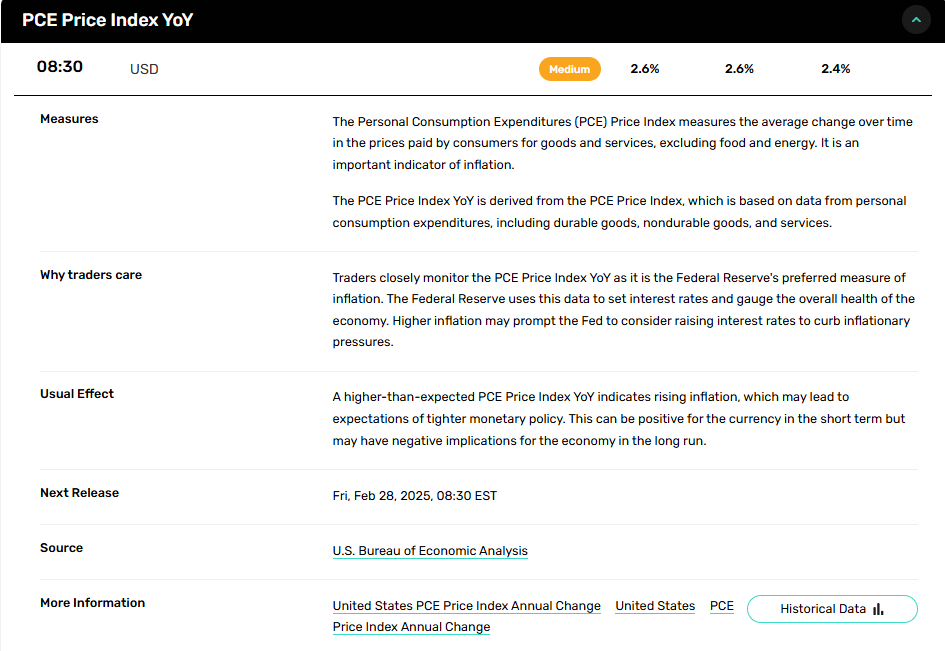
The PCE price index—a key measure of inflation—rose 0.3% in December from the prior month. Excluding food and energy, core PCE inflation increased 0.2%. On an annual basis, the headline PCE price index was up 2.6%, while core PCE climbed 2.8%, both above the Federal Reserve’s 2% target.
While inflation is gradually cooling, the pace remains stubbornly high, reinforcing expectations that the Fed will maintain a cautious stance on interest rate cuts. Traders will be closely monitoring upcoming economic data and Fed statements for further policy signals.
Market Outlook: Fed Policy Uncertainty Keeps Traders on Edge
With PCE inflation still above the Fed’s target and consumer spending showing resilience, expectations of aggressive rate cuts may weaken. If inflation remains sticky, the Fed could delay or reduce the number of expected rate cuts this year. This would likely support the U.S. dollar and pressure risk assets, particularly equities.
Traders should watch for upcoming inflation reports and labor market data, as any signs of persistent price pressures could shift market sentiment. Until then, the outlook remains cautious, with rate-sensitive assets particularly vulnerable to shifting expectations.