
UK GDP Numbers Miss Expectations
The UK economy took center stage on January 16 amid shifting sentiment toward the Bank of England’s (BoE) rate path. November’s GDP numbers pointed to a struggling UK economy, potentially fueling speculation about a BoE rate cut.
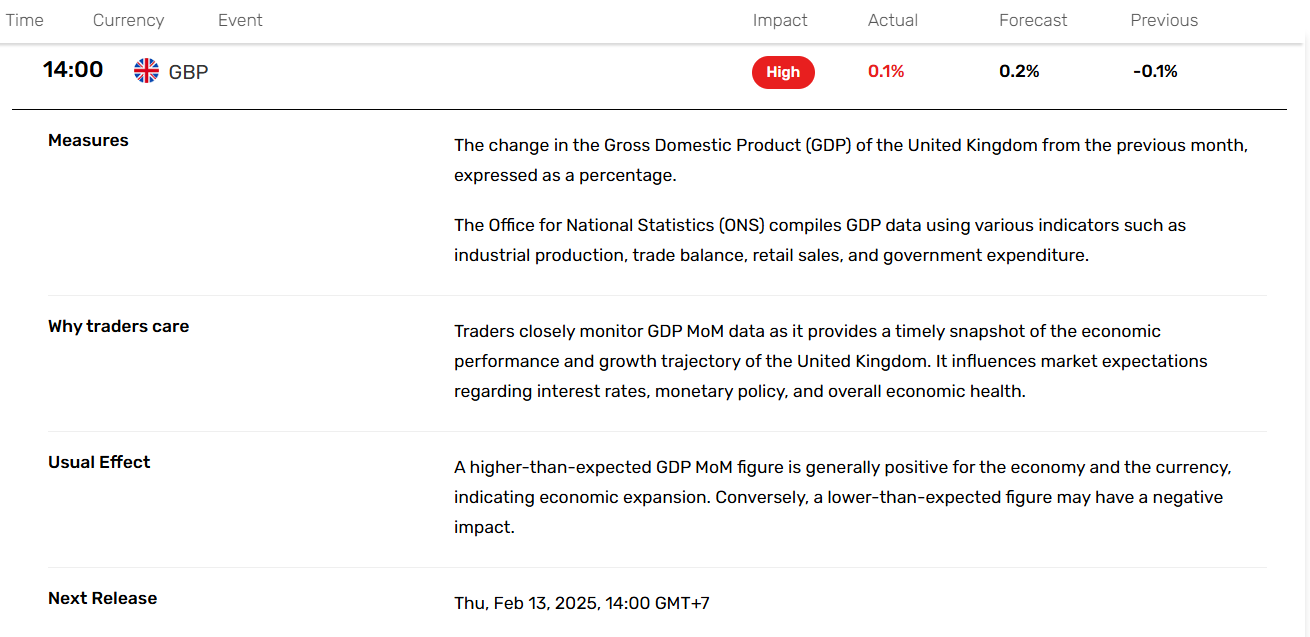
The economy grew by 0.1% month-on-month, reversing October’s 0.1% contraction but falling short of the anticipated 0.2% growth.
Key data from the Office for National Statistics included:
- Services sector output rose by 0.1% month-on-month after falling 0.1% in October. However, there was no growth in the three months to November.
- Production declined by 0.4%, following a 0.6% drop in October. In the three months to November, production was down 0.7%.
These figures underline the broader economic stagnation, as weak services and production outputs weigh on growth.
Expert Views on the UK Economy
Mohamed A. El-Erian, President Queen’s College, Cambridge, and former Pimco CEO/co-CIO, commented on the latest data:
“The latest monthly GDP expansion will come as some relief to those worried about stagflationary winds, and especially so after yesterday’s better-than-expected inflation data.”
Despite this, the data provided little indication of a February BoE rate cut, potentially supporting a rebound in GBP/USD from earlier losses. Elevated inflation could keep the BoE on a cautious footing.
GBP/USD Price Forecast
Every new GBP/USD analysis as it publishes, today's technical signal and key levels, live price — on one page.
See all GBP/USD forecastsBank of England Monetary Policy Implications
The GDP numbers followed December’s UK inflation data that failed to fuel bets on a February BoE rate cut. The annual inflation rate eased to 2.5% in December, remaining well above the BoE’s 2% target.
However, the GDP figures could fuel speculation about a BoE rate cut. BoE Deputy Governor Sarah Breeden recently changed her stance on monetary policy, stating,
“The recent evidence further supports the case to withdraw policy restrictiveness and I expect to continue to remove restrictiveness gradually over time.”
This evolving perspective signals potential shifts in the BoE’s approach, adding to market uncertainty.
GBP/USD Reaction to November’s GDP Report
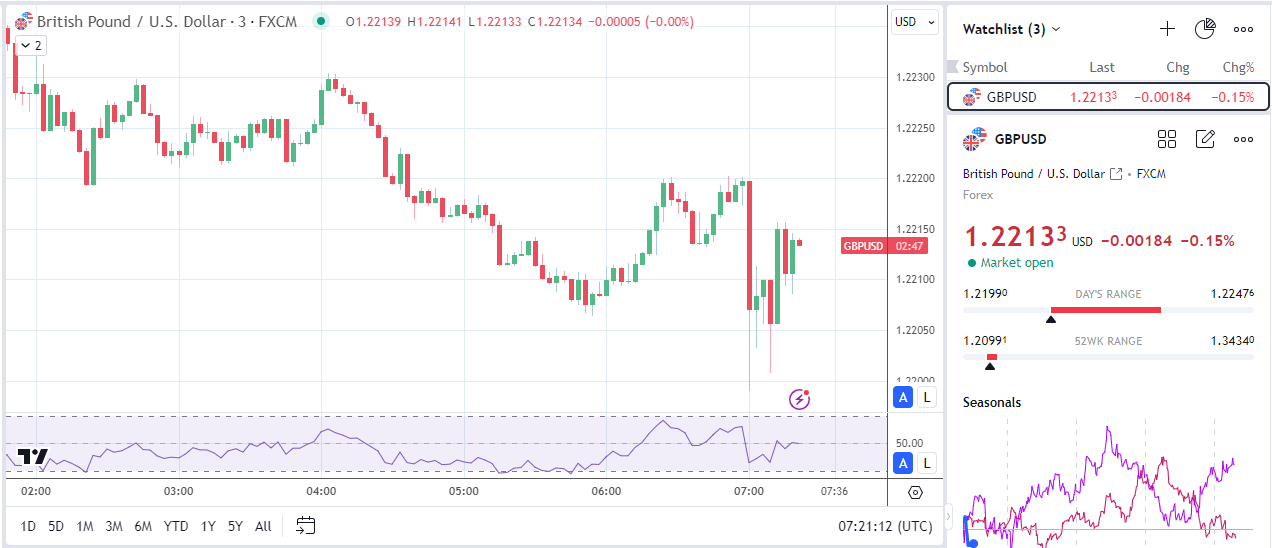
Before the UK GDP Report, the GBP/USD climbed to a high of $1.22476 before falling to a low of $1.22064.
However, in response to the Report, the GBP/USD fell from $1.22197 to a post-report low of $1.21990.
On Thursday, January 16, the GBP/USD was down 0.15% to $1.22133. The choppy reaction to the UK GDP report underscored ongoing uncertainty about the BoE rate path. While the UK economy stalled in the three months to November, inflation remained well above target.
View timely updates and expert insights into economic trends and their implications for global markets here.