Bitcoin Sees Four-Day Winning Streak End
On Wednesday, September 11, BTC declined by 0.53%, following a 1.02% gain from the previous session, closing at $57,357. Significantly, BTC dipped below $56,000 before retaking the $57,000 handle.

US Presidential Debate Sends BTC Sub-$56,000
On Wednesday, September 11 (UTC), the US Presidential Debate drew investor interest. Despite previously courting crypto voters, his failure to mention the crypto market impacted BTC demand. BTC dropped to a Wednesday morning session low of $56,137.
US CPI Report Fuels BTC Volatility
Later, US economic data drove BTC price volatility amid shifting bets toward a 50-basis point September Fed rate cut.
The US annual inflation rate eased from 2.9% in July to 2.5% in August, supporting bets on a September Fed rate cut. However, the core inflation rate remained at 3.2% in August, sinking hopes of a 50-basis point Fed rate cut. BTC responded, dropping to a session low of $55,593 before recovering. The steady core inflation figure weighed on investor sentiment regarding an aggressive Fed policy shift.
According to the CME FedWatch Tool, the chances of a 50-basis point September Fed rate cut fell from 34.0% on Tuesday, September 10, to 15.0% on Wednesday, September 11.
Bitcoin Price Forecast
Every new Bitcoin analysis as it publishes, today's technical signal and key levels, live price — on one page.
See all Bitcoin forecasts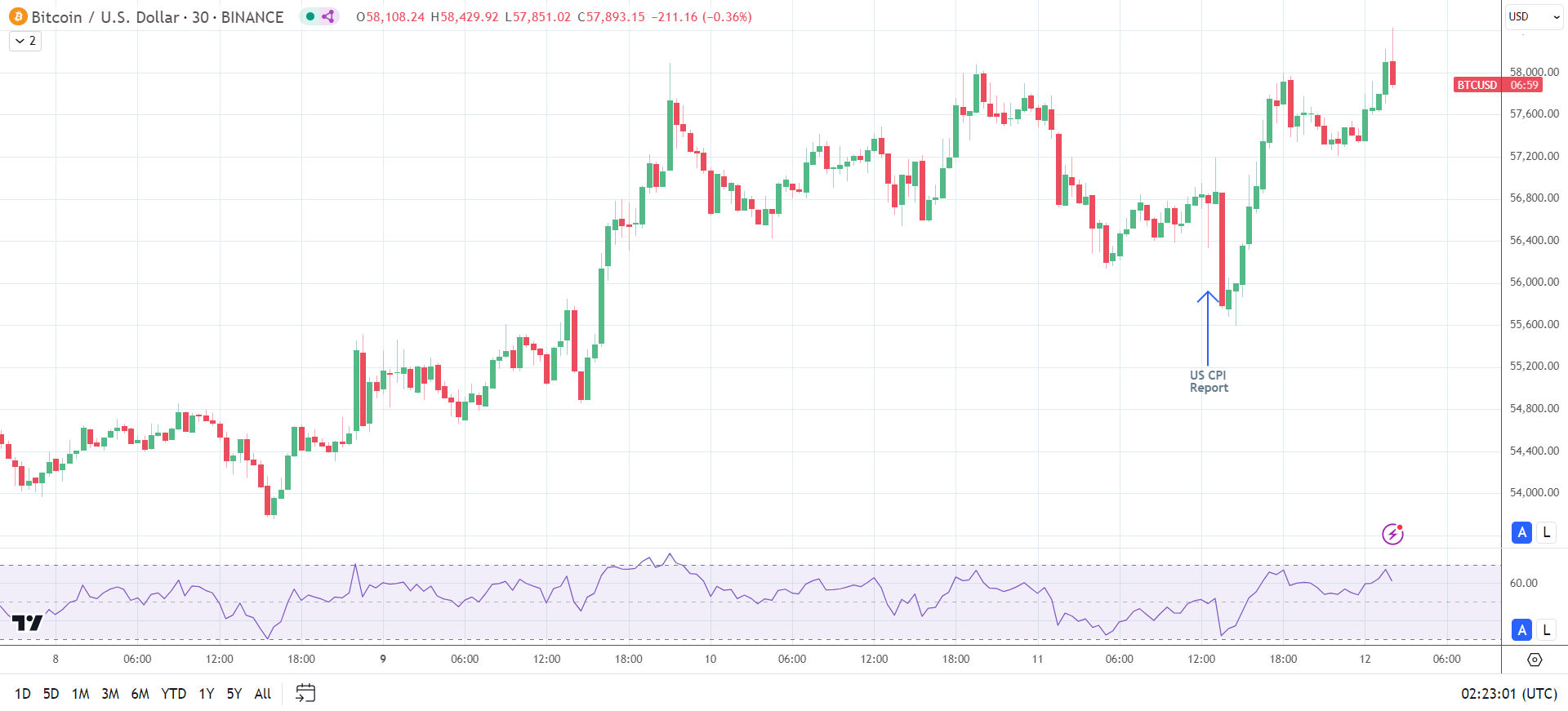
US BTC-spot ETF Market Sees Outflows Resume
On Wednesday, September 11, the US BTC-spot ETFs faced their first outflows in three sessions, reflecting sentiment toward the US core inflation figure and falling expectations of a 50-basis point Fed rate cut.
According to Farside Investors,
- ARK 21Shares Bitcoin ETF (ARKB) saw net outflows of $54.0 million.
- Grayscale Bitcoin Trust (GBTC) saw net outflows of $4.6 million.
- Grayscale Bitcoin Mini Trust (BTC) had net outflows of $0.5 million.
- Conversely, Fidelity Wise Origin Bitcoin Fund (FBTC) reported net inflows of $12.6 million.
Excluding iShares Bitcoin Trust (IBIT) flows, US BTC-spot ETFs saw $43.9 million in net outflows, contributing to BTC’s loss. US BTC-spot ETF flows affect BTC demand, influencing BTC price trends.
US Economic Calendar: Labor Market and Inflation in Focus
On Thursday, September 12, initial jobless claims and producer prices may further influence sentiment toward the Fed rate path. Lower producer prices and higher claims could renew hopes of a 50-basis point Fed rate cut, possibly pushing BTC toward $60,000. However, if jobless claims unexpectedly spike above 250k, recession fears may resurface, adversely affecting BTC demand.
Investors should stay vigilant as shifting sentiment and supply-demand trends may affect BTC demand. Stay updated with our latest news and analysis to manage exposure to BTC and the broader crypto market.
Technical Analysis
Bitcoin Analysis
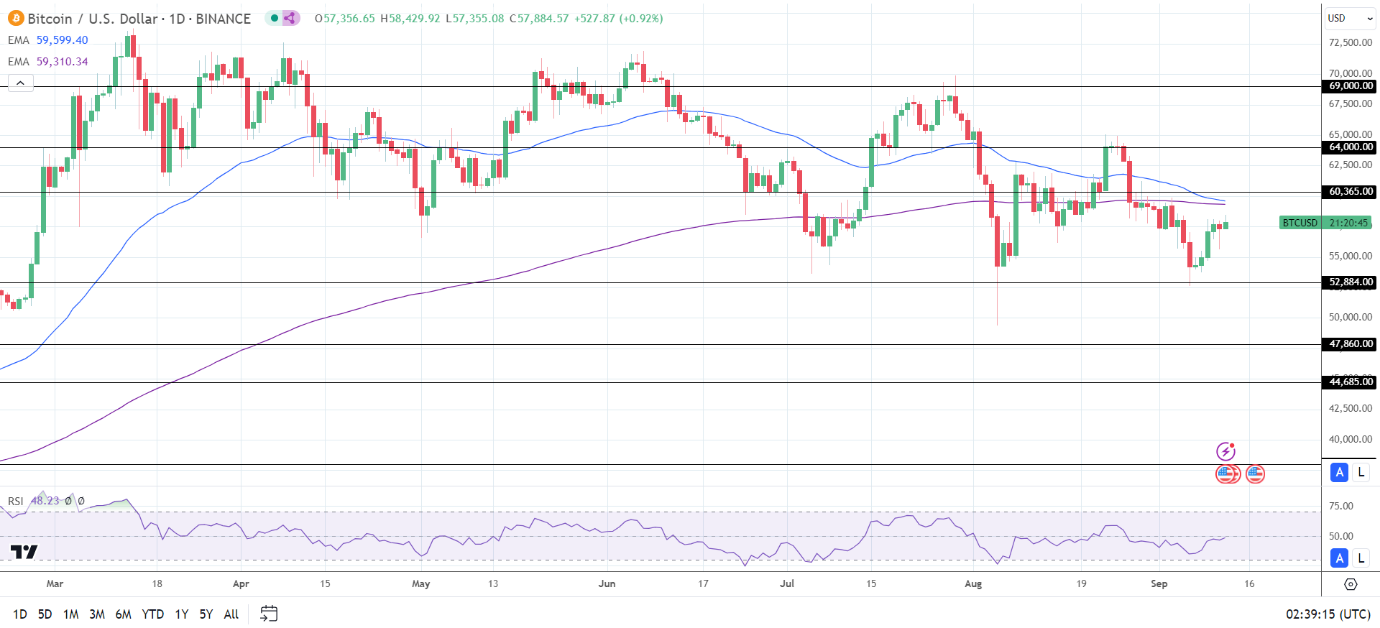
BTC hovered below the 50-day and 200-day EMAs, affirming bearish price signals.
A breakout from $58,000 could give the bulls a run at the 200-day and 50-day EMAs. Furthermore, a break above the 50-day EMA may support a move toward the $60,365 resistance level.
US economic data, sentiment toward the Fed rate path, and BTC-spot ETF market flow trends require consideration.
Conversely, a break below $55,000 could bring the $52,884 support level into play.
With a 48.23 14-day RSI reading, BTC may break below $55,000 before entering oversold territory.
Ethereum Analysis
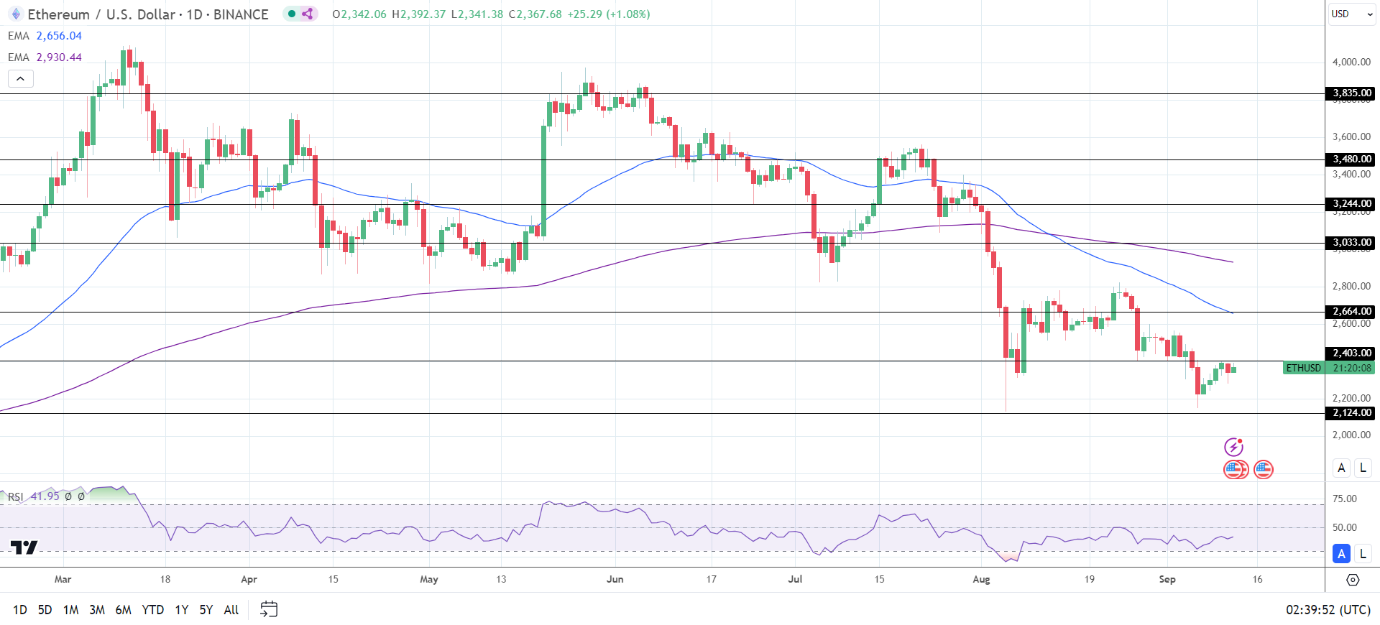
ETH remained well below the 50-day and 200-day EMAs, affirming bearish price signals.
An ETH break above the $2,403 resistance level could support a return to the $2,500 level. Furthermore, a breakout from $2,500 may bring the $2,664 resistance level into play.
US ETH-spot ETF market-related updates also require consideration.
Conversely, an ETH fall through the September 6 low of $2,150 could give the bears a run at the $2,124 support level.
The 14-period Daily RSI reading, 41.95, suggests an ETH fall to the $2,124 support level before entering oversold territory.