The Dow Jones Industrial Average closed the week positive at 53,537 as strong earnings and resilient consumer demand offset growing policy and trade risks. The speech by Kevin Warsh at the Jackson Hole raised expectations of a rate hike in September as PCE inflation held at 3.7%. The surge in US Treasury yields and the U.S.-Canada tariff dispute may limit the next rally. But the technical structure remains bullish above 52,900 and the immediate resistance remains the 55,000 level.

Kevin Warsh Jackson Hole Speech Raises September Rate Hike Risk
Fed Chair Kevin Warsh delivered the strong message on Friday at Jackson Hole. He said that the U.S. economy has strengthened and the U.S. labor market is near full employment. He also contended that there is no widespread financial constraint. But he cautioned that inflationary pressures are still too high as the PCE inflation rate is 3.7% annually and 4.1% over the last six months.
Warsh did not mention that there would be a rate hike soon. But he said that the Fed still has some work to do unless the underlying inflation moves clearly toward the 2% target. In response, traders allowed for a higher risk of a September rate hike, moving from near 35% to around 57%. The two-year Treasury yield jumped about 11 basis points to 4.34%, while the 10-year yield increased to around 4.72% after the Jackson Hole meeting.
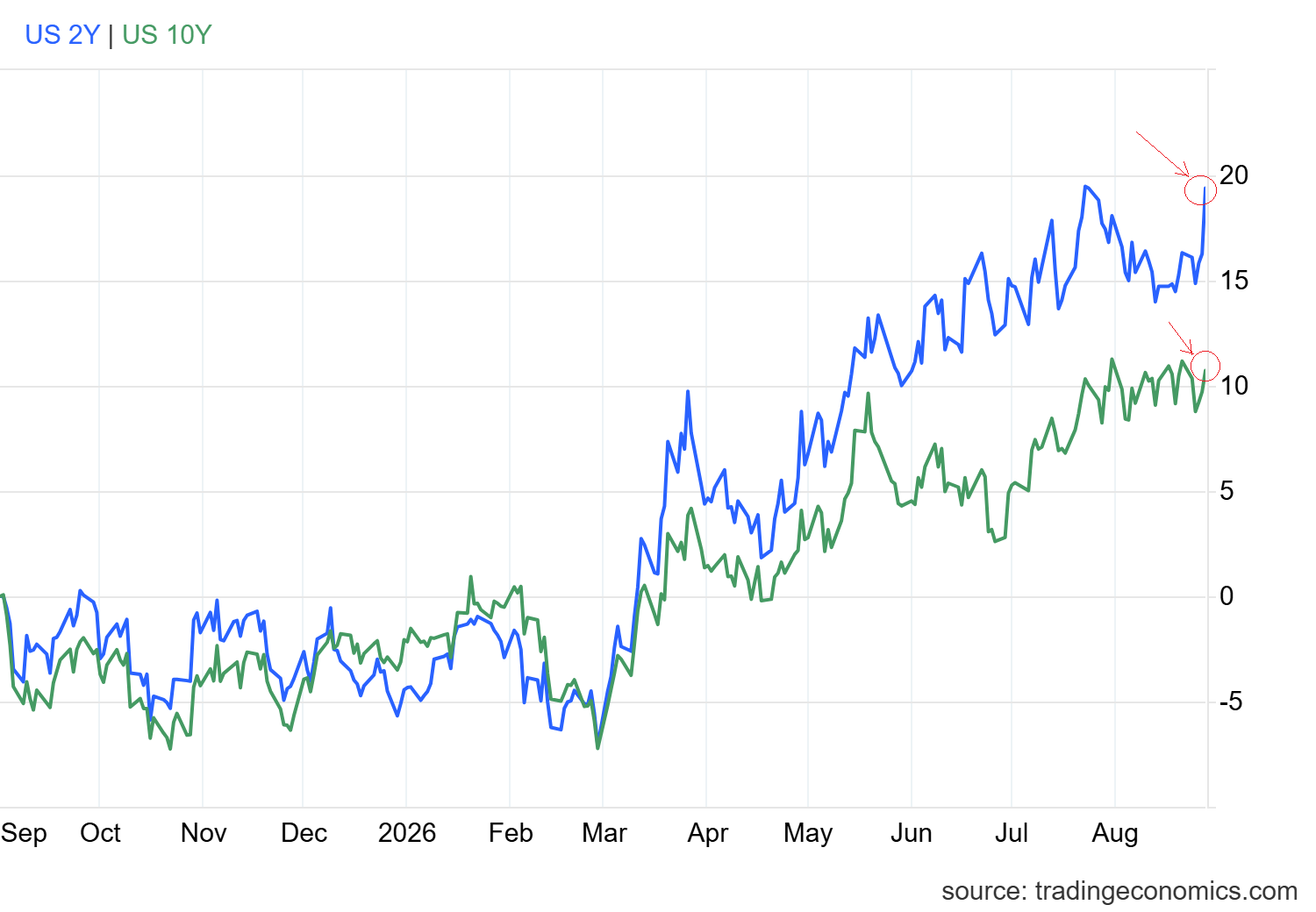
The surge in yields added selling pressure in tech and semiconductor stocks. The Nasdaq dropped 0.52% while the Dow finished almost unchanged. This divergence indicates that the Dow continues to hold up better than the tech-heavy market. But another rally in US Treasury yields in the short term could still weigh on industrial, consumer and other rate-sensitive stocks. The surge in expectations of rate hike in September increases the volatility in the US stock market.
Dow Jones Price Forecast
Every new Dow Jones analysis as it publishes, today's technical signal and key levels, live price — on one page.
See all Dow Jones forecastsPCE Inflation at 3.7% Keeps Fed Rate Hike Risk Alive
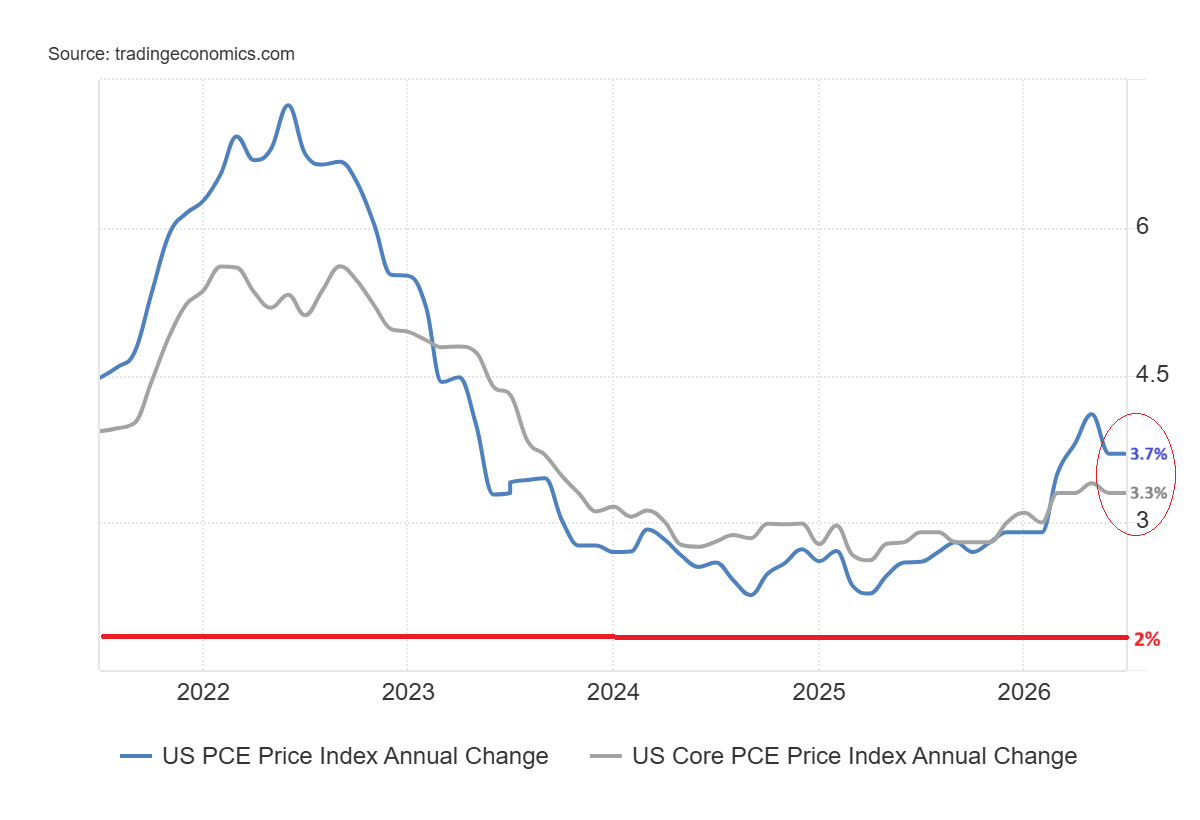
The latest PCE report indicated that inflation made little progress in July. The PCE price index rose 0.2% from the month before and 3.7% over the past year. The annual value was the same as in June and was higher than the market forecast. Core PCE inflation was also up 0.2% for the month, and held steady at 3.3% for the year.
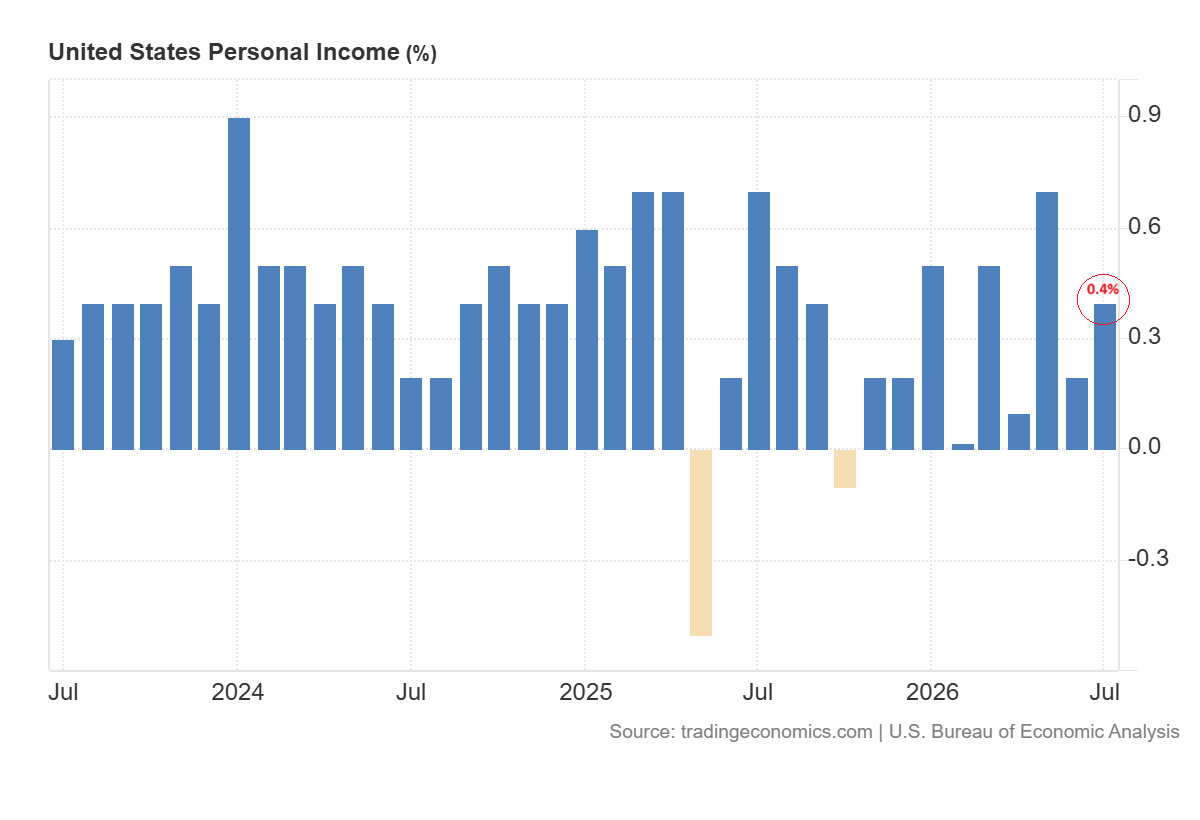
Personal income increased 0.4% while disposable income rose 0.5%.
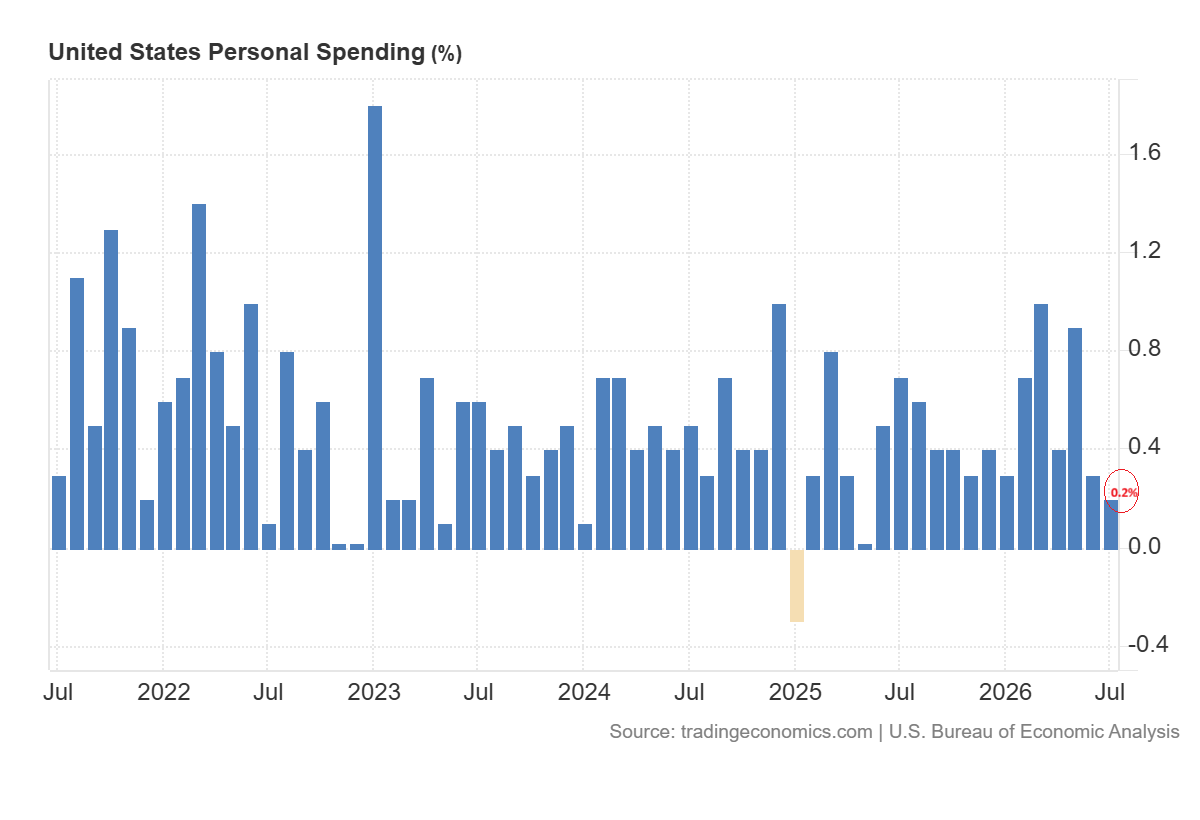
Consumer spending was up 0.2%, with spending in real dollars barely rising. Spending on services rose $86.2 billion and spending on goods declined $49.9 billion.
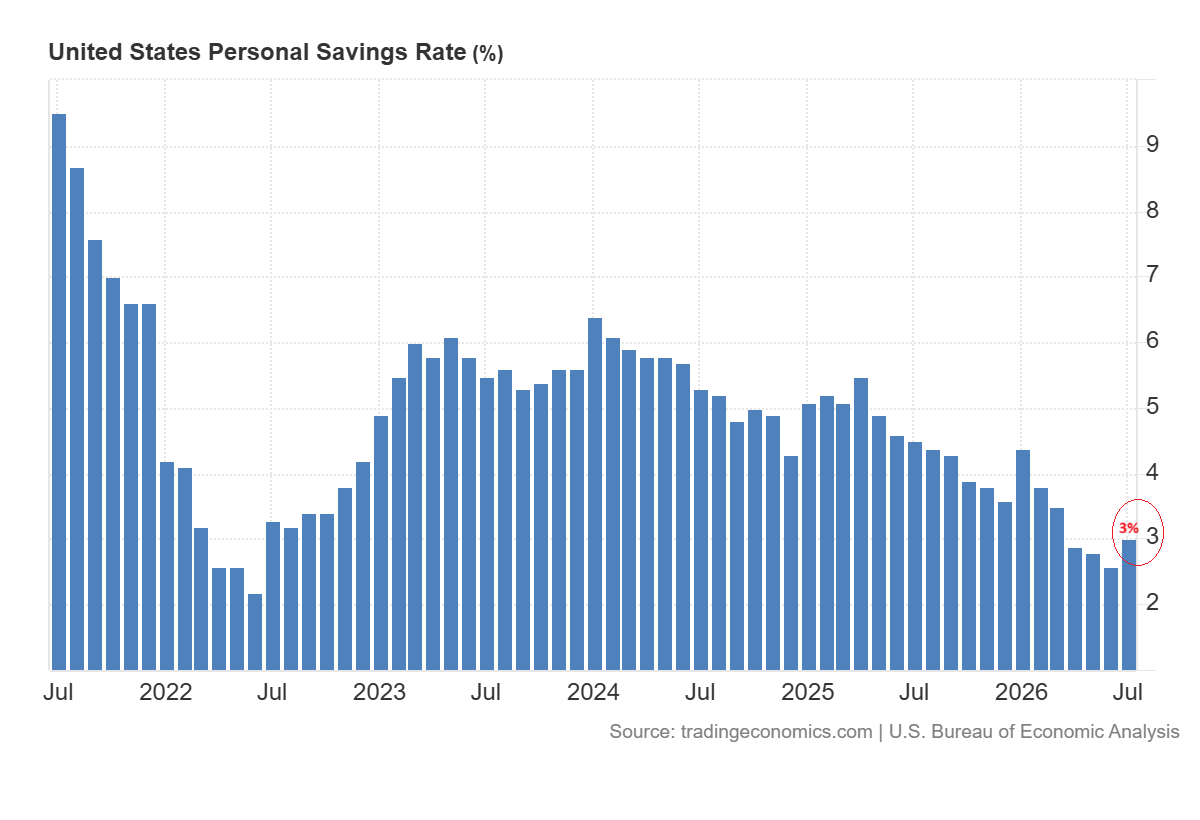
Moreover, the personal saving rate increased to 3% but still remains historically low. This indicates a relatively strong level of household income even as higher prices curb growth in real spending.
This data doesn’t indicate a sudden collapse in consumer demand. But they leave the Fed plenty of room for a tight policy stance. The mix of solid jobs growth, solid income growth and inflation rates that are still above target are enough to warrant a further increase. It creates a narrow path for the Dow. The index may be supported by strong earnings, but rising yields could limit the growth. Slower inflation data would be good news for stocks, but another hot inflation report could be a catalyst for more profit-taking.
U.S.-Canada Tariffs Raise Costs for Dow Jones Industrials
The latest developments in tariffs come after the talks broke down on Friday between the U.S. and Canada. Trans Mountain CEO Mark Maki said that the controversy made it more urgent to construct another Canadian oil pipeline to the West Coast. Canada exports about 90% of its oil to USA. The pipeline would provide Canadian producers greater access to buyers in Asia and reduce their reliance on U.S. buyers.
The U.S. has imposed 50% tariff on approximately $20 billion worth of Canadian exports. The pressure is growing on manufacturing and automotive networks around Detroit and southern Ontario. Some components cross the border several times during the manufacturing process. So, increases in tariffs can also raise costs at multiple points and squeeze profit margins throughout the supply chain.
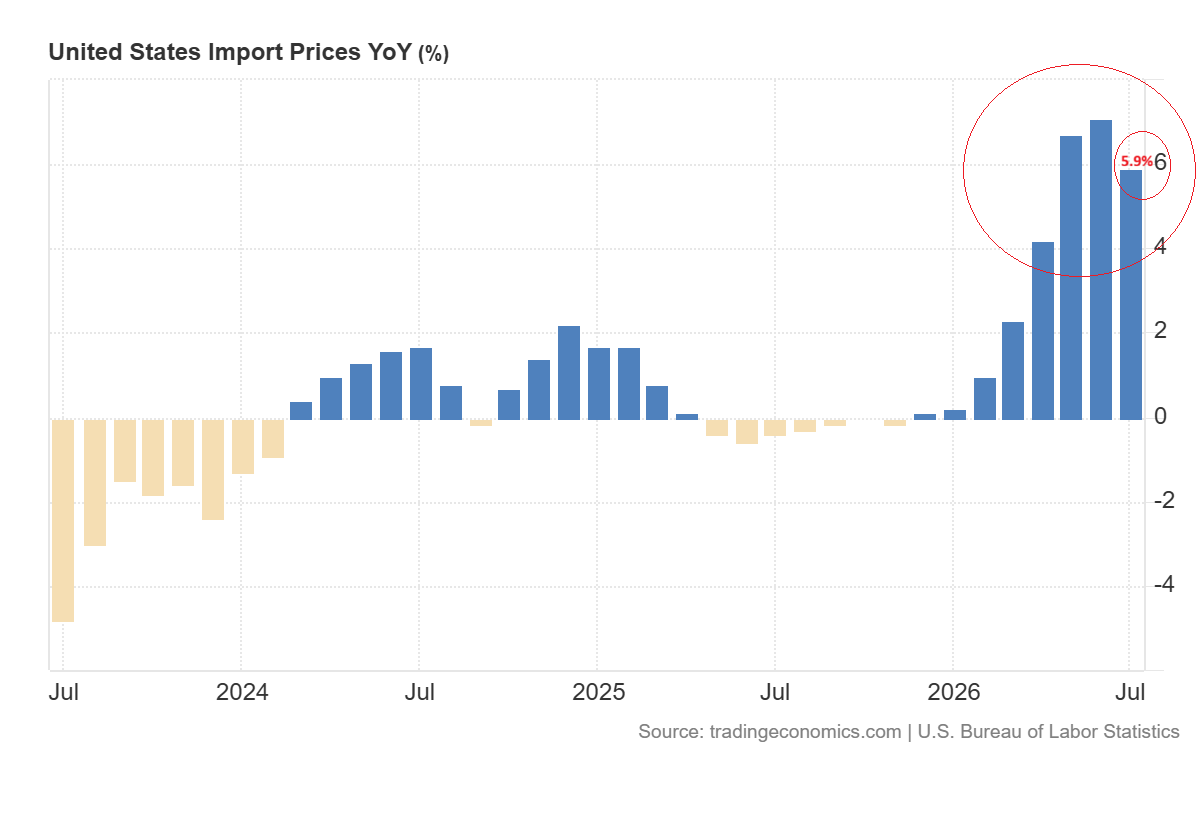
U.S. import prices were already 5.9% higher than a year earlier in July. The nonfuel import prices also increased 4.5%.
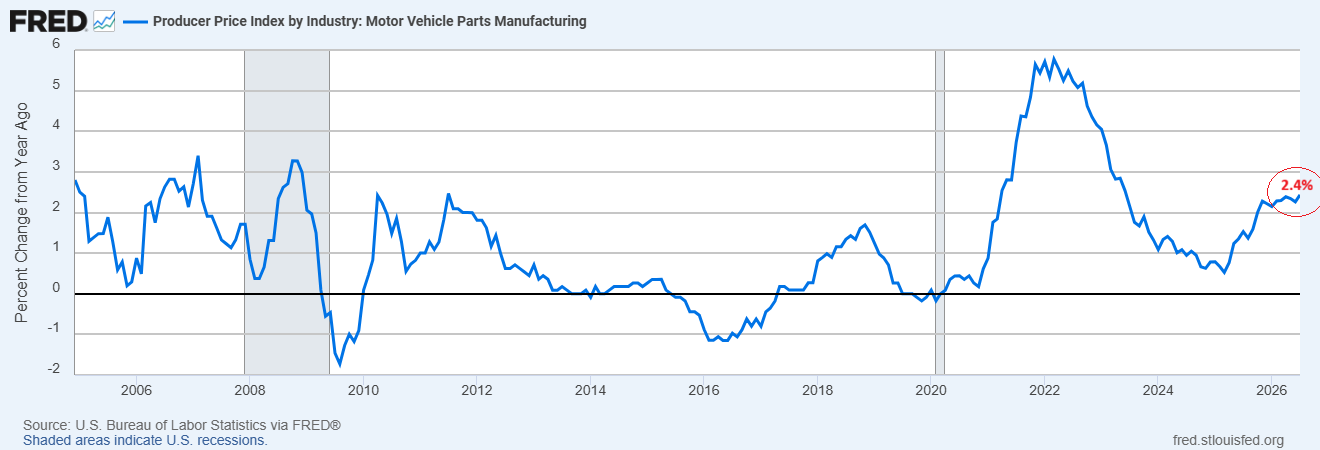
These price pressures were also visible in automotive sector. The chart below shows that the producer price index for motor vehicle parts manufacturing has been consistently increasing since March 2025. These data points were recorded before the U.S.-Canada tariffs and show that the cost pressure already exists in the system.
The greatest tariff risk for the Dow lies in the rising cost of inputs and re-emergence of inflation pressures. Materials could become costlier and demand from overseas could be lower for industrial firms. The retailers may also have difficulty absorbing cost increases through retail pricing. The price increases due to tariffs may make the Fed less willing to ease policy. A renewed push on the trade talks will support a relief rally. But a longer dispute could keep industrial and consumer stocks down.
Dow Jones Technical Analysis Eyes Breakout Above 55,000
The weekly chart for the Dow Jones shows that the index has been consolidating below 50,000 to build pressure to break higher. The last weekly candle gained slightly by 0.51% after two weeks of decline from the peak of 54,778.
This reversal indicates that the short term direction may remain uncertain and the index may consolidate between the 52,000 and 54,000 levels. However, as long as the index remains above 50,000, the possibility of a break above 55,000 is high.
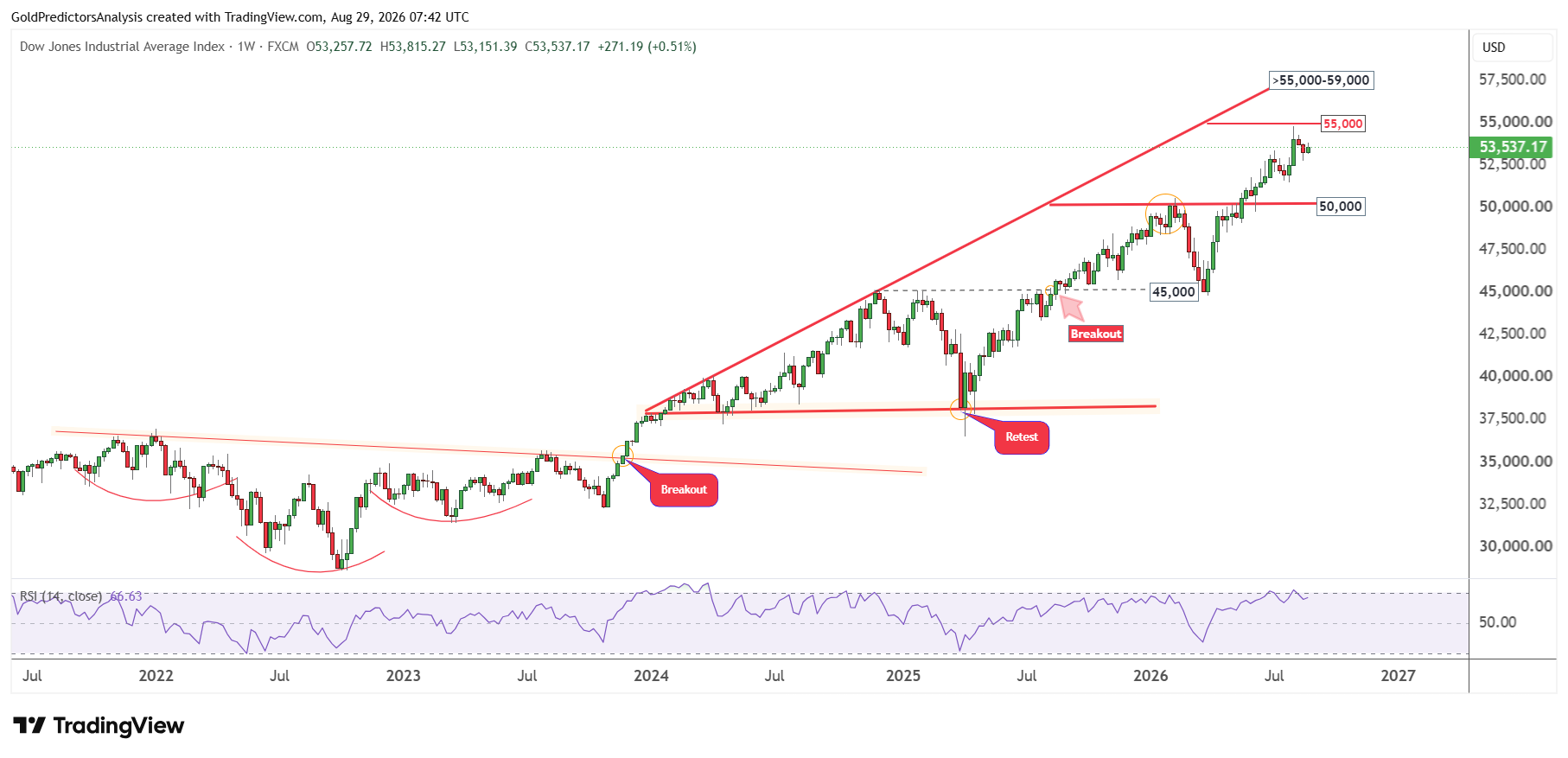
A break above 55,000 will likely push the index into the 55,000-59,000 range. This range is the primary long term target for the index. This target is defined by the ascending broadening wedge pattern that stretches from January 2024.
The index shows strong volatility on the daily chart. The chart shows that the index has been trading within the ascending channel pattern since April 2026. The index also remains above the 50-day SMA and the target remains the 56,600 level. The emergence of inverted head and shoulders patterns in Q1 and Q2 2025 suggests a broader bullish picture. The V-shaped recovery in March 2026 also supports bullish view.
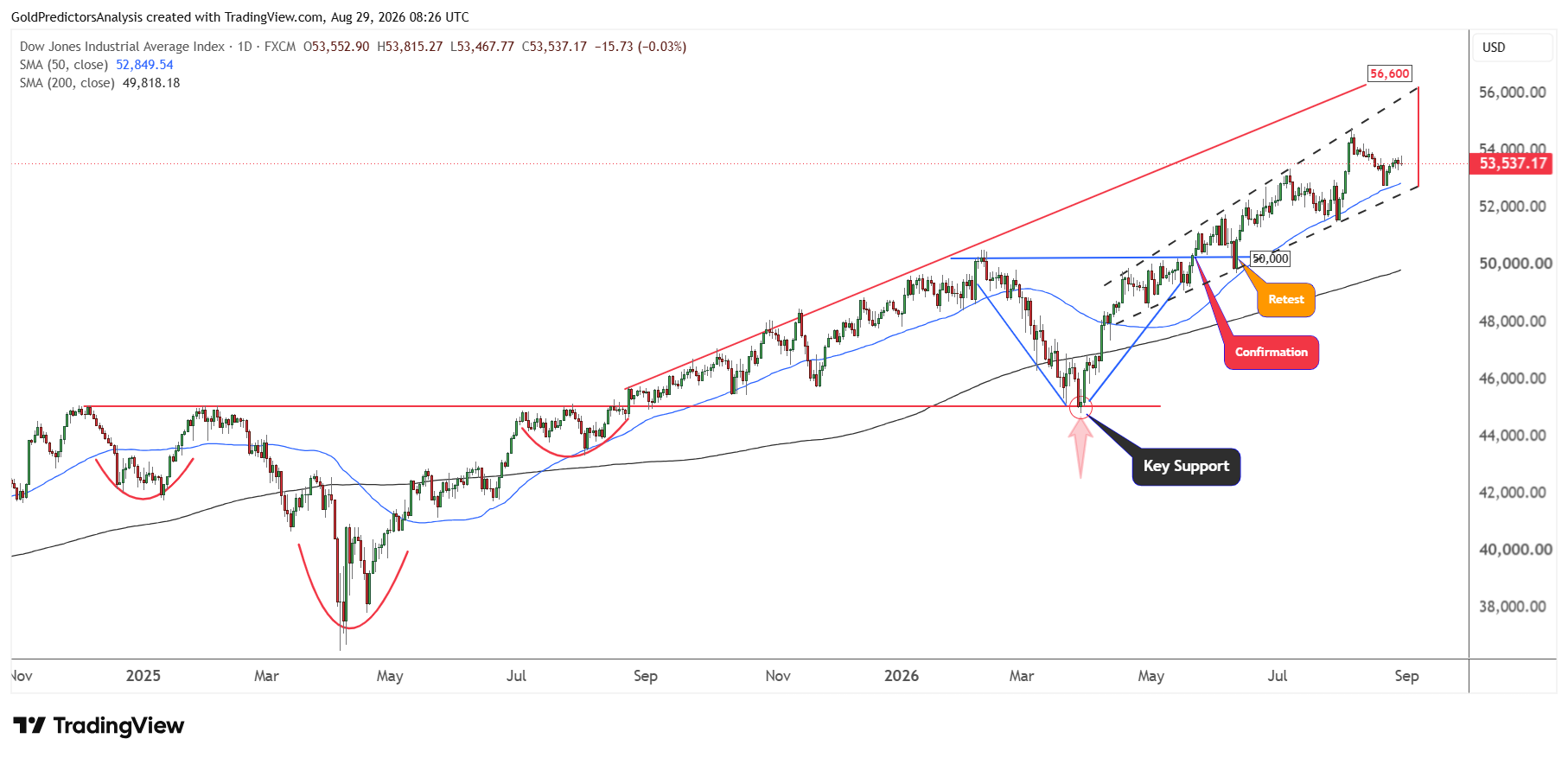
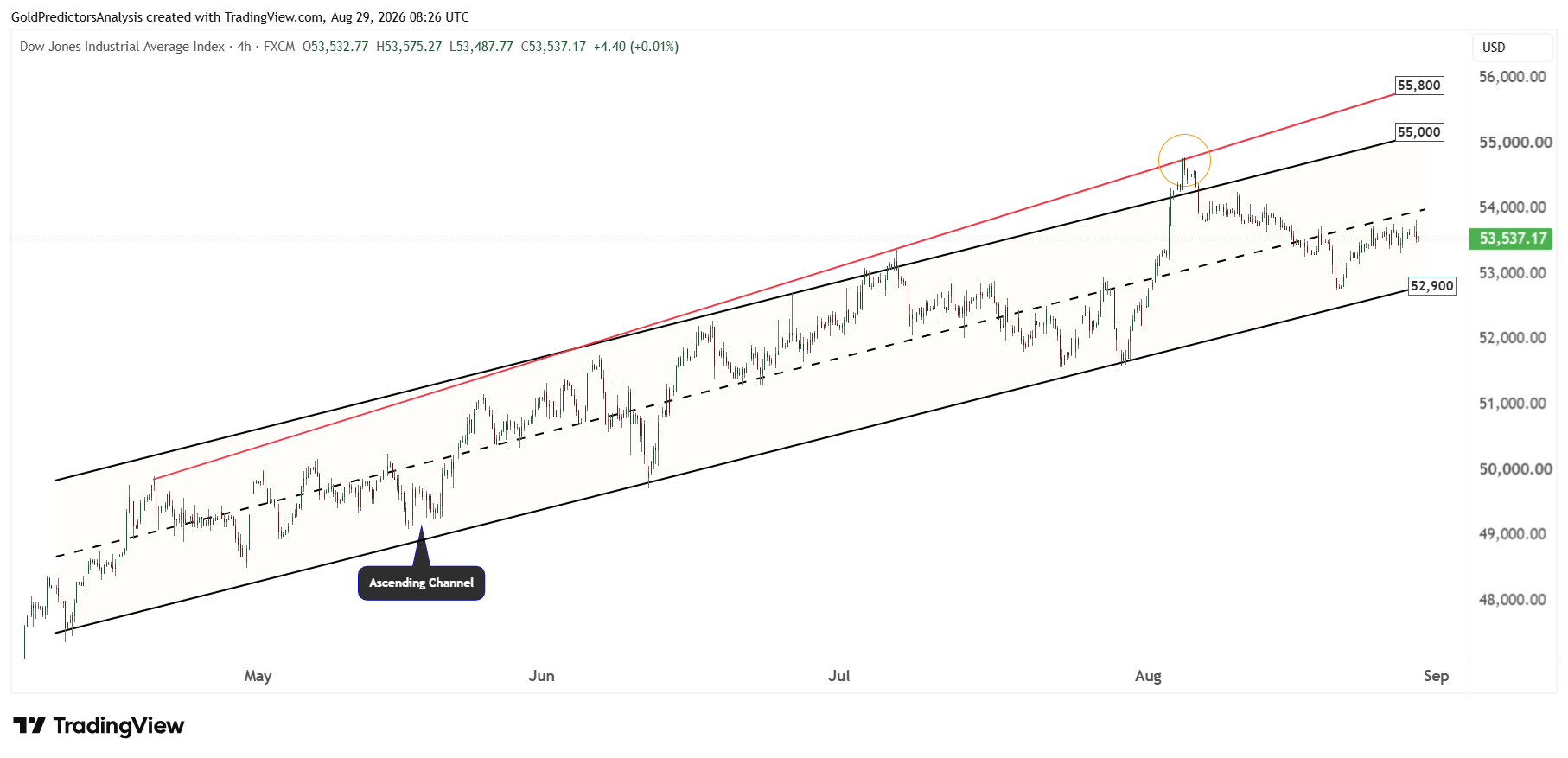
The short term trend for the Dow Jones still remains bullish as the index is trading within the ascending channel pattern. The index has been trending gradually higher since the bottom in 2026. The immediate short term support remains at 52,900. As long as this support holds, the index may rebound toward 55,000, which is the resistance of the ascending channel pattern.
What to Watch Next for the Dow Jones
The Dow Jones Industrial Average is supported by strong earnings and strong consumer demand. But the outlook carries more risk after the Fed speech at Jackson Hole. The persistent PCE inflation, higher Treasury yields and the Canada tariff dispute may keep volatility high. These pressures could also increase the case for rate hike in September and limit the next market rally.
The short term trend remains bullish as the index holds above 52,900. The rebound from this support may push the Dow toward 55,000. A break above 55,000 would open the way toward the long term targets of 56,600 and 59,000. But the break below 52,900 may weaken the bullish structure and expose the 50,000 support.