



US Closed; Asia Markets Mixed
US markets kept their doors shut in observance of Labor Day on Monday; therefore, cash markets were closed for stocks and treasuries. However, US equity index futures were mixed, with the S&P 500 and Dow futures losing steam, while Dow futures added some ground. Overnight, Asia-Pac shares lacked direction, caught between a batch of regional data that blew hot and cold.
Japan’s Nikkei drifted between gains and losses, while the broader Asia-Pac benchmark outside Japan edged higher, buoyed by a stronger showing from Korean equities. By contrast, Australian shares slipped after a sharp deterioration in a local consumer confidence gauge for September.
Yen Breaches ¥155 as BoJ Hike Odds Firm
For FX, I would be remiss not to highlight the JPY. USD/JPY breached the widely watched ¥155 handle amid increased bets that the BoJ will pull the trigger and hike its policy rate by 25 bps next week. Investors are assigning a 75% probability of a rate increase (or +19 bps), up from 50% a month ago. I can only imagine how many stops were tripped at this level, adding to the unwind lower. This left the pair within touching distance of ¥124 at the close yesterday, a base closely shadowed by daily support at ¥152.83. Technically, there is room for further underperformance.
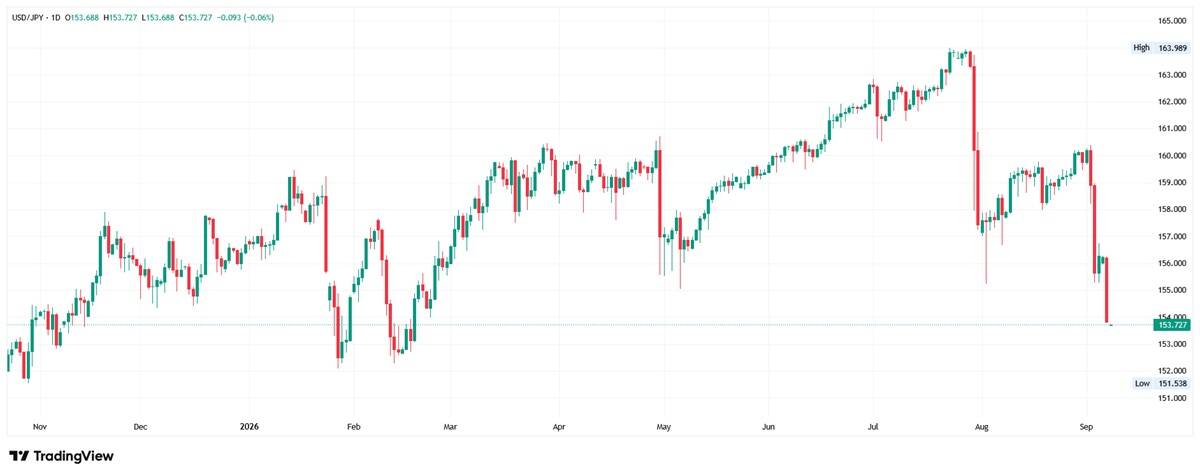
Underpinning the BoJ repricing was a fresh batch of domestic data released yesterday. Revised Q2 26 GDP figures showed the Japanese economy expanding at a faster annualised clip than the initial estimate, with wage growth adding further fuel to the tightening narrative: inflation-adjusted pay packets rose at their fastest pace in years, marking the seventh straight monthly gain. Combined, this leaves policymakers with little excuse to delay.
Canada Retaliates
Beyond the yen, the CAD faces acute downside risk heading into today’s sessions as Canada imposes sweeping counter-tariffs of 15% to 50% on US goods following the collapse of trade talks. With President Trump already labelling the CAD/USD exchange rate ‘unacceptable’ and threatening punitive export bans, expect heightened USD/CAD volatility and defensive USD hoarding as this major trade escalation begins to fracture integrated cross-border supply chains.
Oil Firm Amid Middle East Tensions
In the commodities complex, oil benchmarks remained higher on Monday amid the fragile situation between the US and Iran, which exchanged blows in recent days. Brent crude continues to trade within striking distance of the widely watched US$100/barrel – a barrier I would think houses a collection of sell orders, with stops likely set just north of the US$102 high established on 23 July.
Brent Oil Price Forecast
Every new Brent Oil analysis as it publishes, today's technical signal and key levels, live price — on one page.
See all Brent Oil forecastsThis geopolitical premium is also spilling directly into metals; on Monday, benchmark LME three-month copper futures surged 0.8% to a record-breaking all-time high of US$14,533 a ton. This historic breakout is being turbocharged by a major inventory squeeze, as traders aggressively front-run anticipated US tariffs on refined metal by draining global stockpiles and routing them directly into US warehouses.
Subdued Day Ahead
The data slate will be quiet again; in fact, tomorrow will also be subdued. As I noted in yesterday’s mailer, things do not really change gear until Thursday, when we get an update from the ECB – a rate hike is widely anticipated – and the August US PPI inflation data. Although we usually see CPI land before PPI, this week it’s the other way around; I think this is down to the holiday-shortened US week.
Written by FP Markets Chief Market Analyst, Aaron Hill