
The first hike by the Federal Reserve (Fed) in three years supported the dollar against most other major currencies, with the large majority of participants expecting at least one more hike before the end of the year. This article summarises the Fed’s statement and press conference with context from inflation then looks briefly at the charts of EURUSD and USDCAD.
The majority expecting the Fed to hike on 16 September had grown fairly steadily in the fortnight or so before the meeting, so the main decision wasn’t surprising. Forecasts for inflation in 2026 were revised slightly higher but held for 2027. Inflation remains significantly higher than the target but has declined somewhat from a peak earlier in the year:
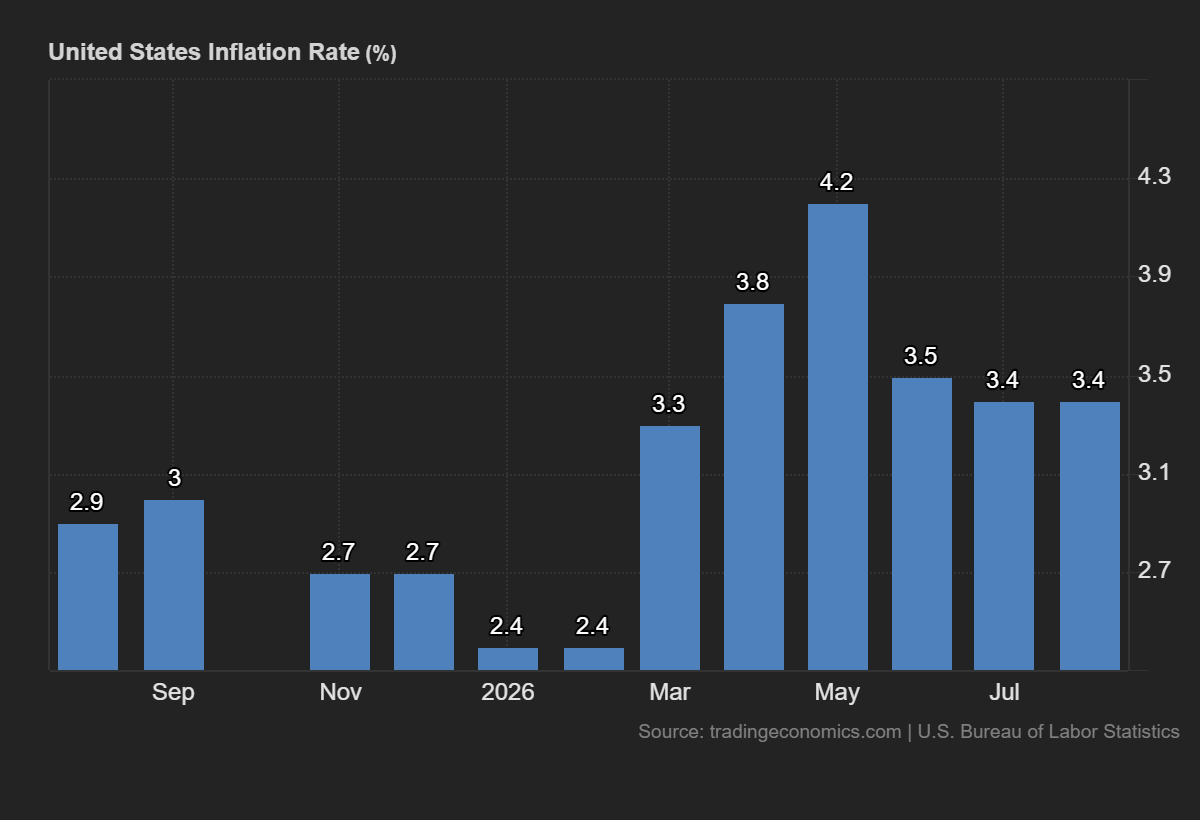
Annual headline inflation in the USA held at 3.4% in August as expected with the rate having fallen around 0.8% from the latest high in May. However, core CPI last month slowed to 2.4%, the lowest in more than five years. Ongoing conflict in the Gulf which has recently expanded further into the southern Arabian peninsula and supported ongoing high prices for oil with American light oil still close to $100 a barrel.
The Fed’s unanimous hike on 16 September came against the backdrop of a much stronger NFP than expected in September. For much of August, the narrative of a weaker job market in the USA had been active, which suggested that it might be difficult for the Fed to hike aggressively this year because of the hit to jobs and so consumers’ spending. Now, though, the probability of at least one more hike by the end of the year is around 85% according to CME FedWatch with about 35% of participants expecting a hike at both of the upcoming meetings.
Although there’s still nearly a month to go before the next release of inflation from the USA, early estimates suggest that the annual headline figure might rise again to around 3.7%. Traders will continue to monitor estimates in the next few weeks and October’s NFP for possible clues on one or two more hikes in 2026.

Euro-dollar Could Stabilise Around $1.145
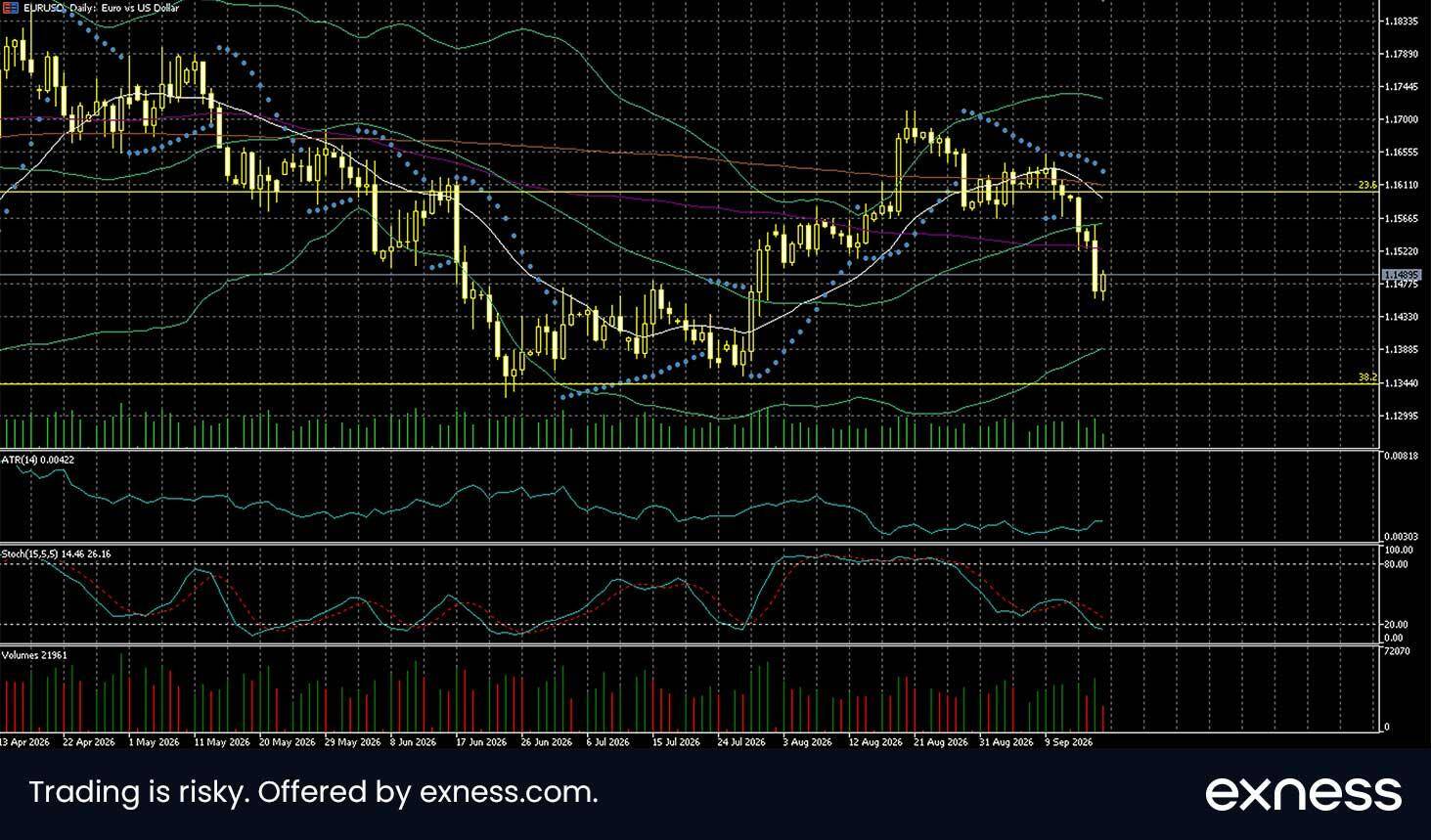
The Euro-dollar declined in the immediate aftermath of the Fed’s expected single hike on 16 September. Both the Fed and ECB are likely to hike once more this year, with a significant possibility of two more hikes from the Fed, so the carry is likely to continue favouring the dollar at least into the middle of 2027. The situation in the Gulf remains uncertain but an immediate major shock to the supply of oil seems unlikely with the Saudi government insisting that the Petroline/east-west pipeline can be fully repaired within weeks.
The price has broken clearly below $1.15 for now and might continue lower in the longer term. However, sideways movement or possibly a limited bounce seem more likely in the immediate future. Consecutive days’ losses to 16 September pushed price clearly into the oversold zone from the slow stochastic, while there wasn’t a clear uptick in selling volume for CFDs. $1.14 seems to be a likely support too, as the main technical reference for most of July.
$1.15 is a possible psychological area followed by the 100 SMA around $1.153. For now, the weekly Fibonacci retracements don’t seem to be relevant since a continuing large movement in either direction probably won’t develop without significant new fundamental information or a notable shift in sentiment. Traders are looking ahead to flash inflation from various countries in the eurozone on 30 September but the planned summit between the American and Chinese leaders from 24 September might bring some volatility to various instruments.
EUR/USD Price Forecast
Every new EUR/USD analysis as it publishes, today's technical signal and key levels, live price — on one page.
See all EUR/USD forecastsDollar-loonie Returns to $1.40

The differential in rates for USDCAD widened to 1.5-1.75% in favour of the greenback on 16 September as the Fed met expectations by hiking. The comparison of overall economic conditions between the USA and Canada hasn’t changed significantly over the summer, with the situation in the USA remaining clearly better and the Fed likely to continue hiking.
$1.40 seems like a possibly important psychological area that the price is currently testing, although the breakout above the 61.8% weekly Fibonacci retracement probably isn’t confirmed yet. With the slow stochastic signaling overbought after more than a week of consecutive gains, it might be time for a consolidation before the next possible attempt to push higher to the 50% Fibo around $1.41.
Recent lows around $1.375 remain the main support in focus but the various moving averages might halt losses over the next few days before this area is reached. There’s no clear signal from ATR or volume. Traders are looking ahead to final American GDP for last quarter on 30 September but before that the summit between presidents Trump and Xi on 24 September might bring significant news and affect markets.
This article was submitted by Michael Stark, financial content lead at Exness.
For the latest analysis, ideas for trading and more, follow Michael on X: @MStarkExness.
The opinions in this article are personal to the writer; they do not represent those of Exness. This is not a recommendation to trade.