


Gold Had a War Bid and Could Not Use It
Gold had every reason to catch a geopolitical bid Tuesday and did not. The United States struck Iranian targets again. Oil pushed above $90 WTI and $95 Brent. A tanker took fire near the Strait of Hormuz. The metal sold off anyway. The 10-year Treasury yield hit 4.796%. The dollar index climbed to 99.70. September rate hike odds reached 68%. Friday’s break below the 200-day moving average is still drawing sellers in and Tuesday confirmed it.
At 19:21 GMT, Spot Gold (XAUUSD) is trading at $4,335.68, down $113.55 or 2.55%. The metal reached $4,326.27, its weakest level in two weeks.
Daily Spot Gold (XAUUSD) Technical Analysis
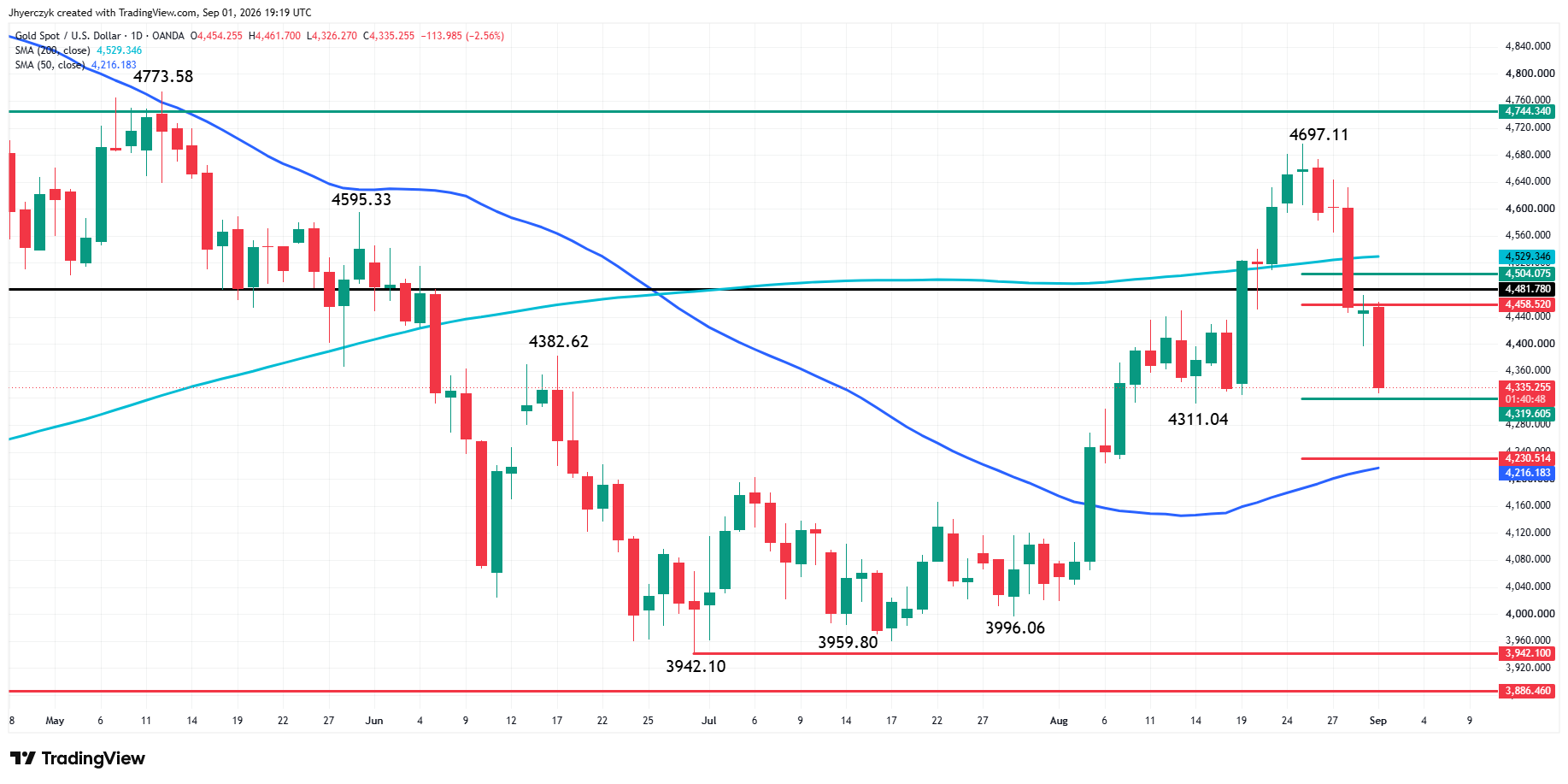
Spot Gold is down sharply late Tuesday with the market rapidly approaching the intermediate retracement zone at $4,319.60 to $4,216.06 and the swing bottom at $4,311.04. Below this zone is the 50-day moving average at $4,216.08. A sustained move under it could trigger an acceleration to the downside.
The test of the retracement zone and the swing bottom could be the source of volatility over the next several days. On one hand, value-seeking buyers could come in on a dip into $4,319.60 to $4,216.06. On the other, aggressive counter-trend sellers may press the market through support and under the 50-day moving average, opening a test of the broader support area between $4,202.70 and $3,942.10.
The 10-Year at 4.796% and Gold Gave Back $113
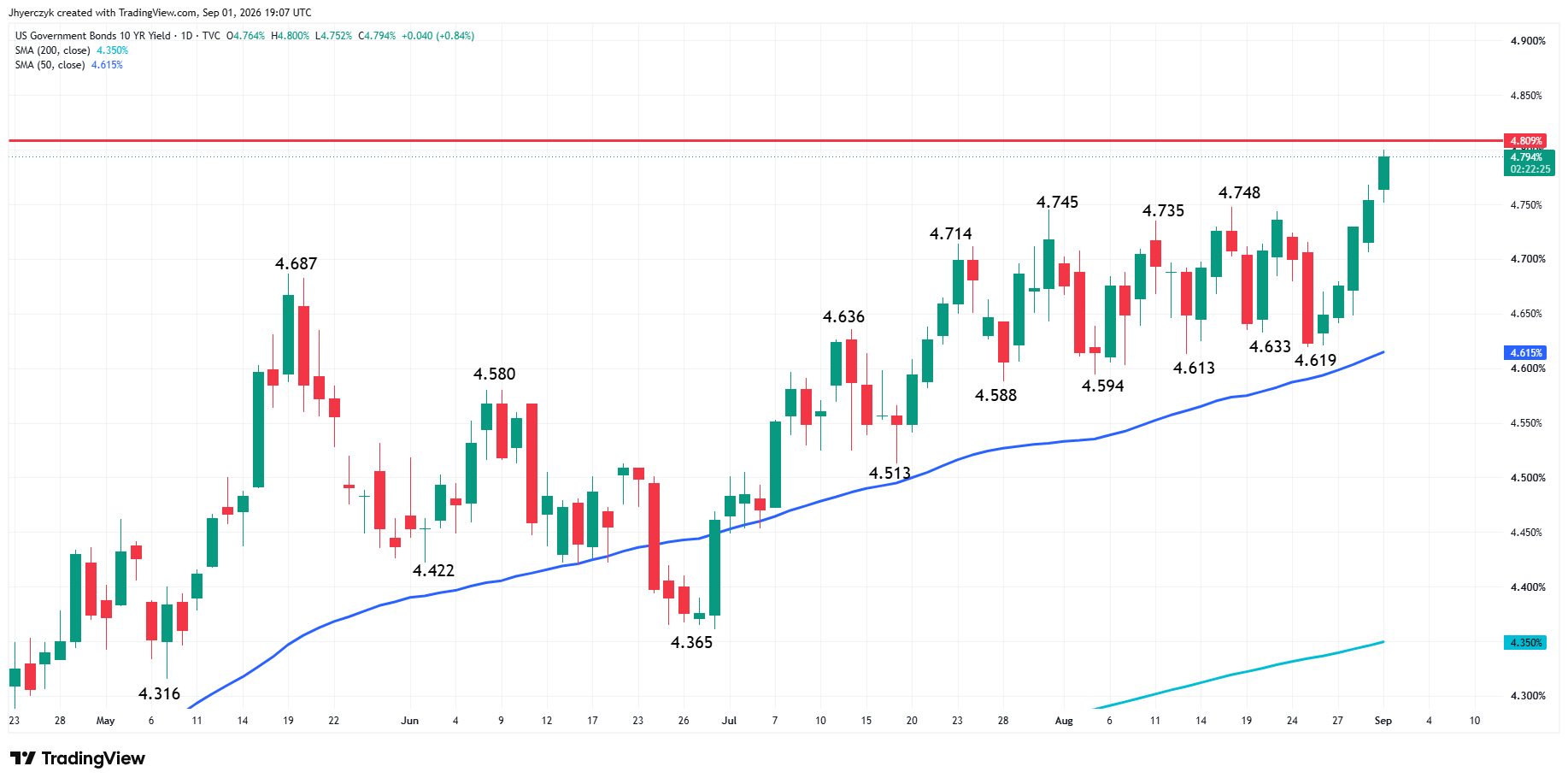
The 10-year Treasury yield hit 4.796% Tuesday, the highest since January 2025. The 30-year moved to 5.268%. The 2-year climbed to 4.396%. Japan’s 10-year touched 3% for the first time in three decades. Global bond markets were selling from Tokyo to London. The dollar index rose 0.28% to 99.70. The euro and sterling both weakened.
Gold dropped $113.55 in a single session with yields running and the dollar firm at the same time. The metal reached a more-than-three-month high last week. Warsh reversed that trade at Jackson Hole Friday. Tuesday the bond market and the dollar piled on.
Gold Price Forecast
Every new Gold analysis as it publishes, today's technical signal and key levels, live price — on one page.
See all Gold forecastsFriday’s 200-Day Break Is Still Doing the Damage
Gold broke below the 200-day moving average Friday and has not been able to take it back. That is the level longer-term traders watch and the break gave anyone sitting on August gains another reason to hit the exit. The selling became more aggressive after the break. Tuesday extended it.
The metal was still up strongly for August before the reversal started. That monthly number is not what anyone is trading now. The market is trading the rate path into the September 15-16 Fed meeting. The 200-day is sitting above the current price as resistance. Buyers need to prove they can hold the lows near $4,326 before the market can talk about stabilization. Tuesday’s tape did not show that.
Crude Above $90 Gave Gold Nothing
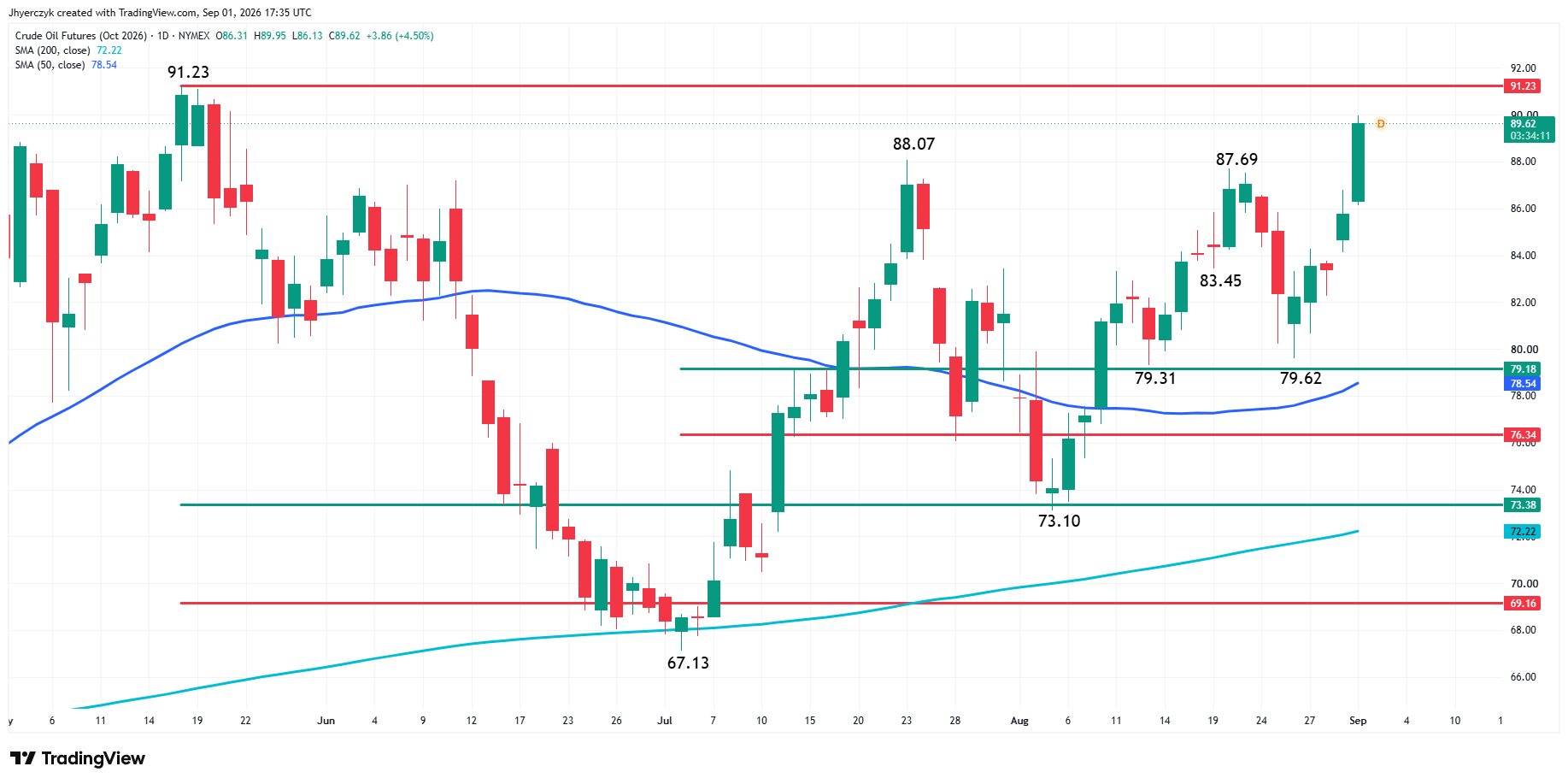
WTI crude pushed above $90 per barrel Tuesday. Brent moved above $95. The U.S. carried out fresh strikes against Iranian targets. The Strait of Hormuz remains impaired after months of fighting. Gold sold off on the same day.
Silver traders already know what crude above $90 does to the inflation outlook and gold traders are reading the same tape. Warsh said the Fed has more work to do if inflation does not cool. Oil above $90 WTI and $95 Brent does not give him a reason to back off. The Middle East headlines were on the screen all day Tuesday. Gold traded through them and kept falling. The rate story was louder than the war story and the price told you which one the market cared about.
Warsh and Barr Made the Same Call in the Same Week
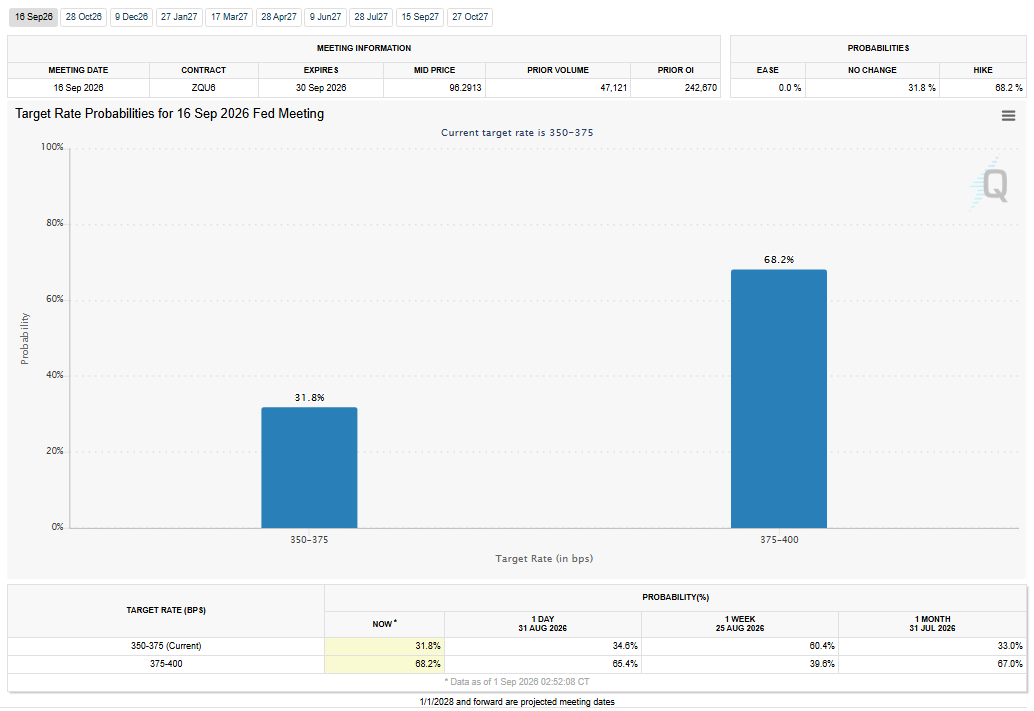
Before Jackson Hole, traders saw about a 35% chance of a September rate hike. Fed funds futures now show 68%. Warsh said Friday the Fed would have work to do if inflation failed to cool. Fed Governor Michael Barr said Tuesday the central bank would need to raise rates if inflation did not come down quickly.
August manufacturing came in slightly below expectations. July job openings were roughly in line with forecasts. Neither number was soft enough to take the September trade apart. The data is not settling the argument. It is leaving the door open for Warsh to walk through.
ADP employment data arrives Wednesday. Friday’s nonfarm payrolls report is the larger test. Economists expect 56,000 jobs added in August. A firm report with stronger wages keeps the 68% odds where they are and gold sellers stay in control. A soft number forces a repricing and gives the metal room to find a floor.
What to Watch
Friday’s payrolls report decides whether the 68% September odds hold or crack. ADP lands Wednesday. Warsh and Barr both made the same call this week and crude above $90 WTI is not giving either one a reason to soften it. The 10-year is near 4.8%. The dollar is at 99.70. Gold dropped $113 Tuesday with a war bid sitting right in front of it. That tells you which trade the market is running.
Gold is pressing into the intermediate retracement zone at $4,319.60 to $4,216.06 with the swing bottom at $4,311.04 right inside it. The 50-day moving average sits at $4,216.08 below that. The 200-day break from Friday started this move. Tuesday’s $113 drop accelerated it. The retracement zone is the first place value buyers showed up on the last pullback. Below it, the broader support area runs down to $3,942.10.
If you’d like to know more about how to trade gold, please visit our educational area.