Influence of Economic Indicators on XAU/USD Price
Although the Federal Reserve maintains a cautious stance, the presence of subsiding inflation in the U.S. maintains market speculation for a potential rate cut in September. This speculation has so far prevented the U.S. Dollar from capitalizing fully on its recent surge to near two-month highs.
The subdued equity market environment and ongoing global uncertainties also buoy gold prices. Moreover, the investment community is treading carefully, awaiting further U.S. economic reports, especially the forthcoming Personal Consumption Expenditures (PCE) Price Index, which is a significant determinant of the Fed’s policy adjustments.
Market Reactions and Upcoming Economic Data
Recent U.S. government data indicated a substantial 11.3% drop in New Home Sales for May, marking the lowest sales pace since November and the sharpest monthly decline since September 2022. Despite this downturn, the strength of the U.S. Dollar was largely unaffected, suggesting that investors are more influenced by long-term Federal Reserve interest rate projections.
The Federal Reserve currently forecasts only one rate reduction in 2024, though market participants are still betting on an earlier cut in September, possibly followed by two additional quarter-point reductions by year-end.
Anticipation and Strategy for Investors
As the financial markets prepare for the U.S. presidential debate and the critical release of the PCE Price Index, uncertainties linger. Additionally, key economic reports set to be released this Thursday—including the final Q1 GDP figures, Durable Goods Orders, Initial Weekly Jobless Claims, and Pending Home Sales—are expected to provide new directional cues for traders.
Conclusively, while the Federal Reserve’s current policy approach puts downward pressure on gold prices, the evolving economic landscape marked by easing inflation and critical upcoming data releases could sway market trajectories.
Short-term Forecast
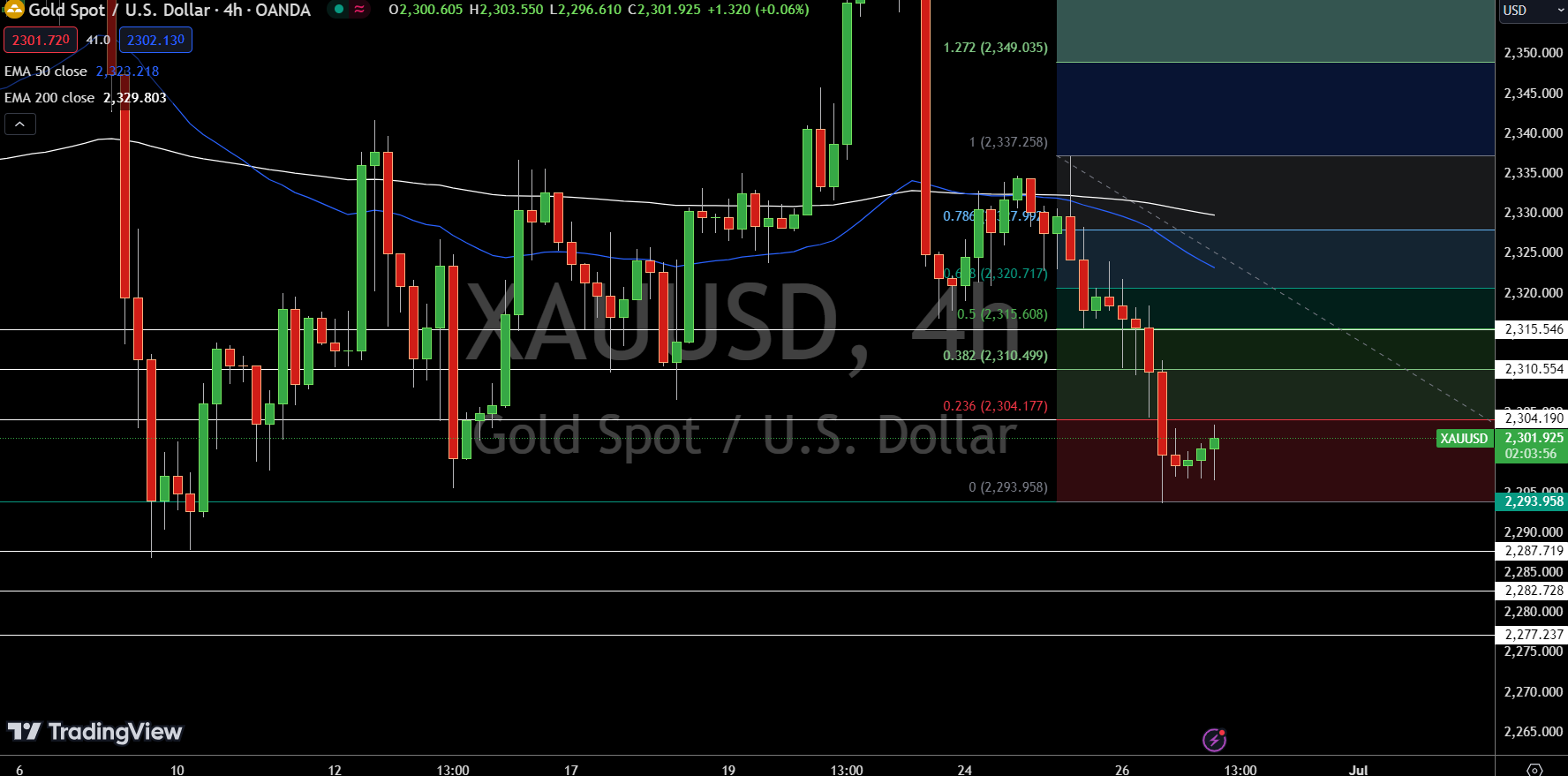
Gold (XAU/USD) continues to navigate a tight range near the $2,300 mark, reflecting a complex interplay of market forces. This stagnation follows the Federal Reserve’s indication of limited interest rate cuts, bolstering Treasury yields and dampening allure for the non-yielding metal.