
However, political tensions in Europe and ongoing geopolitical risks are providing some support, preventing further price drops.
Economic Data Influencing Market Sentiment
Investors are now focusing on upcoming U.S. consumer inflation figures and the Federal Open Market Committee (FOMC) decision on Wednesday. These events are crucial in shaping expectations about the Federal Reserve’s interest rate trajectory, impacting gold’s short-term direction.
The recent U.S. Nonfarm Payrolls report suggested the Fed might maintain higher interest rates for longer, strengthening the dollar and pressuring gold prices. The likelihood of a September rate cut has decreased to around 50%, with only one 25-basis-point reduction anticipated later this year.
The 10-year U.S. government bond yield remains above 4.45%, supporting the dollar and limiting gains in gold priced in dollars.
Political Events Adding to Uncertainty
The political landscape in Europe is adding layers of uncertainty, particularly with French President Emmanuel Macron’s recent call for snap elections. This development could impact the Eurozone’s economic stability, potentially influencing gold prices.
As the market braces for this week’s critical U.S. economic data, traders remain cautious, preferring to wait before making significant bets on gold’s future movements.
The outcome of these events could significantly dictate the near-term pricing trajectory of gold, as it continues to navigate economic and geopolitical headwinds.
Short-Term Forecast
Gold is expected to remain under pressure, with key support at $2,287. Upcoming U.S. inflation data and FOMC decisions are crucial.
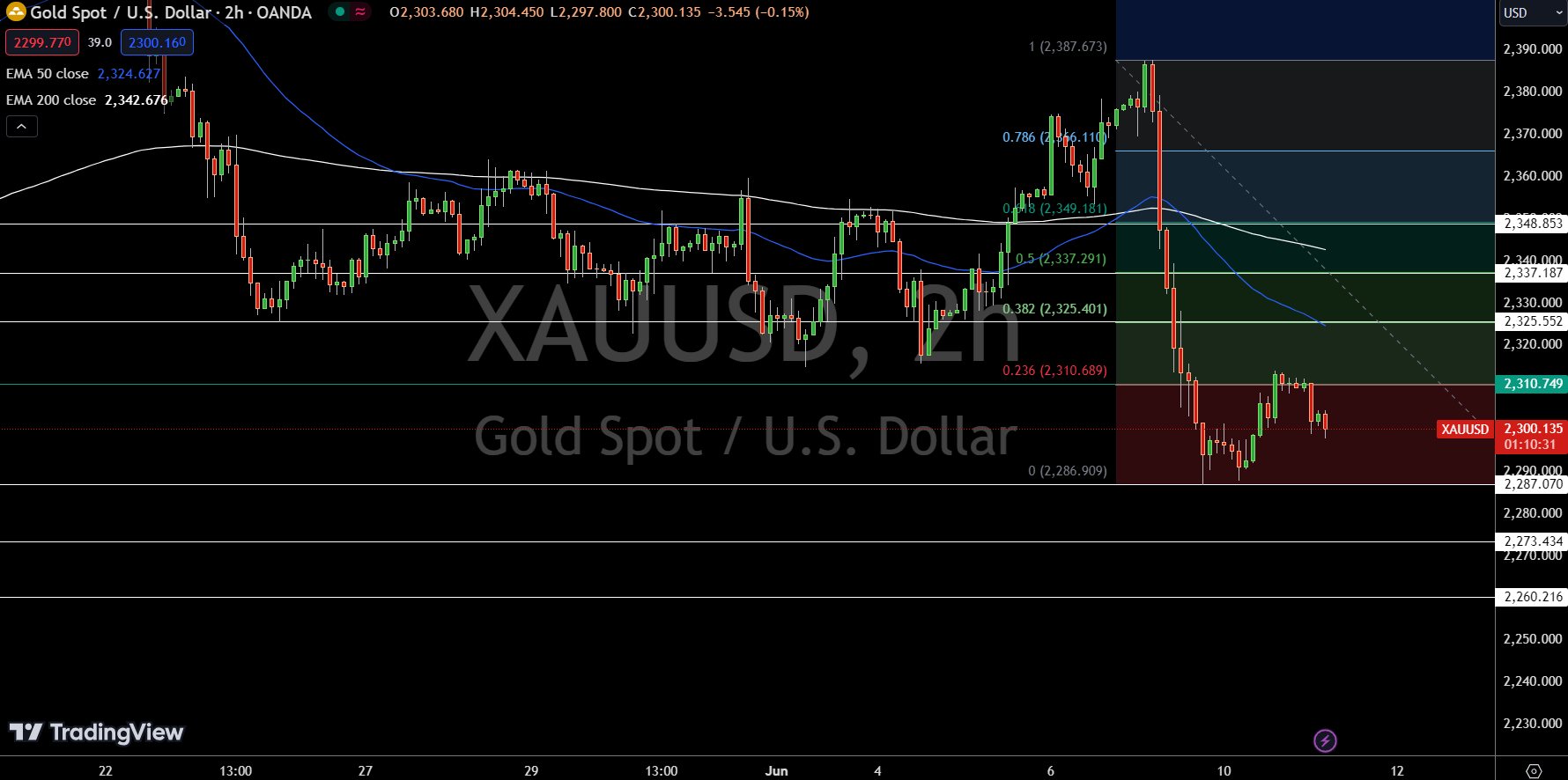
Gold completes a 23.6% Fibonacci retracement at around the $2,310 level. The closing of candles below this level has the potential to drive a selling trend. The technical outlook for gold remains bearish as long as it trades below the pivot point of $2,310.