



The opportunity cost of holding non-yielding assets increases with this scenario, making it bearish for gold. Despite market speculation, statements from regional Fed leaders, including Boston Fed President Susan Collins, suggest that inflation control remains a priority and that rate cuts are not imminent. The likelihood of a September rate cut has decreased from 85% to just under 55%.
Central Bank Demand and Consumer Sentiment Impacting Gold
On the demand side, gold continues to see substantial purchases from central banks, with the People’s Bank of China increasing its reserves by 60,000 troy ounces last month, signalling sustained institutional confidence in the metal.
Moreover, robust demand from over-the-counter markets and consumers in Asia, particularly in China and India, provides a counterbalance to the pressures from U.S. monetary policy.
Upcoming economic indicators, such as the U.S. Initial Jobless Claims expected around 220,000 and the Consumer Sentiment Index, projected to drop to 76.0 from 77.2, will provide further insights into the economic conditions influencing gold’s trajectory.
Looking ahead, the gold market is bracing for more Federal Reserve communications and critical consumer price index data.
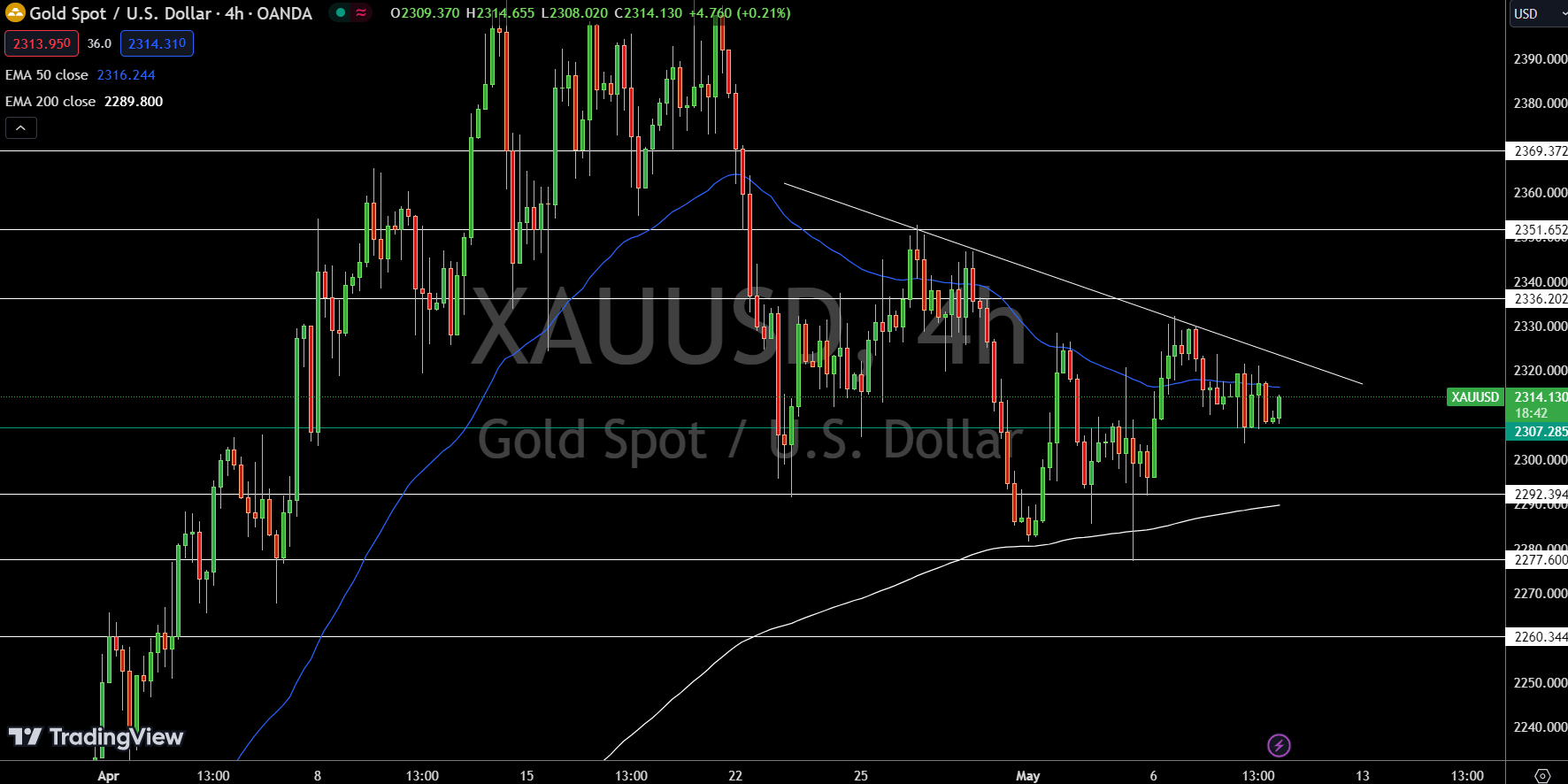
Support levels are more distinctly set at $2,294.59, $2,277.60, and $2,260.34, providing cushions that could stabilize price drops. The technical configuration includes a downward trendline posing resistance near $2,320, while a double bottom pattern around the $2,300 mark offers strong support.
This setup suggests that maintaining above $2,307 could favor bulls, but slipping below could trigger a sharp decline in prices.


