Gold Cleared the 200-Day and Buyers Are Not Slowing Down
Spot Gold broke through the level that has capped every rally for months. The 200-day moving average gave way Friday after the dollar dropped toward 98.6 and September hike odds kept fading. The metal is up more than 3.5% on the week and heading for a third straight weekly gain.
The dollar is doing most of the work. Treasury’s buyback announcement earlier in the week interrupted the rise in long yields and the currency followed lower. Gold took the opening and ran through resistance that had been holding since the summer selloff began. Crude near $93 Brent and $86 WTI is the piece that does not fit. The inflation side of the Fed debate stays alive as long as oil stays elevated.
Spot Gold (XAUUSD) was trading at $4,586.66, up $67.71 or 1.50%.

The Dollar Broke Below 99 and Gold Responded Immediately
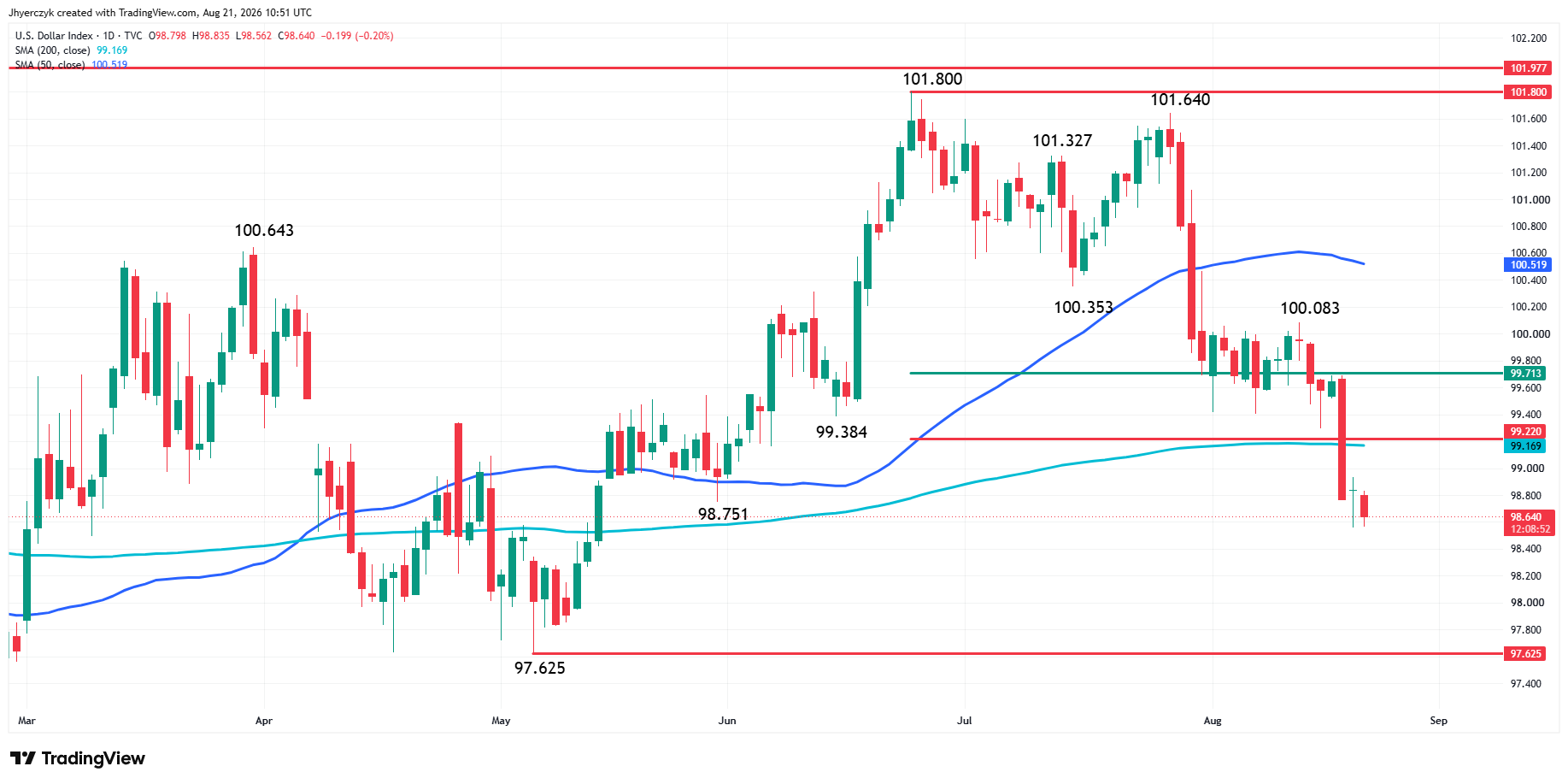
The U.S. Dollar Index is slipping toward 98.6 and is headed for a weekly loss of nearly 1%. The currency had held firm for most of the summer even as the economic data softened. That support started giving way this week and gold did not wait for confirmation.
A dollar near 98.6 brings overseas buyers into the market at the same time U.S. traders are watching September hike odds climb toward the mid-60% range for a hold. The combination of a falling currency and fading rate expectations is the cleanest setup gold has had in weeks. The metal is responding before the market has settled where Treasury yields land next week.
Treasury’s Buyback Changed the Conversation on Long Yields
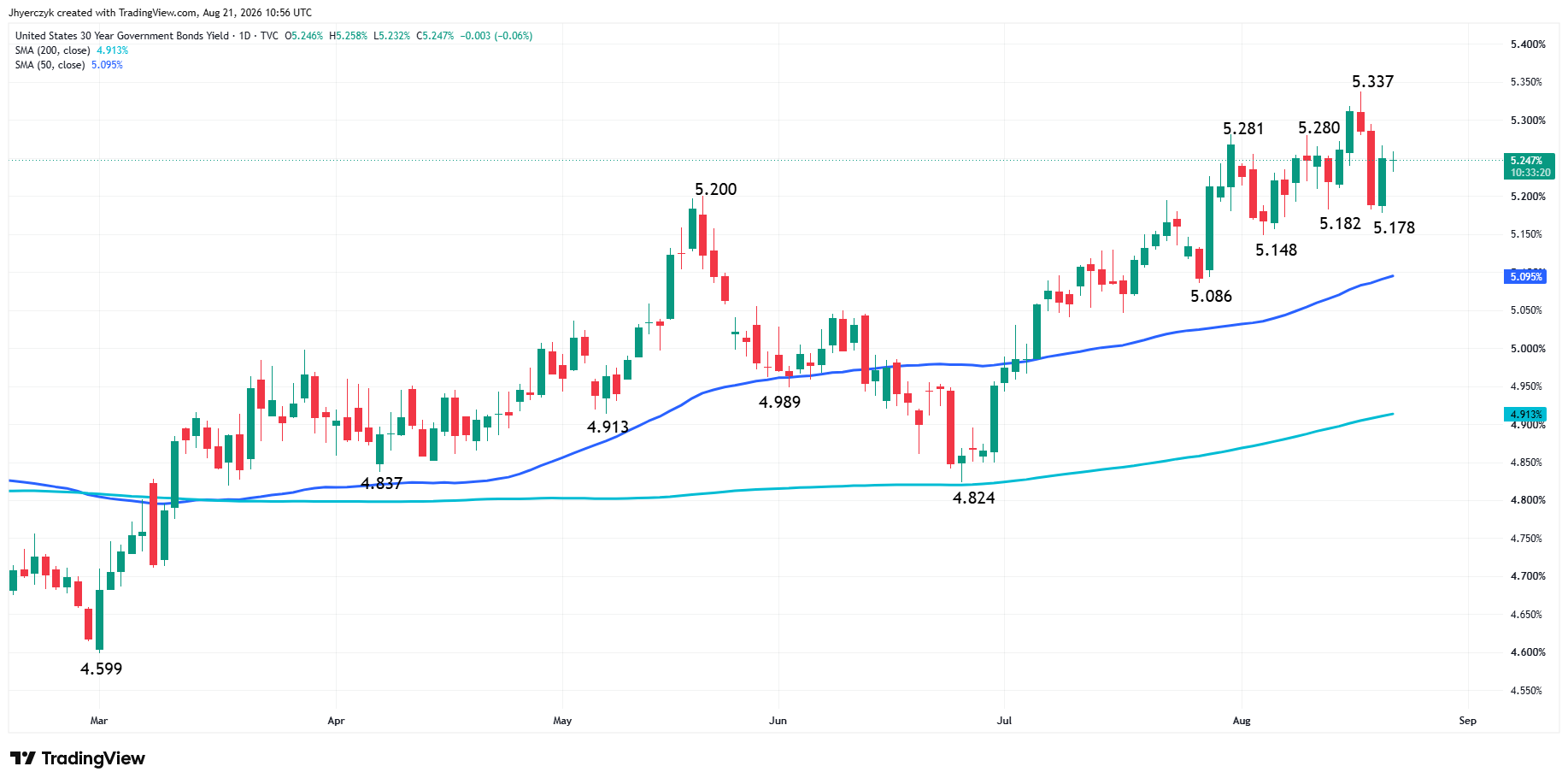
Treasury announced Wednesday it would at least double the maximum size of its longer-dated buyback operations to $4 billion for bonds maturing in 10 to 30 years. Secretary Bessent said the size could go larger if conditions require it. The announcement came after the 30-year yield reached its highest level in nearly 20 years.
Yields fell hard on the news. They recovered some ground Thursday and Friday. The 10-year was near 4.69% Friday. The 30-year was around 5.25%. Those are still high rates. Gold is not rallying because the bond market got easy. It is rallying because yields stopped going in one direction while the dollar turned lower.
Gold Price Forecast
Every new Gold analysis as it publishes, today's technical signal and key levels, live price — on one page.
See all Gold forecastsU.S. government debt has passed $40 trillion and borrowing needs are not shrinking. Treasury can buy older bonds back from the market. It cannot answer how much new debt still has to be sold. Gold buyers see that question. They are not waiting for the next bond-market break to trade it.
September Hike Odds Are Fading and Gold Is Taking the Bid
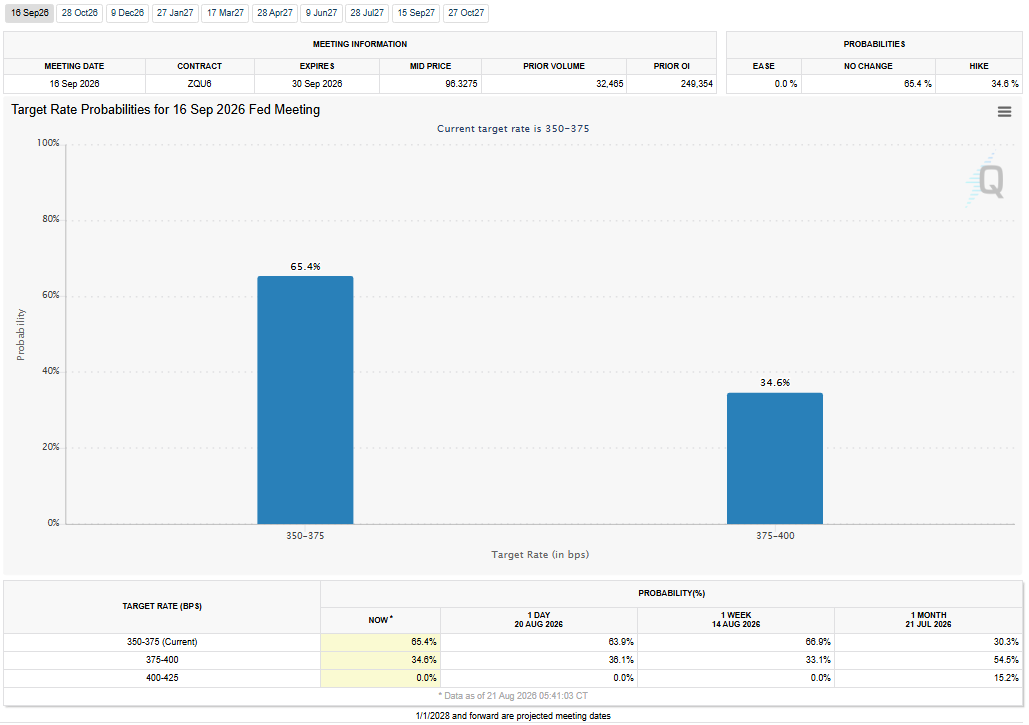
The Fed has not turned dovish. The market is less convinced that another hike is coming next month. Odds of a hold have climbed toward the mid-60% range after payrolls softened, inflation readings cooled and retail sales came in weak.
Gold had been trading against a Fed that still looked ready to tighten. The hike threat kept the dollar firm and made bonds the better alternative. The recent data gave traders room to question whether the Fed needs to move in September. Gold buyers acted on that opening this week and have not stopped.
The rate trade is less one-sided than it was ten days ago. That shift alone is enough to bring money back into gold after the break from the summer highs.
Crude Oil Near Weekly Highs Keeps the Inflation Risk in Front of the Fed
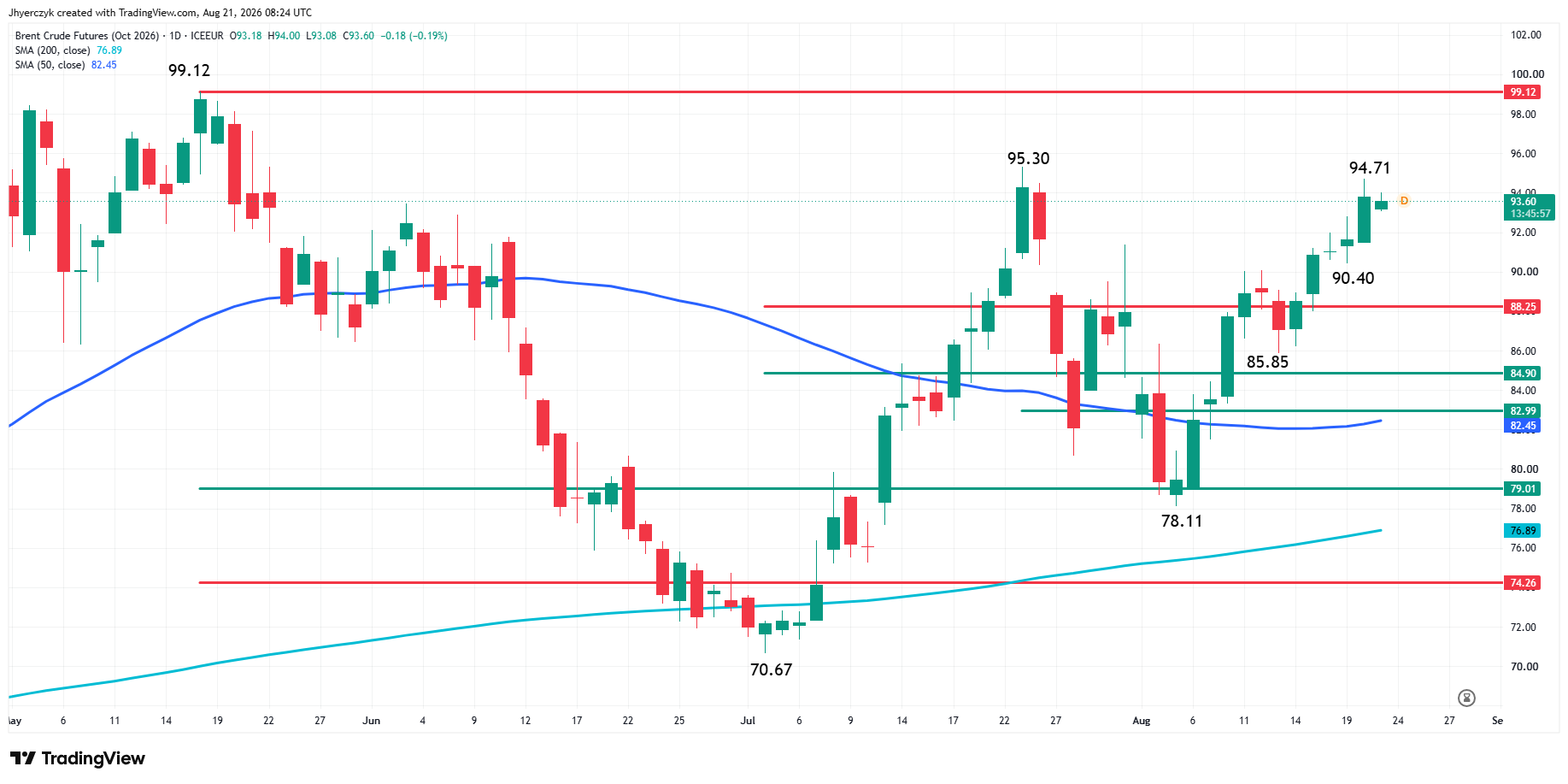
Brent is holding near $93 to $94. WTI is around $86. Both contracts are headed for a second weekly gain as the Iran conflict restricts Hormuz shipping and Washington prepares another round of sanctions against Tehran.
Gold is climbing Friday on the dollar and the fading hike trade. It is not climbing on crude near its weekly highs. The war is creating two separate trades that can run together for a session but do not have to agree for long. If oil keeps pushing higher, the inflation side of the Fed debate comes back and that gives the dollar and yields a reason to reverse.
Central Banks Keep Buying Under the Surface
Central-bank accumulation remains steady underneath the market. Countries including China have continued adding gold to reserves as they diversify away from dollar-denominated assets. That buying does not explain a $67 move in a single session. It does explain why every break this year has attracted buyers instead of turning into sustained liquidation.
Investment demand is adding to the flow. Traders who had been waiting for yields to top out or the dollar to roll over now have both signals in front of them at the same time.
Daily Spot Gold (XAUUSD) Technical Analysis
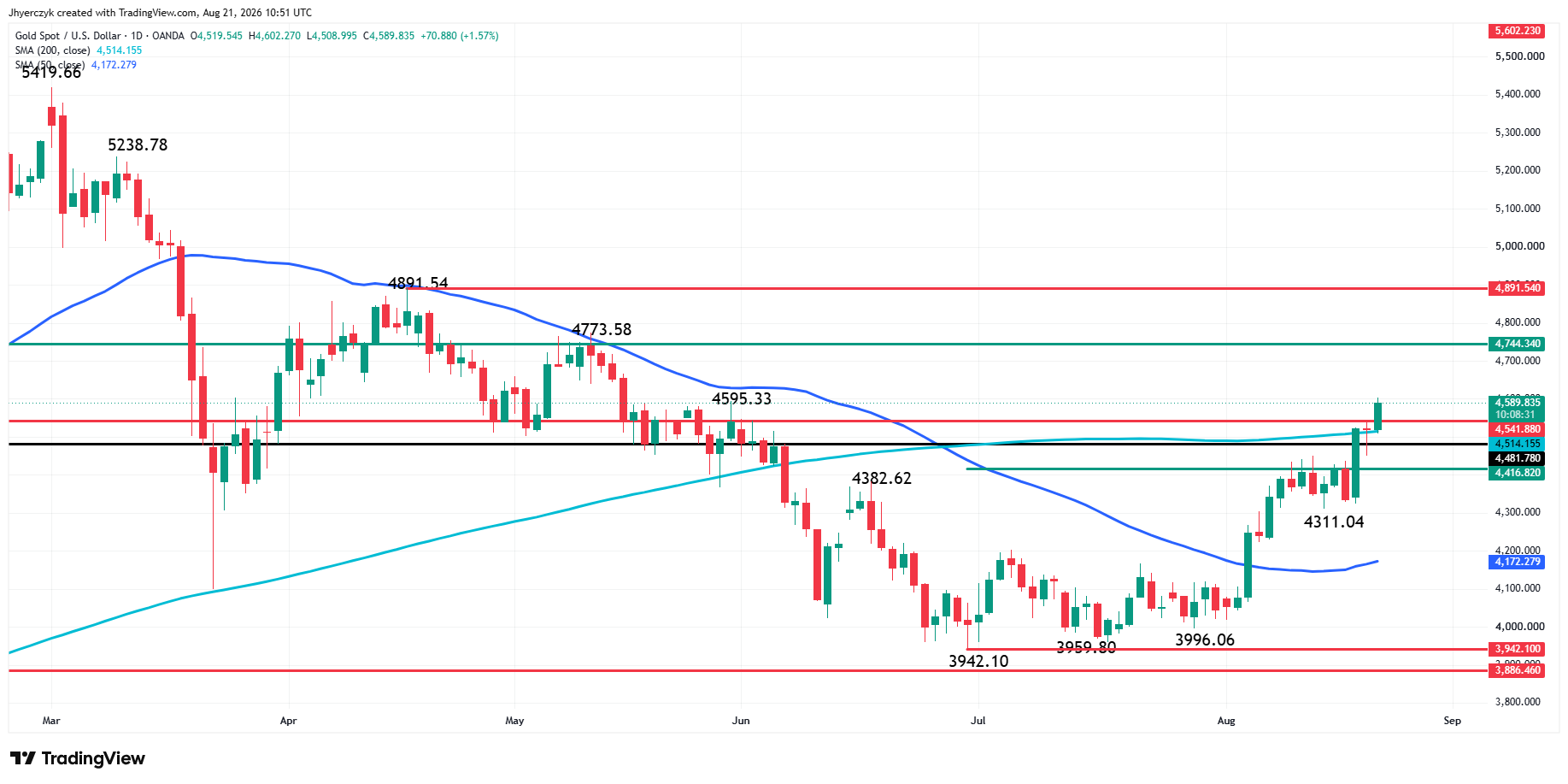
Spot Gold (XAUUSD) is sharply higher early Friday after recovering above the bear-market threshold at $4481.78 and decisively crossing to the strong side of the 200-day moving average at $4514.13. Bullish traders are hoping the latter leads to more institutional investment.
The market has also entered the 50% to 61.8% retracement zone of the rally from $3886.46 to $5602.23. The first sign of strength was the crossing of the Fibonacci level at $4541.88. If the bulls can build a solid support base over this level, the next move could be to the 50% level at $4744.34. Additionally, all the previous tops ahead of this upside target have been pierced, giving traders room to test this objective if buying volume persists.
What to Watch
The dollar below 99 is carrying this trade. Gold’s rally holds if the currency stays under pressure and September hike odds keep fading. Treasury’s buyback interrupted the rise in long yields but the 30-year at 5.25% has not stopped being a risk. The metal cleared the 200-day moving average and entered the retracement zone that has been the target since the June bottom. The previous tops between here and the 50% level have all been taken out. Buying volume and a cooperative dollar decide whether the market can reach it.
Crude near $93 Brent is the force that can turn the Fed conversation back toward tightening. Gold and oil are running on different catalysts this week. They do not have to stay on the same side. Central-bank buying and investment demand are holding the floor underneath the market. The dollar and the rate outlook are providing the momentum above it. Oil is the reason the path is not as clear as the price action suggests.
If you’d like to know more about how to trade gold, please visit our educational area.