
US Markets Under Pressure Amid Trade News
US equity markets had a volatile start to the week as investors reacted to Trump’s latest stance on tariffs. The Nasdaq Composite Index and the S&P 500 dropped by 1.21% and 0.50%, respectively, while the Dow edged up 0.08%.
On February 21, President Trump affirmed that fresh tariffs on Canada and Mexico will take effect on March 4. He also indicated that reciprocal tariffs will go ahead, potentially as early as April 2.
US tariffs could drive import prices higher, fueling inflationary pressures. A higher inflation outlook could delay Fed rate cuts and lift borrowing costs. Rising borrowing costs may adversely impact corporate earnings and dampen demand for risk assets.

US Economic Indicators Signal Weaker Growth
On February 24, US economic data signaled a softer demand environment, also affecting risk sentiment. The Dallas Fed Manufacturing Index unexpectedly dropped from +14.1 in January to -8.3 in February. Notably, production and new orders declined, dragging the Index into negative territory.
Monday’s data reinforced concerns about the economy after the S&P Global Services PMI slid to 49.7 in February, down from 52.7 in January.
Hang Seng Index Slides as US-China AI War Intensifies
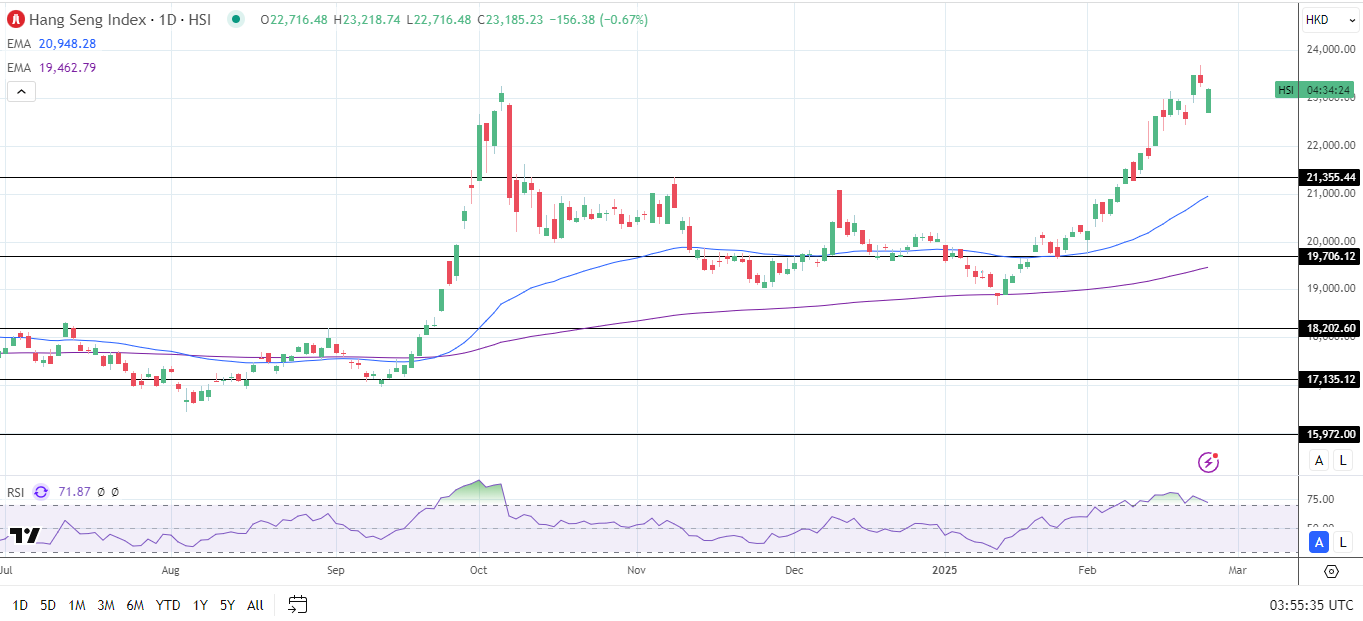
In Asia, the Hang Seng Index fell 0.67% on Tuesday morning as investors reacted to Trump’s latest tariff threats. Real estate and tech stocks led the declines.
The Hang Seng Mainland Properties Index fell 1.01%, while tech giants Alibaba (9988) and Baidu (9888) slid by 3.02% and 3.13%, respectively.
Nikkei Price Forecast
Every new Nikkei analysis as it publishes, today's technical signal and key levels, live price — on one page.
See all Nikkei forecastsAI-linked stocks faced renewed selling pressure after President Trump signed a national security memorandum on February 21, restricting Chinese investments in strategic US sectors.
However, EV stocks bucked the trend, with Li Auto Inc. (2015) surging 12.24% after unveiling its first all-electric SUV.
Mainland China’s equity markets also struggled amid tariff concerns and tech-related restrictions. The CSI 300 and the Shanghai Composite Index posted losses of 0.40% and 0.14%, respectively.
Nikkei Index Slides Amid Tariff Concerns
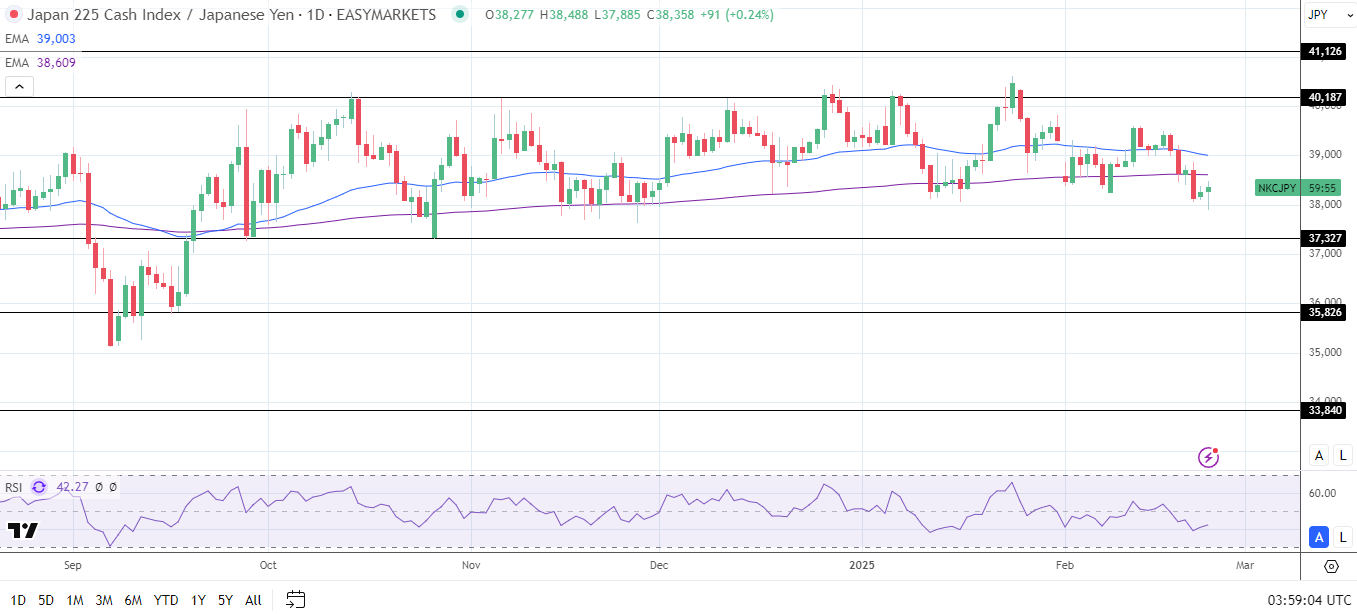
Japan’s Nikkei Index slid by 1.13% on Tuesday morning, weighed by the prospect of sweeping tariffs on auto and semiconductor exports. A slight overnight rebound in USD/JPY failed to lift investor sentiment. Yen strength remains a headwind after the USD/JPY pair tumbled 2.01% last week. A stronger Yen could affect company earnings and demand for Japanese stocks.
Nissan Motor Co. (7201) led the losses, tumbling 8.35%, while tech stocks Tokyo Electron (8035) and Softbank Group (9984) dropped by 3.79% and 3.15%, respectively.
ASX 200 Declines as Bank, Mining, and Tech Sector Fall
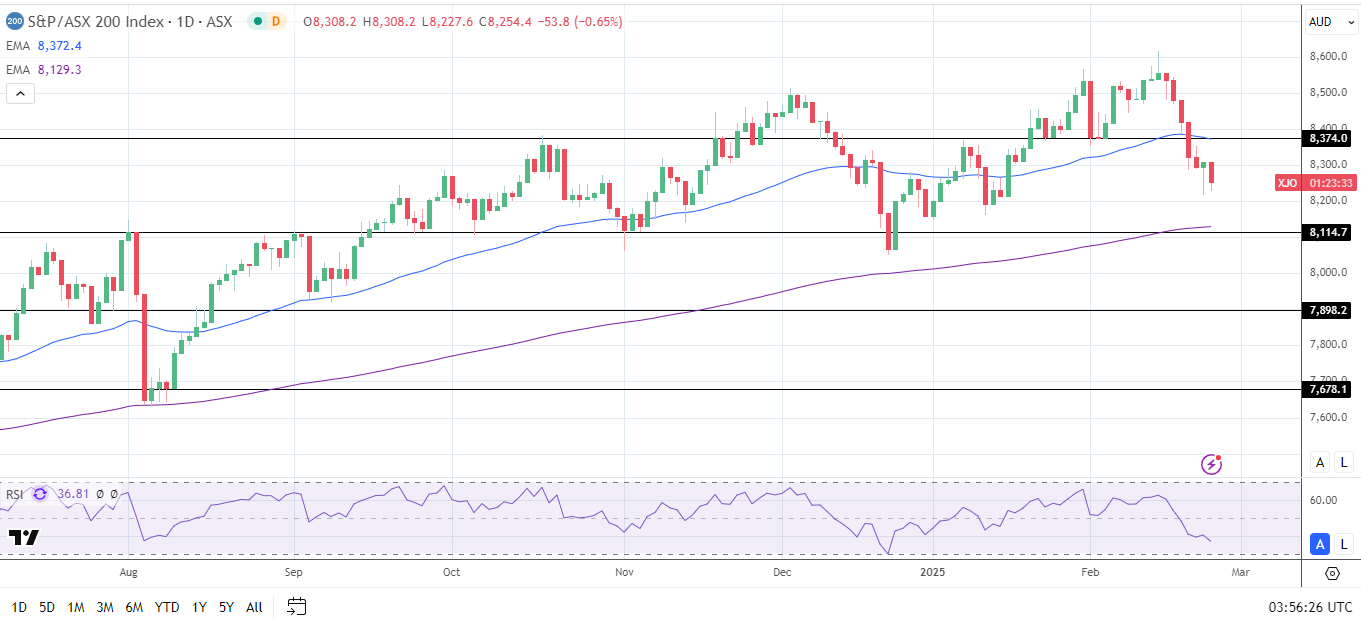
Australia’s ASX 200 Index joined the broader market in negative territory, falling 0.65%. Banking, mining, and tech stocks contributed to the morning losses.
Commonwealth Bank of Australia and National Australia Bank fell 1.52% and 1.36%, respectively. Mining giants BHP Group Ltd. (BHP) and Rio Tinto Ltd. (RIO) were down 1.08% and 0.35%, respectively. Meanwhile, the S&P/ASX All Technology Index tracked the Nasdaq’s losses, sliding 1.15%.
Outlook: Key Risks and Opportunities
Looking ahead, a potential US-China AI war, central bank forward guidance, and US tariff developments will continue influencing market sentiment.
While innovation and strategic partnerships in AI and technology sectors present growth opportunities, a US-China AI war could stifle progress. Ongoing tariff uncertainties may also drive further market volatility.
Stay ahead of market shifts with expert insights and in-depth analysis here—stay informed and make smarter investment decisions.