
Cisco’s Revenue Decline: What’s Driving the Drop?
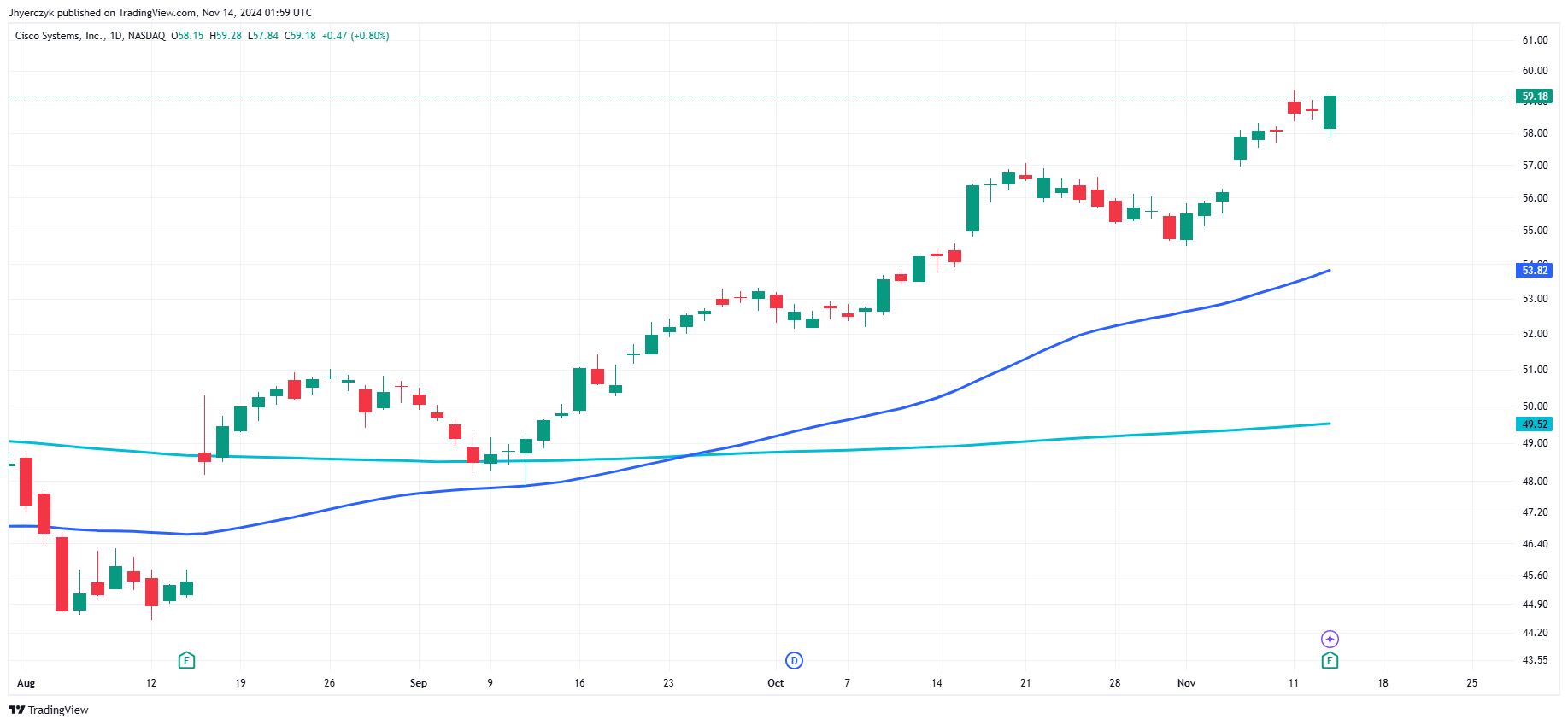
Cisco Systems Inc. reported its fourth consecutive quarter of revenue decline on Wednesday, even though earnings exceeded expectations. The tech company posted $13.84 billion in revenue, down 5% from $14.7 billion a year ago, with adjusted earnings per share of 91 cents, surpassing analysts’ forecast of 87 cents. However, the company’s stock dipped 2.5% in after-hours trading as investors expressed concerns about the ongoing revenue contraction. Among Cisco’s key business segments, networking revenue declined 23% to $6.75 billion, falling slightly below consensus estimates.
Despite these declines, Cisco’s CEO Chuck Robbins pointed to strong demand in AI infrastructure. Orders for AI-focused infrastructure from large-scale clients reached $300 million during the quarter. Robbins shared plans to enhance Cisco’s AI offerings, including hardware equipped with Nvidia GPUs, to support future AI demands. The company expects its AI revenue to reach $1 billion this fiscal year, with substantial deployments anticipated by 2025 as enterprises prepare their infrastructure for AI-driven applications.

Are Government Delays Impacting Cisco’s Revenue?
Cisco’s revenue also took a hit from postponed deals with U.S. government agencies. Scott Herren, Cisco’s finance chief, attributed these delays to federal budget restrictions under the Fiscal Responsibility Act of 2023, which limits government spending. Herren anticipates that as Congress moves forward, government spending could return to previous levels, potentially supporting Cisco’s performance in coming quarters.
Looking ahead, Cisco raised its full-year guidance, projecting revenue between $55.3 billion and $56.3 billion and adjusted earnings per share in the range of $3.60 to $3.66. Analysts’ estimates stood at $3.58 per share on $55.89 billion in revenue, suggesting Cisco’s new outlook could exceed expectations if market conditions improve.
What Other Stocks Moved in After-Hours Trading?
Several other companies saw notable after-hours moves following their earnings reports on Wednesday.
- CNH Industrial: Shares climbed nearly 8% after David Einhorn of Greenlight Capital revealed at the Delivering Alpha conference that he had taken a position in the agricultural equipment maker. Einhorn’s investment highlights increased interest in agriculture-focused firms, driven by demand for equipment and innovation in farming technologies.
- Ibotta: The cashback platform’s stock dropped nearly 17% in after-hours trading despite a positive earnings report, with the company posting 51 cents per share on revenue of $98.6 million, both above estimates. The sharp decline indicates that investors may have concerns about Ibotta’s future growth potential.
- Beazer Homes USA: Shares of the homebuilder surged around 12% after reporting October sales growth of more than 30% compared to the prior year. Beazer attributed the uptick to a larger number of active communities, reflecting strength in the housing market.
- Sonos: The audio equipment maker saw its shares slip less than 1% after reporting a quarterly loss of 44 cents per share on revenue of $255.4 million. Limited analyst coverage likely tempered the market reaction.
Conclusion: Will Cisco’s AI Investments Pay Off?
Cisco’s latest quarterly results reflect its efforts to navigate a challenging revenue environment while investing in AI-focused technologies. The success of these investments will likely be a deciding factor in Cisco’s ability to reverse its revenue decline in the coming quarters. Meanwhile, stocks like CNH Industrial and Ibotta continue to capture investor attention in after-hours trading, highlighting various sector-specific movements. Investors will watch closely to see if Cisco’s commitment to AI infrastructure can generate meaningful growth.