Chip Selling Overpowers the Oil Break
The oil break was not enough Monday. Brent and WTI are down sharply after the U.S. and Iran paused attacks but the lower inflation pressure did not bring buyers back into semiconductors. The VanEck Semiconductor ETF is down more than 4% with AMD and Teradyne off about 8% each and Micron down roughly 5%. That is group selling, not one name reacting to one report. Financials are making new highs and giving the Dow a bid but the growth side of the market is still paying for the AI spending debate that Alphabet’s report reopened last week.
At 15:40 GMT, the S&P 500 is down 0.29% and the Nasdaq Composite is off 0.55%. The Dow Jones Industrial Average is up 87 points or +0.17%.
The split tells you the market has two trades running at once and they are not pointing in the same direction.
Semiconductors Are Selling the AI Story, Not the Oil Story
Lower crude should help growth stocks by easing the inflation pressure that lifted yields last week. Monday’s session shows that is not enough on its own. The chip group is not trading oil. It is trading the question Alphabet raised last week about whether the biggest technology companies can turn AI infrastructure spending into revenue and cash flow fast enough to justify the capital being committed.
AMD and Teradyne down 8% each on a day when crude dropped more than 6% tells you the selling is coming from inside the AI trade, not from the rate story. Semiconductor sellers are reducing exposure ahead of Amazon, Apple, Meta and Microsoft reporting later this week. Those four reports either settle the spending debate or accelerate the exit from the names that carried this market to record highs earlier in the year.
Financials Hit a Record While Chips Break Down
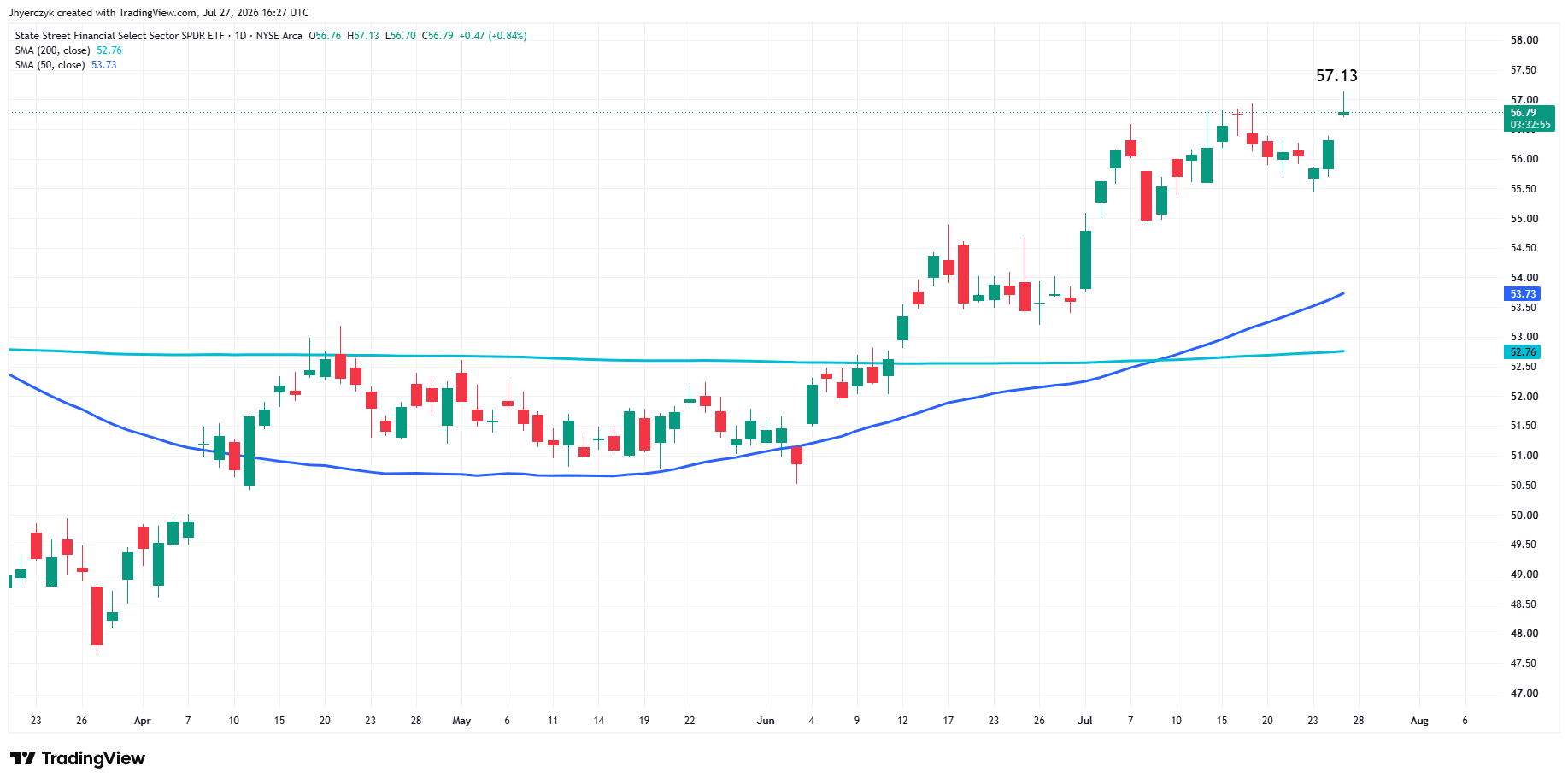
The Financial Select Sector SPDR ETF broke to an all-time high Monday, rising more than 1% and clearing its July 16 closing high at 56.75. JPMorgan Chase rose about 1%, Visa gained roughly 1.5% and Goldman Sachs added more than 2%. The group benefits from a rate market that is still pricing the possibility of further tightening even after Monday’s drop in Treasury yields.
That is the divergence driving the Dow higher while the Nasdaq falls. Financials are acting as if rates stay elevated. Semiconductors are acting as if the AI spending bill is becoming harder to justify. The Dow holds because it has more exposure to the first trade. The Nasdaq drops because it is built on the second.
SpaceX Keeps Breaking Down After IPO
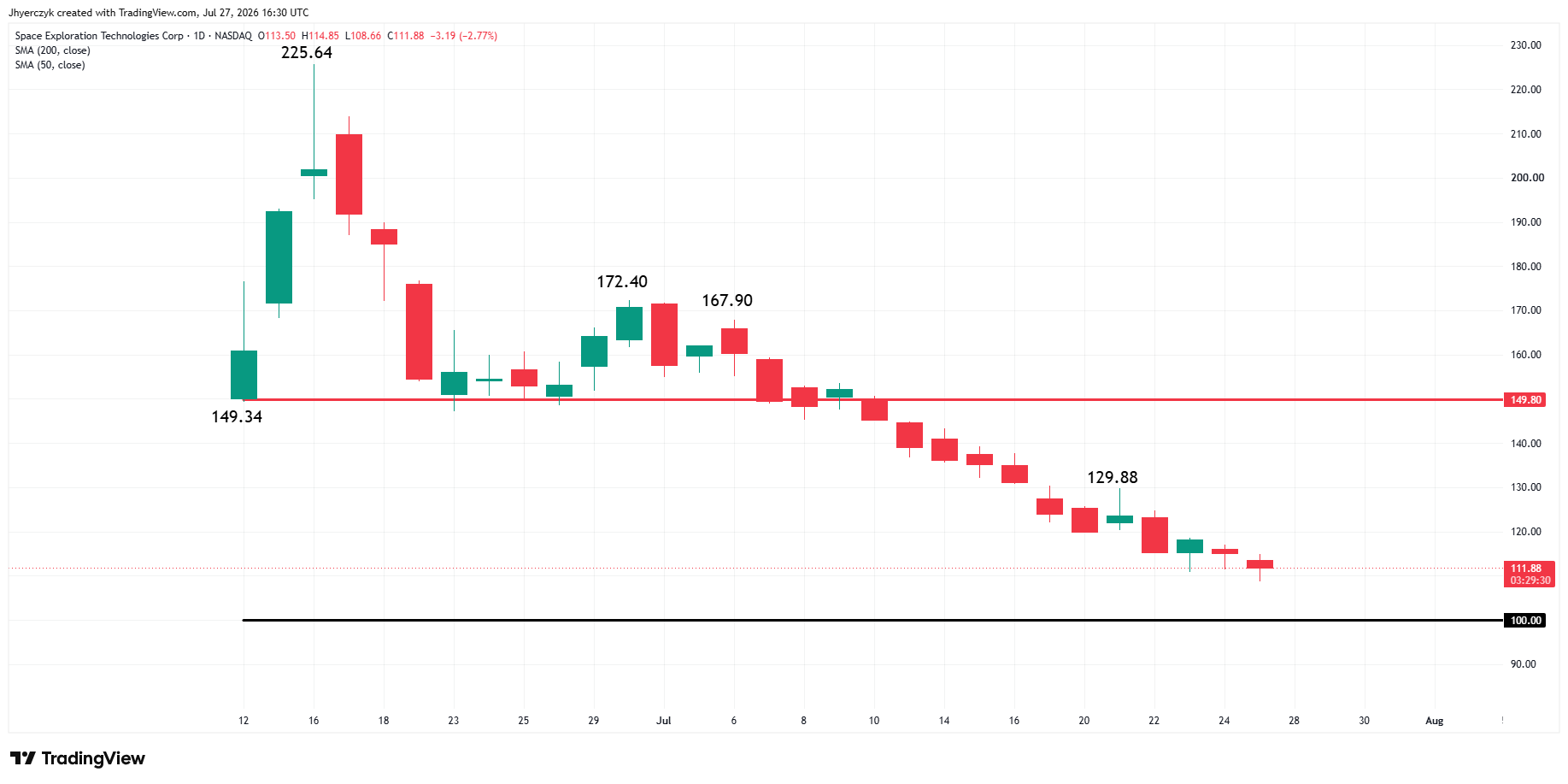
SpaceX traded near $109.40 Monday, more than 51% below its $225.64 high reached shortly after the June 12 IPO. The stock has stayed below the $135 IPO price for eight sessions and is on pace for its tenth negative session in twelve. The decline is a market questioning the price investors paid for a company where Starlink remains the profitable business while the AI and space-launch operations continue consuming capital.
Tesla Faces a Long Wait for New Proof
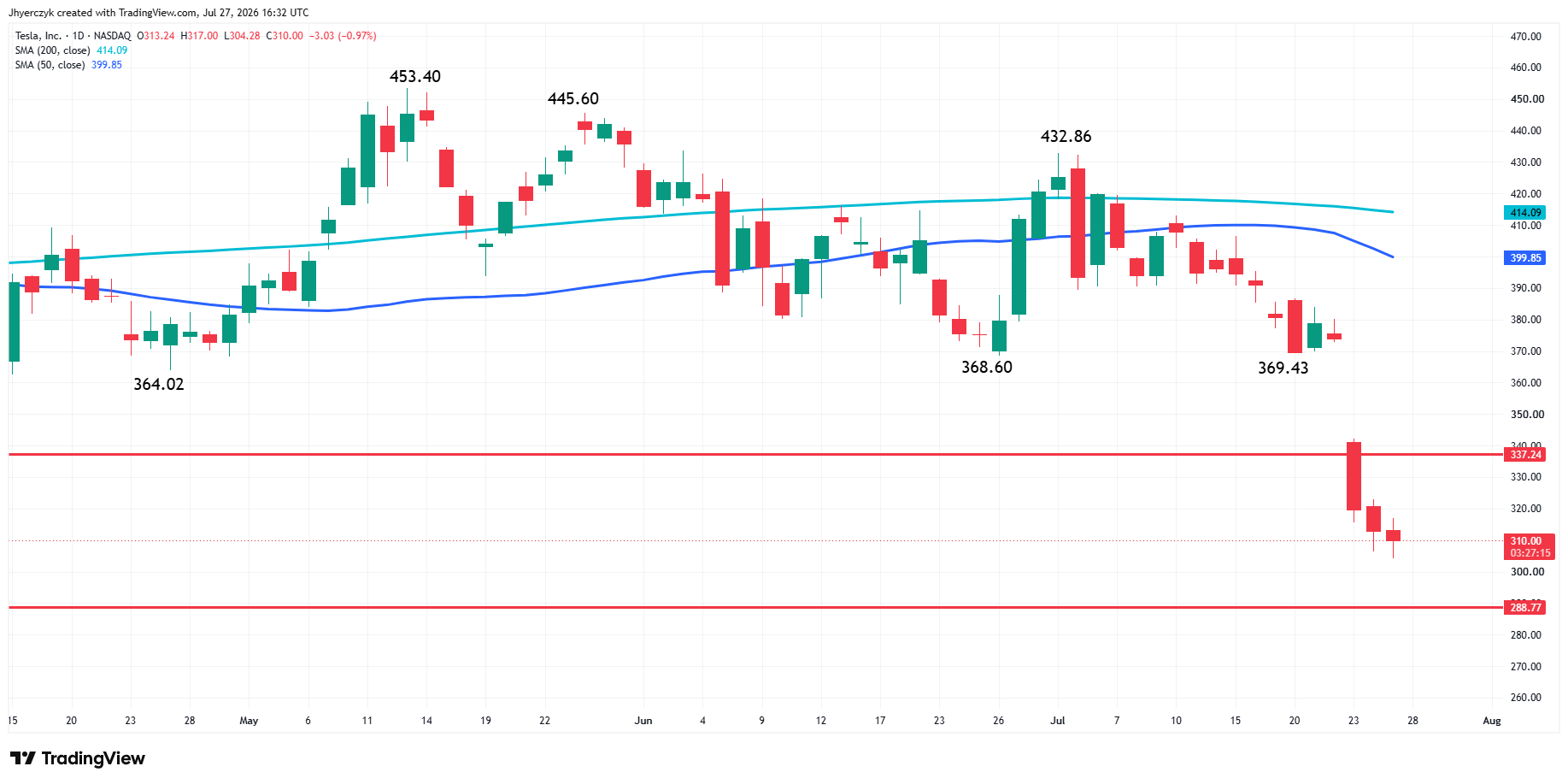
Deutsche Bank kept its buy rating on Tesla but cut the price target to $420 from $465, citing slower-than-expected progress in robotaxis and Optimus along with the risk that cash burn rises before the next major milestone. Tesla fell 16% over two sessions after last week’s earnings and the stock is caught between a lower target, negative free cash flow and a long gap before the next catalyst.
Daily Nasdaq Composite Technical Analysis
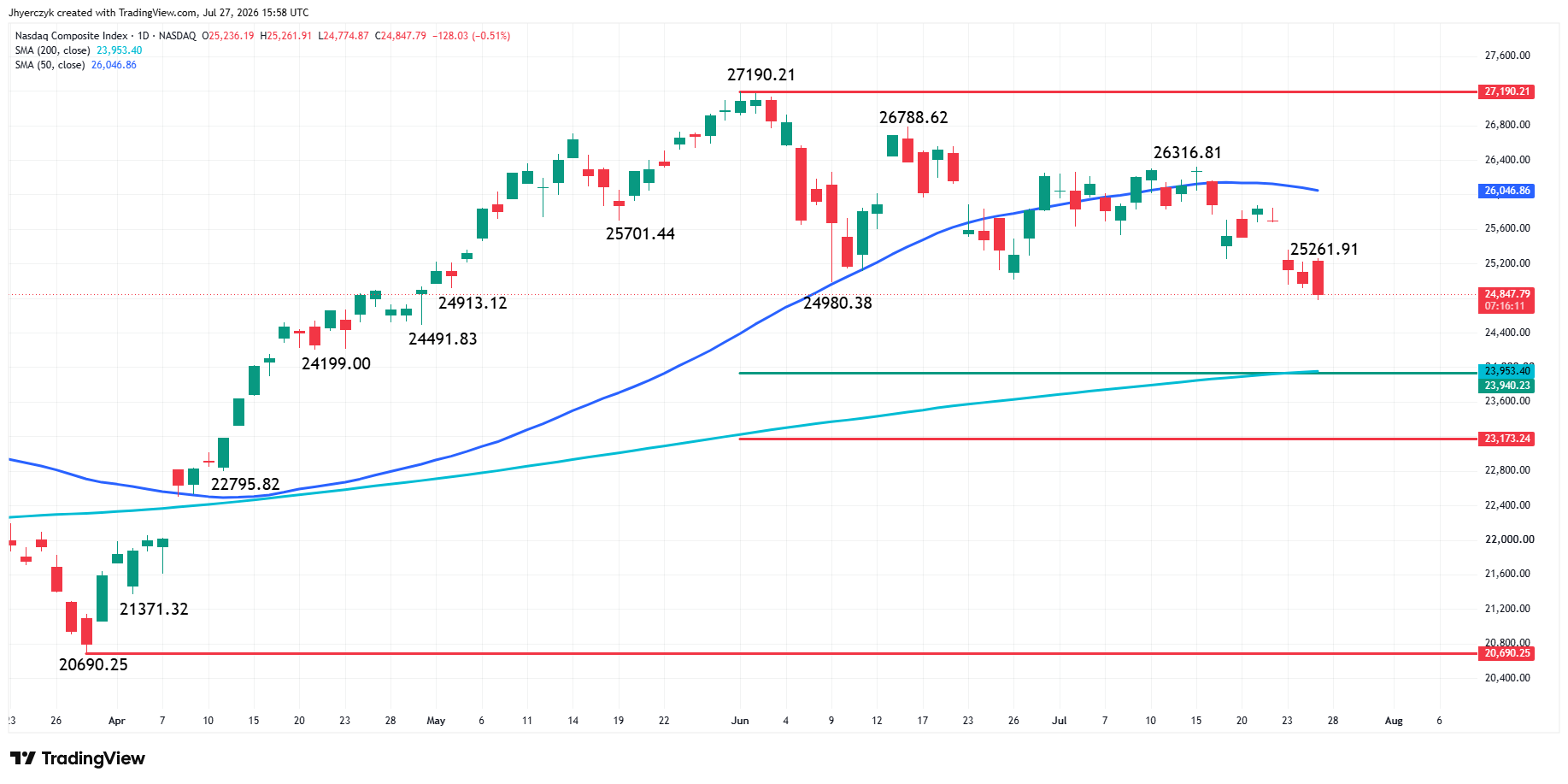
The Nasdaq Composite is trading lower after reversing earlier gains as we approach the mid-session on Monday. A new minor top at 25261.91 was formed in the process. A trade through this level later today could reverse momentum to the upside.
A reversal to the upside would signal the return of buyers. This could set the index on a course for a retest of the 50-day moving average at 26047.17.
If today’s selling pressure continues throughout the session then this would indicate that the bears are setting their sights on a full-blown retracement into the 200-day moving average at 23953.42 and the long-term retracement zone at 23940.23 to 23173.24. To some long-term investors, this zone may represent value. So essentially, it could be the next major battleground between momentum traders and value-seekers.
What to Watch
Wednesday’s FOMC decision is the next event and the market still sees a meaningful chance of a hike with September odds heavily skewed toward tighter policy. Then Amazon, Apple, Meta and Microsoft report. The chip group needs those numbers to stop the selling because lower oil alone is not doing it.
Financials making new highs and semiconductors making new lows in the same session tells you the earnings calendar is the only thing that resolves the split. If the megacap reports show AI spending producing returns, the chip sellers are wrong and the Nasdaq recovers. If the reports confirm Alphabet’s problem, the selling extends and the 200-day average and the long-term retracement zone below become the next conversation for the Nasdaq.
More Information in our Economic Calendar.