
Memory Stocks Carry Nasdaq as Oil Caps Gains
Memory stocks are the only reason the Nasdaq Composite is green Monday. Micron, Sandisk, Western Digital and Seagate all ran higher after Commerce Secretary Howard Lutnick visited an Apple site in Houston and told the company Chinese memory chips are off the table. DRAM and NAND are already in a shortage.
The rest of the market is not following. Iran threatened to escalate in the Strait of Hormuz if diplomacy with the United States fails and crude oil is higher again. The Dow and S&P 500 are lower while the Nasdaq holds a fractional gain on the strength of chips alone. Last week’s record is not getting follow-through outside of technology.
FOMC minutes Wednesday and retail earnings this week will test whether the consumer picture that helped stocks this month is still holding together. The memory ETF gapped above its 50-day moving average on the opening and the Nasdaq is pushing toward last week’s high.
At 15:15 GMT, the Dow Jones Industrial Average was trading 53553.10, down 179.31 or 0.33%. The S&P 500 Index was at 7776.18, down 9.58 or 0.12%. The Nasdaq Composite was at 26770.916, up 41.752 or 0.16%.

Memory Stocks Got the Washington Headline They Needed
Western Digital and Micron rose more than 3% before the bell. Seagate added more than 2.5% and the group held gains after the opening. Lutnick told Apple directly that Chinese memory chips are not where the administration wants the company sourcing during the current shortage in DRAM and NAND.
AI data centers have been buying everything these producers can ship. Supply is already tight and prices are moving higher. Apple and other electronics makers have every reason to look for cheaper alternatives and Washington just removed the cheapest one.
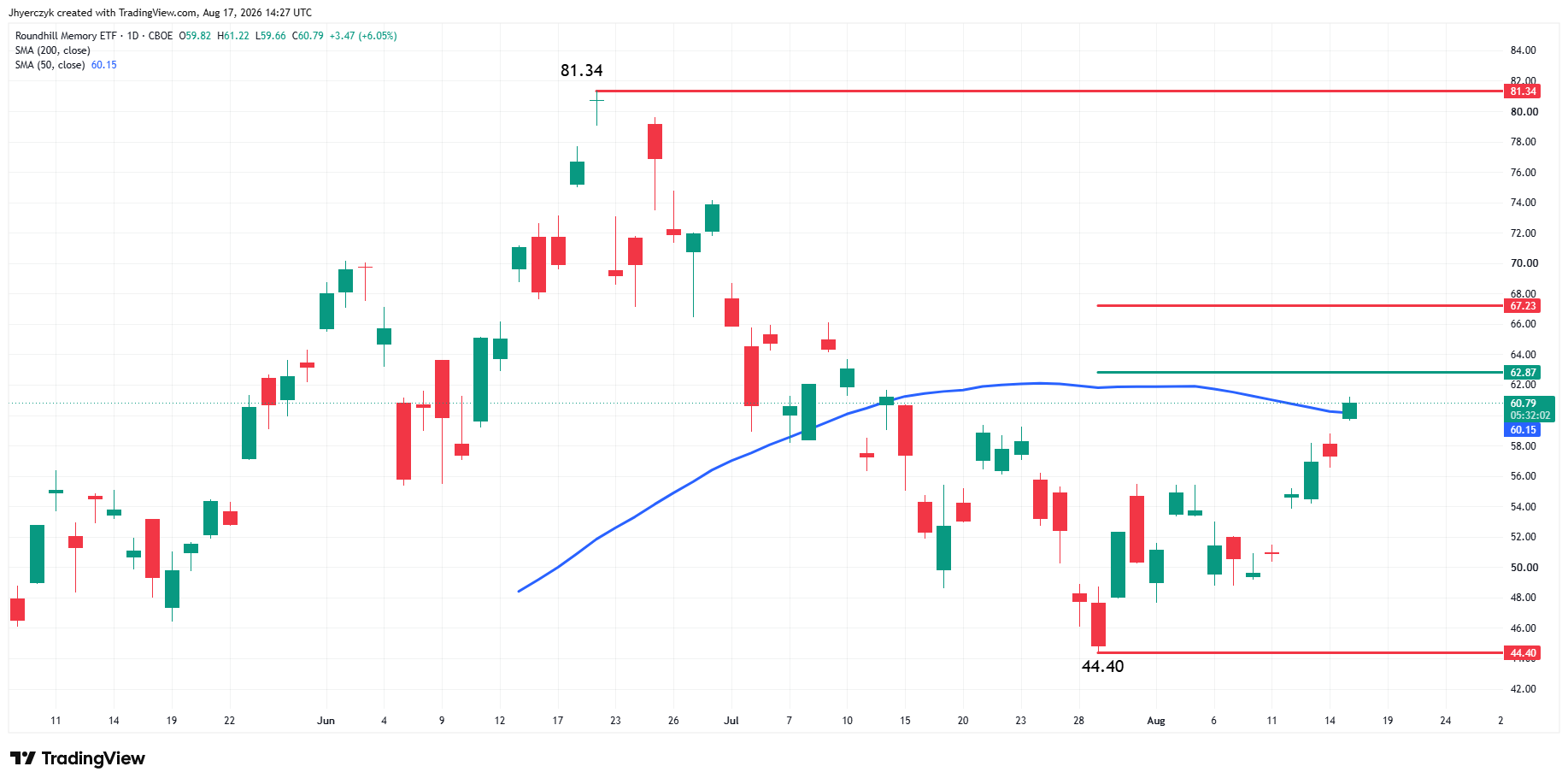
The Roundhill Memory ETF is edging higher on Monday after crossing to the strong side of the 50-day moving average at $60.15.
The near-term range is $81.34 to $44.40. Its 50% to 61.8% retracement zone is $62.87 to $67.23.
A sustained move over the 50-day MA could create the momentum needed to challenge the retracement zone. However, I don’t anticipate a breakout to the upside unless buyers can overcome the Fibonacci level at $67.23.
Dow Jones Price Forecast
Every new Dow Jones analysis as it publishes, today's technical signal and key levels, live price — on one page.
See all Dow Jones forecastsSandisk Led the Memory Group Higher on the Lutnick News
Sandisk jumped nearly 5% before the bell and held gains after the opening, leading the entire memory group on the Commerce Department headline. The stock is the most direct beneficiary of the Lutnick message because it sits at the intersection of the NAND shortage and the policy shift away from Chinese supply.
Sandisk is up 8.88% shortly after the opening on Monday. The main trend changed to up on the daily chart last week after a nearly two-month sell-off. The main range is $2354.39 to $998.19. Its 50% to 61.8% retracement zone is $1676.29 to $1836.32.
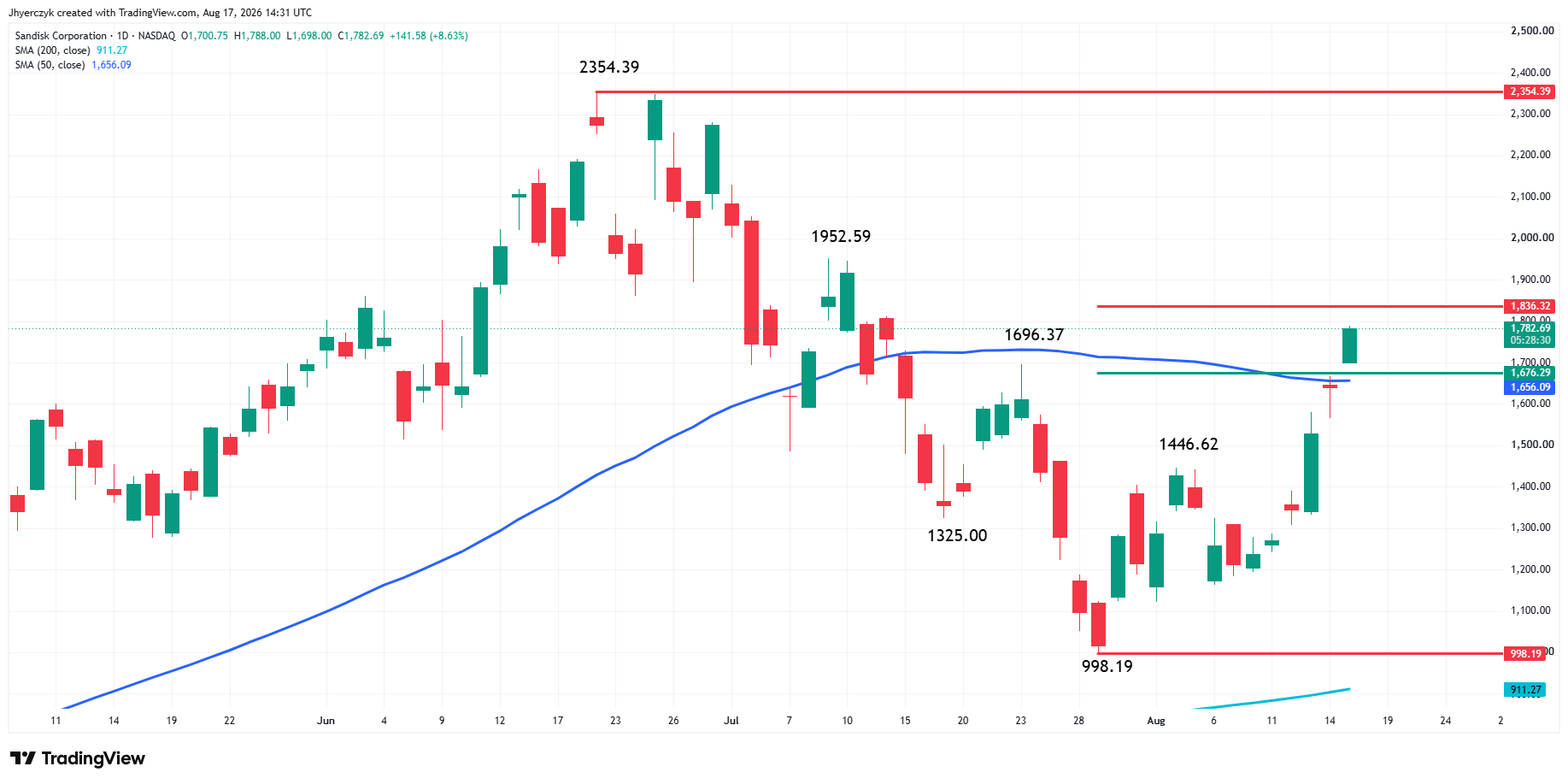
On Monday’s opening, the stock gapped the 50-day moving average at $1656.12 and the 50% level at $1676.29. The strong rally created by the move has put the stock in a position to challenge the Fibonacci level at $1836.32.
With room to run to the all-time high at $2354.39, the Fib level at $1836.32 could be the trigger point for an acceleration to the upside. Retreating back under the 50-day MA will be a sign of weakness, but not a change in trend. It will likely mean that traders have to build a stronger support base.
Anthropic Revenue Helped Chip Buyers Shake Off Friday
Anthropic’s second-quarter revenue topped $11.5 billion, according to Bloomberg. That number gave buyers a reason to come back to chips after Friday’s selling hit Broadcom and Applied Materials. Micron gained more than 3% on the combined news. Broadcom and Nvidia were both higher. Marvell and Arm rose about 2% in premarket trading. Applied Materials added 1.5% and AMD moved up.
Intel’s CEO Lip-Bu Tan bought more than 105,000 shares last week at $95. That is real money from the one person who knows the turnaround plan. The stock is trading higher with the rest of the chip group Monday.
Rising Crude Keeps the Dow and S&P Short of the Record
WTI crude oil rose about 0.5% to nearly $83 per barrel Monday. Brent gained about 0.6% to around $89. A senior Iranian official told Reuters that Iran would raise tensions in the Strait of Hormuz if diplomacy with the United States fails. That keeps the supply premium in crude and the rest of the market is absorbing the cost.
Higher oil puts the inflation question back in front of the Dow and S&P 500 after last week’s record. The contained CPI and flat PPI that helped stocks this month can look different if crude stays elevated through the next round of data. Technology can trade through a higher oil price for a session. It has a harder time doing it if yields and the dollar start following crude higher. That is the conflict Monday. Chips are buying the AI shortage while energy is pricing a longer disruption.
Stocks in the News
Home Depot reports earnings Tuesday. Lowe’s follows Wednesday. Walmart reports Thursday. The three retailers will give traders their first read on the consumer since last week’s soft retail sales number.
Daily Nasdaq Composite Index (IXIC) Technical Analysis
The Nasdaq Composite is edging higher shortly after the opening on Monday. The focus today is last week’s high at 26875.52. Bullish traders are hoping to take out this level with enough upside momentum to drive the tech-weighted index into the all-time high at 27190.21 and beyond.
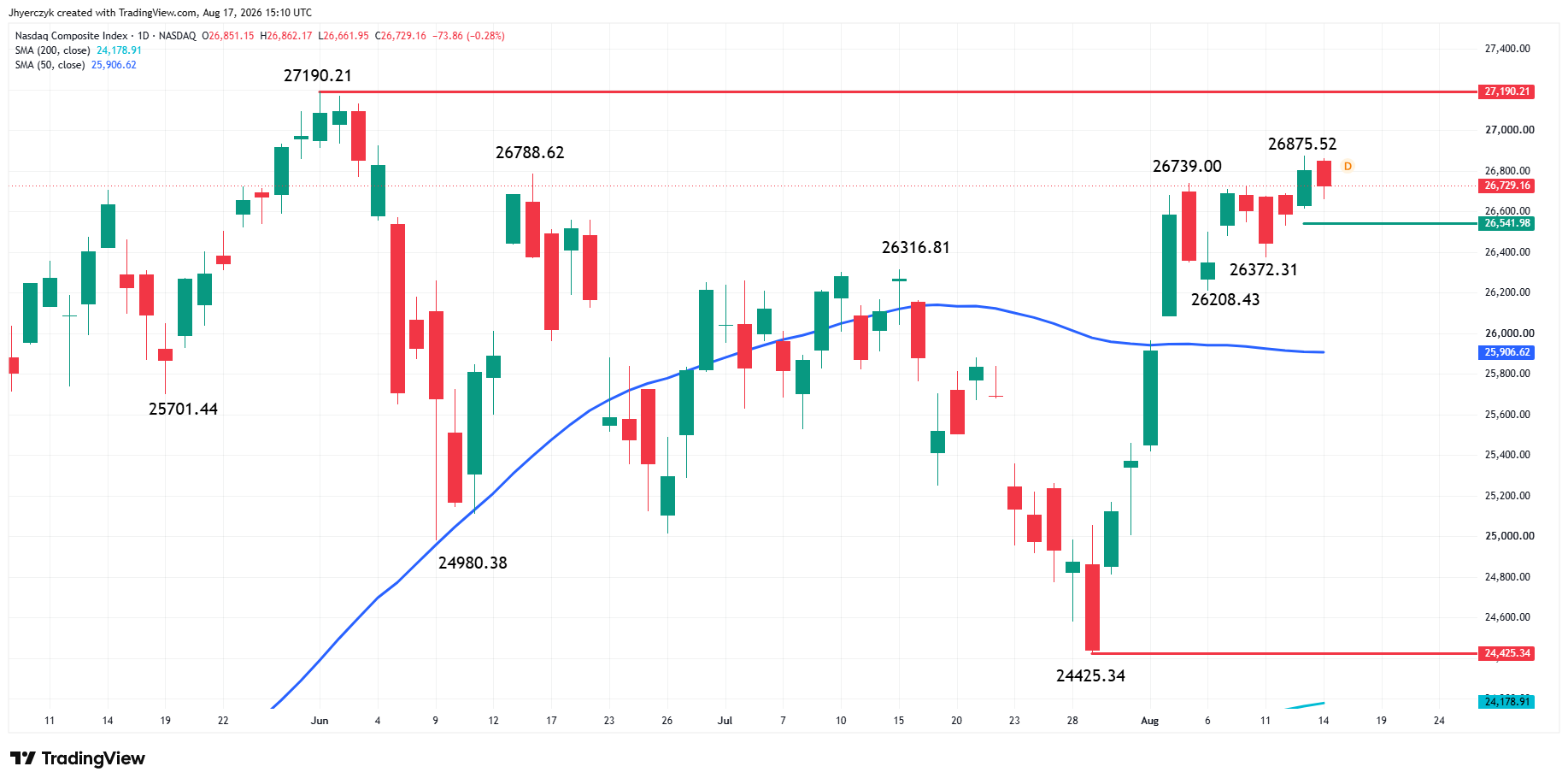
A failure to take out the high could lead to a quick intraday sell-off with the minor pivot at 26541.98 the first key target. This move could set up the next buying opportunity. If it fails to hold, sellers could press the index into the two minor bottoms at 26372.31 and 26208.43. If buyers don’t show up to defend these levels, losses could extend into the 50-day moving average at 25906.62.
What to Watch
The memory stocks are the feature and holding Monday’s gains matters more than the opening move. The Commerce Department message is supportive but the group has already run hard on the AI shortage. The broader market needs oil to settle before the Dow and S&P can build on last week’s record. FOMC minutes Wednesday will show whether the July dissent was three votes in isolation or a wider concern the committee kept quiet. Retail earnings from Home Depot, Lowe’s and Walmart give the consumer story its next test after last week’s soft sales number.
The Nasdaq is pressing last week’s high with the all-time record just above it. The memory group is doing the technical work, clearing key moving averages across the board. The broader market is consolidating below the record and waiting for crude oil and the rate debate to give buyers a reason to commit.
More Information in our Economic Calendar.