



Oil prices attempt a modest recovery in Asian trading on Tuesday, with Brent oil near $104 a barrel and WTI oil around $90. Both benchmarks dropped over 2% on Monday as the improvement in the exports of the Middle East eased supply concerns. The shipping data released on Monday showed that regional crude exports exceeded pre-war levels on four days during the final week of September. More oil is reaching buyers despite the risks around the Strait of Hormuz, which could limit the recovery in prices.
The latest developments in Yemen keep traders cautious. The Houthis said on Monday that they had attacked several Saudi sites, including the Aramco refinery in Rabigh. Saudi Arabia had not immediately confirmed those claims and the reports do not establish any loss of production. The talks between the US and Iran also remain unresolved, which leaves the recovery in regional supplies exposed to further disruption.
In my view, the improvement in exports could keep oil prices under pressure while any confirmed damage to energy facilities could quickly lift prices. This article examines the latest developments in supply and key technical levels that may shape the next move for Brent and WTI.
WTI Crude Oil Forecast: $87 Support and $94 Resistance in Focus
WTI crude oil dropped lower in September to close the month at $90.33 with a gain of 4.67%. However, the shadow on the monthly candle for September at the resistance of $106 suggest uncertainty in the short term.
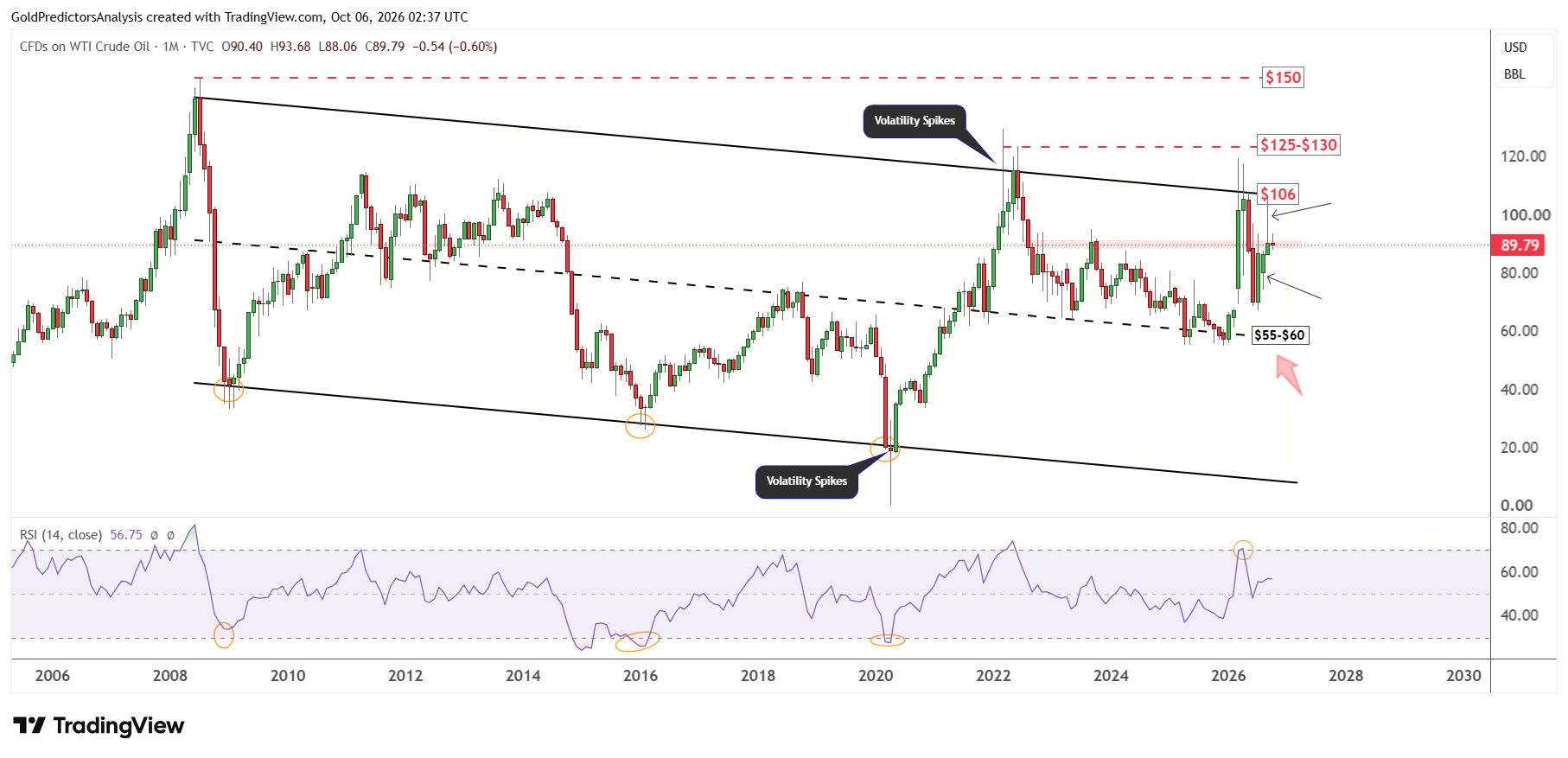
The price is now consolidating around $90 and looks to make the next move. A recovery above $100 will indicate another move towards the $106 area. On the other hand, a break below $85 will likely open the way for a further drop towards the $70 region. Overall, WTI crude oil has been consolidating in a wide range before finding the next move.
The daily chart for WTI oil also shows consolidation in the short term. The chart shows that the price has been consolidating between $87 and $93.
A break below $87 will open the way for a further drop towards the $83 region at the 200-day SMA. The RSI remains below the midline, which suggests negative price action in the short term and increases the likelihood of a further drop.
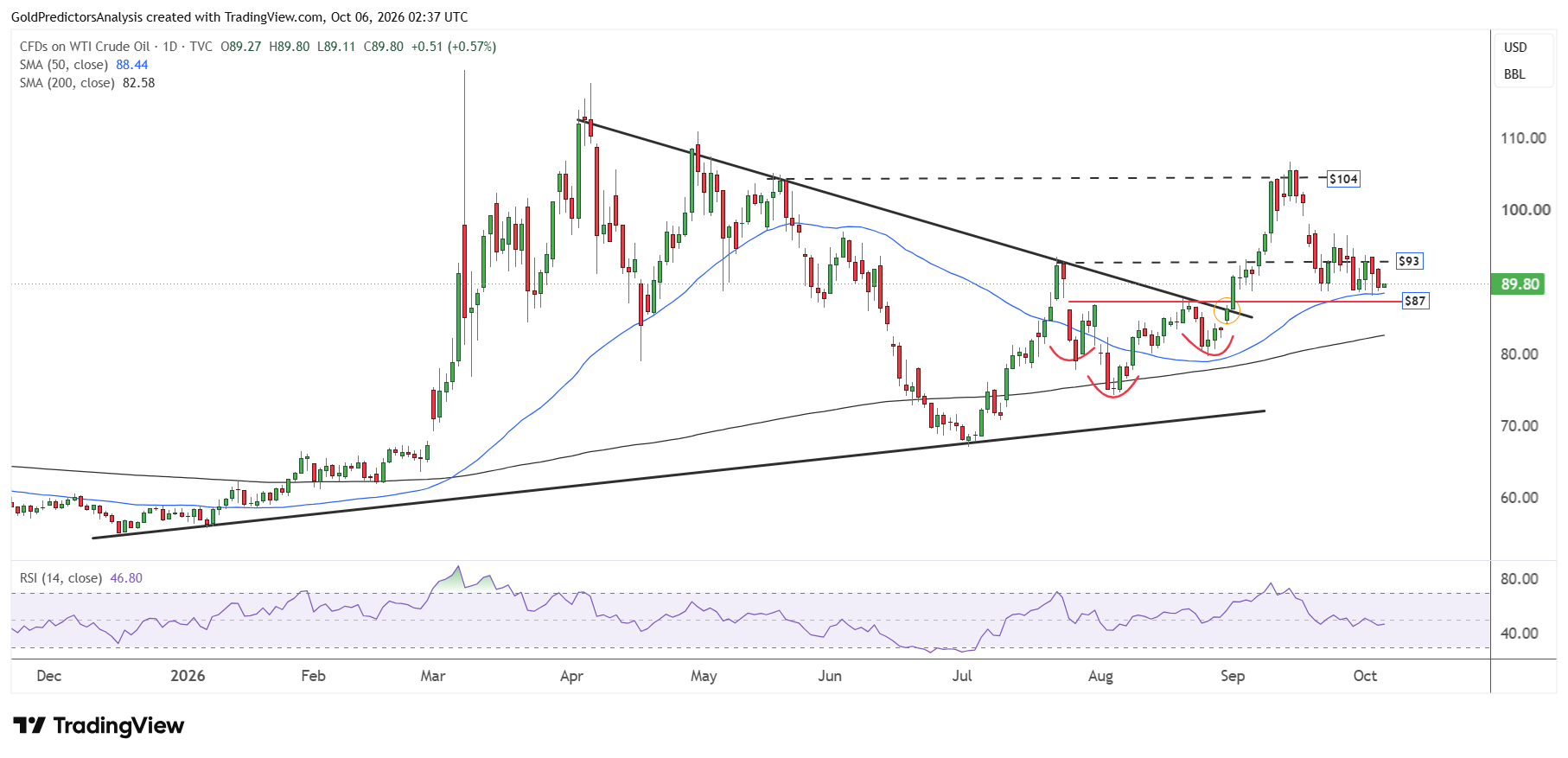
However, a recovery above $94 will suggest that the price has formed a bottom and will open the way for further upside towards the $104 region.
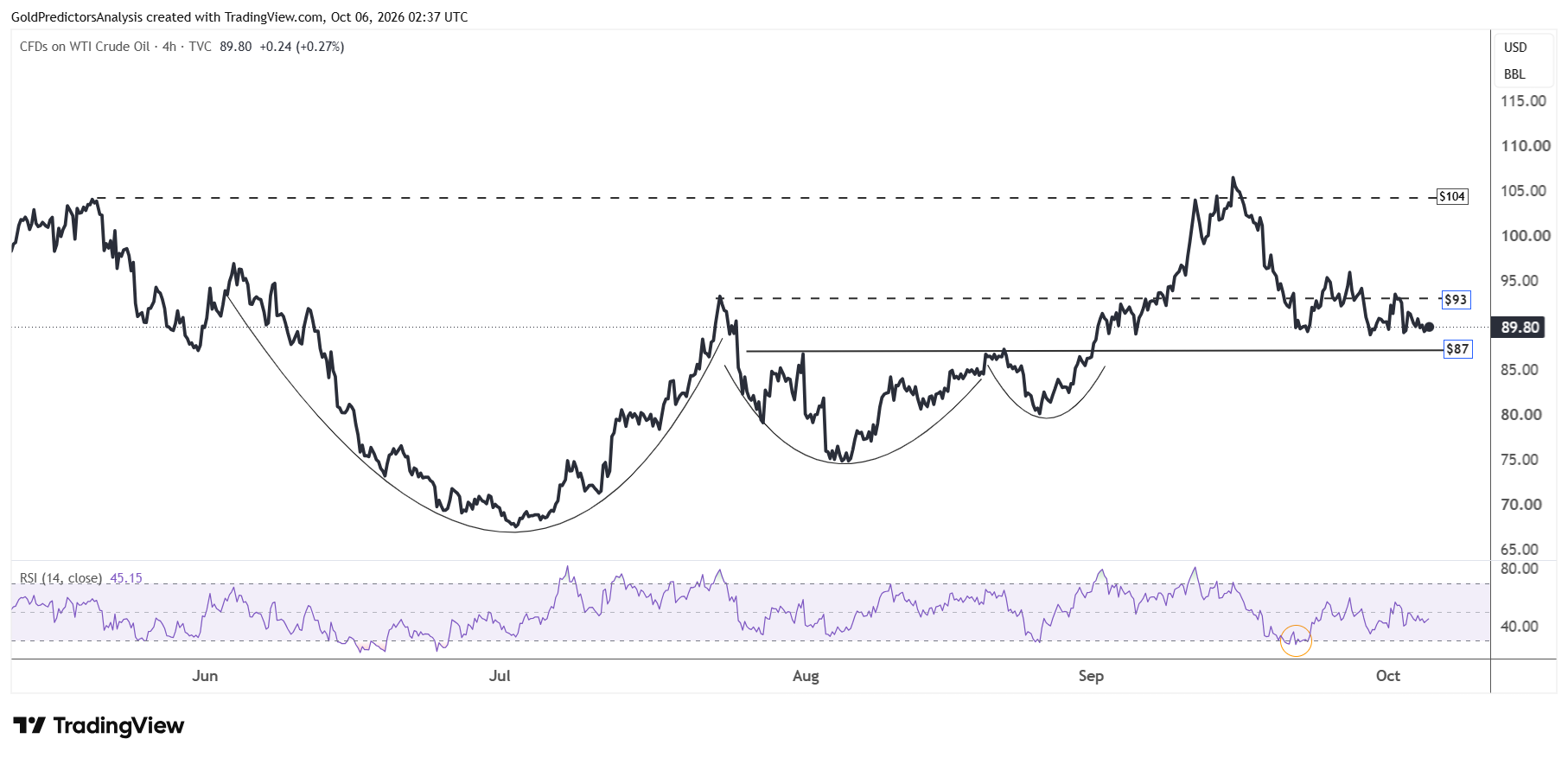
The 4-hour chart for WTI crude oil also shows this strong consolidation. As long as the $87 support holds, the price structure for WTI crude oil remains bullish.
Brent Oil Price Forecast
Every new Brent Oil analysis as it publishes, today's technical signal and key levels, live price — on one page.
See all Brent Oil forecastsBrent Crude Oil Forecast: $113 Breakout Could Target $120
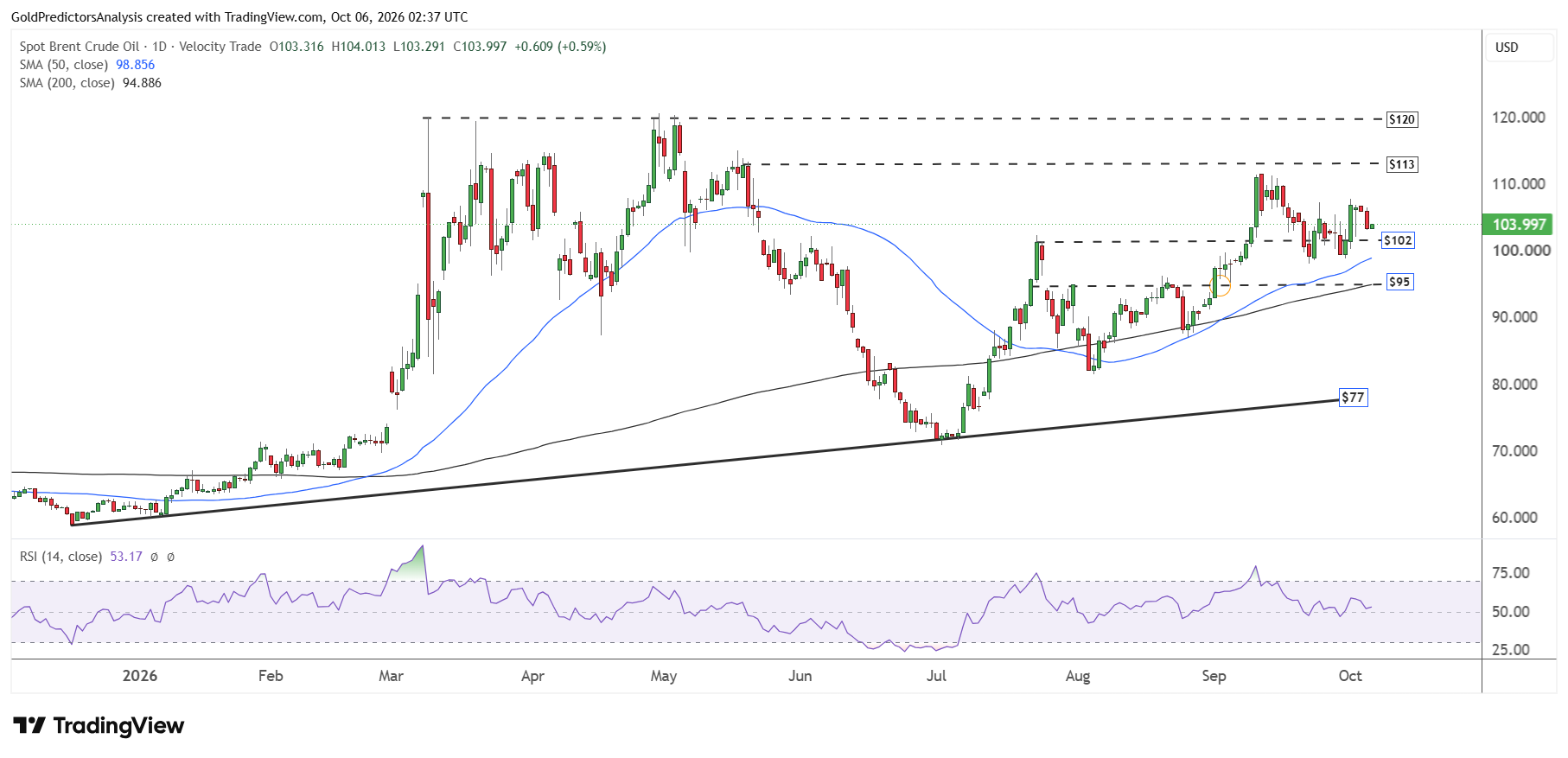
The daily chart for Brent crude oil shows that price has been consolidating above the 50-day SMA at the $99 region. A break below $99 will push prices towards the 200-day SMA at the $95 area.
On the other hand, a break below $95 will open the way for further drops towards the $78 region. Brent crude oil must break above $113 to push prices towards the $120 area.
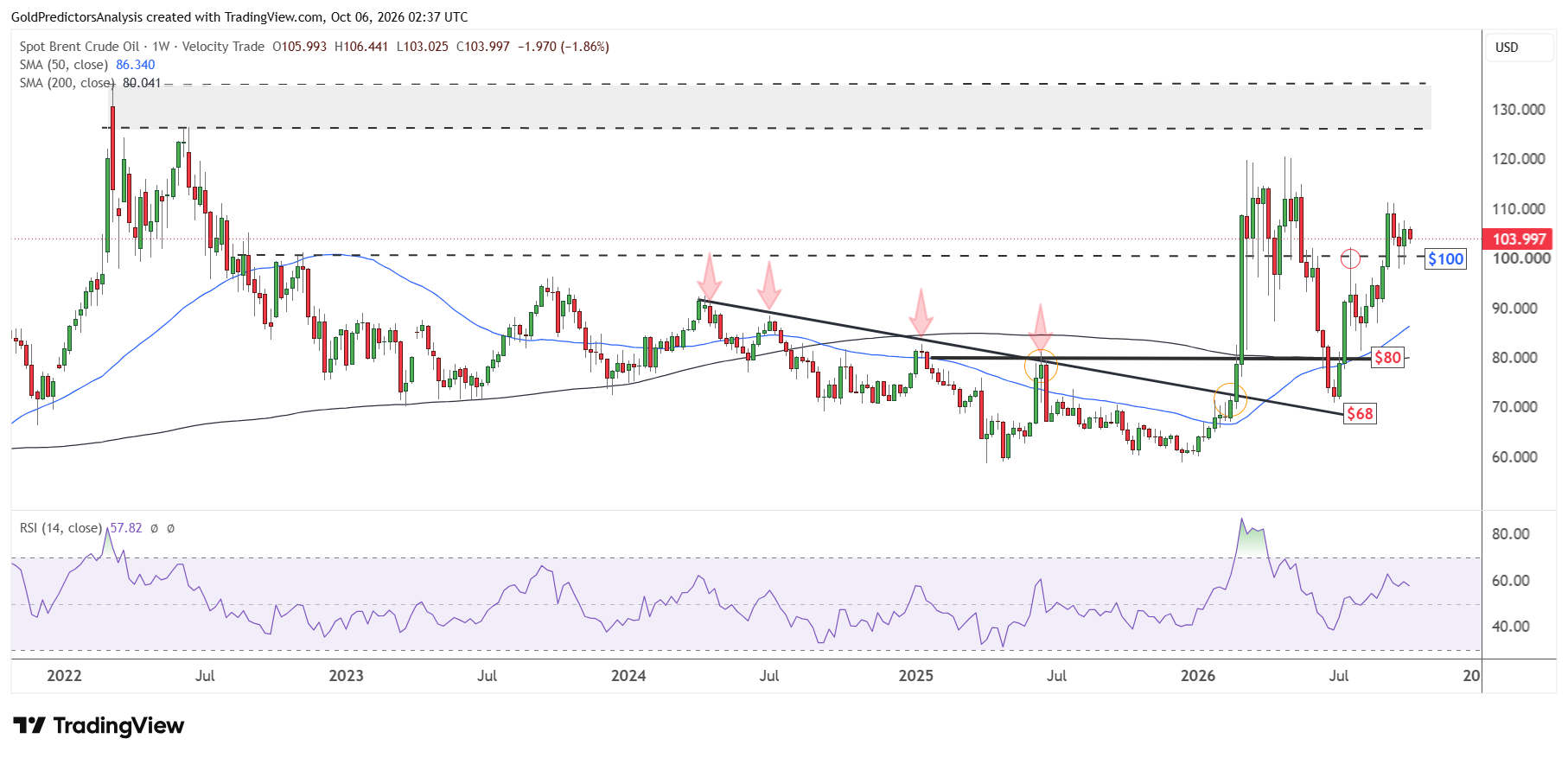
The weekly chart for Brent crude oil shows a 3.18% gain last week. The price still remains above the key level of $100 and suggests positive momentum in the short term. A weekly close below $100 will likely open the way for a further drop towards $90.
On the other hand, a recovery above $113 will be a bullish sign. The RSI remains above the midline, which suggests positive momentum in the Brent crude oil market.
Bottom Line
Oil prices may struggle to sustain a recovery as higher exports in the Middle East ease supply concerns. However, any confirmed damage to energy facilities could lift prices again. WTI needs to stay above $87. A break below this support could lead to a drop towards $83.
Brent also needs to defend the $99-$100 area to reduce the risk of a decline towards $95. Buyers need to push WTI above $94 to open the way towards $106. A breakout above $113 in Brent oil could bring $120 into view. Until then, the improvement in exports could limit gains while unresolved regional tensions keep both markets volatile.


