The S&P 500 and Nasdaq remain close to their record highs as investors weigh Nvidia’s $500 billion AI financing plan against the risk of another Fed rate hike. The plan could extend the AI investment cycle and support technology earnings. But it remains a long term goal that depends on strong demand for computing power. The economic growth, high energy prices and persistent inflation may keep interest rates elevated. The next move in both indexes may depend on the upcoming Nvidia earnings, Treasury yields and the ability of the indexes to break their key resistance levels.
Inki Cho, Senior Financial Markets Strategist at Exness commented:
Nvidia’s financing plan highlights how much capital is still flowing into AI infrastructure, and that’s a meaningful signal for the technology sector’s growth trajectory. At the same time, markets are being shaped by competing forces: solid AI demand on one hand, and the risk of persistently high interest rates on the other. Traders should expect volatility around this earnings release, as expectations are already elevated and any guidance that falls short could trigger sharp repricing. As always, we’d encourage clients to manage their risk carefully around high-impact events like this
NVIDIA’s $500 Billion AI Plan Supports S&P 500 and Nasdaq
NVIDIA Corp. (NVDA) has partnered with Apollo, BlackRock, Blackstone, Brookfield, Goldman Sachs and KKR. These companies are looking to unlock over $500 billion in third-party capital for AI infrastructure. The platforms would enable Nvidia’s customers to fund computing power on a larger scale. This may help sustain demand for chips, networking equipment, data centers and power infrastructure for many years.
The structure could reduce the near term pressure on the balance sheet of technology companies. Currently, large cloud providers are investing large amounts in data centers and processors. These companies would be able to rent computing power. This may turn some of their capital expenditure into operating expenditure. It can also enable smaller companies working with AI systems to use Nvidia systems without having to invest in their own data center.
This arrangement can benefit the Nasdaq and the S&P 500. NVIDIA is one of the large companies in both indexes. The chipmakers, the memory producers, the electrical equipment companies and data-center operators may also benefit from the plan. The results from Analog Devices further suggest that the demand for the AI data center remains solid. But Google’s new deal with Marvell for custom chips suggests that large cloud providers are also working on alternatives to Nvidia’s chips.
NVIDIA AI Financing Risks Put August 26 Earnings in Focus
There are relevant risks linked to the plan. The $500 billion is a long term financing goal, not the amount that has already been deployed. The projects will be based on customer demand, utilization of the computers and the worth of the older processors. Investors could face losses if AI revenue fails to cover the financing costs.
S&P 500 Price Forecast
Every new S&P 500 analysis as it publishes, today's technical signal and key levels, live price — on one page.
See all S&P 500 forecastsTherefore, NVIDIA’s earnings on August 26 will be important. The company’s guidance could be the deciding factor whether an investor believes that this plan is a sign of sustainable demand or an attempt to keep the spending cycle moving.
Fed Minutes and Strong GDP Growth Keep Rate Hike Risks Alive
The Federal Reserve kept its target rate between 3.50% and 3.75% in July. But three policymakers backed a quarter-point hike. The Fed minutes also revealed that many officials had thought a further increase could be warranted in the event of inflation failing to ease. The market expects only 33% chance of a rate hike in September. But the expectations of a 25 bps increase in December are still 45%.
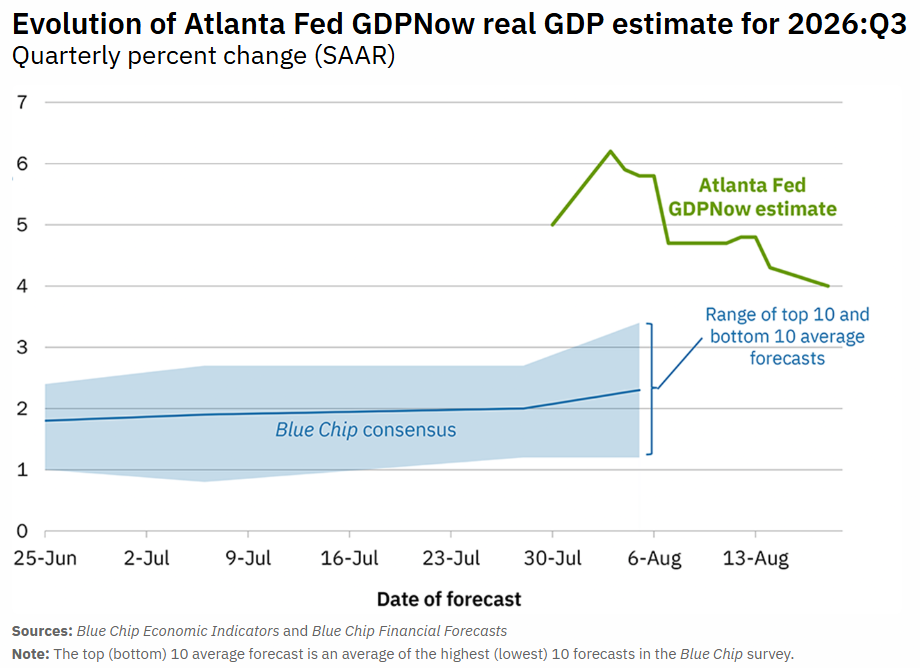
The Fed also has some more room to pay attention to inflation with strong economic growth. On August 14, the GDPNow model from the Atlanta Fed had a 4.3% estimate for third quarter growth, which was revised to 4.0% on August 18. Despite the revision, the estimate still exceeds the Blue Chip consensus as seen in the chart below.
Inflation and Higher Oil Prices Increase Rate Risks for Nasdaq
The latest inflation data provides a mixed message. The consumer prices increased by only 0.1% in July. The annual inflation also declined slightly to 3.4%, and the core inflation to 2.5%. But the inflation still remains above the Fed’s 2% target. Producer prices were flat in July, but they are still at 4.7%. This indicates that certain companies are still going through higher expenses.
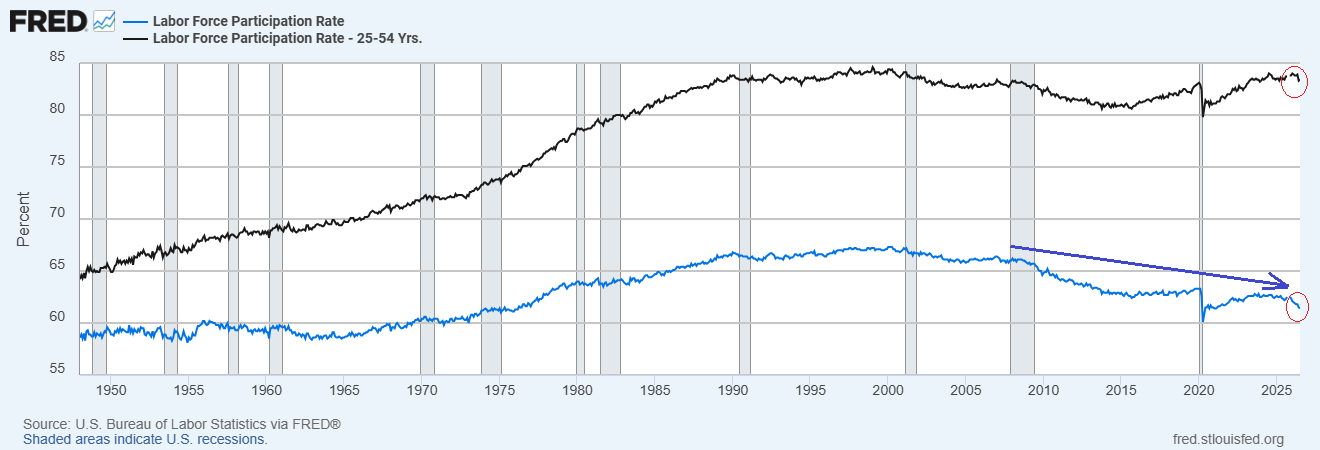
The situation of labour is also mixed. The overall participation rate is low, but among the working age population (25 to 54), it was 83.4% in July, which is near its historical high. This indicates that much of the overall decline in participation can be explained by demographic shifts. The Fed could thus conclude that the underlying strength in labor market is not weak enough to rule out another rate hike.
Another problem for the Fed is energy prices. Brent crude is trading above $95 a barrel, following disruptions in the Strait of Hormuz. The rising costs of fuel and transportation could ripple through the economy. The Fed may thus be cautious despite a slowdown in consumer spending and jobs. This increases the possibility that interest rates will remain high for longer.
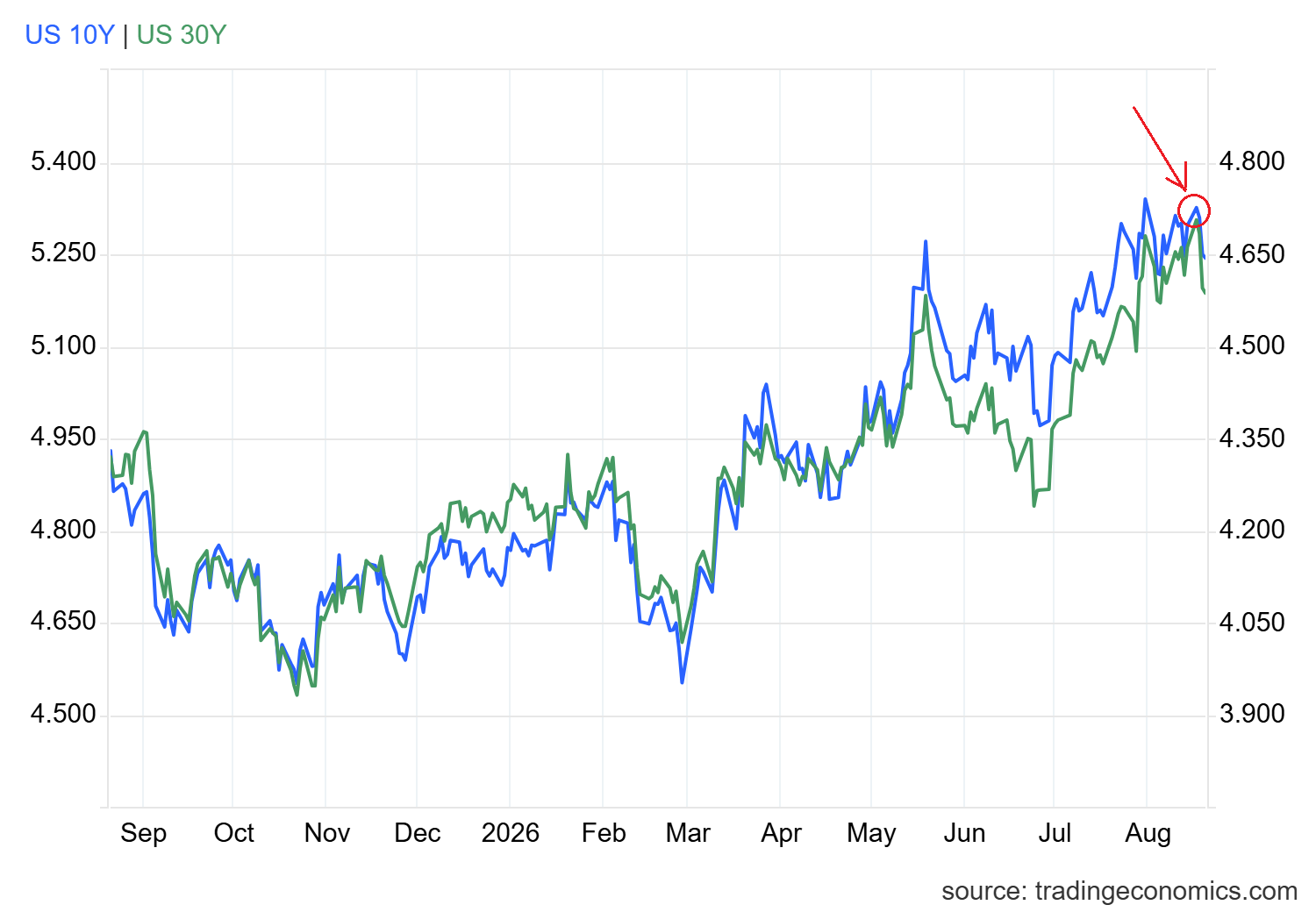
The higher rates are important to the Nasdaq. Technology companies derive large share of their valuations from profits expected many years into the future. The higher Treasury rates reduce the value of those earnings. The S&P 500 has more financial, industrial and energy stocks, but its large technology share also makes it vulnerable to the uptick in yields. The long-term Treasury yields still remain strong despite the sharp drop on Wednesday.
S&P 500 and Nasdaq Forecast: Key Breakout Levels and Price Targets
The financing plan by Nvidia can offset some of the pressure from the Fed, but it cannot remove the interest rate risk. The plan supports future revenue expectations across the AI industry. The higher yields work in the opposite direction by reducing valuation multiples. The strongest bullish scenario would require strong Nvidia earnings and decline in the 10-year yield. If yields remain above 4.70%, S&P 500 and Nasdaq may face challenges even if AI spending continues to grow.
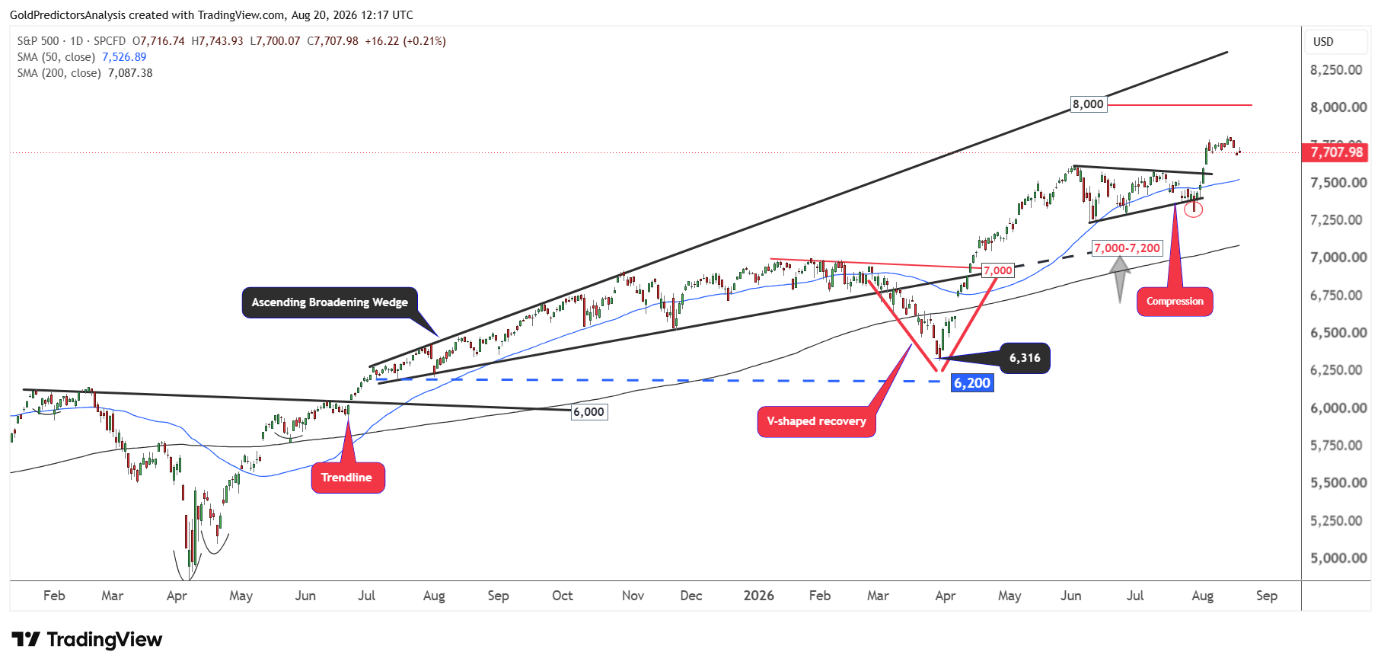
From technical perspective, the S&P 500 remains in a constructive price action and is moving toward the $8,000 target. The index has already moved very close to the target and it looks like the rally needs a breakout. The $8,000 target is defined by the ascending broadening wedge pattern. A break above $8,000 will open the door for another surge toward the 8,500 level.
The immediate support for the S&P 500 remains at 7,620. A retracement toward this support may strengthen the rally in the index towards 8,000. But a break below 7,500 will open the door for a further drop toward the 7,300 level.
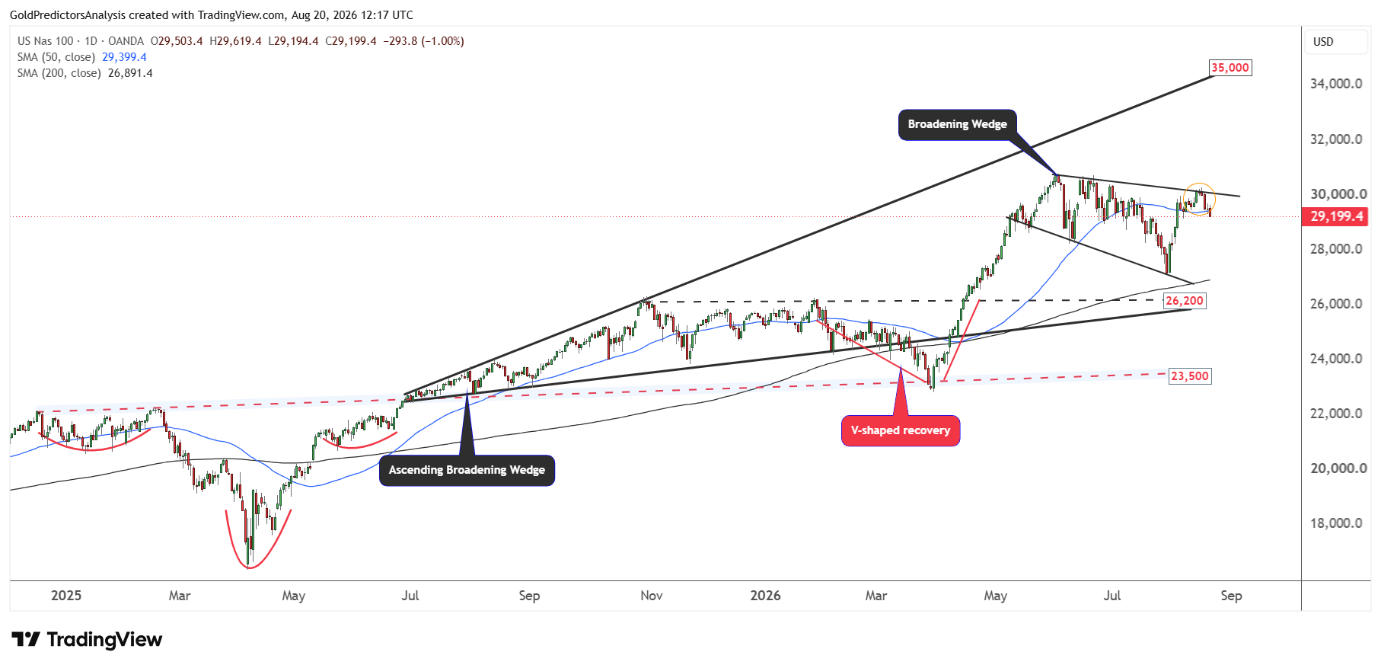
The Nasdaq index also shows very constructive bullish price action and is consolidating at the resistance of the broadening wedge pattern. A break above 30,600 is required to push the Nasdaq index toward the 35,000 level. This target of 35,000 is defined by the ascending broadening wedge pattern that stretches from June 2025 lows.
As long as the Nasdaq index remains above the 27,000 level, the possibility of strong surge toward the 35,000 level remains high.
Final Thoughts
The financing plan by Nvidia supports the long term outlook for the S&P 500 and Nasdaq. It could extend the AI spending cycle and strengthen demand across the technology sector. But the plan does not remove the risks from higher interest rates and bond yields.
The financing structure also creates the downside risk if AI revenue fails to grow fast enough to cover the long term commitments. AI labs face strong competition and limited pricing power. If the growth does not follow the expectations, hyperscalers may reduce data center spending. This may weaken demand for chips and infrastructure and increase the risk of strong correction. The next earnings release and guidance by NVIDIA on August 26 will show whether AI demand remains strong enough to support the rally.
The technical outlook remains bullish and continues to move towards the respective targets. A break above 8,000 in S&P 500 may push the index to 8,500. On the other hand, the Nasdaq must move above 30,600 to open the way toward 35,000. S&P 500 and Nasdaq 100 must remain above 7,000 and 27,000, respectively, to keep the bullish momentum towards their respective targets. But a break below 7,000 in the S&P 500 or 27,000 in the Nasdaq would weaken the bullish outlook.