
Stocks Hold Friday’s Gains but Oil and Yields Are Already Pushing Back
The S&P 500 and Nasdaq are holding small gains Monday but the Dow is lower and the tape is not broad. Friday’s payrolls miss sent stocks to record levels on the expectation that the Fed would have a harder time hiking in September. Monday is testing that bet. WTI crude is near $80 after Iran issued new demands on the Strait of Hormuz and the 10-year Treasury yield climbed back to 4.68% after touching 4.60% on Friday’s jobs data.
The S&P 500 is trading on the strong side of its minor pivot and both trends remain up on the swing chart. But the split between growth holding gains and the Dow sitting lower tells you this rally has not widened yet. Wednesday’s CPI decides whether it does.
At 14:33 GMT, the Dow Jones Industrial Average was at 53,988.71, down 48.22 points or 0.09%. The S&P 500 was trading at 7,769.06, up 11.42 points or 0.15%. The Nasdaq Composite was at 26,716.58, up 25.97 points or 0.10%.

Daily S&P 500 Index (SPX) Technical Analysis
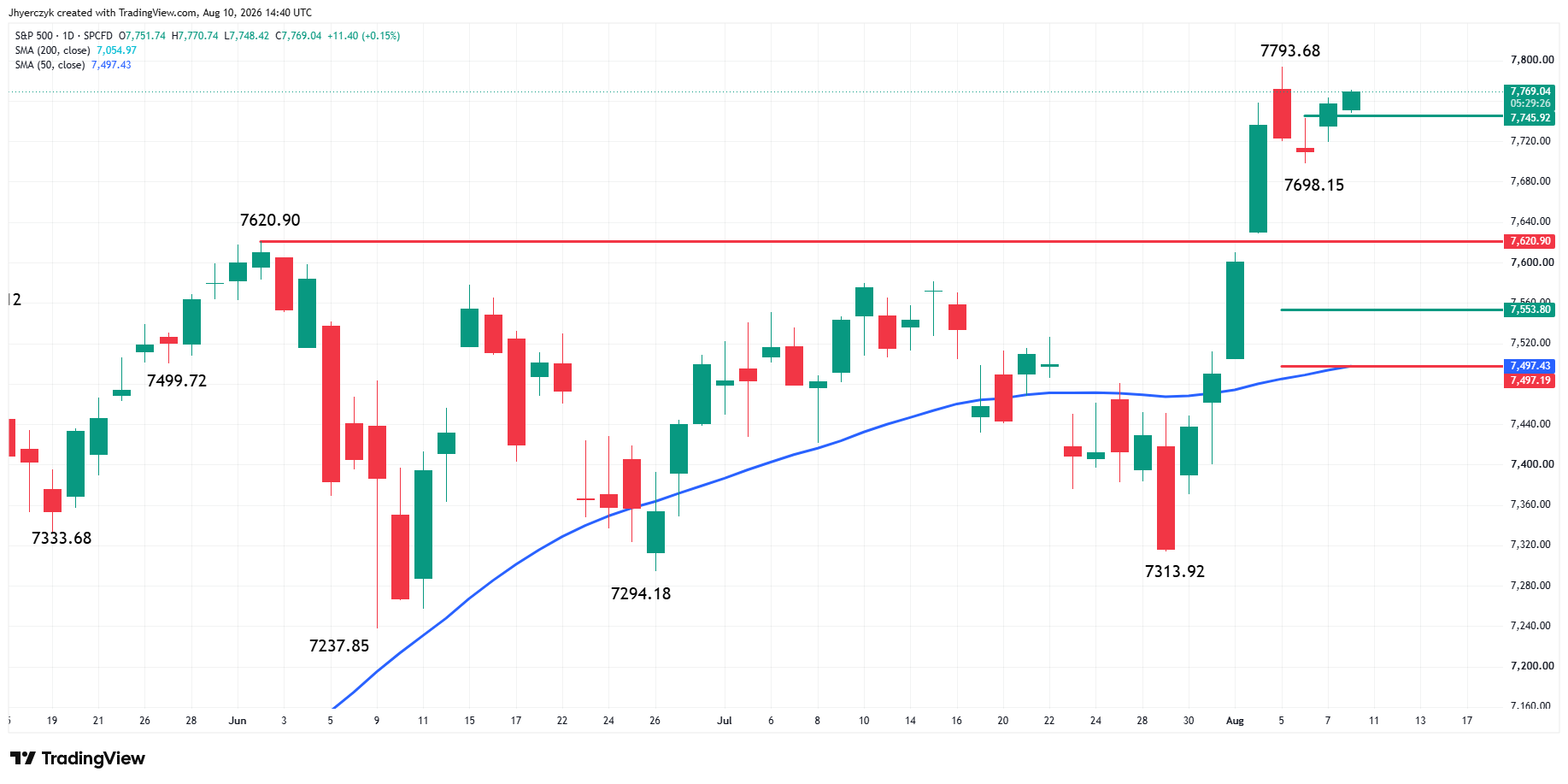
The S&P 500 Index is edging higher shortly after the opening on Monday. Early in the session, the market crossed to the strong side of a minor pivot at 7,745.92, giving it a little upside momentum. Trader reaction to this pivot should set the tone today.
A sustained move over 7,745.92 will indicate the presence of buyers. If upside momentum begins to build, then look for a test of the record high at 7,793.68. A move through this level will reaffirm the minor and main trends.
A sustained move under the pivot will signal the presence of sellers. Taking out the minor bottom at 7,698.15 will change the minor trend to down. This will also shift momentum to the downside.
The first major support is the former top at 7,620.90. Buyers may return to defend this level since old tops can become new bottoms. A failure to hold this level will indicate the selling pressure is increasing. This could lead to a 50% to 61.8% correction of the rally from 7,313.92 to 7,793.68. These targets are 7,553.80 to 7,497.19, respectively. Additionally, the 50-day moving average at 7,497.50 forms a support cluster with the 61.8% level.
Although the trend is up, some traders feel the steep nature of the five-day rally has created an overvalued situation. This makes the market vulnerable to a near-term correction. The first sign that this correction is starting will be a trade through the 7,698.15 minor bottom.
Dow Jones Price Forecast
Every new Dow Jones analysis as it publishes, today's technical signal and key levels, live price — on one page.
See all Dow Jones forecastsWTI Near $80 and Rising Yields Are Unwinding Friday’s Trade
Crude is doing more damage. WTI is near $80 after Iran issued new demands before reopening the Strait of Hormuz to shipping traffic. The market is putting supply risk back into the oil price and that feeds straight into inflation expectations. The jobs report weakened the labor side of the Fed’s case for September. Oil climbing back toward last month’s levels can rebuild the inflation side in a hurry.
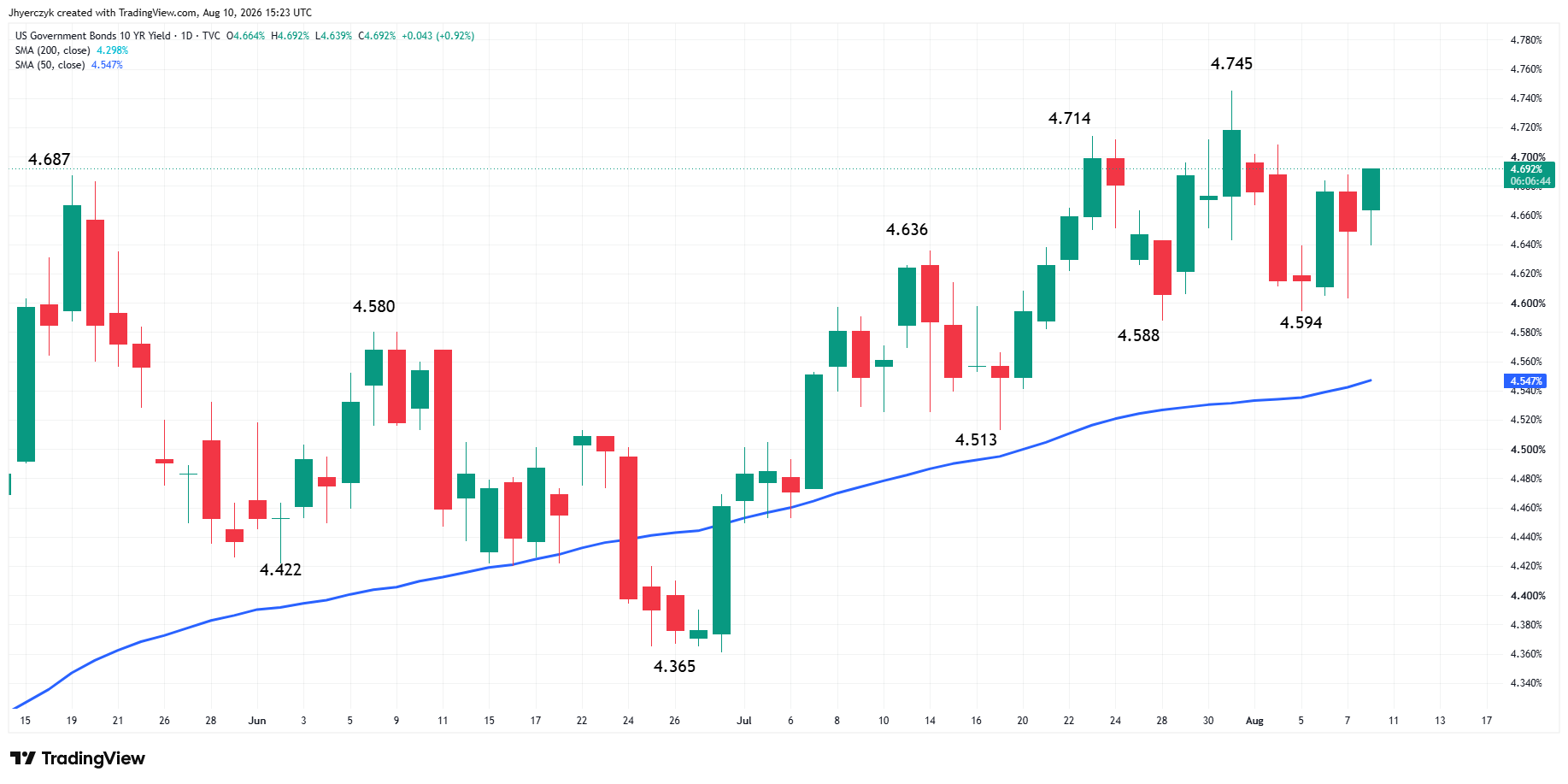
The 10-year yield rose to 4.68% from 4.65% at Friday’s close. That is not a large move but it shows the bond market is not treating one weak payrolls print as the final word on the Fed. Friday’s rate relief trade sent growth stocks higher and pushed yields to 4.60%. The bond market has already taken half of that move back.
CPI Wednesday Decides Whether Record Highs Hold or Correct
Wednesday’s CPI is the number. PPI Thursday and retail sales Friday follow. The June reports landed before Hormuz disruptions hit energy costs. This round of data carries those disruptions and the market will see it immediately.
A soft print and Friday’s rally keeps running. A hot one with WTI near $80 and the same buyers who chased growth stocks Friday start selling Wednesday afternoon. The payrolls miss does not disappear but it stops being enough on its own.
J.P. Morgan Raised Its S&P 500 Target to 8,000 on AI Earnings
J.P. Morgan lifted its year-end S&P 500 target to 8,000 from 7,800 Monday. The 2026 EPS forecast went to $365 from $350 and the 2027 number to $420 from $390. Google, Amazon and Microsoft did the heavy lifting on that call. Their results convinced the firm that AI spending is showing up in revenue, not just costs.
The numbers back it up. Of 436 S&P 500 companies through Friday, 85.1% beat estimates. The long-term average is 68%. J.P. Morgan still capped the target at 20 times forward earnings. Rates are not coming down, Hormuz is not resolved and the market is absorbing heavy equity and debt supply. The multiple reflects what is working against stocks, not just what is working for them.
Stocks in the News
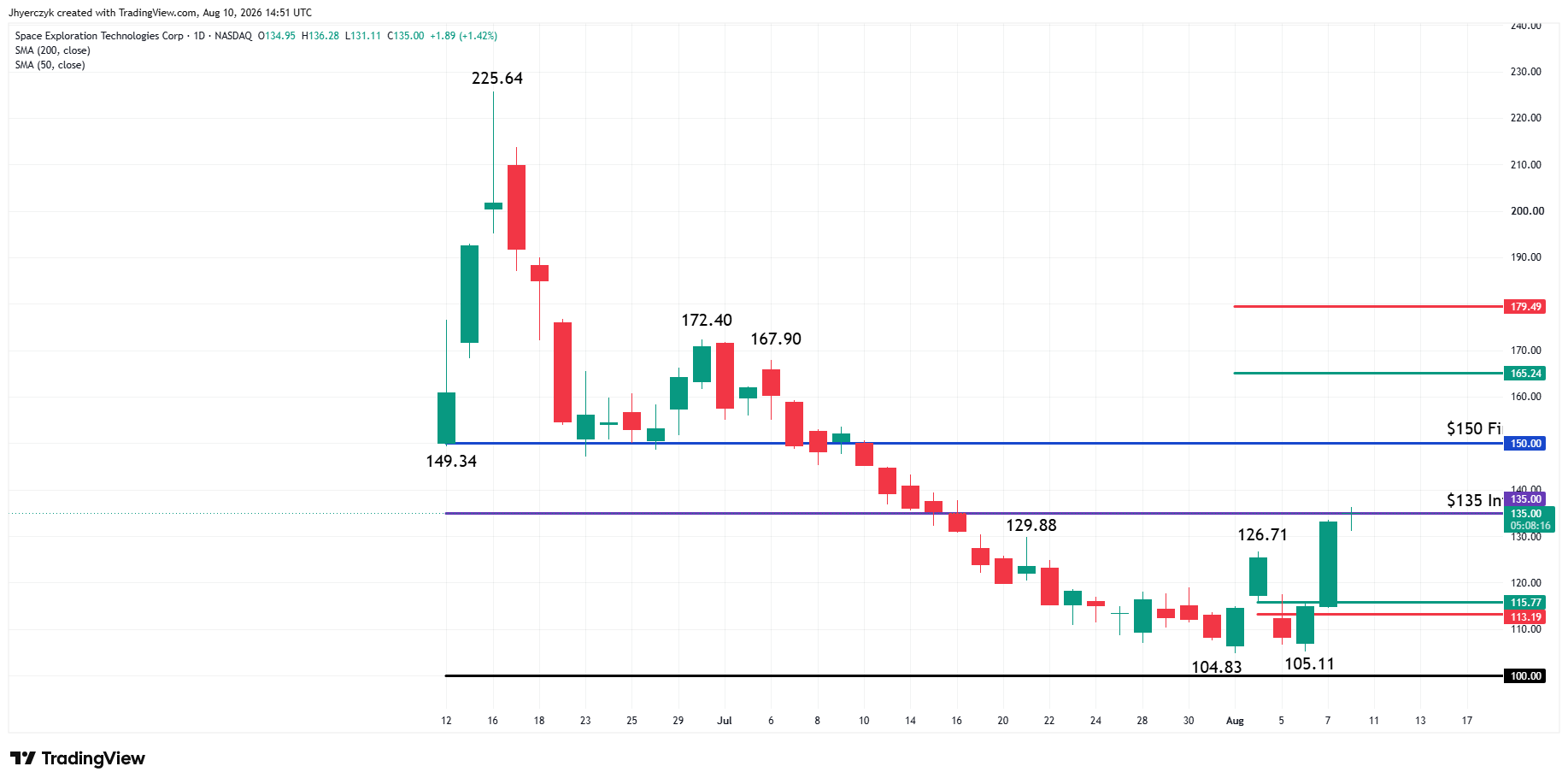
SpaceX touched $135 in the opening minutes before pulling back to $134, up about 1%. That $135 is the IPO price and the level the market is watching. The stock has bounced more than 20% off last week’s record low and Friday’s lockup expiry passed without the selling wave traders feared. A hold above the IPO price and buyers are back in control. A rejection and $120.56 is the first downside target.
Meta picked up about 1% on Zuckerberg’s comments about keeping AI models broadly accessible. The stock is still part of the AI leadership group but the spending has to start showing up in revenue before the market gives it credit for the vision.
Berkshire Hathaway gained about 2% after posting strong earnings. Greg Abel is signaling he will put the cash pile to work through buybacks and equity investments. The Dow needed something besides technology to participate Monday and Berkshire gave it a reason.
What to Watch
Monday’s gains are narrow. The S&P 500 is near its record. The Nasdaq is positive. The Dow is not participating. Oil near $80 and the 10-year yield climbing back from Friday’s lows are the two forces working against the rate relief trade that produced last week’s rally.
CPI Wednesday is the week. Soft inflation keeps the repricing intact and growth stocks keep running. Hot inflation with crude climbing on Hormuz gives the Fed its argument back. The minor pivot at 7,745.92 is holding. A break below 7,698.15 starts the correction and the 50-day cluster near 7,497 is where it finds support.
More Information in our Economic Calendar.