
China PMIs Contrast with IMF Growth Forecasts
On Friday (May 31), the Chinese economy was in the spotlight. After better-than-expected Caixin private sector PMIs for April, the NBS PMI numbers were in focus.
The NBS Manufacturing Sector PMI declined from 50.4 to 49.5 in May. Economists forecast a PMI of 50.5. The NBS Non-Manufacturing PMI fell from 51.2 to 51.1. Economists expected the PMI to increase to 51.5.
Significantly, the May PMIs aligned with April trends, where the PMIs signaled a deteriorating macroeconomic environment.

IMF Growth Forecasts and May PMI Takeaways
On Wednesday (May 29), the IMF revised its 2024 growth forecast for China, aligning with the Beijing projection of 5%. The IMF attributed the upward revision from the previous 4.6% forecast to a better-than-expected Q1 2024 and policy measures from Beijing.
Nevertheless, the IMF expects growth to slow to 4.5% in 2025. The April and May NBS PMI numbers suggest a downward shift in economic momentum, aligning with the IMF’s outlook for 2025.
However, on Monday (June 3), the China Caixin Manufacturing PMI will likely impact market risk sentiment more. Economists forecast the Caixin Manufacturing PMI to increase from 51.4 to 51.5 in May.
The Hang Seng Reaction to the NBS Manufacturing PMI
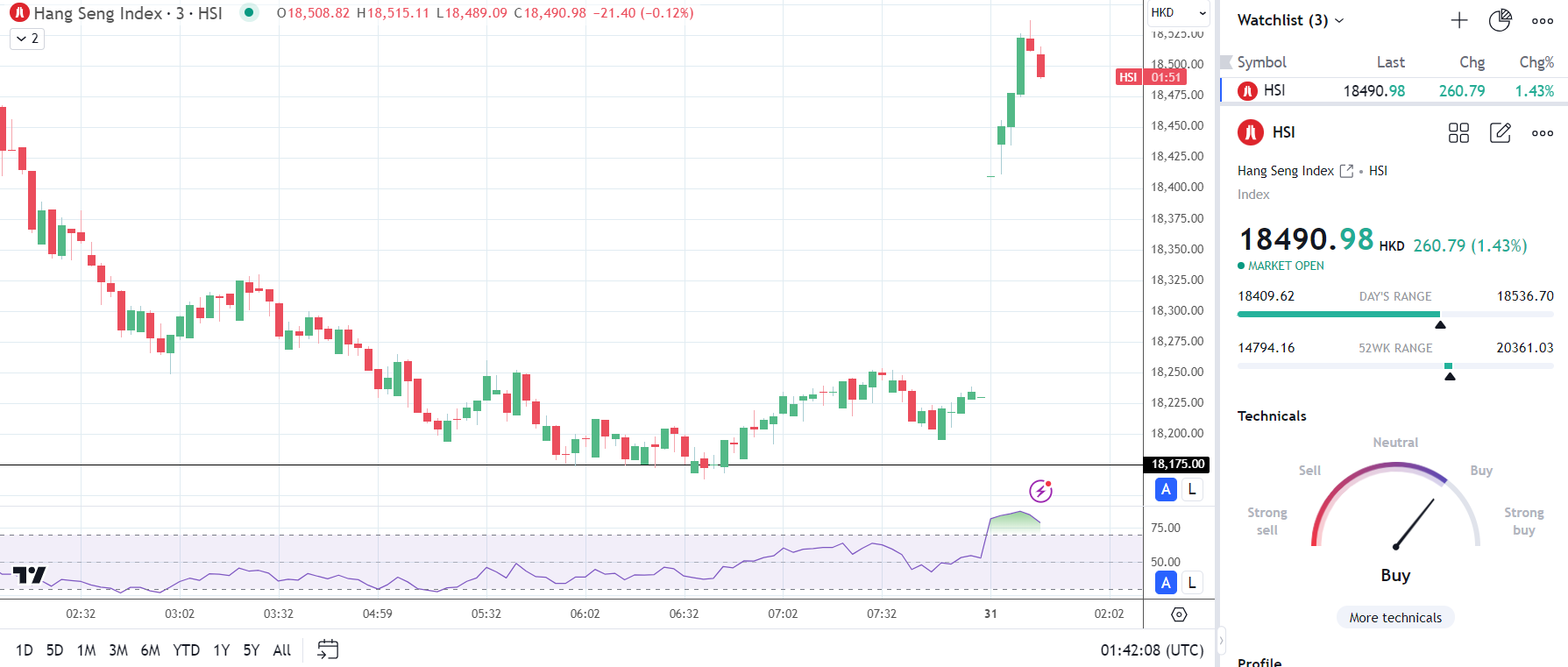
Before the PMI numbers, the Hang Seng Index was up 0.98% to 18,410.
Hong Kong Hang Seng Price Forecast
Every new Hong Kong Hang Seng analysis as it publishes, today's technical signal and key levels, live price — on one page.
See all Hong Kong Hang Seng forecastsHowever, the Hang Seng Index brushed aside the weaker-than-expected numbers, climbing to 18,537.
On Friday (May 31), the Hang Seng Index was up 1.43% to 18,491.
Up Next
Later in the Friday session, the all-important US Personal Income and Outlays Report will warrant investor attention. Higher-than-expected Core PCE Price Index numbers for April could sink investor bets on a September Fed rate cut.
Economists forecast the US Core PCE Price Index to increase 2.8% year-on-year in April after advancing 2.8% in March.
However, investors should also consider the personal income and spending numbers. Upward personal income and spending trends could fuel demand-driven inflation and further impact expectations of a September Fed rate cut.
Economists forecast personal income to increase by 0.3% in April after rising by 0.5% in March. Additionally, economists expect personal spending to advance by 0.3% after an increase of 0.8% in March.