Economic Indicators from China Face Scrutiny Amid Looming US Tariffs
On Friday, November 15, China’s economic data garnered significant interest due to recent stimulus efforts. Fixed asset investment, industrial production, retail sales, and unemployment data sent mixed signals after a wave of stimulus measures aimed at bolstering the economy.
Key economic indicators included:
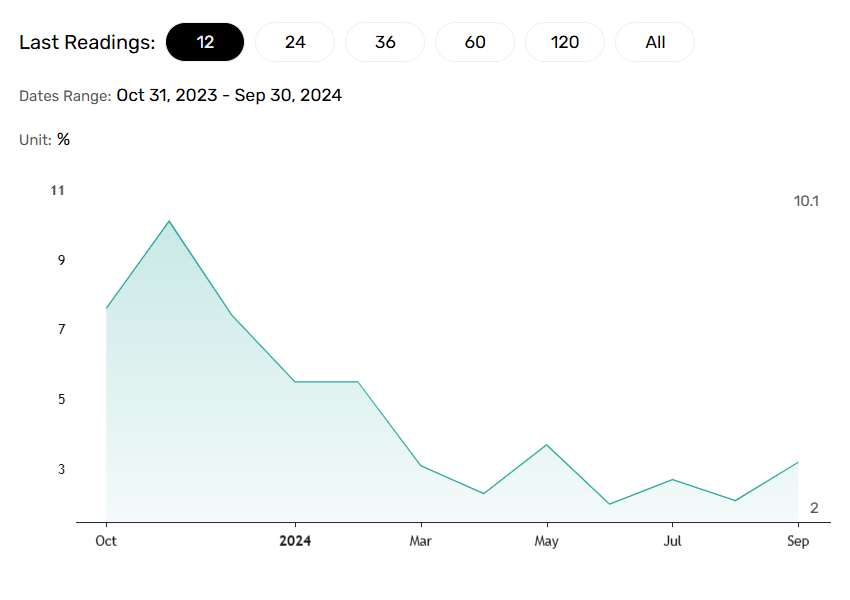
- House Price Index declined by 5.9% year-on-year in October after falling 5.8% in September.
- Fixed asset investment increased by 3.4% year-to-date in October compared with the same period in 2023, mirroring September’s trend.
- Industrial production rose by 5.3% year-on-year, down from 5.4% in September.
- Retail sales advanced by 4.8% year-on-year in October, up sharply from 3.2% in September.
- China’s unemployment rate dipped from 5.1% in September to 5.0% in October, potentially driving domestic consumption.
Significantly, China’s economic indicators highlighted improving labor market conditions and private consumption. The positive retail sales and unemployment data may justify Beijing’s decision to delay additional stimulus to target consumer spending.
The latest numbers could provide some relief after inflation figures hinted at growing deflationary pressures stemming from waning demand.
However, the housing sector and manufacturing sector numbers raised concerns as US tariffs pose a risk of reduced demand for Chinese goods.

Expert Views on China’s Economy, Stimulus Measures, and US Tariff Threats
AMP Head of Investor Strategy and Chief Economist Shane Oliver commented on Friday’s data, stating,
“Chinese Oct data was on balance slightly better than expected. Growth in inv was flat at 3.4% yoy, IP was softer than exp., but retail sales accelerated more than exp to 4.8% yoy. Prop-related data remained weak with investment, sales, and home prices continuing to fall.”
The Hang Seng Index Reaction to the China Data
Before the economic indicators from China, the Hang Seng Index was up 0.15%.
AUD/USD Price Forecast
Every new AUD/USD analysis as it publishes, today's technical signal and key levels, live price — on one page.
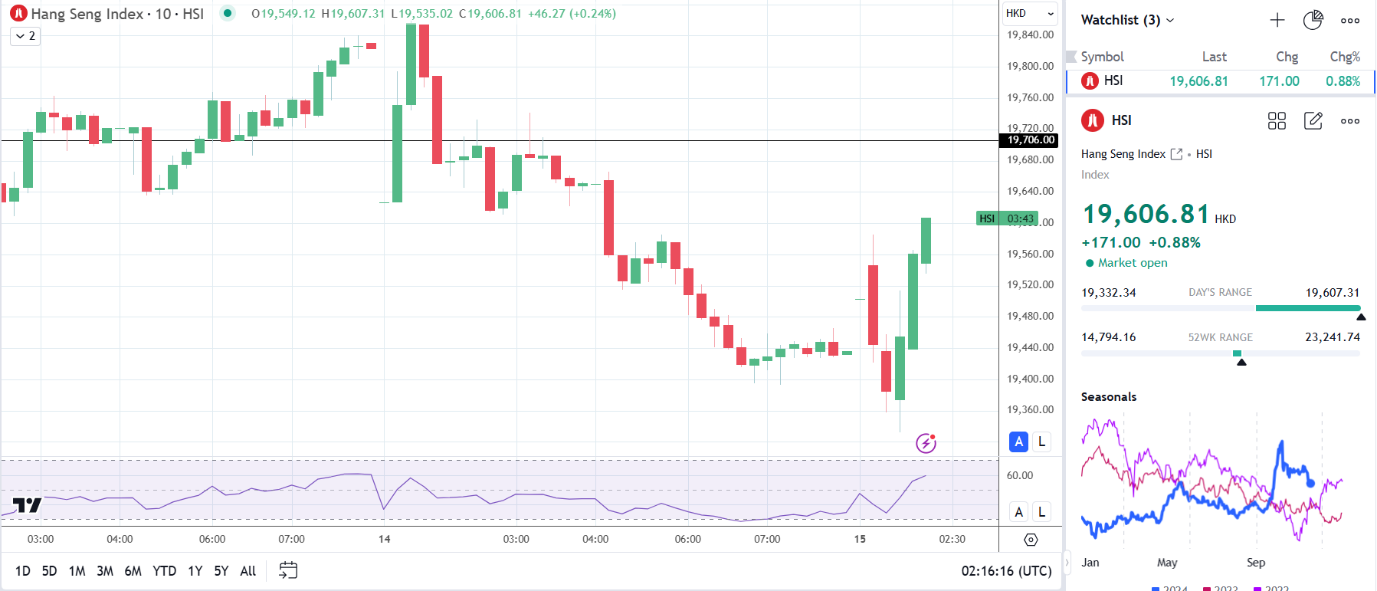
See all AUD/USD forecastsHowever, in response to the numbers from China, the Hang Seng Index rallied 0.54% within the first ten minutes. The sub-indexes also reacted to the numbers. The Hang Seng Tech Index (HSTECH) rallied 0.94% within the first ten minutes of the data, while the Hang Seng Mainland Properties Index (HSMPI) advanced by 0.54%.
On Friday morning, November 15, the Hang Seng Index was up 0.88% to 19,607 despite investor fears over US tariffs.
AUD/USD Receives Much-Need Boost from China’s Economic Data
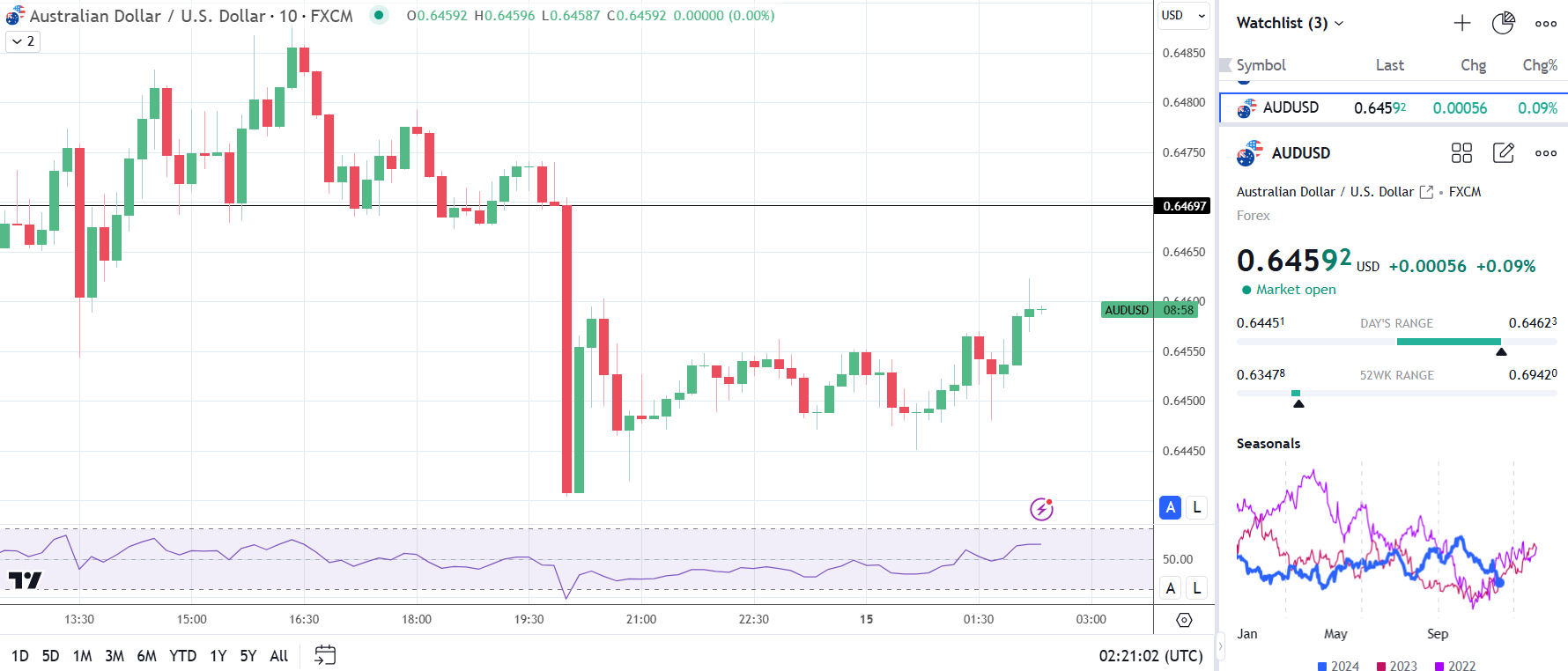
The AUD/USD also benefitted from China’s economic indicators. In response to the data, the pair briefly dropped to a low of $0.64536 before climbing to a high of $0.64623.
On Friday, November 17, the AUD/USD was up 0.09% to $0.64592.