Normal backwardation is when the futures price is below the expected future spot price. This is desirable for speculators who are “net long” in their positions: they want the futures price to increase. So, normal backwardation is when the futures prices are increasing.
Backwardation is the opposite of contango. When a market is experiencing backwardation, the contracts for future months are decreasing in value relative to the current and most recent months. The spot price is thus greater than the front month, which is greater than future delivery months. A market in backwardation is a bearish sign because traders expect prices over the long term to decrease.
When the front month trades higher than the current month, this market condition is known as contango. The market is also in contango when the price of the front month is higher than the spot market, and also when late delivery months are higher than near delivery months.
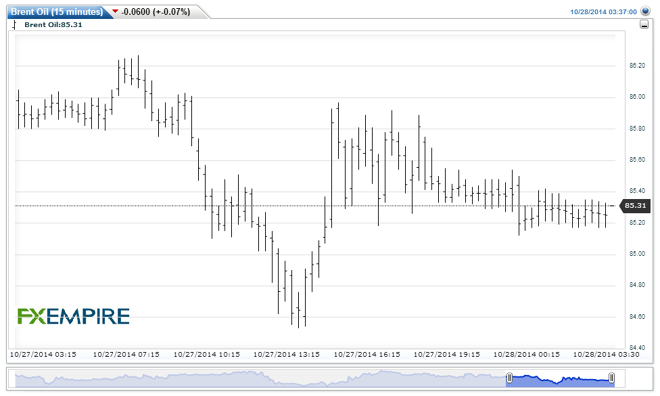
At present WTI crude oil eased by 27 cents this morning to trade at 80.73 while Brent oil is trading at 85.39 in the spot market. Crude oil for December is priced at 80.71 and for January at 80.37 and at 80.16 for February.
|
Month |
Last |
Change |
Prior Settle
Open
High
Low
Volume
Hi / Low Limit
DEC 2014
80.71
-0.29
81.00
80.64
80.79
80.45
3,574
91.00 / 71.00
JAN 2015
80.37 a
-0.33
80.70
80.35
80.41
80.12
798
90.70 / 70.70
FEB 2015
80.16
-0.32
80.48
80.11
80.18
79.98
164
90.48 / 70.48
MAR 2015
80.04 b
-0.30
80.34
80.00
80.00
80.00
20
90.34 / 70.34
After months-long tumbling crude prices, commodity index investors may soon have another reason to consider leaving the oil market: contango. For the first time since January, the U.S. West Texas Intermediate (WTI) crude oil futures market is poised to flip into contango, a structure in which prompt prices are below longer-dated contracts, typically signaling a weaker market. Outright oil prices have already tumbled about 25 percent since summer. In contango, passive investors in commodity indices end up selling cheaper prompt contracts and buying more costly next-month futures for a loss every time they have to roll their positions forward. Brent crude has been in contango for months. In the case of WTI, strong U.S. refinery demand and a decline in crude inventories earlier this year at Cushing, the delivery point for U.S. futures, had supported the market.